
Greene County is the eastern half of our home turf — Beavercreek’s growth-belt subdivisions backing up to our Dayton routes, Fairborn wrapped around the university and the base, Xenia holding the county seat where five rail lines once crossed, and Bellbrook tucked into the wooded Sugarcreek country. We have served the county since our first season, four of its communities carry dedicated pages below, and this hub is the county-level index: who we cover, what the county’s pest geography actually looks like, and the east-side logistics of a company whose routes cross the county line dozens of times a week.
Half of Greene County says pest control and the other half says exterminator. We answer to both, and the technician who turns up is the same either way.
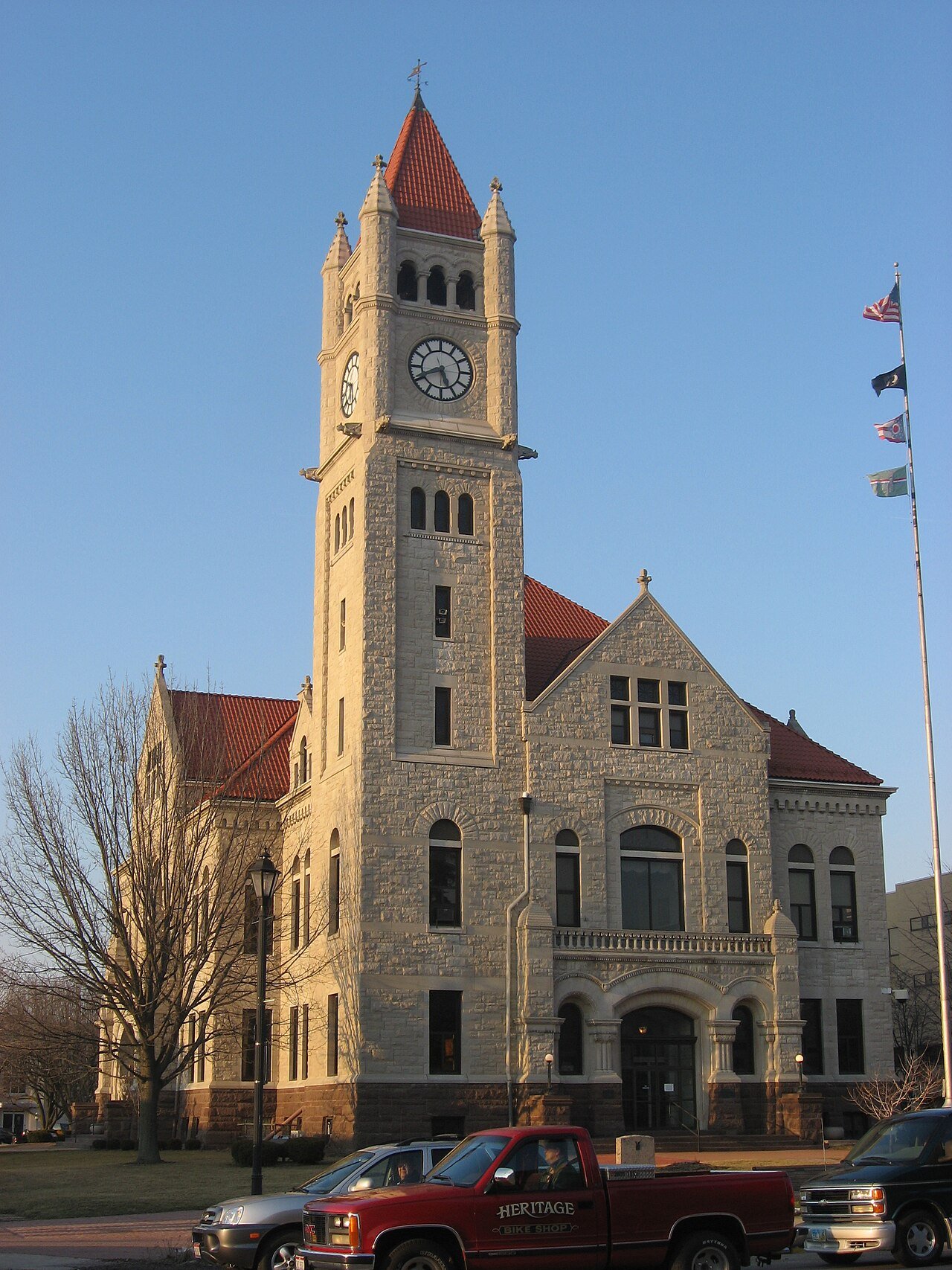
Every Greene County community we cover
- Beavercreek — the county’s biggest city and our densest east-side routes
- Fairborn — the university-and-base city with its rental-cycle rhythms
- Xenia — the county seat and its historic housing stock
- Bellbrook — wooded Sugarcreek country running the full edge-lot playbook
- Plus every township address between — Beavercreek, Bath, Xenia, Sugarcreek, Spring Valley, Miami, Cedarville, and the rest — routed under the nearest community at identical pricing. Yellow Springs, Cedarville, and Jamestown ride the eastern loops by request today and join the named-page roster as resident demand sets the queue.
The county’s pest geography: growth belt, campus country, and the wooded south
The western growth belt — Beavercreek’s subdivisions and retail corridors — runs newer-stock patterns: the unsealed line-sets and deck ledgers of 1990s-forward construction, field-displacement rodent pressure where development meets remaining crop ground, and commercial programs along the Fairfield Commons and Greene Town Center orbits. Campus-and-base country — Fairborn under Wright State and Wright-Patterson — adds the turnover economy: student rentals cycling every May and August with the furniture-and-luggage introductions turnover always carries, and landlord portfolios that run best on documented programs. The historic seat — Xenia’s surviving older stock (the 1974 tornado rewrote much of the map, which is itself a housing-era story) — mixes exclusion-craftsmanship blocks with postwar rebuild. And the wooded south — Bellbrook, Sugarcreek Township, the Little Miami corridor — is pure edge-lot country: woodland mice, carpenter ants off the mature timber, ticks along the trail margins, and the September-anchored defense calendar.
The base, the campus, and the turnover calendar
Wright-Patterson and Wright State give Greene County a rhythm no other county on our map runs: thousands of households arriving and leaving on orders and semesters, rental stock cycling on fixed dates, and the pest patterns that follow moving boxes everywhere they go. The practical playbook for the county’s landlords and property managers: turnover inspections as standard practice (the cheapest possible moment to catch what the last tenancy left or the next one brings), bed-bug-literate unit checks each cycle, and documentation habits that serve both the housing-office conversations base families sometimes need and the ordinary deposit-dispute realities of campus rentals. For the arriving military family or new faculty household: the moving-day protocol was written for exactly your week, and the free photo line answers PCS-season questions daily. The turnover economy is not a problem — it is a calendar, and calendars are what we are good at.
A Greene County year
- March–May: ants wake across the growth belt; termite swarms demand same-day photos in Xenia’s older blocks; the Little Miami corridor opens its mosquito season; May turnover wave one hits the campus rentals
- June–August: wasps scale on subdivisions’ deck structures and Bellbrook’s wooded eaves; PCS season peaks the moving-box economy; cicada killers patrol the sandy new-construction lawns
- September–October: the county double — field-edge rodent push where Beavercreek meets remaining crop ground, woodland push in the Sugarcreek country, invader flights on every sunny wall; August turnover wave two; the September visit anchors everything
- November–February: interior mouse season; exclusion projects in the older stock; pre-spring WDI queue for the county’s active real-estate market
Greene County questions we hear
Beavercreek feels like Dayton’s suburb — is service really county-wide east of it?
Fully — the eastern routes run through Xenia and the townships on the same scheduled-density model that serves Preble: Beavercreek and Fairborn ride near-daily density off the Dayton trunk, Xenia and Bellbrook anchor regular county loops, and the rural east books onto them without mileage lines. The county line is an accounting concept; the routes never notice crossing it.
The eight-county map: Montgomery County · Warren County · Preble County · Miami County · full service area.
New-construction country: the growth belt’s specific homework
Greene County builds more new housing than anywhere else on our map, and new construction carries its own pest file that buyers rarely hear at closing: line-set and utility penetrations sealed with foam or nothing (the first mouse door on nearly every new build we inspect), deck ledgers and grade-level trim meeting landscaping that will bury them within five seasons, sod-and-irrigation packages that hand moles a ready-made economy, and the displacement effect — every new phase pushed into former field ground inherits that ground’s rodent population the first fall the combines cannot come. The first-year homework is short and pays for a decade: the baseline inspection while the builder’s punch-list energy lives, steel at the penetrations before the first October, and the grading-and-mulch discipline that keeps the warranty landscaping from becoming the entry map. New houses are the easiest on the whole map to keep permanently boring — caught in year one. The twelve-doors guide’s new-construction section runs the full list, and our first-year baselines are among the cheapest visits we sell.
The bottom line for the east side
Greene County gets the complete eight-county standard with an east-side accent: growth-belt literacy for the subdivisions, turnover-calendar fluency for the campus and base economy, county-seat craftsmanship for Xenia’s survivors, and the full edge-lot defense through the wooded south — all riding routes that cross the Montgomery line dozens of times weekly, all carrying the same free quotes, photo triage, and two honest ways to hire us. Four communities named below, every township covered between them, and the number identical everywhere: (937) 569-3330. Greater Dayton Pest & Rodent — east of the line since season one.
The Little Miami factor: the scenic river’s pest economy
The county’s eastern spine is the Little Miami — a National Scenic River trailing state-park woodland, bike-path corridor, and tributary creeks through Sugarcreek country and the townships — and river-corridor rules apply exactly as they do on our west-side waters: longer mosquito seasons on the adjacent low ground, healthy woodland rodent and deer mouse populations pushing at every structure within range each fall, tick margins wherever trails and yards trade edges, and the moisture economies that keep valley basements interesting. The corridor households’ playbook is the standing edge-lot defense — sealed structures, September barriers, wood-line habitat managed rather than fought — plus the specific griefs and gifts of trail adjacency: more spider-feeding insect traffic at every light, and the best evening walks in the county as compensation. The river is the east side’s Hills & Dales: permanent pressure, permanently worth it, permanently manageable.
Do you coordinate with base housing or university facilities?
Where residents route us, yes — private landlords serving base and campus families are core clientele, our documentation travels well into housing-office conversations, and off-base rental portfolios run beautifully on the standard programs. On-installation and university-owned facilities carry their own contracting worlds we do not pretend to shortcut; everything outside the fence is ours at full standard, and the fence line — like every line on this page — is somewhere the pests have never once stopped.
Xenia’s tornado legacy: a county-seat housing story worth knowing
One Greene-specific chapter deserves its own heading, because it changes how the county seat inspects. The 1974 Xenia tornado — still among the most destructive in American history — erased whole districts of the city’s Victorian stock and rebuilt them in mid-70s construction, which means Xenia’s housing map is uniquely spliced: streets where 1890s survivors stand beside 1975 rebuilds, each running a completely different pest playbook, sometimes sharing a fence line. The survivors carry the full historic file (stone, balloon frames, the exclusion craftsmanship they reward); the rebuild cohort is now fifty years old itself — original seals aged out, first-generation vinyl and aluminum at end of life, the “newer” half of town quietly graduating into the sealable-stock playbook. Inspecting Xenia well means reading the splice house by house rather than assuming by neighborhood, and it is a small point of pride that our technicians do — the county seat’s history is written in its framing, and the framing is where our work lives. Every Xenia quote starts by asking which side of 1974 your house stands on; the answer sets the whole plan.
Greene County commercial: from town centers to flight lines
The county’s commercial file concentrates in three bands, each with its own program shape. The retail-and-dining belt — The Greene, Fairfield Commons, and the strips feeding them — runs shared-wall storefront dynamics at scale: coordinated block programs, restaurant-grade documentation for the dining rows, and delivery-dock discipline for the anchors. The contractor-and-tech corridor serving the base — the office parks and light-industrial stock along the 675 arc — runs quiet-floor office programs where monitoring devices notice what hybrid-work schedules do not. And the hospitality band serving base travel — the hotel clusters at the interchanges — runs lodging protocols where bed bug literacy is the whole product and response speed is the reputation. All three bands ride the eastern route density, all three get inspector-and-auditor-ready paperwork, and all three are quoted free with the same no-crisis-markup policy the whole map carries. The east side’s businesses referred us across the county line years ago; the programs above are why they kept doing it.
One east-side tip worth the page: match the house to its band, then book its season
The Greene County version of the county-index advice: place your property in its band — growth-belt new build, campus-orbit rental, Xenia splice, or wooded corridor — and book the band’s anchor appointment before its season. New builds take the first-year baseline; rentals take turnover inspections on the semester calendar; the splice takes an era-read before anything else; the corridor takes September, always September. One matched appointment a year outruns most of the county’s call log — and the Protection Plan exists for households who would rather the calendar run itself. Free quotes, free photo identification, and honest band-reads by phone: (937) 569-3330.
What the east side taught us
Every county on this map has contributed a chapter to how we work, and Greene’s are turnover and growth. The semester-and-PCS calendar taught us that pest control for cycling populations is logistics first — inspection windows timed to move-out weeks, documentation that survives handoffs, protocols that assume the furniture has history. The growth belt taught us the first-year baseline — that the cheapest house to protect is the one whose builder’s gaps get steel before their first October, a lesson now sold on every new-construction street in four counties. And the Xenia splice taught the era-read discipline that our whole inspection method leans on: never assume the house from the neighborhood, because history edits blocks one address at a time. The east side runs on cycles — semesters, orders, building phases, the river’s seasons — and a company that learned to read cycles here reads them everywhere. That is Greene County’s fingerprint on everything we do, and this hub is its overdue byline.
The county’s real-estate rhythm and the inspection trade
Greene County’s housing market moves fast in every band — growth-belt new builds selling from plans, campus-orbit rentals trading between investor portfolios, Bellbrook’s wooded stock drawing Dayton’s move-up buyers — and every transaction that touches a lender touches our Category 12 inspection work. The county-specific notes agents learn quickly: new-build purchases still warrant the WDI (builder warranties cover workmanship, not the subterranean colonies working the former field ground the subdivision sits on); the Xenia splice makes era-blind inspections genuinely risky (a 1975 rebuild inspected like a Victorian wastes everyone’s attention on the wrong failure points, and vice versa); and the wooded south’s properties deserve inspectors who walk tree lines, not just foundations. We schedule against closings, write NPMA-33 reports lenders accept without follow-up calls, and keep the realtor workflow page current because the county’s agents use it. For sellers: the pre-listing inspection remains the cheapest way to keep a Greene County closing boring — and boring closings are the whole point.
Does the county’s student housing get different treatment standards?
Different logistics, identical standards: campus-orbit rentals get the same products, placements, and documentation as any home — what changes is the calendar (turnover-window scheduling), the coordination (property managers and sometimes parents in the loop), and the emphasis (bed-bug vigilance and kitchen-sanitation realism appropriate to the tenancy). No corner of the county gets a lesser version of the work; the campus economy just gets it on semester time.
The bottom line for Greene County, complete
Four bands, one standard: the growth belt gets first-year baselines and new-stock literacy, the campus orbit gets turnover-calendar logistics, the county seat gets the era-read its spliced history demands, and the wooded south gets the full edge-lot defense — all of it riding eastern routes dense enough that the county line is invisible in the scheduling, all of it documented, guaranteed per the two-tier structure, and priced without mileage lines from Beavercreek’s subdivisions to the last lane before Clinton County. The four named communities carry the depth; this hub carries the map; and the county’s households carry the only number that matters: (937) 569-3330 — free quotes, free photo identification, same-week norms, Saturdays by appointment. Greater Dayton Pest & Rodent, Ohio licensed — ODA Pesticide Business License #115079: east of the line since season one, and now finally indexed like it.
And the townships’ rural addresses — full campus treatment like Preble?
Identical doctrine: Greene’s farm and acreage properties — the Cedarville and Jamestown grain country, the Spring Valley and Caesarscreek lanes, every address where the mailbox serves more than one structure — get the whole-property campus read the Preble hub codified: house sealed to the twelve-doors standard, feed and shop rooms hardened first, barns triaged honestly, equipment on the deer-mouse storage protocol, and the September visit timed to the sections. The county’s east opens into genuine farm country faster than its Beavercreek face suggests, and the rural playbook rides the same route days as everything else. One county, four bands — and a fifth, rural one, running on the doctrine the west county wrote.
Every Greene County community above links onward to the depth its geography earns — and the county joins Montgomery, Warren, Preble, and soon Miami on a service map that now covers the Miami Valley the way it deserved covering all along: community by community, era by era, honestly priced and locally written. The east side’s page is live; the east side’s phone line has been for years.
— Greater Dayton Pest & Rodent, 733 Salem Ave, Dayton. Free quotes and photo identification every business day.
Over the northern line. Greene shares its northern border with Clark County, and the seam runs right through Clifton, where the village straddles the county line at the head of the Little Miami gorge. Enon sits just across from Fairborn on the same Mad River terrace, with the same gravel soil and the same heavy ant and carpenter bee pressure.
The far corners. Greene sits in the middle of our map; Butler County anchors the southwest with 390,357 people and Miami University’s rental stock, and Darke County the northwest with Ohio’s number one livestock county. Neither borders Greene, and both are covered by the same crew out of the same office.
Frequently asked questions
Do you cover all of Greene County?
Every community — Beavercreek, Fairborn, Xenia, Bellbrook, and the townships between, from the WPAFB corridors to the farm belts east and south.
What pests dominate Greene County?
The newer-build-meets-landscape pattern: sod-to-woodline yellowjackets (the county signature), slab pavement ants, tight-construction mice funneling through garage corners, creek-corridor mosquitoes, and the field-edge September surges the eastern townships deliver.
How does Greene County pricing work?
The same published formula as everywhere — property-computed, no county adjustment: most Greene homes run $39–$55/month quarterly, one-time flat, campuses walked. Free quotes: (937) 569-3330.
Which Greene County communities have dedicated pages?
Beavercreek, Fairborn, Xenia, and Bellbrook lead, each with its local profile — the college-town turnover files, the base-adjacent patterns, the county-seat edges, and the wooded-estate carpenter ant country respectively.
How fast is Greene County scheduling?
Routes run daily — most addresses within days, priority faster, no travel charges county-wide.
Do you serve Greene County businesses?
Yes — the retail corridors, base-adjacent hotels, college-town restaurants, and the flex-industrial spaces each on matched programs; the student-rental portfolios get turnover-season planning.
What is the county’s signature pest problem?
The ground-nest yellowjacket — the county’s abundant lawn-to-treeline seams are premium burrow real estate, discovered by mowers every August. The flag-and-dust protocol plus fall burrow-filling is practically Greene County liturgy.
Does WPAFB adjacency affect pest service?
Practically: base-schedule flexibility, rental-turnover volume around the gates, and the hotel back-of-house programs the corridor supports — all standing features of our Fairborn-and-Beavercreek routes.
What about the rural eastern townships?
Campus treatment — farm properties from Cedarville to Jamestown’s edges quoted as systems, harvest-calendar aware, with the strongest exclusion emphasis on the route map.
How do I start service in Greene County?
Instant quote from any county address, free photo ID, or (937) 569-3330 — free estimates and first visits typically within days.