Somewhere between the six-dollar hardware-store spray and the emergency room, there is a decision every Miami Valley household eventually faces at the end of a wand: is this wasp nest a DIY evening or a professional call? The honest answer depends on four variables — species, size, location, and who in your household reacts to stings — and this page gives you the complete decision framework from the people who take the calls when the spray can loses: which nests genuinely are homeowner-manageable (some are, and we will say so), which ones hospitalize DIYers every Ohio August, exactly what professional removal involves and costs, and why the wall-void nest in particular is the one situation where the cheap first move reliably becomes the expensive second one.
Know your opponent: the four nests of an Ohio summer
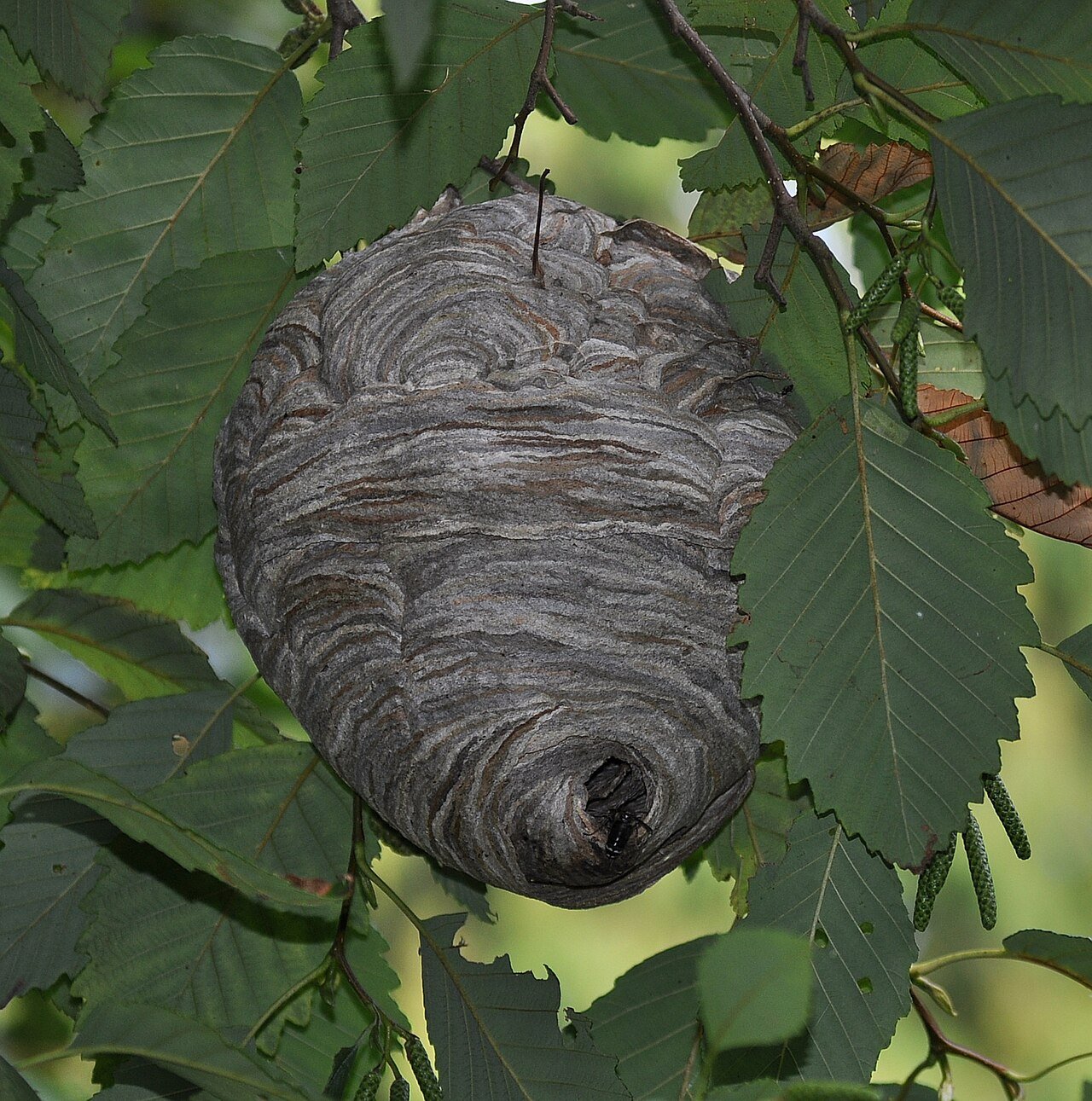
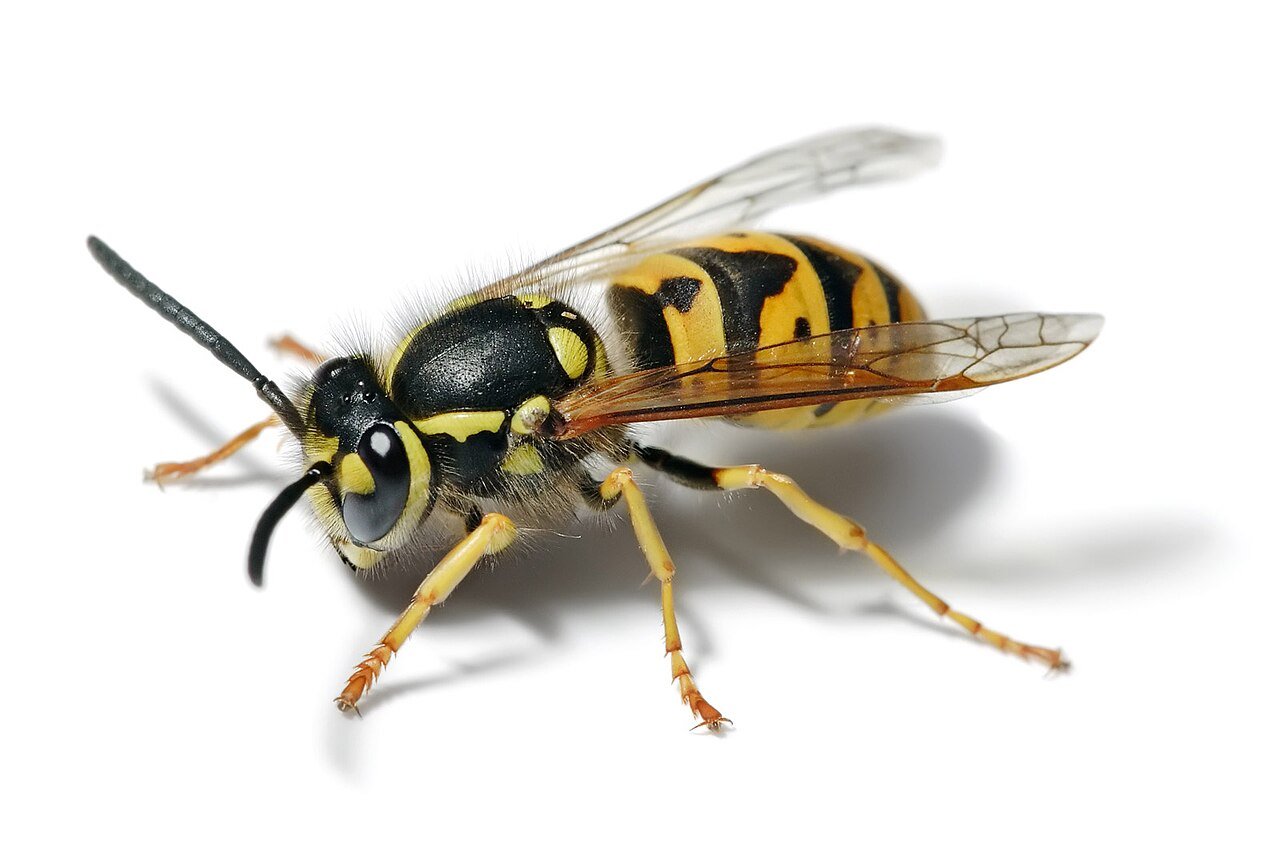
Paper wasps build the open honeycomb umbrellas under eaves, porch ceilings, railings, and grill lids — visible comb, a few dozen wasps at peak, moderate defensiveness with a short pursuit range. The genuinely DIY-viable category, with conditions below. Yellowjackets are the volume problem: thousands-strong colonies by late summer, nesting underground (the lawn hole with fighter-jet traffic), in wall and soffit voids, and behind siding — aggressive collective defense, alarm pheromones that recruit the whole colony, and the ability to sting repeatedly through ordinary clothing. Bald-faced hornets hang the iconic gray paper footballs in trees and on structures — several hundred defenders with the sharpest eyesight and longest pursuit of the local lineup, plus the charming documented habit of aiming venom spray at the eyes of vertebrate threats. European hornets — Ohio’s true hornet — run cavity nests in hollow trees, barns, and wall voids, fly at night (the huge wasp banging the porch light in September), and combine hornet size with colony defense. The sorting matters because the DIY failure modes are species-specific: paper wasp missteps cost a sting or two; yellowjacket and hornet missteps cost dozens, and the emergency-department literature on August weekends reads accordingly. (The two-inch giant patrolling the lawn solo is none of these — that is a cicada killer, and it mostly needs an introduction, not a removal.)
If the nest is high, hidden in a wall, or anyone in the house reacts to stings, it is not a DIY job. See wasp and hornet removal in Dayton.
The honest DIY lane (and its exact boundaries)
We are not a company that pretends every nest needs a truck, so here is the lane where the hardware-store can genuinely serves: a paper wasp umbrella nest, smaller than your palm, at reachable height without a ladder, discovered early in the season (May–June, while colonies number a dozen rather than sixty), on a household where nobody has sting-allergy history. Method: a long-range aerosol labeled for wasps, applied at dusk or dawn when the colony is home and torpid, from the maximum distance the stream allows, with an exit path planned before the first spray and the nest knocked down and bagged only after a full day of zero activity. Every clause in that paragraph is a boundary, and crossing any single one moves the job into our column: ladders plus defensive insects is the injury mechanism (the falls hurt worse than the stings — August ladder incidents are an ER genre); late-season colonies of any species have the numbers to overwhelm a retreat; height, and especially the second story, means you are fighting gravity and wasps simultaneously; and allergy in the household converts every sting event from painful to potentially medical. The two absolute never-DIY categories get their own sections, because they generate our most instructive emergency calls.
Never-DIY #1: the wall-void nest and the fatal plug
Yellowjackets entering a gap in the siding, the soffit, or the brick weep are running a colony inside your structure, and the two instinctive DIY responses are the two worst available. Spraying the entrance kills the doorway’s traffic and leaves the colony — thousands strong, now alarmed — intact in the void. And plugging the hole, the move that feels most decisive, is the one with the signature disaster: sealed-in yellowjackets do not die quietly; they follow air currents and light through the wall assembly and chew through interior drywall — emerging into the living room, sometimes by the hundreds, in the days after the confident caulk job. We take these calls every August, and the families involved describe the same arc: the plug, the strange scratching, the first scouts indoors, the unforgettable afternoon. Professional void work runs the sequence that physics requires: treat the void through the entrance with dusts that returning workers distribute colony-wide, leave the entrance open through the die-off window, verify zero activity, and only then seal — often paired with removal of accessible comb, because a dead void nest is also a pound of protein that invites carpet beetles and rodents next. The order of operations is the entire product; it is also why this job resists the spray can categorically.
Never-DIY #2: ground yellowjackets and the football in the tree
The lawn nest — a bare hole with constant traffic, usually discovered by mower — commands respect because vibration is its trigger: ground colonies interpret footsteps and engine rumble as excavation by a predator and respond with the full defense, which is how the “I just walked past it” multi-sting stories happen and why the mower discovery is a stand-off event, not a spray-it-tonight event. Mark the approach lines, flag the hole from distance, retire the mower from that zone, and book the treatment — ground nests are quick professional work (dusted at the entrance in low-activity hours, dead within days, no drywall subplot) and rank among our most common priority-response jobs when they sit beside patios, pools, and play sets. The bald-faced hornet football earns the same distance for different math: several hundred defenders, visual tracking that identifies and pursues individual threats well past most retreat plans, and a venom-spray habit aimed at eyes — plus the detail that DIY sprays enrage the outer-shell guards while barely penetrating the paper envelope to the comb inside. Professional hornet work uses the equipment the nest architecture demands (suits rated for the species, dusts and delivery tools that reach the interior, timing at colony-home hours) and removes the nest after the kill — which, for the record, is also the only safe path to the empty-nest trophy people want for the garage wall. Ask; we usually oblige once it is genuinely vacant.
What professional removal actually involves (and costs)
Demystifying the visit: assessment — species confirmed, nest architecture and entrance mapped, approach and household factors noted (the pool, the dog run, the allergic teenager); timing — treatments scheduled for colony-home windows, dawn and dusk, because a nest treated at noon is a nest half-empty with its workforce returning angry all afternoon; treatment — species-matched products and delivery: aerosol knockdown and comb removal for paper wasps, entrance-dusting for grounds and voids, envelope-penetrating work in protective gear for hornets; the die-off and verification window — written guidance on the days-long quiet-down, with the return visit built in if activity persists (our re-treatment guarantee applies to stinging work like everything else); and closure — nest removal where warranted, entrance sealing after voids verify empty, and prevention notes for the structure. Cost honesty: straightforward accessible nests run modest and single-visit — typically comparable to a nice dinner out, not a car repair — with height, void access, and multi-nest properties moving the quote, which is delivered free and firm before any work as always, emergency or scheduled, with no crisis markup. Against the alternative — an ER copay runs multiples of a nest job, before the ladder factor — the professional line item is the cheap path through every scenario past the DIY lane’s boundaries.
The bee exception: when removal is the wrong word entirely
One identification changes the whole conversation: honey bees. A swarm cluster on a branch (a beard-shaped mass, usually placid, often gone in a day) or an established colony in a wall void is not a wasp job and mostly should not be a kill job — swarms are typically collected free by local beekeepers happy for the call, and established wall colonies deserve the removal-versus-extermination conversation because a killed hive leaves honey and comb to melt, ferment, and draw every pest in the county into your wall assembly. Our protocol on confirmed honey bees is coordination: beekeeper referral for swarms and viable colonies, and where extraction is the path, the comb-removal planning that prevents the sticky aftermath. The sorting is easy with a photo (bees are fuzzy foragers; wasps are glossy hunters — the bee guide runs the full lineup), and it is one more argument for the picture-first habit: thirty seconds of identification can convert a kill order into a free beekeeper pickup. Bumble bee colonies (small, docile, annual, gone by frost) usually earn coexistence; carpenter bees drilling the deck rail are their own program entirely.
Prevention: the fall-and-spring squeeze that empties next summer
Wasp pressure is annual — colonies die at frost, and only new queens overwinter to found next year’s nests — which hands the strategic homeowner two cheap windows. Fall: after hard frost, knock down and bag the year’s dead paper nests (safe once genuinely frosted-out) and seal the entries the season revealed — the soffit gap, the siding seam, the porch-ceiling joints — because void real estate re-lets to scouting queens each May. Spring: the April–May queen patrol — every umbrella nest the size of a golf ball is one queen and a dozen cells, removable with a broom handle and trivial risk; ten minutes of eave-walking in May deletes the colonies that would have been August footballs. Add the ecosystem edits — trash lids tight (late-summer yellowjackets are protein-and-sugar scavengers), fallen fruit collected, hummingbird feeders away from doorways — and most properties drop from several nests a summer to occasional. Our seasonal customers get exactly this squeeze built into spring and fall visits, which is why their Augusts are quiet and their calls to this page’s number are rare; the guarantee covers the exceptions.
Wasp removal questions we hear
The nest is active right now by my door. What do I do before you arrive?
Close the route: use another entrance, keep kids and pets off the approach line, and do not test the colony’s mood with a broom or a garden hose — both are documented ways to convert a manageable nest into a sting event before the truck arrives. Mark the location from distance for the technician, note the entrance if it is a void or ground nest, and if the household includes sting allergy, say so at booking — it moves the schedule (priority-response rules apply). Most door-adjacent nests are treated the same or next day.
I sprayed it and they came back. Why?
Three usual reasons, in order: the spray reached the nest’s surface but not its population (hornet envelopes and void nests shrug off exterior wetting); the treatment happened midday, killing the guards while the field force was out — the returners rebuilt or relocated within feet; or the “same nest” is actually the same site re-selected by the species’ real estate logic, which only entrance sealing and structural correction changes. Each failure mode is a timing-or-access problem the professional protocol exists to solve — and each round of spray-and-return makes the colony warier and the eventual fix slightly harder. Two attempts is the honest limit; after that, the math favors the call.
Do wasp traps and decoy nests work as prevention?
Traps: as harvest devices yes, as protection barely — a bag trap by the patio kills scavenging workers by the hundred in August while the colony producing them replaces the losses same-week; placed away from gathering areas as a diversion, they earn a modest supporting role. Decoy paper nests (the “wasps are territorial” pitch): charming theory, indifferent field results — paper wasps and yellowjackets routinely nest within sight of decoys in our service photos. Neither substitutes for the fall-and-spring squeeze above, which attacks the actual mechanism (queens and real estate) instead of the symptom (August traffic).
The stinging-insect shelf: wasp & hornet service · cicada killers · bees in Ohio · emergency response.
The allergy paragraph, which outranks every other paragraph
One household fact overrides this page’s entire decision framework: if anyone under your roof has had a systemic sting reaction — hives beyond the sting site, facial or throat swelling, breathing changes, dizziness — then no nest on the property is a DIY nest, at any size, height, or species. Venom allergy makes every colony encounter a potential medical event, epinephrine access and an allergist’s action plan become household equipment, and the pest-control posture flips from reactive to preventive: the fall-and-spring squeeze on schedule, professional response to every discovered nest with the allergy flagged at booking (it moves our schedule, always), and zero tolerance for the “it is just a small one” economy. Roughly one in twenty people carries some degree of sting hypersensitivity and many discover it on a bad afternoon; if your family has had the warning shot, treat it as the gift of information it is. We would rather treat ten golf-ball nests a summer for an allergic household than take the other kind of call — and our pricing for exactly that standing arrangement reflects the preference.
The bottom line
Wasp nest removal sorts cleanly once the variables are named: small, low, early paper wasp umbrellas are a legitimate dusk DIY for non-allergic households with an exit plan — everything else earns professional handling on straightforward physics: yellowjacket numbers, hornet defense systems, void architecture that punishes plugs, ladders that injure more DIYers than stings do, and allergy math that overrides it all. The professional version costs dinner-out money, runs on timing and species knowledge the spray can cannot print on its label, and carries the guarantee through the die-off window. Learn the four nests, run the fall-and-spring squeeze, keep the honey-bee exception in mind — and for everything past the boundary line, the number is the same one on every page of this site: (937) 569-3330. Greater Dayton Pest & Rodent — free photo ID, same-week response, priority handling for doors, decks, and allergic households, and a healthy respect for the insects we are paid to outthink.
A closing note on timing your call, because August teaches it annually: every wasp colony in the Miami Valley is at its smallest, calmest, and cheapest to resolve on the day you first notice it, and at its largest, angriest, and most expensive six weeks later — the colony growth curve is the price curve. The golf-ball nest noticed in June and handled that week never becomes the August football, the wall-void scouts of May never become September’s drywall event, and the household that photographs early spends the summer on the patio instead of watching it through glass. First sighting, one photo, one call — the whole playbook fits in a sentence, and the season it buys back is yours.
Frequently asked questions
What does professional wasp nest removal include?
Species and architecture ID on sight, the right material for the nest type (dust for ground and voids, direct treatment for combs and globes), the entrance left open so returning foragers carry product inward, removal of accessible nest structure once the colony is down, and — for voids — the return visit to seal.
How much does it cost to have a wasp nest removed?
By situation: accessible paper wasp combs at the low end, ground and aerial colonies mid-range, wall-void jobs highest (two visits built in), with height and access adjustments stated up front. Phone or photo quotes are free and firm — and no crisis markup, ever: (937) 569-3330.
Why hire a professional instead of DIY wasp spray?
For exposed reachable combs — honestly, you often should not; we say so and teach the dusk protocol free. For everything enclosed (ground, void, globe), DIY is where the multi-sting injuries live: those jobs are equipment, materials, and colony-behavior knowledge — the actual product you are buying.
How long does professional wasp removal take?
Most visits run under an hour on-site, with colonies collapsing within a day or two as dust distributes. Void jobs add the die-off window and the scheduled return-to-seal — a deliberate two-act structure, priced as one job.
Is professional wasp treatment safe for kids, pets, and bees?
Targeted by design — product goes in or on the nest, not across the yard, and species ID precedes everything: honey bee colonies are never treated; they get referred to beekeepers, confirmed from your photo before scheduling.
When is the best time to have a wasp nest removed?
As early as spotted — a July colony is a fraction of its September self, and every week adds defenders. May founding combs are cheapest of all; late-season nests near frost sometimes earn the honest “wait for November, it’s free” advice instead of an invoice.
Do you remove the nest itself or just kill the wasps?
Both where access allows — accessible combs and globes come down after colony collapse, and large void nests are worth extracting (abandoned brood draws carpet beetles). Underground nests decompose harmlessly in place once dusted.
What if the wasps come back after removal?
The treated colony cannot — but the site can re-audition next spring, so removal pairs with sealing and the prevention notes for that specific spot. Plan customers get re-service free; one-time jobs carry our return-if-active promise on the treated nest.
Can you remove nests that are very high up or inside walls?
Ladder-range height is routine with a surcharge stated in advance; 30-plus feet is bucket-truck territory we price by hand. Wall voids are a specialty — treat, wait, seal, in the only order that works, both visits in the quoted price.
How fast can you come for a wasp emergency?
Sting-risk and allergy-household calls get priority routing — typically within a day or two, faster when the route allows. Describe the nest or text a safe-distance photo and we arrive with the exact right plan and materials the first time.