Miamisburg’s roach story splits at the hill line, same as everything else in this river town. Down in the valley — the historic downtown blocks, the century-old housing near the Great Miami, the storefront buildings with apartments above — the file runs old-infrastructure: damp stone basements, senior drain lines, and the big black and mahogany roaches that commute through both, surging with every high-water spring. Up the hill, the newer slab neighborhoods run the standard suburban file: the striped kitchen species arriving in cardboard and secondhand appliances, plus the June wood roaches at the porch lights. Two elevations, two playbooks — and one river setting the schedule for the lower one. Here’s the whole map.
The Valley File: Old Bones and High Water
- The stone-basement residents: the historic district’s foundations hold the cool damp that Oriental roaches — the glossy black “water bugs” — require, and their floor-drain commutes peak after every wet stretch. The water bug file covers the species; the water-the-traps protocol closes their main door.
- The high-water surges: when the Great Miami runs full, saturated ground and loaded storm lines push the drain-dwelling population upward — valley-block basement sightings spike for a week or two after every high-water event, a rhythm the riverside streets learn to expect and the drain protocol converts to a non-event.
- The storefront-and-apartment stack: downtown’s mixed-use buildings run the connected-structure biology — shared walls and vertical plumbing chases linking street-level food service to the apartments above. Building-level treatment, documented for owners, is the fix that holds; unit-by-unit is the churn that doesn’t.
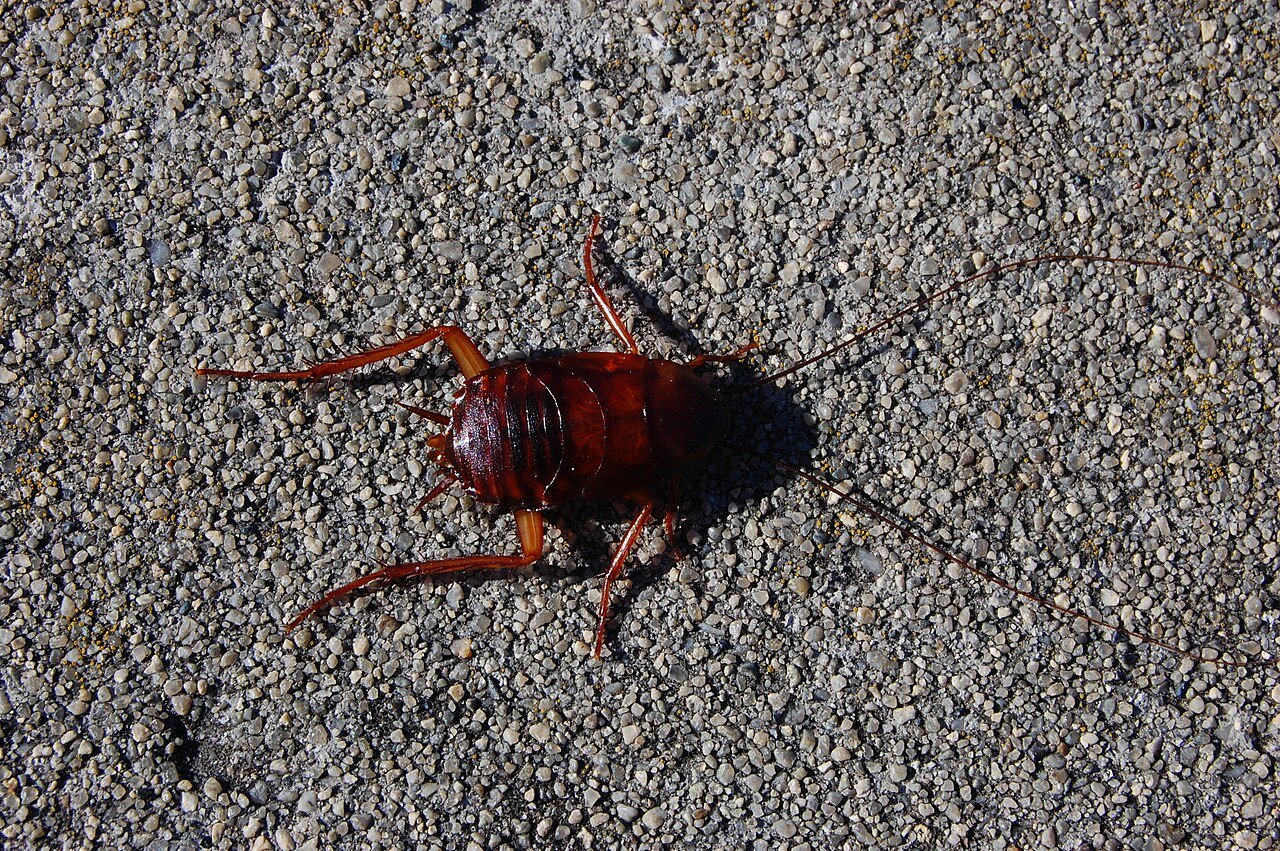
- The mahogany giants: inch-and-a-half American roaches surface from the older laterals on the warmest weeks — commuters, not colonists, in most valley homes, and honest triage says so.
The Hill File: the Standard Suburban Story
The newer neighborhoods up the grade run the file every slab suburb runs. The striped kitchen species arrives by importation — grocery cardboard, moving boxes, the secondhand mini-fridge — and compounds on its 50-day clock in the warm utility core; single sightings justify action, the two-stripe check settles identification, and crevice-placed gel baiting with growth regulator (never foggers — the standing indictment) clears it inside two reproduction cycles. The June wood roach blunders in from the wooded hillsides and river corridor, can’t breed indoors, and earns a dustpan and a free identification rather than a treatment plan. And the false-alarm gallery — ground beetles, crickets, the occasional valley giant that wandered uphill — gets sorted by photo before anyone spends a dollar; the visual calls live at the Ohio roach lineup, with the early-warning significance of nymph sightings and daylight activity linked from there.

The Method, Split by Elevation
Valley jobs run infrastructure-first: water and mineral oil down every unused trap monthly, mesh on drains and sump lids, dehumidification stripping the stone basement’s damp, low-zone baiting along the flashlight-mapped routes, and — for the mixed-use blocks — the coordinated building program with the paperwork that keeps owners, tenants, and health inspectors aligned. Hill jobs run placement-first: dozens of crevice gel points in hinge lines and appliance voids, insect growth regulator so the next generation never matures, monitors reading the trend, and follow-ups timed inside the reproduction window. Both elevations share the honest don’t-do list — no foggers, no bleach-mopping the placements, no mothball folklore — and both end the same way: verification before victory, with the quarterly Protection Plan holding the perimeter after.
The Miamisburg Calendar and Bottom Line
The valley’s year runs on the river: spring high water brings the drain surges, high summer brings the mahogany commuters, and the storefront blocks run their connected-building pressure year-round. The hill’s year runs on the calendar everyone shares: importation spikes at moving season and the holidays, June’s porch-light wood roaches, and the indoor consolidation of fall. The strategic windows follow — drain protocol and screening before spring’s first high water, building programs launched in fall before winter density, and the move-in cabinet inspection habit for every hill-side turnover. One flat price residential, documented agreements for the mixed-use blocks, the full method at cockroach control — and the town’s whole file, termites and fleas included, at Miamisburg pest control.
Black Roaches in a Valley Basement — or Stripes Up the Hill?
Two elevations, two playbooks, one local crew — drain-first below, placement-first above, guaranteed at one flat price across Miamisburg.
Frequently asked questions
Why does my Miamisburg basement get black roaches every spring?
High water on the Great Miami saturates ground and loads the senior drain lines, pushing the Oriental roach population upward through floor drains — the valley blocks see a week or two of surfacing after every wet stretch. Wet traps, screened drains, and a dry basement convert it to a non-event.
What is the huge roach in my downtown Miamisburg apartment?
An American cockroach commuting from the old laterals — the mixed-use blocks’ shared plumbing chases link street-level food service to the apartments above. Building-level treatment, documented for the owner, is the fix that holds.
Are the roaches at my porch light up the hill a house problem?
June’s chestnut wood roaches wander in from the hillsides and river corridor, can’t breed indoors, and die within days — a dustpan event we identify free so nobody buys a treatment for weather.
What does a striped half-inch roach in a hill-side kitchen mean?
The kitchen species and a real case — it arrives in cardboard and secondhand appliances, compounds on a 50-day clock, and clears inside two reproduction cycles on a crevice-baiting program with growth regulator. Single sightings justify starting.
Do the storefront restaurants cause the apartment roaches upstairs?
They share the building’s anatomy — vertical chases and party walls move populations both directions, which is why mixed-use blocks need coordinated building treatment rather than unit-by-unit churn. Our documentation keeps owners, tenants, and inspectors aligned.
Why shouldn’t I fog my Miamisburg basement?
Foggers drive roaches deeper into stone-foundation voids and upstairs units, miss every egg case, and coat surfaces for nothing — while the actual fixes (wet traps, screening, dehumidification, low-zone baiting) address the infrastructure the roaches commute through.
When should the drain protocol happen?
Before spring’s first high water — monthly water plus mineral oil in unused traps, mesh on drains and sump lids, and the basement dehumidified ahead of the surge season. It’s the cheapest roach control the valley blocks can buy.
What does cockroach control cost in Miamisburg?
One flat price residential — species-confirmed, elevation-matched program with follow-ups and verification — and documented service agreements for the mixed-use downtown blocks. Free photo identification either way.