
“It’s brick — termites can’t touch it” is Huber Heights’ most expensive local legend. America’s largest community of brick homes is, from a termite’s perspective, a community of ordinary wood-framed houses wearing masonry jackets: behind every brick veneer runs the same pine framing, sill plates, and subfloors as any sided ranch, and the veneer itself adds two features termites genuinely appreciate — a hidden climbing cavity between brick and frame, and weep holes at exactly soil level. Pair that with slab-on-grade construction’s invisible entry routes and a housing stock now fifty-plus years past any builder-era soil treatment, and the brick city’s termite risk is entirely real — just uniquely well-hidden. Here’s how the veneer changes the inspection, and how protection actually works here.
What Brick Actually Changes (and Doesn’t)
- The frame is the food: brick veneer is a weather jacket over standard wood framing — sill plates bolted to the slab, studs, subfloor — and every board of it is on the menu. Brick changes the route, never the target.
- The veneer cavity is a highway: the designed air gap between brick and frame gives termites a protected vertical corridor no exterior inspection can see — mud tubes climb inside the cavity, from soil to sill, in complete privacy.
- Weep holes are soil-level doors: the veneer’s drainage openings sit at grade by design and must stay open (sealing them traps wall moisture) — so protection has to work in the soil below them, not the holes themselves.
- The slab adds its standard routes: expansion joints at garage and porch pours, plumbing penetrations, and bath traps — the hidden-entry file every slab city carries, with evidence surfacing indoors at baseboards rather than on a wall you can walk past.
- The mulch line compounds it: beds mounded against brick bury the weep-hole course and the slab edge together — the four-inch visible-foundation rule matters doubly where the veneer already hides the first few feet of climb.
Inspecting a Brick-on-Slab House
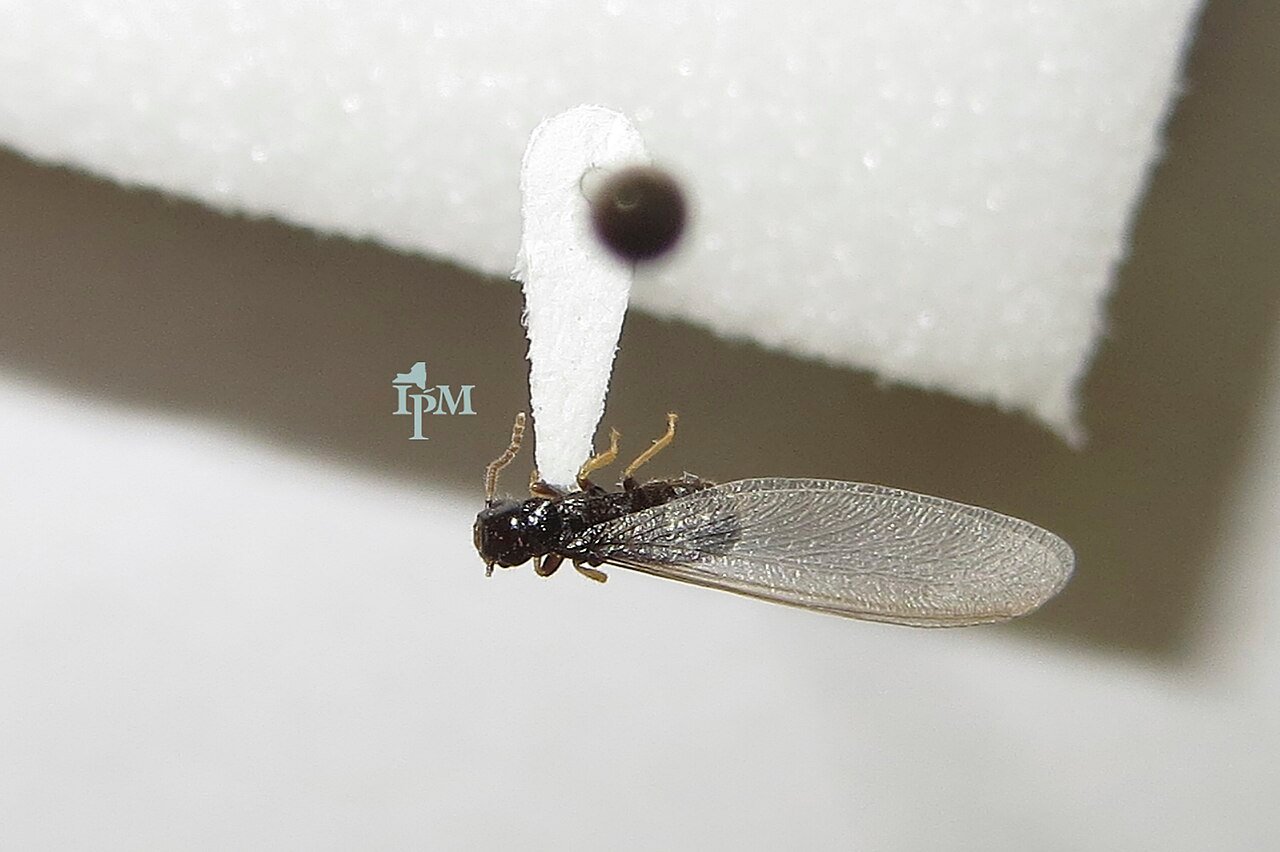
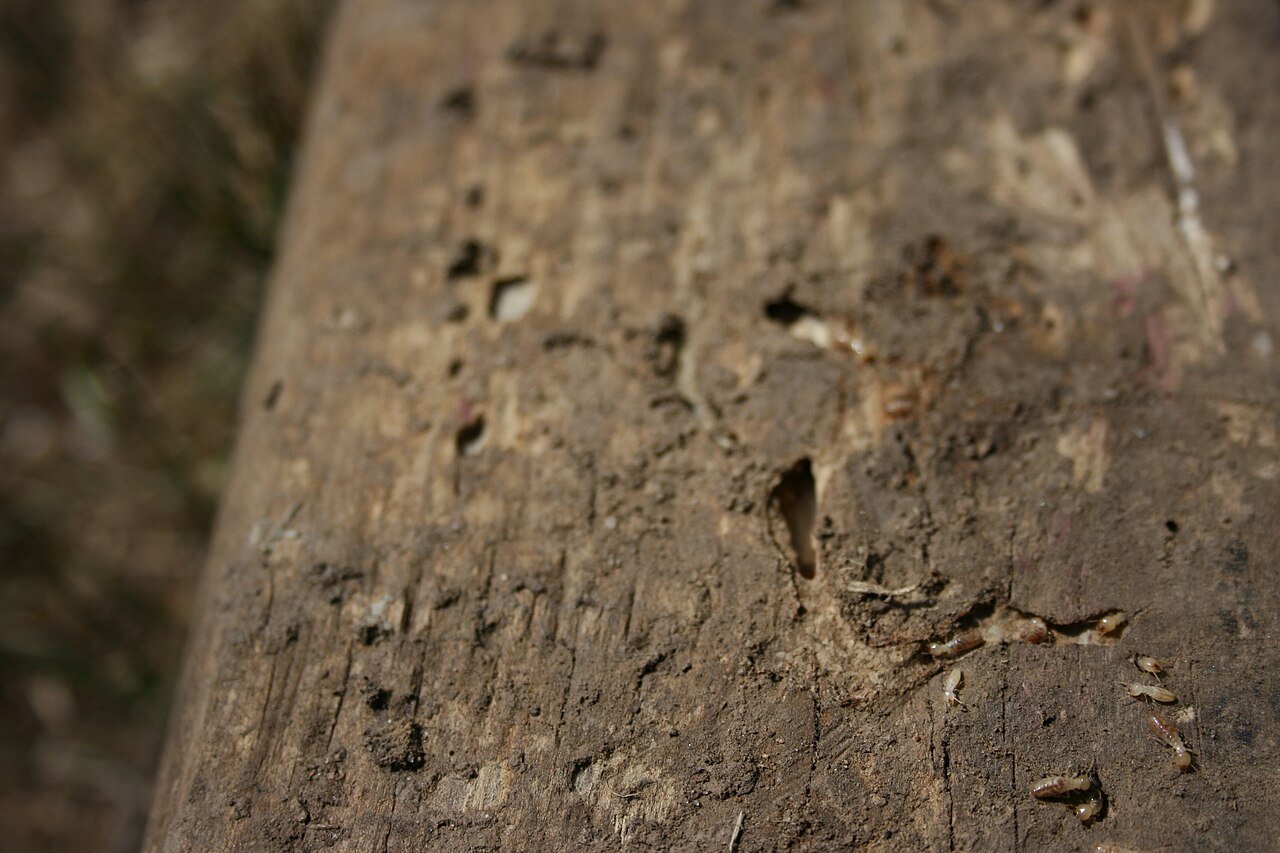
Because the veneer hides the classic exterior evidence, Huber inspections weight the indoor tells. Spring windowsills: swarmers and shed-wing piles in March through May are the headline sign — indoor emergence on a slab home almost always means a colony under or in the structure, checked against the flying-ant lookalike first. The baseboard line: bubbling paint, pinholes with soil crumbs, hollow-sounding trim, and spongy floor edges along exterior walls — the slab’s interior evidence set. The garage: the brick city’s best inspection room — exposed slab joints, grade-level sill plates, and stored cardboard concentrate first evidence where a flashlight can actually reach it. The bath trap: the soil-filled void under the tub, accessible behind its panel, is both a favorite entry and a checkable one. And the honest structural note: because the veneer cavity defeats visual inspection so thoroughly, monitoring infrastructure — the bait-station ring — carries more of the protective load in Huber Heights than almost anywhere we work; the full evidence catalog stays at signs of termites.
Protection Built for the Veneer
The program leans on the one layer termites can’t route around: the soil. Bait station rings are the Huber Heights standard — in-ground stations circling the home intercept foraging colonies before any climb, cavity or joint, collapse the colony through shared bait, and then stand permanent guard as the monitoring infrastructure the veneer makes necessary; installation runs clean through the city’s lawns with no trenching against the brick (the full case). Liquid soil treatment answers confirmed active infestations — non-repellent termiticide at the foundation line, through slab penetrations, and at the weep-hole course’s soil grade, where workers carry it home through the very routes the veneer hides. Active-damage cases get honest scoping with repair guidance and the standing reassurances: termites eat slowly, same-hour contract pressure is a sales tactic and not a biological fact, and no brick ranch in Ohio will ever need a tent. The annual inspection anchors it all, documentation transfers at sale, and pricing stays flat and published on the cost page.
The Huber Heights Calendar and Bottom Line
Swarm season, March through May, delivers the discovery calls — the week after each warm spring rain fills the schedule. Summer feeds silently behind the veneer; fall is bait-ring installation prime (pre-winter foraging finds stations fast); winter pauses nothing under a heated slab. The brick city’s bottom line: the legend protects the legend, not the house — brick homes carry ordinary Ohio termite risk through extraordinary concealment, which makes soil-level monitoring the whole game, and makes the households that install it the ones whose brick stays nothing but a weather jacket. One flat price, a licensed applicator who knows a veneer cavity from a solid wall, the method at termite control — and the city’s whole file, roaches and bed bugs included, at Huber Heights pest control.
Wings on a Brick-House Windowsill?
The veneer hid the climb — the soil ring catches the colony. Free identification, honest triage, and flat published pricing across Huber Heights.
Buying or selling in Huber Heights? What a lender, a VA file, or a listing agent asks for is not a treatment — it is a written report. That is a termite and WDI inspection in Huber Heights: $99 flat on the lender-ready NPMA-33, next business day, PDF the day we inspect. Treatment only enters the conversation if the report actually finds something.
Frequently asked questions
Can termites damage a brick house in Huber Heights?
Absolutely — brick veneer is a weather jacket over ordinary pine framing, and the designed air cavity between brick and frame gives termites a hidden climbing corridor from soil to sill. Brick changes the route, never the target.
How do termites get past brick?
Three ways: up the concealed veneer cavity, through the slab’s expansion joints and plumbing penetrations, and via the bath trap’s soil void under the tub. Weep holes at grade complete the map — and must stay open for wall drainage, which is why protection works in the soil below them.
What are the signs of termites in a brick slab home?
Indoor evidence leads: swarmers or shed-wing piles on spring windowsills, bubbling baseboard paint, pinholes with soil crumbs, hollow trim, and garage slab-joint evidence. The veneer hides the classic exterior tubes, so the interior tells carry the inspection.
Should I seal the weep holes to keep termites out?
Never — weep holes drain and ventilate the veneer by design, and sealing them traps wall moisture that causes worse problems than it prevents. Correct protection is soil-level: bait rings and, where warranted, treated soil at the foundation line.
Why do you recommend bait stations so strongly in Huber Heights?
Because the veneer cavity defeats visual inspection — monitoring infrastructure has to do the watching, and an in-ground ring intercepts foraging colonies before any hidden climb while standing permanent guard. It’s the layer termites can’t route around.
My brick house is from the 1960s — wasn’t the soil treated when it was built?
If it was, that treatment expired decades ago — builder-era termiticides degraded within 10–15 years, and the housing stock now runs two to five decades past any protection. “Treated at construction” is history, not coverage.
Are winged insects on my windowsill termites or ants?
Straight antennae, thick waist, four equal wings — termite; elbowed antennae, pinched waist — ant. Wing piles lean termite, indoor emergence on a slab means the colony is under the structure, and the photo verdict is free either way.
What does termite protection cost for a brick ranch?
Flat, published pricing — bait ring installation with annual service, or liquid treatment scoped to confirmed activity — with a free inspection first, transferable documentation, and never a tent: that’s a different termite species Ohio doesn’t have.