
The treatment quote answered one question and opened a harder one: the termites can be killed — but what about the wood they already ate? Termite damage repair is where this subject gets genuinely expensive, genuinely confusing, and genuinely under-explained — because it sits in the seam between two trades: pest control companies kill termites but mostly don’t rebuild sills, and contractors rebuild sills but can’t tell you whether the galleries they’re looking at are live, dead, or five decades old. This page is the bridge across that seam, written from the pest-control side with the honesty the topic deserves: how to read damage severity yourself (most termite damage is dramatically less structural than it looks — and some innocuous-looking damage is worse), the repair hierarchy from wood hardener to sistering to full replacement and what each costs in real numbers, the non-negotiable sequencing rule (treatment verified BEFORE repair — always, and why skipping it buries live termites behind new lumber), the insurance answer nobody likes but everyone needs stated plainly, how old damage plays in a real-estate transaction, and where our role starts and stops honestly — we’re the verify-and-map half of your repair team, licensed for exactly the questions the contractor can’t answer. Greater Dayton Pest & Rodent, free damage evaluations across eight counties: (937) 569-3330.
First: is it even termite damage? (The forensics refresher)
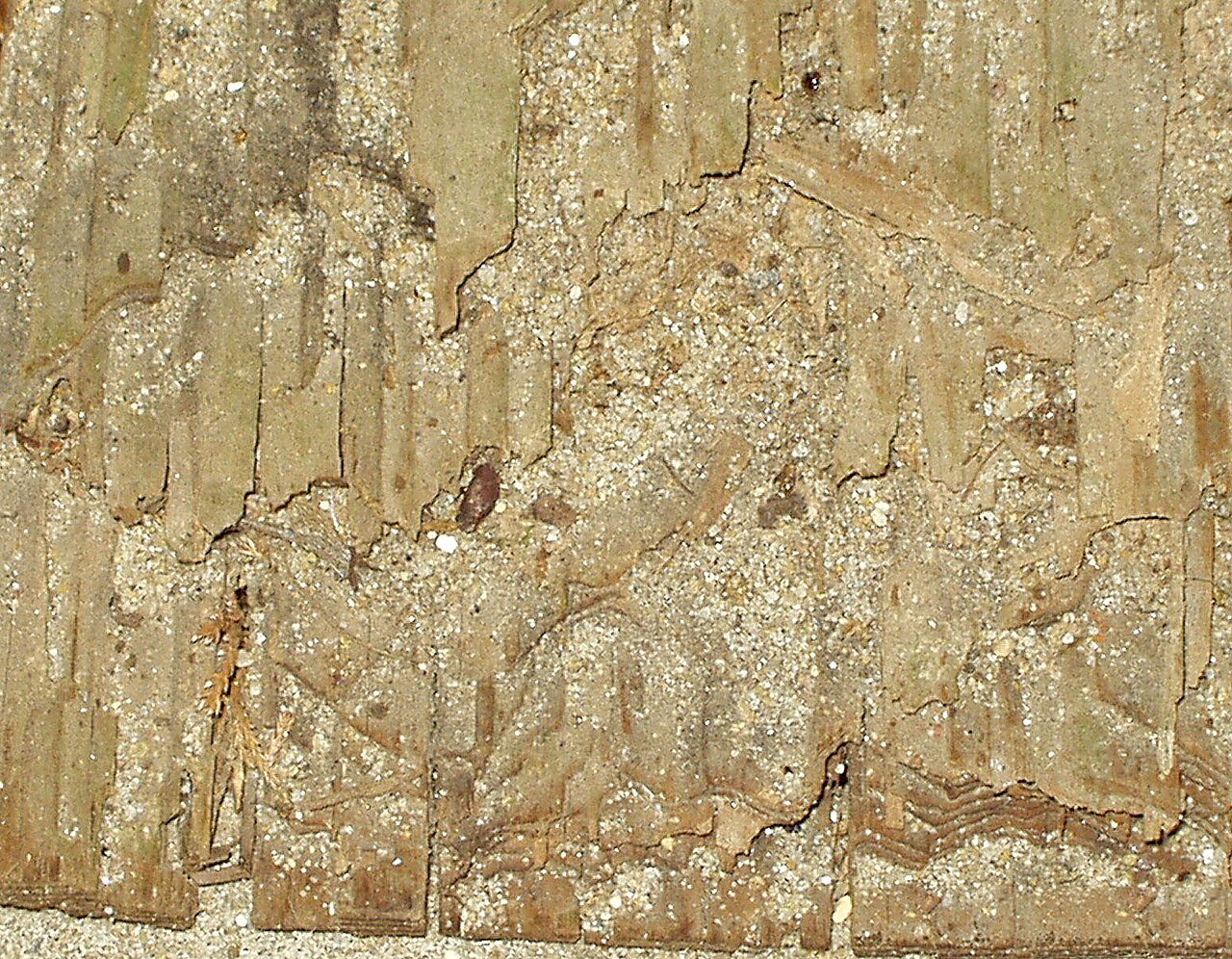
Repair planning starts with correct attribution, because three different repair bills hide behind similar-looking wood. Subterranean termite work — the Ohio case — has a signature: galleries that follow the grain, eating the soft springwood and leaving the harder growth rings as papery laminae, with the tunnels packed with dried mud and soil (termites carry their humidity infrastructure everywhere — the mud is their fingerprint). Surface wood often looks intact while a screwdriver handle’s tap finds the hollow drum note, and a probe sinks through paint into honeycomb. Carpenter ant galleries — the great impostor from our fork page — run clean and smooth, sawdust-adjacent frass piled below, no mud anywhere: a moisture-problem flag with a much smaller repair bill, since ants excavate for housing rather than eating the wood. Wood rot — the co-conspirator — softens wood spongy and dark without galleries at all, and frequently coexists with termite work since both follow the same moisture. The attribution matters doubly because it sets both the treatment (termites = the colony conversation; ants = moisture correction; rot = plumbing and grading) and the repair scope — and because “termite damage” discovered during a remodel is very often historical: galleries from a colony treated or dead decades ago, with no live activity anywhere. Old dry galleries with no mud tubes, no live insects, no fresh swarm evidence are an archaeology find, not an emergency — and distinguishing archive from active is precisely the free evaluation’s job, before a single board is bought.
The severity read: cosmetic, structural, or somewhere between
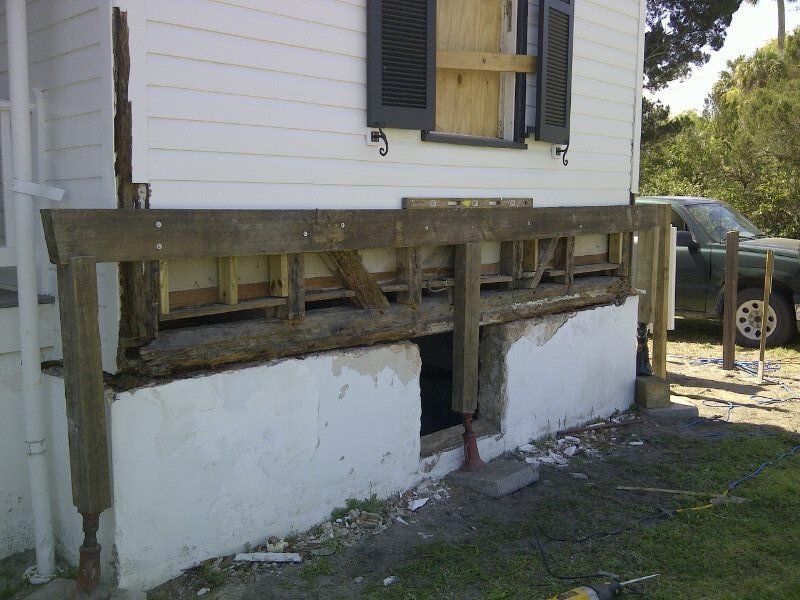
The comforting statistical truth first: most residential termite damage is caught at the cosmetic-to-moderate stage — subterranean colonies eat slowly (the “house eaten down in months” imagery is sales theater, per the swarm-chaser file), and the typical Ohio discovery is a few feet of sill plate, a rim joist section, a porch post base, or trim-and-flooring surface work — not a compromised frame. The severity ladder, in the terms a repair decision actually uses: Cosmetic — surface etching, damaged trim, hollow baseboard sections, flooring top-layers: no load-bearing role, repaired for appearance on your schedule. Localized structural — the common real case: a damaged section of sill plate, band joist, or a couple of floor joists with the damage mapped and bounded; repairable by sistering or section replacement at carpenter day-rates, not catastrophe rates. Extensive structural — long sill runs, multiple bays, posts crushed enough to measure settlement: the jack-and-rebuild tier with engineer involvement, real money, and — worth saying — rare in caught-in-time houses; we see a handful a year across eight counties, essentially always in long-vacant or long-ignored buildings. The homeowner’s triage tools: the screwdriver probe (mapping hollow extent), the flashlight-raking-light pass for buckled paint and sagging lines, the door-and-window test (sudden sticking = movement = professional look now), and the humility rule — anything load-bearing that probes soft gets professional eyes before weight-bearing conclusions, ours for the termite half, a structural pro for the load half.
The iron rule: treat first, verify second, repair third
If this page installs one sentence permanently, let it be this one: never repair termite damage before the infestation is treated and the treatment verified — because new lumber installed over a live colony is not a repair, it’s a restocked pantry with a fresh coat of paint over the evidence. The failure pattern arrives on our inspection reports with grim regularity: a sill section replaced during a remodel, the surrounding activity never treated, and three years later the NEW wood carries galleries — except now the damage hides behind finished surfaces the original repair installed, discovered only when a transaction inspection probes it. The correct sequence, each step gating the next: (1) Treatment — the active colony addressed per the treatment decision: liquid knockdown at hot zones, bait network for elimination and standing guard, frequently both. (2) Verification window — activity confirmed ended before walls close: for liquid-treated zones, re-inspection of monitoring points after the label interval; for bait, station evidence of collapse; for the impatient remodel timeline, the practical compromise is treating, opening the repair zone, and having us re-read the exposed framing the week the carpenter starts — live-versus-dead readable directly on the opened wood. (3) Repair — with the conducive conditions fixed in the same mobilization (the grade line lowered, the downspout moved, the sill gap flashed — the same moisture list that invited the colony), because repairing the wood while preserving the conditions is scheduling the sequel. Our written treatment-and-verification documentation slots into this machinery deliberately: it’s the paper your contractor works behind, your buyer’s inspector reads, and your own year-five self thanks you for.
The repair hierarchy and the real numbers
What the fix actually costs, tier by tier, in the ranges Miami Valley trades currently run — with the standing caveat that repair work is contractor scope and these are planning numbers, not our quote: Epoxy consolidation and fillers ($20–100 DIY per zone) — for cosmetic and light non-structural damage: wood hardener saturates the honeycomb, epoxy filler rebuilds the profile, paint finishes; legitimately durable on trim, sills’ non-bearing faces, porch post surfaces — and never a structural repair, whatever the label implies. Sistering ($150–500 per member, professionally) — the workhorse for localized joist and stud damage: new full-length lumber bolted alongside the damaged member, restoring capacity without demolition; a competent carpenter’s afternoon, and the answer for most “a few joists probe soft” findings. Section replacement ($500–2,500 per zone) — damaged sill-plate and band-joist runs cut out and replaced, with temporary support during the swap: the common serious-but-bounded repair; pressure-treated replacement stock is standard and sensible. Jack-and-rebuild ($3,000–10,000-plus, engineer-specified) — the extensive tier: structure lifted on screw jacks, long runs rebuilt, posts and beams replaced; rare (see above), and the tier where multiple bids and an independent structural engineer’s scope — not the contractor’s own — protect you. Cross-cutting advice from the referral seat we occupy: get the pest documentation into every bid packet (bounded scope kills padding — “replace this mapped eight feet” bids very differently than “there was termites”), prefer contractors who’ve seen termite work before (the mud-packed galleries surprise first-timers into overscoping), and treat any repair bid that includes its own termite treatment as a flag — that’s our licensed lane, and bundled pricing there hides both halves’ numbers.
The insurance answer, stated plainly
The question every damage discovery asks within the hour: homeowners insurance does not cover termite damage. Essentially every policy excludes it under the maintenance-and-gradual-damage doctrine — insurers cover sudden accidents, and a colony eating a sill over four years is, in the policy’s cold logic, a maintenance failure the owner could have prevented with inspection and treatment. The narrow exceptions worth knowing exist mostly in law-school hypotheticals: sudden collateral events traceable to hidden damage (the classic example is a covered water-pipe burst that reveals or interacts with termite work) sometimes produce partial coverage of the collateral portion — worth a conversation with your agent, never worth planning around. The practical financial protections that DO exist, ranked by realism: prevention economics (the annual inspection at free-to-cheap, the monitored bait network at ~$300/year — both rounding errors against this page’s repair table); treatment warranties with damage riders — some treatment contracts (including the national franchises’ famous million-dollar versions) attach damage-repair warranties: read the conditions ruthlessly (annual renewals unbroken, re-inspection compliance, transferability, and the exclusions that hollow some of them); and the transaction-timing protection — for buyers, the WDI inspection is the one moment someone else’s termite history can become someone else’s bill, which is why waiving it to sweeten an offer is the most expensive courtesy in real estate. The uninsurable risk with the cheap standing defense: that asymmetry is the entire termite-protection industry’s honest sales pitch, and for once the pitch is just arithmetic. If reading your own policy’s exclusions is overdue, an independent local agent is the shortcut — our neighbors at Ingram Insurance Group wrote the full termite-exclusion breakdown — including the narrow hidden-damage collapse exception.
Termite damage questions, answered
We found old galleries during a remodel — no live termites anywhere. Do we have to do anything?
Two things, neither dramatic: get the live-versus-historical read confirmed (free — and the mud-tube check plus fresh-evidence sweep takes an hour), and treat the discovery as the risk flag it is: this house’s envelope admitted a colony once, so the conducive-conditions list and a standing monitoring conversation are worth having while the walls are open. Repair the old damage per the severity ladder on your own schedule — archaeology doesn’t have a deadline.
Can I just fill the damage with epoxy and not tell anyone?
Structurally, epoxy on load-bearing damage is a false floor — and on disclosure, Ohio’s residential property disclosure form asks directly about termite damage and treatment history; concealing known damage buys litigation exposure that outprices any repair on this page. The clean play is the documented one: treatment records, bounded repair scope, receipts — a file that converts “termite house” into “termite-handled house,” which sells fine. Buyers fear mysteries, not histories.
The treatment company and the contractor are pointing at each other. Who owns what?
The seam is real, so here’s the clean division: pest control owns kill, verification, and prevention (licensed, warrantied, documented); the contractor owns lumber, load, and finish; an engineer owns any question with “structural capacity” in it. What no one should own alone is sequencing — that’s yours, and it’s the iron rule above. Our part of playing well with others: written verification timed to the contractor’s schedule, findings mapped on photos the bid can reference, and a phone call with your carpenter included in the service. The seam closes when both trades work from one map.
How do I know the damage isn’t worse inside the walls I can’t see?
Honestly: probing reaches what probing reaches, and closed walls keep secrets — which is why the inspection maps risk alongside findings: moisture patterns, tube geography, and construction type predict hidden-damage probability well enough to target exploratory openings where they pay. The moisture meter and the borescope extend the map through small holes before drywall decisions; the remodel-timing trick (read the framing while it’s open for other work) is the cheapest full answer a house ever gets. Uncertainty shrinks with method — it never quite reaches zero, and anyone promising zero is selling.
The repair, in order
Termite damage repair done right is mostly sequencing discipline: attribute the damage correctly (mud means termites; clean galleries mean ants; sponge means water), grade the severity with a screwdriver and appropriate humility, kill and verify before a single board moves, fix the moisture that issued the invitation, then repair to the tier the damage actually earned — epoxy for cosmetics, sisters for joists, sections for sills, jacks for the rare catastrophe — with documentation flowing through every step because the paper is worth real money at resale. The uninsurable-but-preventable asymmetry does the rest of the persuading. Our seat at your repair table: the free damage evaluation, the licensed treatment and written verification, the contractor-ready mapping, and the standing guard afterward — (937) 569-3330, Greater Dayton Pest & Rodent, Dayton and all eight counties. The wood is replaceable; the sequence is everything.
A century-home casebook note
Because our eight counties’ housing stock skews historic, the old-house version of this page deserves its paragraph. Century homes complicate every section above in characteristic ways: the damage attribution gets layered (a 1905 sill can carry 1950s termite galleries, 1970s carpenter ant work, and current rot in one probe-length — the archaeology needs a patient reader), the repair stakes rise (replacing a hand-hewn sill with dimensional lumber changes load paths; the heritage-grade answer is often a timber-framer rather than a general contractor, and we keep those referrals too), and the treat-first rule gains a preservation corollary — the no-drilling bait argument matters most exactly where the masonry is irreplaceable. But the old houses also carry the page’s most reassuring data: a structure that has stood since McKinley with visible historical galleries has already demonstrated its redundancy — balloon-framed and timber-framed buildings distribute load along paths modern spec framing doesn’t, which is why the scary-looking probe in the 1890s basement so often grades out as “localized, sister it, monitor” rather than catastrophe. The pattern our inspectors repeat in Oakwood basements and Troy’s historic district holds across the map: old damage is common, active damage is rare, and the houses that reach us at all are overwhelmingly the caught-in-time kind. The century home’s termite story is usually a long one precisely because it’s survivable — and the standing-guard ending is available at any chapter.
Damage read, sequence held, paper kept: the scariest line item in home ownership reduced to a checklist with prices attached. The evaluation that starts it costs nothing, the map it produces pays for itself in the first contractor bid, and the standing guard afterward closes the story the right way — treated, verified, rebuilt, and watched. That’s the whole bridge across the two-trade seam, and it’s been the missing page in this library’s termite wing until today.
One more time, because it saves more money than any other sentence here: treat first, verify second, repair third. The lumberyard will still be there next month; the colony behind the new drywall would have been too.
And for the reader holding a probe and a bad feeling right now: photograph what you found, touch nothing else, and call — the free evaluation books same-week, the verdict is usually better than the dread, and either way you’ll know by Friday what the wood knew all along.
Mud in the galleries, method in the response — page closed, house standing.
Frequently asked questions
Can termite damage be repaired?
Almost always — the overwhelming majority of Ohio finds are localized (sill plates, rim joists, trim, subfloor sections) and repair with sistering, partial replacement, or epoxy consolidation. The total-loss horror stories are decades-of-neglect cases, not typical discoveries.
Who repairs termite damage — the exterminator or a contractor?
Split roles: we kill and verify the colony and map damage boundaries; licensed contractors handle structural carpentry. The order is non-negotiable — treatment before repair, always, or the new lumber feeds the same colony.
How much does termite damage repair cost?
The honest spread: cosmetic trim and drywall runs hundreds; localized structural work (a sill section, several joists) commonly $1,500–$5,000; extensive multi-member damage climbs from there. Every figure argues the same direction — monitoring costs less than any line on this list.
How do I know how deep the damage goes?
Probing and mapping — screwdriver-soft wood, hollow soundings, and mud-lined galleries mark feeding zones; we document boundaries during treatment so the contractor bids reality instead of worst-case. Finished surfaces sometimes hide the extent until opened; budgets should breathe accordingly.
Should I repair before or after termite treatment?
After — treatment first, then verification, then carpentry. Repairing first hides evidence, wastes lumber on an active colony, and voids the logic of boundary mapping. The only pre-treatment work worth doing is emergency shoring where safety demands it.
Does homeowners insurance cover termite damage repair?
Essentially never — policies exclude it as preventable maintenance, the industry’s standing verdict on skipped inspections. The financial protection that exists is monitoring; there is no retroactive version.
Can I live in the house during termite damage repair?
Nearly always — localized structural work is a construction inconvenience, not a displacement event. Even significant sill-plate campaigns typically proceed room by room around an occupied house.
Will repaired wood get re-infested?
Not while protection holds — which is the argument for pairing every repair with active monitoring: stations standing guard over the new lumber, and conducive conditions (the moisture that invited the first colony) fixed as part of the job.
How do I know the termites are gone before repairing?
Verification evidence: station feeding ceased, no fresh mud tubes on the break-test, no live workers at mapped galleries — documented in writing before we green-light carpentry. “Probably dead” is not a repair authorization.
Who coordinates all this in the Dayton area?
We run the treatment, verification, and boundary documentation, and hand your contractor a map worth bidding from — or refer you to carpenters who work behind us regularly: (937) 569-3330. One number starts the whole sequence with the free inspection.