
Huber Heights sells itself as America’s largest community of brick homes, and every spring a new crop of buyers hears the same folk wisdom at the open house: brick means no termites. It’s a comforting legend, and it’s wrong — which is exactly why the WDI inspection matters as much here as anywhere in the metro. Ours is $99 flat, on the lender-ready NPMA-33, next business day, PDF the day we inspect, payable at booking or on the settlement statement. Agents book in one minute at the realtor link.
What Inspections Actually Find in Huber Heights
The brick is a veneer. Behind it stands an ordinary wood-framed house — studs, sill plates, subfloor, roof structure — and between brick and frame runs a hidden cavity that termites travel invisibly. No mud tubes on the foundation, no evidence on the surface, and a colony working the sill plate from inside the wall: that’s the specific failure mode of trusting the brick. Our inspections here concentrate where veneer construction actually shows its story — the sill line in the basement or crawl, garage door frames where slab meets wood, weep-hole lines, and the utility penetrations every 1960s–70s ranch shares. The findings are the metro’s usual mix, historical evidence more often than live activity, but the search pattern is different, and our Huber Heights termite work is built on it.
First-Time Buyers, FHA Files
Huber Heights runs one of the metro’s highest shares of first-time and FHA purchases, which shapes the transaction two ways: appraiser notes trigger WDI orders on short notice, and buyers who’ve never seen a termite report need the findings explained without alarm. The same-day PDF plus a plain-English verdict — active, historical, or clean, and what each means for the loan — is our answer to both.
Built for the Transaction Timeline
- $99 flat — FHA, VA, and conventional-accepted NPMA-33
- Next business day standard; rush handled when the appraiser’s note lands late
- Same-day PDF to agent, buyer, lender, and title
- Pay now or at closing on the settlement statement
- Plain-English findings call for first-time buyers who’ve never read an NPMA-33
Say It Before the Buyer Believes the Legend
For listing agents, the brick legend cuts the other way: buyers who skip the WDI because “it’s brick” sometimes discover evidence at their own resale years later, with the story attached to the address. A $99 report in the disclosure file settles the question in the transaction where it belongs. The full agent rundown — portfolio scheduling, pay-at-closing mechanics, report delivery — is on the realtor page.
From the Original Ranches to Carriage Trails
Huber Heights’ brick story has chapters. The original 1950s–70s ranches — the Huber-built blocks that earned the “largest community of brick homes” line — are where the veneer-cavity search pattern earns its keep: sixty-year-old sill plates, slab-adjacent garages, utility penetrations from an era when nobody detailed for termites. North toward Carriage Trails and the newer sections, the file flips to modern construction with its own caveat — recent builds still ride their soil pretreatment, but the 2000s streets have already outlived theirs. Same city, opposite questions: the ranches ask “what happened in sixty years,” the newer streets ask “did anyone notice the barrier expired.”
Both get the same $99 NPMA-33, and both benefit from the same discipline: the inspector who knows which question the house is asking finishes faster and writes a cleaner verdict than a checklist ever will.
What to Have Ready When You Book
The booking form takes a minute, and these five items make it thirty seconds: the property address, your real drop-dead date (closing minus buffer, not just “ASAP”), access details — lockbox code or occupant’s phone — the loan type, since VA and FHA shape the paperwork, and the payment choice, card now or settlement statement at closing. Add the title company if you choose pay-at-closing, and the notes field handles everything else: dogs in the yard, tenant hours, a garage that needs the seller’s opener.
That’s the whole apparatus. No account, no phone tree, no callback window. Book it from the driveway after the showing — most Huber Heights agents do exactly that.
Swarmers or Flying Ants? The Spring Panic, Settled
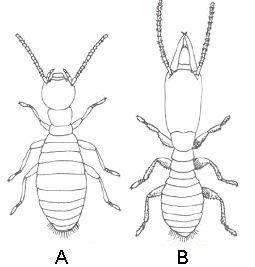
Every spring, Huber Heights buyers and new owners find winged insects on a windowsill and reach for the worst conclusion. The field identification takes ten seconds: termite swarmers have straight antennae, equal-length wings, and a thick waist; flying ants have elbowed antennae, unequal wings, and a pinched waist. The distinction matters enormously — one means a mature termite colony nearby, the other means it rained and the ants noticed. Mid-transaction, though, don’t settle it with a phone photo and a guess: the $99 inspection converts the windowsill mystery into a written verdict the lender can file.
And in brick-veneer stock specifically, swarmers emerging indoors — from a baseboard or window frame — are the one sign that skips the maybe: that colony is in the structure, and the inspection’s job becomes mapping it. Either way, the form says what the wings couldn’t.
Buying closer to the city? We also schedule termite inspections in Dayton, Ohio — same $99 NPMA-33 report, same next-business-day turnaround for realtors, from our office at 733 Salem Ave.
Frequently Asked Questions
How much is a termite inspection in Huber Heights?
$99 flat for the WDI with the lender-ready NPMA-33 — next business day, same-day PDF, pay at booking or on the settlement statement.
The house is all brick — does it still need a termite inspection?
Yes, and this is Huber Heights’ most important answer: the brick is a veneer over an ordinary wood frame, and the cavity behind it lets termites reach the sill plate with nothing visible outside. Brick homes need the inspection precisely because their evidence hides better.
Where do termites show up in brick-veneer homes?
At the sill line in the basement or crawl, at garage door frames where slab meets wood, at utility penetrations, and occasionally as tubes crossing the foundation inside the veneer cavity. Our search pattern here is built around veneer construction.
Is a WDI required for an FHA loan?
FHA orders it case-by-case — typically when the appraiser notes evidence or conducive conditions — and those notes often land mid-contingency. VA purchases in Ohio require it outright. The NPMA-33 satisfies both, and we handle short-notice orders routinely.
What do first-time buyers most misunderstand about the report?
That any finding kills the deal. Most findings are historical — evidence of long-resolved activity — and lenders treat documented history very differently from live infestation. We walk first-time buyers through the verdict in plain English.
Does the buyer need to be at the inspection?
No — lockbox access covers it, and the same-day PDF plus a findings call does the rest.
What if you find active termites?
A written verdict with location and extent, a treatment quote only when warranted, and re-inspection on the same file after the work. Booked early in the contingency, active findings usually resolve without moving the closing.
How do agents book?
greaterdaytonpest.com/realtor — one minute, bookmarkable, built for phones. Address, dates, client details, payment choice, done.