
Huber Heights calls itself America’s largest community of brick homes, and that identity — thousands of Huber-built brick ranches on slabs, raised through the 1950s, ’60s, and ’70s — shapes exactly how roach problems happen here and how they get solved. Brick veneer means weep holes and shrinking mortar joints at ground level; slab construction means floor drains, plumbing penetrations, and garage slab gaps instead of a basement moat; and sixty-year-old kitchens mean generations of cabinet retrofits with voids behind them. None of that makes Huber Heights roach-prone in the scary sense — the city’s pressure is ordinary — but it decides where the roaches enter, where they harbor, and where treatment has to go. Here’s the local playbook.
The Roaches Huber Heights Actually Sees
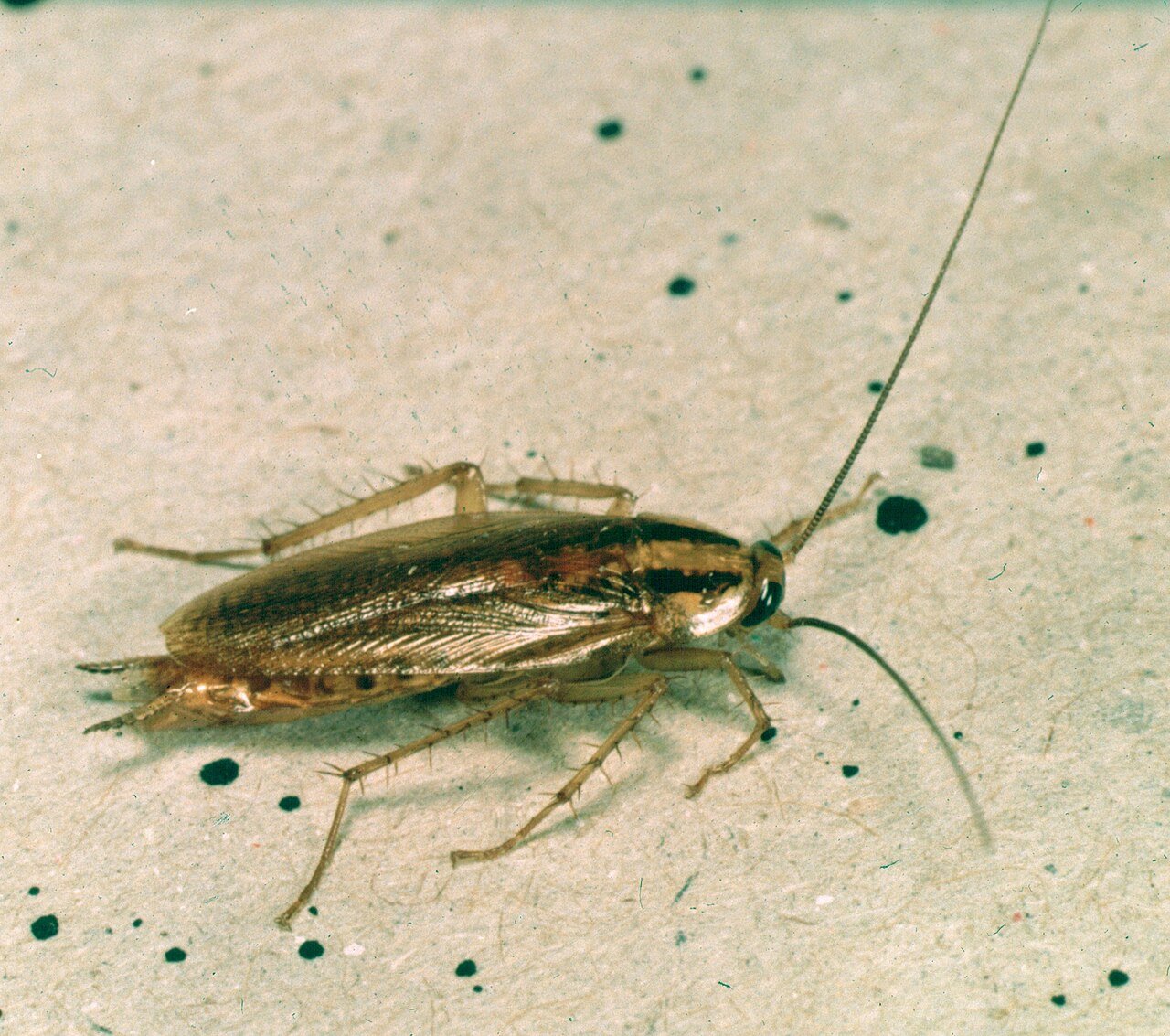
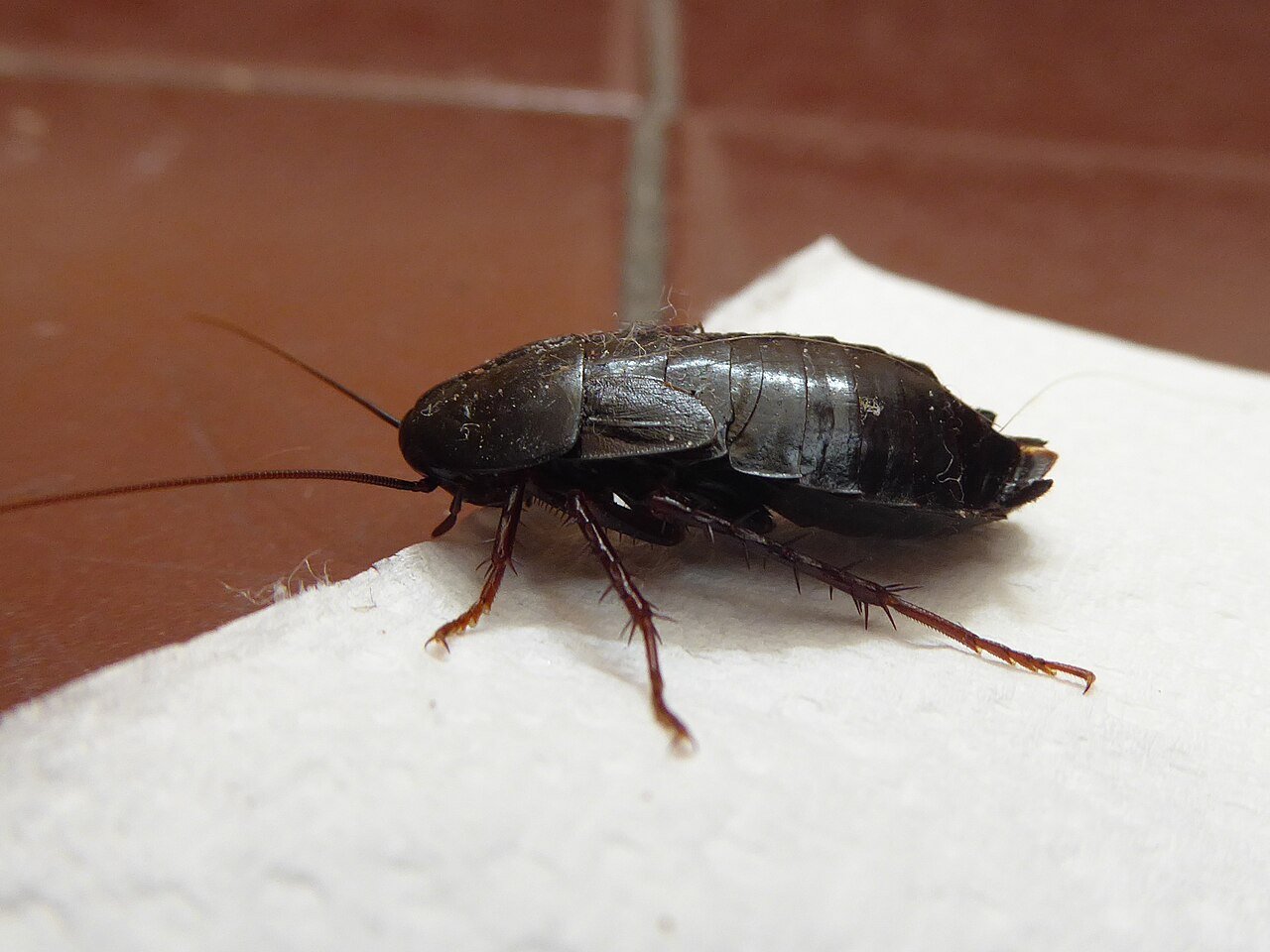
Three storylines cover nearly every call. The kitchen roach: the small tan striped species that arrives in cardboard and secondhand appliances and settles into cabinet hinges and the warm voids behind refrigerators — the one where a single sighting justifies action, because its reproduction runs on a 50-day clock and a slab ranch’s connected kitchen-utility core gives it a compact, warm kingdom. It has no outdoor population here; every case is an importation, which is why the “we keep a clean house” households get it exactly as often as anyone (the arrival routes are on our where roaches come from page). The drain roach: the glossy black inch-long “water bug” that surfaces near garage floor drains, laundry areas, and water heater closets — a slab home’s version of the basement roach, commuting up from moist infrastructure, heaviest after spring rains. The June visitor: chestnut-brown wood roaches from the wooded edges around Carriage Hill and the northern greenbelts, blundering to porch lights and dying indoors without breeding — a weather event that needs a dustpan, not a contract, and we say so.
Why Brick-on-Slab Changes the Treatment Map
- Weep holes and mortar joints: brick veneer breathes through ground-level weep holes by design — they stay open (sealing them traps wall moisture), so the treatment answer is a maintained exterior perimeter band and interior monitoring, not caulk.
- The slab’s wet points: floor drains, tub bath traps, and plumbing penetrations are the drain roach’s doors — monthly water down unused drains (a splash of mineral oil slows evaporation) closes the biggest one free.
- The garage as airlock: Huber’s attached garages collect the cardboard, pet food, and slab-gap access that feed both roach stories — garage discipline is half the battle in this housing stock.
- Vintage kitchen voids: sixty years of cabinet and counter retrofits left dead spaces where gel baits, not sprays, do the work — crevice-placed bait the colony carries home beats anything broadcast.
- The utility core: ranch plumbing concentrates kitchen, bath, and laundry against one warm wall — which concentrates the treatment too. A slab ranch clears faster than a rambling two-story once placements go where the plumbing is.
How We Clear a Huber Heights Roach Problem
The program is identification first — species decides everything — then placement-driven treatment: gel baits and insect growth regulator in the hinge lines, appliance voids, and utility-core crevices for kitchen species; drain-margin and low-zone treatment plus the water-the-traps protocol for the black drain roaches; and an exterior perimeter band at the weep-hole line where pressure is chronic. Follow-up visits land inside the reproduction window so each hatch meets a treated kitchen — the reason our jobs end and fogger weekends don’t. On that subject, the honest warnings we repeat most in this zip: foggers drive roaches deeper into slab-ranch wall voids and accomplish little; bleach-mopping erases bait placements; and mothball folklore adds fumes without subtracting roaches. Daylight sightings, egg cases in cabinet corners, and pepper-fine droppings in hinges are the escalation signs — our daylight-sighting page explains why the bold ones mean crowding, and a single nymph is the earliest cheap alarm the species offers.
The Huber Heights Calendar and the Multi-Family Note
Kitchen-species pressure is year-round — a heated slab ranch is always summer inside — with importation spikes around moving season and the holidays’ cardboard tide. Drain roach surfacing peaks after April-May rains and again in late-summer drought; June brings the porch-light wood roaches; and fall’s cooling drives the last outdoor stragglers toward warm slabs. One structural note this city needs said plainly: in the duplex and multi-family pockets, shared walls and utility chases connect kitchens — single-unit treatment in a connected building is a subscription to reinfestation, and the fix is building-level treatment, which we document and broker with landlords regularly. Everything else we do in this brick town lives on the Huber Heights pest control page, and the full roach method — with pricing — on our cockroach control service page.
Striped Roach in a Huber Heights Kitchen?
Species confirmed free from a photo, baiting placed where slab ranches actually hide them, guaranteed — one flat price, from a crew that knows brick-on-slab.
Frequently asked questions
Why does my clean Huber Heights house have roaches?
The kitchen species has no outdoor population in Ohio — every case arrives in cardboard, grocery boxes, or a used appliance’s warm motor void, into spotless and messy homes alike. Cleanliness controls how fast they compound, not whether they arrive.
What is the big black roach by my garage floor drain?
The drain-commuting “water bug” — a slab home’s version of the basement roach, surfacing from wet infrastructure, heaviest after spring rains. Monthly water (plus a splash of mineral oil) down unused drains closes its main door free.
Do the brick weep holes let roaches in — should I seal them?
They’re a route, but never seal them — weep holes drain and ventilate the brick veneer by design, and blocking them traps wall moisture. The correct answer is a maintained exterior perimeter band at the weep-hole line plus interior monitoring.
Are the roaches at my porch light in June a house problem?
Almost never — chestnut-brown wood roaches wander in from the wooded edges and greenbelts, can’t breed indoors, and dry out within days. They need a dustpan, not a treatment plan, and we’ll tell you which one you have from a photo.
Do foggers work in a slab ranch?
They backfire — driving roaches deeper into wall voids and cabinet dead spaces while missing protected egg cases entirely, and coating the kitchen in residue. Crevice-placed gel baits with growth regulator, on a follow-up schedule, actually end infestations.
How fast can you clear a roach problem in Huber Heights?
A slab ranch’s concentrated utility core works in our favor: most kitchen-species jobs collapse within three to six weeks on a placed-bait program with follow-ups timed to the hatch cycle — guaranteed under the Protection Plan.
My duplex neighbor has roaches — will treating my unit work?
Not durably — shared walls and utility chases connect kitchens, so single-unit treatment in a connected building invites reinfestation on a two-month cycle. We document the case for building-level treatment and broker that conversation with landlords regularly.
What are the black specks in my cabinet hinges?
Likely roach droppings — pepper-fine specks concentrated at hinges and drawer corners mark harborage. Photograph them for a free verdict; paired with a daylight sighting or an egg case, they justify starting the program this week.
The neighboring Huber Heights files complete the map: bed bug treatment in Huber Heights, wasp & hornet removal in Huber Heights, and ant control in Huber Heights.