
Getting rid of ants outside is a different sport from the kitchen campaign, and the first honest thing this page can tell you is that the goal has to change. Indoors, zero is the target and zero is achievable. Outdoors, your yard sits on top of a continent-spanning ant civilization — a typical suburban lawn hosts dozens of colonies and hundreds of thousands of workers as its normal, healthy baseline — and “an ant-free yard” is neither possible nor, as the beneficial-split below explains, actually desirable. What is achievable, cheaply and durably: mounds gone from the places they collide with people, patios and play areas cleared, the driveway’s pavement-ant volcanoes flattened for the season, the aphid-farming operations that supercharge colonies shut down, and — the part that pays compound interest — the foundation-line defenses that keep the outdoor civilization from ever converting into an indoor problem. This is the complete outdoor playbook: target selection, the mound-drench and bait protocols that actually kill colonies, the lawn-and-landscape adjustments that lower the carrying capacity, the remedy aisle graded one more time, and the line where the yard work becomes our work.
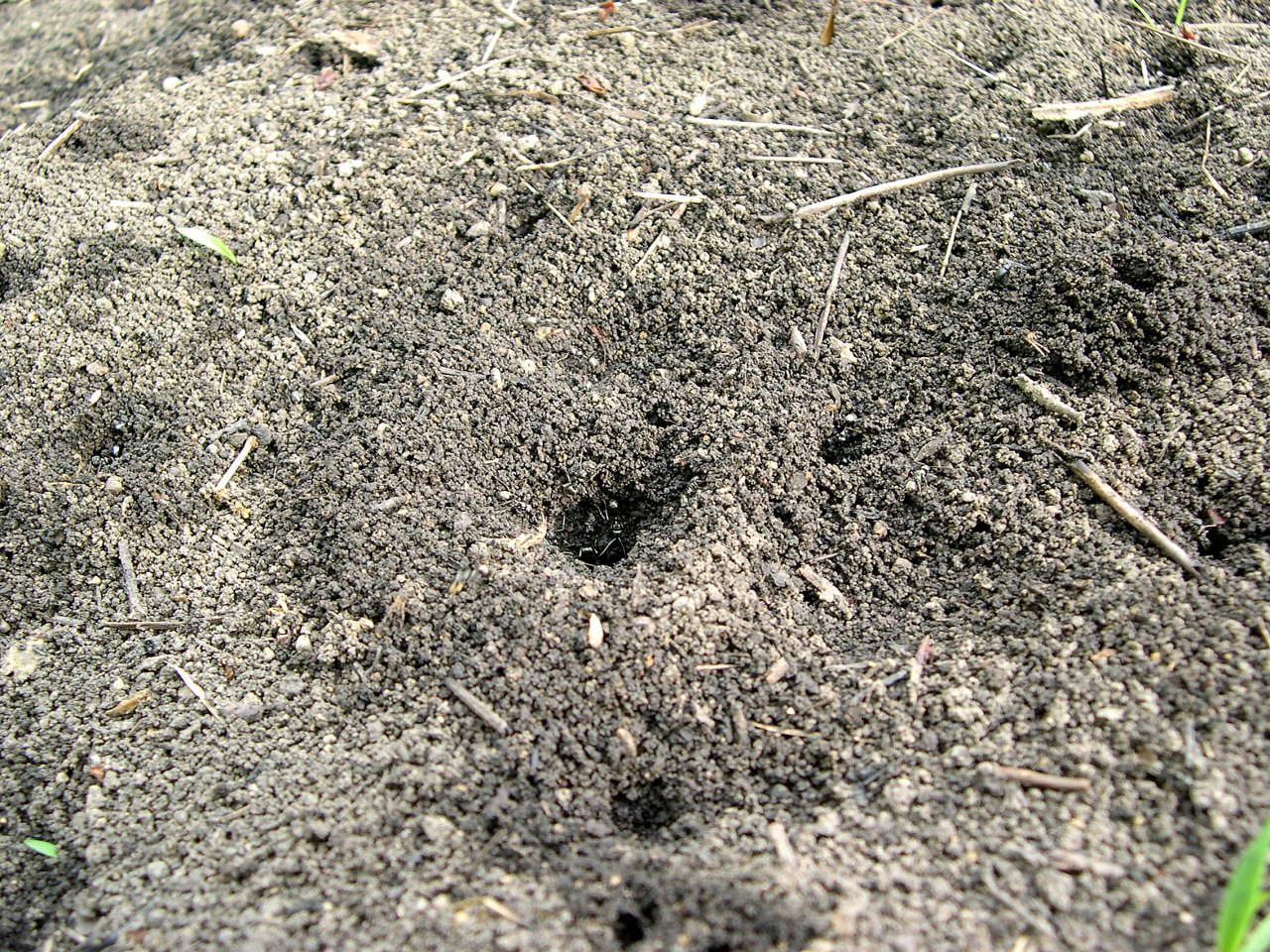
Target selection: which outdoor ants actually warrant action
Yard ants sort into four working files. File one, the collision colonies (treat): any nest whose location guarantees human contact — mounds in the play area or garden beds you work barehanded, pavement-ant cities under the patio you eat on, nests at the doorstep or against the foundation. Location, not species, drives the verdict. File two, the amplifiers (treat the operation, not just the nest): colonies running aphid farms on your shrubs and trees — ants stroking honeydew from herds they actively protect from ladybugs. A big farm can double a colony’s calorie budget, and the tell is a steady ant column running up a plant stem; the fix has to include the livestock, not just the shepherds. File three, the escalation flags (call): carpenter ants trailing from a stump, woodpile, or — worse — your own siding at dusk; their outdoor nests are staging bases for structural moves, and a “yard” carpenter problem within fifty feet of the house is a house problem on a delay. File four, the neighbors (leave): everything else — the field ant mound by the back fence, the tiny colonies under every third stepping stone. They aerate more soil than your core aerator, eat pest larvae by the pound, and occupy territory that hostile colonies would otherwise claim. Every treated yard is re-colonized from the property line within a season; the only question is by whom — and the residents you tolerate are the cheapest border patrol you’ll ever hire.
Outdoor colonies are the supply line for the ants you find indoors, and treating both ends at once is what ant control in Dayton means.
Killing a colony, not a crowd: the two protocols that work
Protocol one: the bait line (for trails, pavement ants, and any colony you can’t locate). The same trophallaxis logic as the indoor doctrine, weatherized: granular or station-protected sweet bait placed directly on active trails and beside mound entrances, refreshed after rain, given its ugly busy week to work. Outdoor colonies are bigger, so patience scales — expect two to three weeks for a mature pavement-ant city, and use stations rather than open gel so the sun doesn’t cook the bait and the rain doesn’t wash it. Protocol two: the mound drench (for located, treatable mounds). A properly done drench — several gallons of labeled insecticide solution, applied slowly into the mound at dawn or dusk when the colony’s home, after breaking the crust with a rod — reaches the queen chambers a surface spray never touches. The failure version everyone runs first: a quick spray of the mound surface, which kills the visible two percent, triggers the colony to translocate the queen deeper or laterally, and produces the “it moved three feet and came back angrier” experience. Slow, thorough, into the galleries, at the hour the workforce is home — or don’t bother. Boiling water, the folk version, works on the same logic with the same rules (multiple pours, full saturation) at the cost of a cooked circle of turf; it earns its C+ only on small, shallow, lawn-corner mounds.
The aphid-farm takedown: cutting the colony’s dairy operation
The most under-used move in outdoor ant control never touches an ant. Odorous house ants, pavement ants, and most of Ohio’s trail-runners get a huge share of their calories from honeydew — the sugar-rich excretion of aphids, scale, and mealybugs that the ants actively farm: herding the livestock to tender growth, milking them by stroking, and bodyguarding them against every ladybug and lacewing that tries to do your garden a favor. Break the farm and the colony’s budget collapses. The takedown: blast aphid herds off roses, milkweed, and shrub tips with a hard hose jet (repeat twice a week; aphids are terrible at reboarding); treat persistent infestations with insecticidal soap or horticultural oil, which kill the livestock without nuking the predators; band the trunks of farmed trees with a sticky barrier (Tanglefoot-style) so the shepherds can’t commute; and then let the ladybugs back in to run the pasture. A colony that loses its dairy pivots to scavenging — which is exactly the moment your bait line, suddenly the best sugar in the territory, does double damage. Trail up a plant stem = farm found = the cheapest colony-weakening move on this page.
Lowering the carrying capacity: the landscape audit
- The mulch line: mulch bermed against the foundation is ant housing with utilities — pull it back to bare inches, keep it under three inches deep. (The same rule three other guides on this site charge for; the seams of the pest world overlap.)
- Stone and timber inventory: every landscape stone, paver, and railroad tie is a roofed ant condo — not a reason to remove them, but a reason to know that a “sudden” patio problem lives under the third paver, and to lift-and-drench rather than surface-spray.
- The stump-and-woodpile file: rotting stumps and ground-contact firewood are carpenter ant staging bases; grind the stump, rack the wood off the soil and off the siding — the one landscape line item that’s about the house, not the lawn.
- Moisture economics: chronically wet beds, leaky spigots, and downspout swamps recruit moisture-loving species and the prey insects that feed everyone; the drainage fix is ant control, pest control, and foundation care in one invoice.
- Turf density: pavement ants and field ants colonize thin, bare, compacted turf far more readily than dense sod — overseeding and lawn care are, quietly, ant policy. The same soil logic as the cicada killer file: bare ground is an application form.
The perimeter: where outdoor ant control earns its keep
Every outdoor protocol on this page has a second job: keeping the yard’s civilization out of your kitchen. The foundation line is the border, and it gets three layers. Layer one, the physical: the caulk-and-sweep audit from the indoor guide, run from the outside — window frames, siding gaps, utility penetrations, the slab seam, all sealed while you’re already out there with the drench bucket. Layer two, the sanitary: trash cans rinsed and lidded, grills degreased, pet bowls in for the night, fallen fruit picked up — the food ads withdrawn. Layer three, the chemical: a professional-grade non-repellent perimeter treatment — the kind our ant control service applies — laid where foundation meets soil. The non-repellent detail is the whole trick: consumer repellent sprays announce themselves and teach colonies to route around (or, for odorous house ants, trigger the budding disaster the indoor guide warns about); non-repellents are undetectable, get walked through and tracked into nests, and quietly take down the colonies doing the probing. It’s the difference between a wall the ants can see and a border they never knew they crossed.
The outdoor remedy aisle, graded one last time
Granular baits (A−): the workhorse — weatherized, colony-killing, cheap per square foot; the minus is only the patience they demand. Mound drenches, done right (B+): fast and decisive on located mounds; graded down only because “done right” excludes the surface-spray version most people actually perform. Diatomaceous earth (C+): honest contact kill in dry weather on trails and mound skirts; useless after every rain, which in an Ohio summer is a demanding maintenance schedule. Boiling water (C+): see the drench rules; add the dead turf circle to the invoice. Broadcast lawn insecticides (C−): kill everything, including the predatory ants and beneficials that were suppressing your actual pests; the classic way to trade one visible problem for three invisible ones. Vinegar, cinnamon, coffee grounds, salt (D): the indoor folklore performs even worse outdoors, where rain resets everything weekly and colonies simply reroute. Gasoline down the mound (F, permanently): illegal, soil-poisoning, occasionally literally explosive — retired from the conversation. Orange oil / d-limonene drenches (C): genuine contact kill, pleasant citrus theater, no residual — fine for a small mound if you enjoy the ritual. The pattern one final time: products that reach queens (baits, true drenches) earn their grades; products that impress the person applying them (sprays, powders, pantry items) don’t.
The seasonal calendar for the outdoor campaign
- April–May: colonies small, queens shallow — drenches and baits at their season-best; the mound you kill now is the August patio war you skip.
- June: aphid farms establish — run the dairy takedown as herds appear; bait lines refreshed.
- July–August: peak traffic, peak visibility — pavement-ant sidewalk wars and patio pressure; treat collision colonies, tolerate the back-fence nations, keep bait stations wet.
- September: the pivot month — outdoor colonies probe structures as nights cool; the perimeter’s three layers matter most right now, same week as the mouse-sealing and stink-bug-caulking traffic jam on your to-do list (they’re the same seams).
- October–frost: activity fades; final mound treatments while colonies are home; mulch pulled, stones noted for spring.
- Winter: nothing to kill — colonies are deep and dormant — but the winter audit logic applies: stumps ground, wood racked, drainage fixed while the workforce sleeps.
When the yard war is our job
Call (937) 569-3330 for: carpenter ant trails touching the structure (the fifty-foot rule — outdoor nests that close are house problems on layaway); mound counts beyond DIY scale — a yard sprouting new mounds weekly has a mature multi-queen network that piecemeal drenching just redistributes; repeat indoor breakthroughs despite a run perimeter — the non-repellent professional barrier plus a trained trace of the routes is the fix; and properties backing to fields or woods, where pressure is structural and the Protection Plan’s quarterly perimeter renewal is honestly the only version of “done” that stays done. What you’re buying in each case is the same thing this page has been teaching: colony-level thinking, applied with commercial-grade tools and the patience of someone paid to come back and check.
The bottom line
Outdoor ant control is triage, not conquest: treat the collision colonies with real drenches and patient bait, dismantle the aphid dairies, lower the yard’s carrying capacity with the mulch-stone-moisture-turf audit, and spend your best effort on the September perimeter where the yard tries to become the kitchen. Tolerate the back-fence nations — they’re unpaid staff — and route the carpenter flags and the beyond-scale cases to us. The yard you actually want isn’t ant-free; it’s ant-quiet where you live and ant-busy where you don’t, and that yard is a weekend of targeted work away from this page.
Species field notes for the outdoor campaign
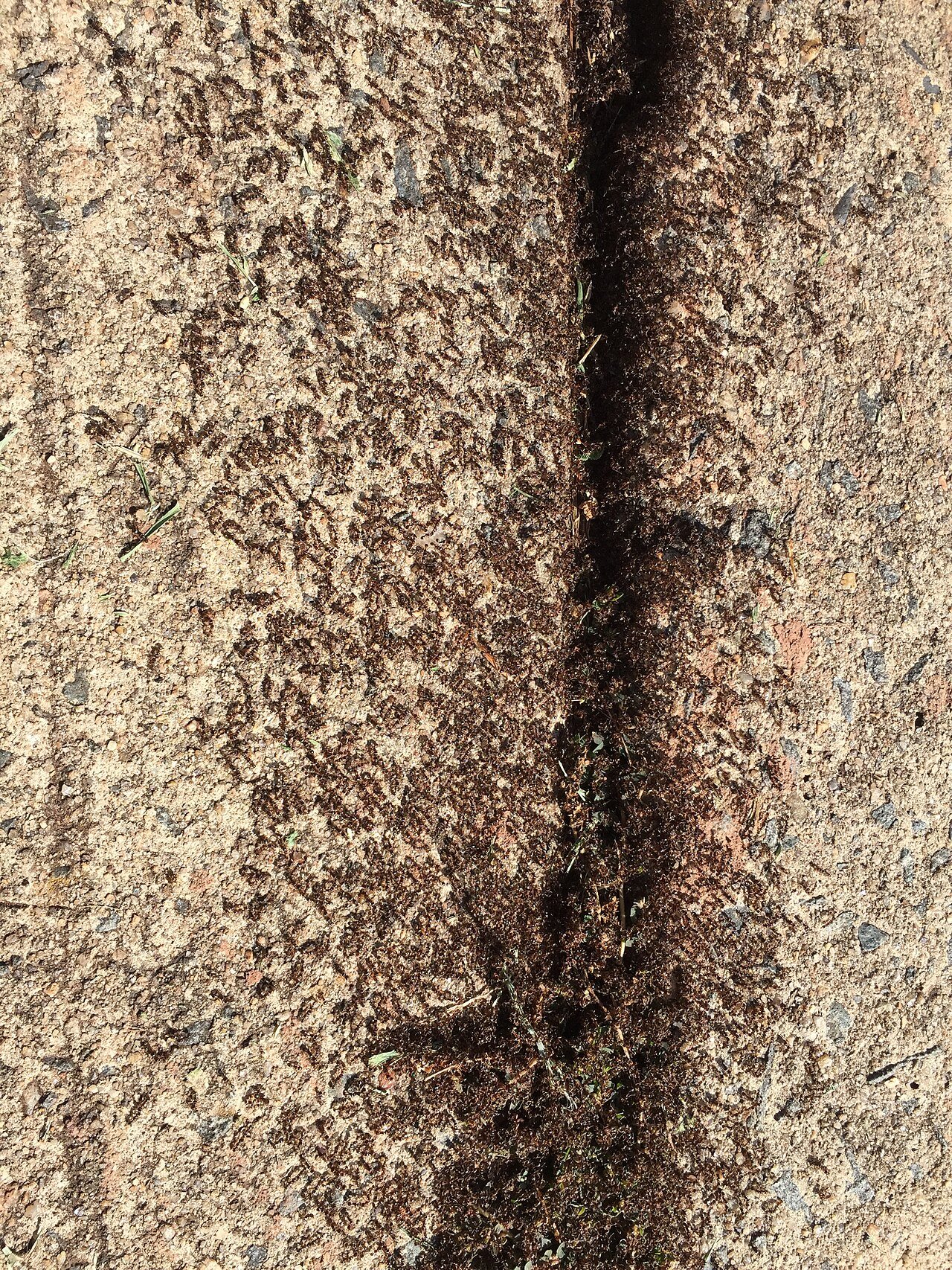
Four outdoor regulars, each with a tactical note the general protocols benefit from. Pavement ants — the driveway-volcano builders and sidewalk warriors of the header photo — nest under slabs, stones, and pavement seams where no drench reaches the full gallery; they are the bait protocol’s ideal customer, and the dedicated pavement ant guide runs their file in full. Odorous house ants outdoors run the multi-queen satellite networks that make spraying so counterproductive — their yard presence is best managed by dairy takedown plus bait, never repellents, for exactly the budding reasons the species page documents. Field ants build the big, dramatic thatch mounds that get blamed for everything — they’re file-four neighbors ninety percent of the time: they don’t invade houses, they eat pest larvae in bulk, and their mound is a problem only where it collides with the mower or the play area (drench those; salute the rest). Carpenter ants get the fifty-foot vigilance rule — and one outdoor-specific tell worth adding: a slow, steady dusk trail moving along a fence top, deck rail, or cable line is a highway between a parent nest and a satellite; follow it both directions before treating anything, because killing the visible end of a carpenter highway is how the hidden end ends up in your wall void. Four species, four files, one discipline: identify before you spend.
The beneficial ledger: what a yard’s ants are worth alive
Before the last mound gets drenched on principle, the accounting deserves one honest paragraph. A healthy lawn’s ant civilization tills more soil per acre than earthworms in many studies — their tunneling aerates compacted turf, cycles nutrients into the root zone, and improves water penetration for free, forever. They’re among the yard’s top predators of flea larvae, termite scouts, grub eggs, and caterpillar pests — a mature colony consumes thousands of insect prey items weekly, many of them species elsewhere in this library charging for removal. They disperse wildflower seeds, feed the flickers and toads you like, and — the strategic entry — their occupied territory is the single biggest barrier to invasion by worse tenants: yards nuked to zero get recolonized first and fastest by the most aggressive, human-tolerant species on the block, which is how a broadcast-spray habit produces the exact odorous-house-ant pressure it was meant to prevent. None of this argues for tolerating the mound your kids’ sprinkler runs through — collision colonies get treated, full stop. It argues for the triage this page opened with: the back-fence nations aren’t freeloaders, they’re staff — unpaid, self-managing, and quietly running soil services, pest patrol, and border security while you’re at work. The yard you actually want keeps them on payroll.
The Saturday-morning program, in order
- 8 a.m., coffee walk: map the collision colonies, flag the aphid trails running up stems, note carpenter traffic near the structure.
- 9 a.m., dairy first: hose-blast the aphid herds, band the farmed trunks — cheapest colony damage of the day.
- 10 a.m., baits down: stations on every active trail and beside every target mound; log where they went.
- 11 a.m., drench the located mounds: slow, gallons, into the galleries — the colonies flagged at 8 with everyone home from the morning shift.
- Noon, perimeter pass: mulch pulled, seams caulked, cans rinsed, spigot fixed — the September layers built in June.
- Two weeks on: re-walk the map. Quiet patios, busy back fence = exactly right. Anything still trafficking the house line: that’s the phone call.
One Saturday, run in that order, settles most Ohio yards for the season — and the parts it doesn’t settle were never Saturday-sized to begin with.
Frequently asked questions
How do I get rid of ants in my yard?
Triage first: treat the collision colonies (patio, play areas, doorsteps) with proper mound drenches and weatherized bait, dismantle the aphid farms feeding them, and leave the back-fence nations alone — they are soil aeration and pest control you are not paying for. An ant-free yard is neither possible nor desirable; an ant-quiet patio absolutely is.
What kills ant hills permanently?
A real drench: several gallons of labeled solution poured slowly INTO the broken-open mound at dawn or dusk when the colony is home — reaching the queen chambers a surface spray never touches. The quick mound-surface spray is the classic failure: it kills the visible two percent and relocates the rest.
What is the best outdoor ant killer?
Granular or station-protected baits for trails and unlocatable colonies (grade A−, colony-killing, weatherproof), true drenches for located mounds (B+), and non-repellent perimeter treatments for the house line. Everything repellent — sprays, vinegar, cinnamon — grades C or below outdoors, where rain resets it weekly.
Does boiling water kill ant hills?
Small, shallow lawn-corner mounds, with repeat pours and full saturation — at the price of a cooked circle of turf. Same rules as chemical drenches: slow, thorough, when the colony is home, or not at all.
How do I keep ants from coming inside from the yard?
Three-layer perimeter: physical (caulk the seams at slab, windows, and utility lines), sanitary (rinsed cans, degreased grill, no overnight pet bowls), and chemical (a non-repellent foundation treatment ants walk through undetected and track into nests). September is the layer-check month.
Why does my yard have so many ant hills?
Thin, compacted, or bare turf is easy colonization ground, and mulch, stones, and timbers are roofed condos — the mound count reflects habitat supply. Overseeding, watering bare patches, and keeping mulch shallow lowers the carrying capacity without a drop of product.
Are ants in the yard actually bad for the lawn?
Mostly the opposite — their tunneling out-aerates earthworms in many studies, they eat flea larvae, grubs, and termite scouts by the thousand, and their occupied territory blocks worse tenants. The mound in the wrong place is a placement problem, not an ant problem.
What are the ants farming on my plants?
Aphids — ants herd and milk them for honeydew and bodyguard them against ladybugs, and a good farm can double a colony’s calories. Hose-blast the herds, band the farmed trunks sticky, and the colony’s budget collapses while your ladybugs get their pasture back.
When should I treat ant mounds — what time of year and day?
April–May for the season (colonies small, queens shallow), dawn or dusk for the hour (everyone home). An hour of spring drenching cancels an August of patio warfare.
Do carpenter ants in the yard threaten the house?
Within fifty feet, yes — stumps, woodpiles, and fence-line nests are staging bases, and a dusk trail along a fence top or cable line is a highway worth tracing both directions before treating either end. Grind the stump, rack the wood off the soil, and call on any trail touching the structure.
Why did the ants come back after I treated the yard?
Yards recolonize from the property line within a season — always. The strategy is not permanent emptiness but managed occupancy: collision zones kept clear, house line defended, and the tolerant back-fence residents left in place as the cheapest border patrol available.
When is outdoor ant control a professional job?
Carpenter trails touching the structure, mound counts growing weekly (a multi-queen network that piecemeal drenching just redistributes), repeat indoor breakthroughs past a run perimeter, and field-adjacent properties where the pressure never sleeps — the quarterly renewal is honestly the only durable version there: (937) 569-3330.