
Garden pest identification runs on a principle the rest of this library has been teaching all along: read the damage before you hunt the culprit — because the damage is always on duty, while the pest usually works nights, hides underneath, or left last Tuesday. This page is the Miami Valley gardener’s diagnostic bench: the damage-pattern key that sorts nearly every vegetable-and-flower complaint into its author’s family (holes versus skeletonizing versus stippling versus wilt — four reads that solve most cases before the flashlight comes out), the rogues’ gallery of the region’s heavy hitters in their seasonal order, the night-shift protocol that catches the culprits daylight never shows, the innocent bystanders who take the blame (this library’s specialty — and the garden is full of them), and the response ladder that starts at a gloved hand and escalates honestly. One scope note up front: this is the garden’s page — the lawn’s grubs-and-moles file, the seedling-line isopods and the structure’s pests all have their own chapters; and the field-crop scale belongs to the extension agronomists we’re happy to point toward. For everything between the fence and the tomato cage: read on, and the photo line grades garden suspects too — (937) 569-3330, Greater Dayton Pest & Rodent.
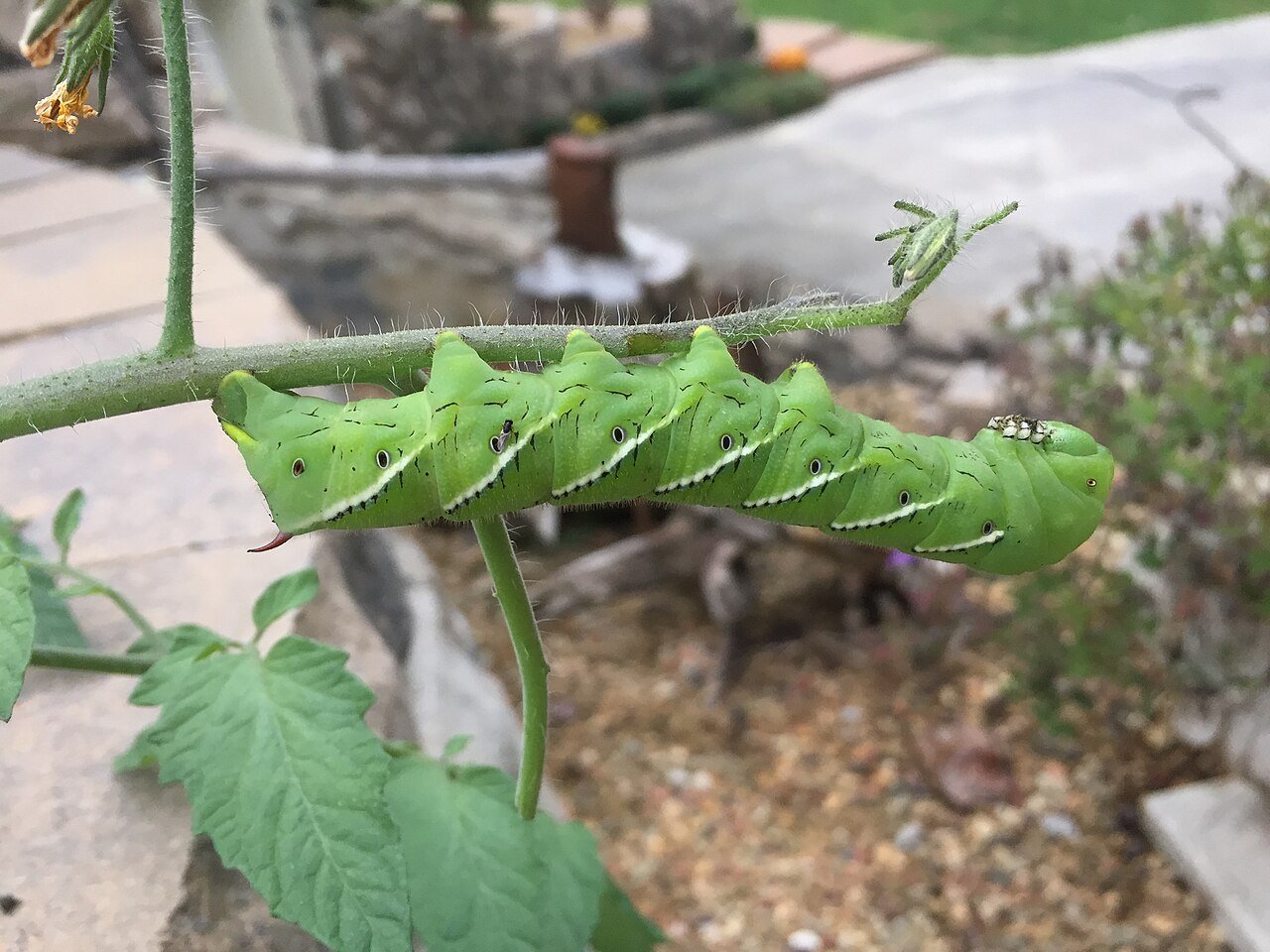
The damage key: four reads that solve most cases
Read one — holes and missing tissue: chewing insects. Large ragged holes or wholesale defoliation from the top down = the caterpillar guild (hornworms on tomatoes, cabbage loopers and imported cabbageworms on brassicas, the fall webworm’s tents); neat semicircular notches from leaf edges = the leafcutter bee’s harmless signature (no treatment, ever — the first bystander acquitted); irregular small holes with a shine of slime = slugs and snails (the night shift’s largest employer); tiny “shot-holes” peppering young leaves = flea beetles (eggplant and brassica seedlings’ spring tax). Read two — skeletonizing: leaves reduced to lace with veins standing = Japanese beetles working in daylight gangs (July’s signature, below) or the sawfly larvae “slugs” on roses and pears. Read three — stippling, curling and stickiness: the sucking guild. Yellow stipple-dots with fine webbing beneath = spider mites; curled, puckered new growth crowded with soft bodies = aphids, whose calling cards — sticky honeydew, the sooty mold that grows on it, and the ant highways farming them — often announce the colony before the insects show; whitening flecks and darting slivers = thrips; clouds of tiny white wedges on disturbance = whiteflies. Read four — wilt, tunnels and vanishing seedlings: the hidden guild. Squash vines wilting one runner at a time = the squash vine borer’s frass-plugged stem hole; winding pale trails INSIDE leaf tissue = leafminers (cosmetic, mostly); seedlings clipped clean at soil line overnight = cutworms (the collar fix); whole plants wilting with roots gnawed = the grub-and-maggot underground. Four reads, one flashlight, and the gallery below fills in the faces.
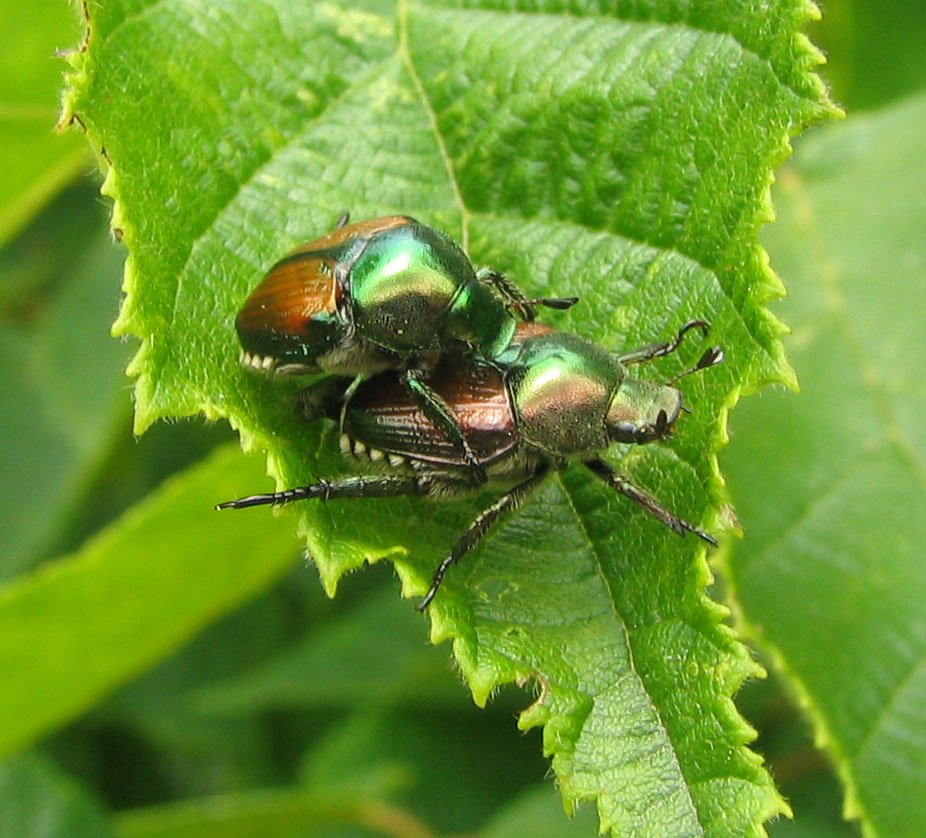
The rogues’ gallery, in seasonal order
Spring: cutworms clip the transplants (cardboard collars, pushed an inch into soil, end the file); flea beetles shot-hole the seedlings (row cover until plants outgrow the vulnerability — the single best organic tool in the shed); aphids found their colonies on the tenderest new growth, where a hard hose-blast plus the arriving lady beetle larvae usually settles the season’s first round. Early summer: the squash vine borer moth — a daytime flier doing a wasp impression — lays at squash stem bases (foil collars and injection-timing for the committed; resistant butternut-types for the pragmatic); cabbage whites flutter prettily while their loopers strip the kale (BTK spray — the caterpillar-specific biological — is the honest organic answer); slugs run the wet-June night economy (board traps from the isopod page, iron-phosphate bait where pressure demands, and the beer-trap folk classic that genuinely works and genuinely smells). July: the Japanese beetles arrive in gangs — skeletonizing roses, grapes, beans and lindens in daylight shamelessness; the honest file: hand-pick into soapy water morning-daily (they’re sluggish early and aggregation-scented — removing early arrivals slows recruitment), skip the bag traps near the garden (the fly-trap placement rule at double strength: beetle traps out-recruit their catch radius and famously worsen the yard that hangs them close — fence-line or nowhere), and note the grub connection — this year’s beetles are last year’s lawn grubs, so the lawn-and-garden files share a ledger. Late summer: hornworms defoliate tomato tops overnight (the night-shift protocol below finds them; the white-coated individuals wearing parasitoid-wasp cocoons get LEFT IN PLACE — they’re done eating and now manufacture your next generation of biological control); spider mites boom in the heat and drought (hose-blasts and humidity — miticides last); stink bugs and leaf-footed bugs dimple the ripening tomatoes (the cat-facing file); and squash bugs mass on the pumpkins (board-trap their overnight aggregations, crush the copper egg rafts under leaves). Fall: the garden’s pests retire into exactly the stem litter and mulch the predator page asked you to leave — the honest compromise: clear the vegetable beds (pest overwintering), leave the perennial margins (predator overwintering), and both ledgers balance.
The night-shift protocol and the innocent-bystander file
The protocol: half the garden’s damage is authored between dusk and dawn, so the diagnostic that outperforms every daytime search: a flashlight (or the phone’s, red-filtered if you’re stealthy) one hour after full dark, walking the damage rows. Slugs on the hosta, cutworms curled at the soil line, earwigs in the dahlia blooms, squash bugs mobilized on the vines, and the hornworm — invisible green-on-green all day — standing exposed mid-chew (bonus: hornworms fluoresce under a cheap UV flashlight, the single most satisfying trick in garden entomology). Ten minutes of night census beats a week of daylight suspicion, and the catch-and-relocate bucket rides along. The bystander file — the acquittals every garden verdict should check first: the leafcutter’s neat notches (pollinator at work); the parasitoid-wasp cocoons on hornworms (biocontrol in progress); the orb weaver and her wheel over the beans (interception, not infestation); the ground beetles sprinting from under the mulch at disturbance (night predators of slugs and cutworms — the garden’s best unpaid staff after the air wing); the syrphid “sweat bee” hover flies whose larvae eat aphids by the score; and the earthworm castings mistaken weekly for insect damage. The garden’s cast is mostly crew, partly audience, and only occasionally villain — and the damage key plus the night census tells the three apart before anything gets sprayed that shouldn’t.
The response ladder: gloved hand to honest chemistry
Garden response runs a ladder this library’s doctrine climbs reluctantly, and each rung has its honest place: Rung one — physical (the workhorse tier, and where most files end): hand-picking into soapy water (beetles, hornworms, squash bugs — the morning round takes five minutes and beats every spray on targets this size), hose-blasting (aphids and mites — dislodged colonies mostly don’t re-establish), collars and row covers (the prevention aristocracy: a $20 roll of floating row cover excludes the flea beetles, cabbage whites, vine borers and squash bugs from the crops that need it most, pulled at flowering for the pollinators), and the board-and-beer trap economy for the night shift. Rung two — biological: BTK for caterpillars (specific, organic-certified, spares everything else), BTI in the rain barrels (the gnat page’s dunk doctrine), insecticidal soap and horticultural oil for the soft-bodied guild (contact-only, pollinator-safe once dry, and honestly effective on aphids-mites-whiteflies at the cost of repetition), and the habitat recruiting the predator page mapped — the flowering margins that feed the syrphids and parasitoids are a standing spray-replacement. Rung three — targeted chemistry: the honest top rung for genuine outbreak years — spinosad for the chewing guild (organic-adjacent, effective, bee-toxic while wet: evening application, non-flowering targets), and the conventional shelf beyond it with this library’s standing rules: label-literal, never on open bloom, spot-not-broadcast, and never as rung one. What earns no rung: the “garden insect killer” broadcast habit that taxes the crew to punish the villains — the Southern fire-ant campaign’s lesson, scaled to a tomato bed: cleared territory favors whoever recolonizes fastest, and it’s never the ladybugs.
Garden pest questions, answered
Something ate every leaf overnight. What’s even capable of that?
The overnight-defoliation shortlist is short: hornworms (tomatoes/peppers — UV flashlight settles it), an armyworm or fall webworm cluster event, slugs in a wet week (check the shine), or — above rabbit height with rasped bark — the deer conversation this page’s wildlife-adjacent cousins can’t caulk away (fencing is the file; eight feet or don’t bother). The night census names the culprit by tomorrow; the damage pattern narrows it tonight.
Are marigolds/companion plants real pest control?
Graded honestly: specific effects are real but narrow — French marigold root exudates genuinely suppress certain nematodes (interplanted, a season ahead); trap-cropping (blue Hubbard squash drawing vine borers off the zucchini) tests out respectably; and the flowering-margin effect — feeding the predator-and-parasitoid staff — is the best-documented “companion” mechanism of all. The folklore tier (marigolds repel everything, mint scares ants) runs on hope. Plant the flowers for the staff they feed, not the pests they allegedly frighten.
When does a garden problem justify calling you?
Honestly: the vegetable bed itself rarely does — the ladder above is gardener’s work, and we’ll say so. The calls that pay: when the garden’s pests are the STRUCTURE’S pests staging (the ant colonies farming your aphids are the kitchen’s spring invasion in rehearsal; the mulch-line earwig and cricket populations are the fall’s indoor cohort), when the stinging files open mid-bed, and when the yard-wide programs (mosquito margins, tick moat, perimeter) want coordinating with the growing space — which our techs plan around bloom and harvest as a matter of course. The tomatoes are yours; the foundation line is ours; the fence between is a conversation.
The bench, closed
Garden pest identification, compressed to its working core: read the damage first (holes, lace, stipple, wilt), walk the night census second, check the bystander file before every verdict, and climb the ladder from the gloved hand up — never the aisle down. The Miami Valley garden’s villains are seasonal, findable and mostly hand-manageable; its crew outnumbers them wildly; and the diagnostic habits this page installs — the same identify-first doctrine running all hundred-eighty pages of this library — turn the growing season’s mysteries into a flashlight walk and a short to-do list. For the suspects that resist the key, the staging populations headed for the house, and the photo of whatever the UV light just made glow: (937) 569-3330, Greater Dayton Pest & Rodent, Dayton and all eight counties — where the garden gets diagnosed like everything else: pattern, culprit, proportion, done.
The season’s ledger: what a Miami Valley garden actually loses (and keeps)
Proportion, the library’s favorite closing ingredient, applied to the growing season: extension-service loss estimates for a managed home garden run modest — the hand-and-ladder gardener typically loses a percentage of yield to the rogues’ gallery, not the harvest — and the loss curve bends most at the cheapest interventions: the row cover’s exclusion weeks, the collar’s cardboard, the morning beetle round, the night census that catches problems at the dozen-insect stage instead of the defoliation stage. The corollary the spray aisle never mentions: a garden’s standing insect population is overwhelmingly neutral-to-crew — census studies of vegetable beds count pest species as a sliver of the arthropod roster — so broadcast response converts a sliver problem into a roster problem annually, while the ladder leaves the roster working. The Miami Valley’s particular blessings round the ledger: hard winters that reset the pressure the South carries year-round (the fire-ant page’s gratitude, extended to the whole gallery), a native predator bench the air wing and ground-beetle infantry keep staffed, and a growing season short enough that patience is usually a viable treatment — the July beetle siege ends in weeks either way; the gardener’s job is keeping the roses alive through it, not winning it. Read, census, ladder, proportion: the bench’s whole method, and the harvest’s honest insurance.
The gardener’s pocket card
- Ragged holes, top-down: caterpillars — night census, hand-pick, BTK if outnumbered. White cocoons on a hornworm = leave it; it’s making your allies.
- Leaf lace in daylight: Japanese beetles — morning soapy-water rounds; traps at the fence line or not at all.
- Curl, stickiness, ant traffic: aphids — hose-blast, soap if repeat, and read the ant highway as the kitchen’s autumn warning.
- Stipple + fine webbing: spider mites — water, humidity, patience; miticides last.
- Clipped seedlings at soil line: cutworms — collars tonight, census to confirm.
- One runner wilting on the squash: vine borer — check the stem base for frass; foil collars next spring, Hubbard trap-crop for the strategic.
- Neat edge notches: leafcutter bee — acquitted, always.
- Slime shine: slugs — boards, beer, iron phosphate; mulch pulled back from stems.
- Anything ambiguous: photo (damage AND suspect, coin for scale) to (937) 569-3330 — the garden’s verdicts are free too.
Pin the card by the trowels, run the flashlight hour when the damage starts, and let the season’s dramas stay exactly the size the ledger says they are: small, seasonal, and thoroughly outnumbered by the crew on your side of the fence.
The eight-county garden map
Local texture for the bench: the river-bottom garden soils along the Great Miami and Stillwater grow the valley’s best tomatoes and its heartiest hornworm pressure in the same alluvium (the levee-town community gardens of Troy and Miamisburg run the UV-flashlight protocol as community practice); the suburban raised-bed districts of Centerville and Beavercreek meet the gallery mostly through the nursery-stock pathway (quarantine the flats — the gnat page’s two-week rule covers garden imports too); the farm-adjacent plots of Preble and Miami counties inherit field-edge pressure waves (the soybean aphid years, the armyworm flights) that make row cover a rural garden’s best standing investment; and the historic districts’ old-rose gardens fight the sawfly-and-beetle double with the season’s most devoted hand-picking culture. Every zone shares the bench’s method and the region’s luck — four honest seasons, a staffed predator bench, and a pest gallery that winter audits annually. The garden was always the library’s friendliest venue: the villains are visible, the crew is loyal, the ladder is short, and the harvest — managed by pattern instead of panic — makes it to the table with percentage points to spare. Bench closed, card pinned, flashlight charged: grow on.
Holes, lace, stipple, wilt — four reads, one flashlight, a crew that outnumbers the culprits, and a season that ends at the table either way. The garden bench closes the way every good diagnosis does: pattern first, panic never, and the tomatoes none the wiser about how close the spray can came.
And should tonight’s census turn up something the key can’t name — glowing, notched, laced or slimed — the photo line grades garden mysteries with the same standing verdict rate as everything else: same day, no charge, and usually better news than the flashlight feared.
Frequently asked questions
How do I identify what is eating my garden?
Read the damage signature: ragged edge-in chewing = caterpillars and beetles; skeletonized leaves = Japanese beetle work; pinhole shot-gunning = flea beetles; slime-trailed irregular holes = slugs; curled sticky leaves = aphid colonies; sawdust at stem bases = borers. The damage pattern plus a dusk flashlight visit identifies ninety percent of cases.
What are the tiny green bugs all over my plants?
Aphids — sap-sucking clusters on tender growth, excreting the honeydew that ants farm (the ant column up your rose stem is the tell). The response ladder: hose-blast (repeat twice weekly), insecticidal soap for persistence, and ladybug patience — plus the ant-farm shutdown our outdoor ant page details.
What is skeletonizing my leaves down to lace?
Japanese beetles — the metallic green-and-copper invaders whose June-August feeding turns leaves to doily. Hand-picking into soapy water (morning, when sluggish) beats the pheromone bag traps, which recruit more beetles than they catch — the same trap-placement lesson as wasps and stink bugs.
What are the fat green caterpillars stripping my tomatoes?
Hornworms — camouflage artists found by damage-then-search (follow the droppings on leaves below). Hand-pick unless they wear white rice-grain cocoons: those carry parasitic wasp pupae, the garden’s own pest control — relocate them and let the wasps finish their work.
What is cutting my seedlings off at the soil line?
Cutworms — nocturnal stem-cutters that fell transplants overnight. Cardboard collars (toilet-paper tubes) around new transplants defeat them completely; the damage is heartbreaking and the prevention costs nothing.
Are the holes in my hostas slugs or something else?
Slime trails settle it: silvery dried tracks plus irregular holes between veins = slugs (evening feeders after rain). The graded controls: beer traps (B — genuinely catch), iron-phosphate baits (B+, pet-safe class), copper tape (C+), and drier mulch practice (the habitat fix).
What garden bugs should I NOT kill?
The staff roster: ladybugs and their fierce-looking larvae (aphid assassins mistaken for pests constantly), lacewings, parasitic wasps, ground beetles, hoverflies, mantises, and every spider — plus the pollinator corps. Identification before execution: half the dramatic-looking garden insects are on your payroll.
Do coffee grounds, eggshells, and marigolds protect gardens?
The folk trio graded: coffee grounds (D — mild soil amendment, no repellency), eggshells for slugs (D — myth-tested and failed), marigolds (C — real nematode suppression in soil, negligible above-ground repellency). The working organic tools remain soap, oil, Bt, iron phosphate, collars, and hands.
When is garden damage actually a house problem?
The crossover cases: aphid farms feeding the ant colonies that scout your kitchen, mulch beds hosting the earwigs and millipedes that migrate indoors, and produce left fallen recruiting everything from flies to rodents. The garden-to-foundation seam is on every inspection we run.
Does pest control treat vegetable gardens?
We keep treatment OUT of edible beds by policy (pollinator and harvest safety) — our garden role is the ID, the organic-method coaching above, and the perimeter work that keeps garden ecosystems from becoming house problems: (937) 569-3330. Photos of mystery damage welcome; garden IDs are free too.