
The fly wars run on a piece of misunderstood arithmetic: a house fly lives two to four weeks — the “24-hour lifespan” belongs to mayflies, a different insect entirely — and in that month a single female lays up to 500 eggs in batches wherever decaying organic matter offers a nursery. Egg to adult runs as little as seven days in July heat. Do the compounding and the summer’s central mystery dissolves: the house with “so many flies” isn’t under invasion from outside — somewhere within fly-commute range, a breeding site is running production, and the swatter is arguing with the delivery system instead of the factory. This page is the complete fly campaign, indoors and out: the lifespan-and-breeding math that explains everything, the source audit (the trash-can rim is the answer more often than every other candidate combined), the trap bench graded honestly (the indoor UV question settled, the outdoor bag traps’ one critical placement rule), the get-rid-of-flies-outside program for patios and barbecues, the flesh fly and blow fly forensics that occasionally point somewhere a carcass check should follow, and the cluster fly — fall’s sluggish window-buzzer — whose file is a different story with a different fix. Greater Dayton Pest & Rodent, photo IDs free: (937) 569-3330.
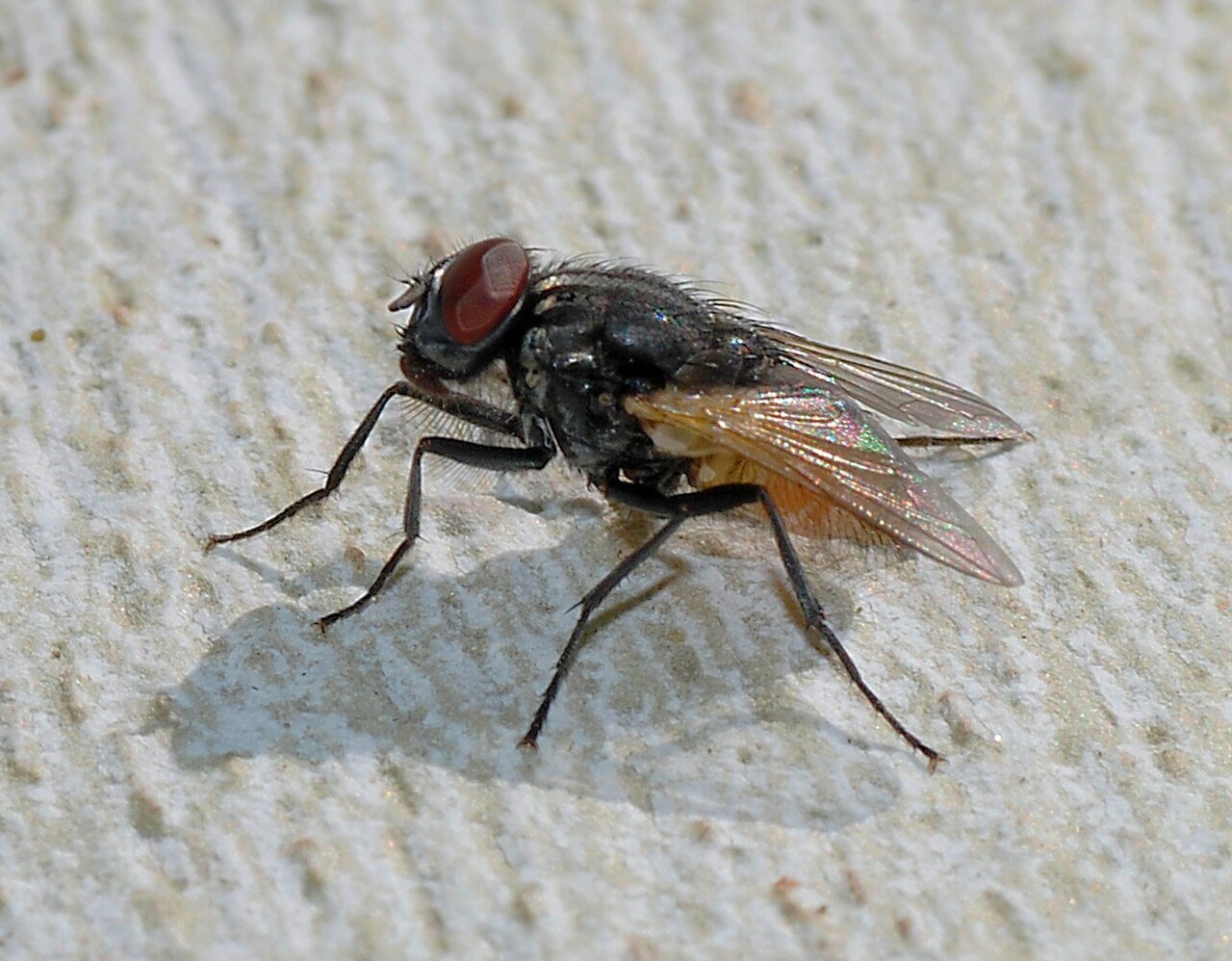
The lifespan file (and why the fly always seems to win)
The search bar asks about fly lifespans constantly, so the honest table: house fly — egg to adult in 7–14 summer days, adults living 2–4 weeks (longer in cool weather, shorter in heat); blow flies and bottle flies (the metallic green-and-blue ones) — similar spans, faster to find carrion than any other insect on earth; flesh flies (gray, checkerboard-abdomen, larger) — weeks as well, with the biological quirk that females deposit live larvae rather than eggs, skipping a development stage; fruit flies — the two-week conveyor of their own page. The strategic meaning of all these numbers: adult lifespan is irrelevant to control, because replacement rate dwarfs death rate — killing adults faster than a breeding site produces them is arithmetic almost no swatter, zapper or spray can win, while removing the site wins by default within one adult generation: two weeks to a fly-free baseline, every time, no chemistry required. It’s the fifth time this library has taught the same inversion — fleas, gnats, drain flies, roaches, now flies — and it never stops being the entire game: the visible insect is the receipt; the source is the purchase.
The source audit: where the factory actually is
House flies breed in moist decaying organic matter, and the residential audit runs a short, predictable list — in descending order of guilt from our route data: the trash can itself — not the bagged trash but the CAN: the rim channel, the lid’s underside, and the juice layer under the bag, where a film of organic sludge runs a maggot nursery that survives every bag change; the fix is the quarterly hot-soapy scrub-and-dry (and the outdoor can’s monthly version), which single-handedly ends more fly problems than any product in the aisle. Then: the outdoor cans and recycling in summer sun (lids tight, rinse the recyclables, park cans out of full sun and away from doors); pet waste in the yard on anything less than a twice-weekly pickup cadence — the suburban fly economy’s largest subsidy; the compost pile run wrong (meat, dairy or grease in an open pile is a fly invitation; a managed browns-covered pile barely registers); the forgotten organic pocket — the potato bag’s bottom (the gnat page’s repeat offender works for flies too), the disposal splash guard, the grill’s grease trap, the bird-feeder spill zone; and in the farm-adjacent zone, manure management — the professional-scale version where our rural accounts’ fly programs actually live. Sudden heavy indoor flies with no audit hit — especially the metallic blow flies — get the forensic read below before anything else: they may be answering a question you haven’t asked yet.
The blow fly forensics (when the flies are telling you something)
A specific fly scenario earns its own section because it’s diagnostic gold: a sudden indoor bloom of metallic green or blue flies — a dozen-plus appearing over a day or two, sluggish, congregating at windows, in a house whose trash audit comes up clean — is the signature of carrion inside the structure: blow flies located a dead animal (mouse in a wall void, squirrel in the chimney, bird in a vent) within hours of death, entered through gaps you’d never notice, bred in the carcass, and the window-buzzing generation is the emergence announcing the address. The response sequence: note WHERE the flies concentrate (they emerge near the source — a bedroom-window bloom points at that wall or ceiling, not the kitchen); follow the secondary evidence (odor peaks then fades as the larder beetle cleanup crew arrives — the two insects together date the death); and treat the finding as the rodent-program referral it usually is — a carcass in a void means a rodent population with access, and the exclusion audit matters more than the cleanup. The flesh flies’ gray-checkered version runs the same story. The comfort in the grim: the bloom is self-limiting (one carcass, one generation), the flies themselves are harmless if unpleasant, and the building just delivered a diagnosis that would otherwise have cost a borescope — nature’s messengers, once again, billing nothing.
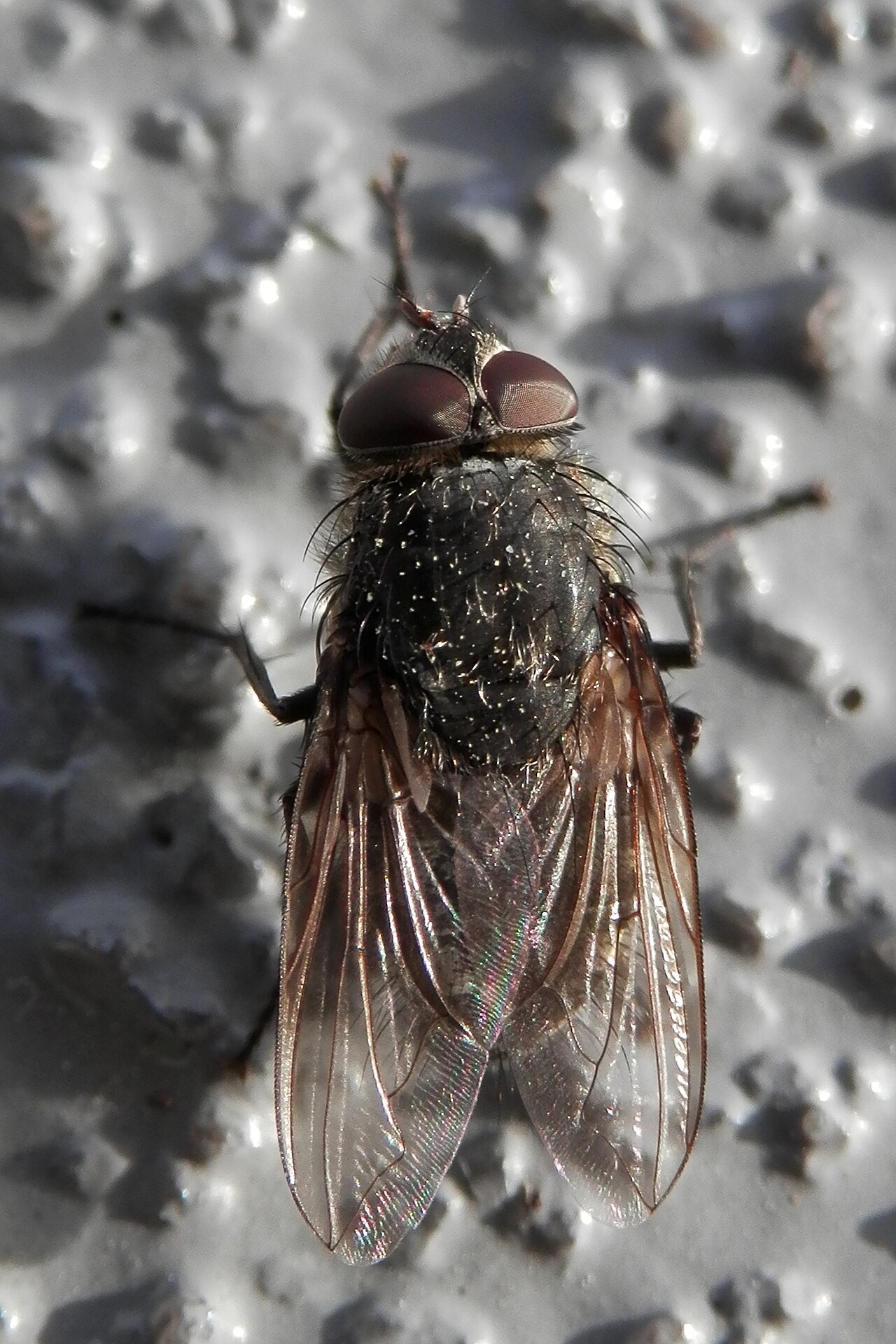
The cluster fly: fall’s different story
Every October, Miami Valley households meet the fly that breaks all the house-fly rules: cluster flies — slightly larger than house flies, darker, with golden hairs on the thorax and a distinctive sluggish, bumbling flight — appearing in numbers at sunny windows on warm fall and winter days, in rooms with no food, no trash, no source to audit. The biology explains everything: cluster flies breed nowhere near your house’s sanitation — their larvae are parasites of earthworms in the surrounding turf and pasture — and the adults seek overwintering shelter in fall exactly like the stink bugs and lady beetles of the fall invader roster: into attics, wall voids and window frames through the same sunny-wall gaps, emerging confusedly into living space on warm days all winter. Which flips the entire playbook: no source audit applies (the source is the neighborhood’s earthworms — unmanageable and unworthy of managing), sanitation is irrelevant, and the fixes are the fall-invader kit: the September seal on south and west walls (the caulk line pays quadruple — stink bugs, lady beetles, cluster flies and sprickets all use the same doors), the exterior barrier treatment on aggregation walls where pressure is heavy (the one chemical layer with honest returns, timed pre-flight in early September as part of the fall anchor visit), and indoors the vacuum-not-swat rule — crushed cluster flies stain and, in numbers, scent; the stocking-vac collects the winter’s sunny-day stragglers without either. One more identification dividend: cluster flies in February mean nothing about your housekeeping and everything about last September’s caulk budget — a distinction that has rescued the pride of many an immaculate household on our phone line.
The trap bench and the outdoor program
The honest gradings, indoors first: the flyswatter and the vacuum remain undefeated per-encounter; fly paper works modestly and hangs ugly — fine for garages and barns, grim over kitchens; indoor UV light traps — the restaurant wall units — genuinely work where placed right (intercept height, away from competing windows, not visible from outside which recruits flies IN) and are standard equipment in our commercial program with logged catch counts; the residential plug-in versions are weaker cousins worth having in fly-prone kitchens; bug zappers keep their standing indictment from the gnat page — they kill moths and beneficials by the tray while missing most flies, and indoor use adds particulate spatter nobody wants near food. Outdoors: the bag traps (the stinky attractant bags) genuinely capture flies by the thousand — with the one placement rule that decides everything: 30-plus feet from the patio, downwind, at the property edge — the attractant recruits flies from a wide radius, and a bag trap hung by the back door is a fly festival you catered; placed at the fence line it’s a diversion that measurably thins the patio. Fans remain the patio’s cheapest force field (flies are weak fliers — the box-fan doctrine covers barbecues too); the sanitation trio (cans, pet waste, grill grease) does the structural work; and the residual exterior treatments on dumpster corrals and can pads earn their place in commercial and heavy-pressure settings, where our accounts pair them with the audit that keeps them from being a subscription. Nothing on the bench replaces the source math; everything on it works better after it.
Fly questions, answered
Why are flies suddenly terrible this week when last week was fine?
A generation matured — the 7-to-14-day cycle means fly pressure arrives in cohort waves, and “suddenly terrible” usually dates the source’s founding to about ten days prior: the missed trash day, the weekend the dog’s yard went unpoliced, the barbecue’s grease spill. Date it, find it, end it — and expect the two-week decay curve as the last cohort ages out.
Are house flies actually dangerous or just gross?
Genuinely both: house flies commute between decay and food, vomiting digestive fluid onto whatever they land on and carrying documented loads of salmonella, E. coli and dozens of other pathogens on their footpads — the reason food-service tolerates zero and the reason the kitchen fly deserves the swatter’s full attention. The individual risk per landing is small; the practice of covering food and running the source math is how small stays small.
What about the “penny in a bag of water” trick over the patio table?
The folk-optics theory (refracted light scares flies) tests out at approximately nothing in controlled trials — the myth-series verdict is theatrics. The fan blowing across the table, the covered dishes, and the bag trap exiled to the fence line are the patio kit that actually measures; the penny bag is décor with a story.
When do flies justify a professional visit?
Four honest triggers: commercial and food-service settings (where monitoring, documentation and drain-line programs are compliance equipment, not luxury); the blow-fly bloom whose carcass hunt needs a borescope and experience; heavy cluster-fly pressure worth a September barrier program; and the farm-scale manure-management cases where fly control is herd economics. The ordinary summer kitchen case is a this-page case — can scrub, source audit, two weeks of patience — and we’ll say so on the phone for free.
The two-week victory
Flies are the fastest-resolving pest in this library once the arithmetic flips: find the factory (start at the trash can rim — it’s the answer half the time), close it, exile the bag trap to the fence line, run the fan, and let the two-to-four-week adult lifespan do the demolition math on the remaining population. Fall’s cluster flies get the different file — caulk in September, vacuum in January, judge nobody — and the metallic blooms get read as the forensics they are. For the commercial programs, the carcass hunts, the barrier seasons and the photo that sorts house fly from blow fly from cluster fly in one text: (937) 569-3330, Greater Dayton Pest & Rodent, Dayton and all eight counties. The swatter stays by the door for sport; the source math wins the war — two weeks, every time.
The patio-season program, assembled
For the household whose actual question was “how do I eat dinner outside in August,” the complete outdoor kit in deployment order: the week before hosting — can scrub, yard policed, grill trap emptied, bag trap hung at the fence line (it needs days to reach full recruitment); day of — fans staged crosswise over the table zone, food covered until serving (the two-minute rule: flies find uncovered protein in under 120 seconds in high season), and the drinks under mesh domes that cost five dollars and end the wasp-in-the-can genre too; during — the sacrificial station trick from catering: a small plate of the fattiest scraps stationed twenty feet downwind pulls the scout traffic that slips past everything else (flies, like yellowjackets, prefer the unguarded buffet); after — same-hour cleanup, because the post-party hour is when the egg-laying happens and next week’s cohort gets founded. Layer the seasonal structure underneath — pet-waste cadence, compost discipline, the dumpster-corral treatment for the properties that need it — and outdoor fly pressure drops to the background level no program eliminates (Ohio summers include flies the way they include humidity) but every good program makes ignorable. That’s the honest outdoor promise: not zero, but dinner in peace — which was always the actual request, and which the fence-line bag trap, the crosswind fan and the covered brisket deliver for about thirty dollars, all-in, reusable through Labor Day.
The eight-county fly calendar
Local seasonal texture to close: May–June opens with the first house-fly cohorts and the blow flies’ spring carcass season (winter’s attrition in the walls announces itself — the forensic blooms cluster in these months); July–August is peak production — every source on the audit list running at seven-day cycle speed, the patio program earning its thirty dollars, and the farm-belt fly economy at maximum (barn programs, manure cadence, the bag traps by the dozen); September pivots the file — house-fly pressure fades with the cooling cycle math while the cluster flies stage their overwintering flights, making the anchor-visit caulk line the month’s highest-leverage move for the fourth consecutive page; October–February belongs to the indoor stragglers — sunny-day cluster flies at the south windows (vacuum, judge nobody) and the occasional heated-garage house-fly lineage that a can scrub ends; March–April resets the board — the overwintered cluster flies exit, the first outdoor generations found, and the season’s single best prevention window opens: the spring can scrub and yard reset that starts summer two cohorts behind schedule. One insect, eight counties, twelve months, and the same arithmetic every week of them: the fly you see is a receipt — and the household that audits sources instead of counting receipts eats outside all summer, indoors in peace all winter, and calls us mostly to say the math worked. It does. It’s arithmetic.
Five hundred eggs against one scrubbed trash can: the most lopsided rematch in the library, and the can wins every time it’s actually fought. Two weeks to quiet, thirty dollars to a peaceful patio, one September caulk line against the winter’s window-buzzers — the fly file closes on the cheapest complete victory in pest control, and the swatter retires to ceremonial duty where it always belonged.
Receipt, factory, arithmetic — find the second one and the first stops printing. Dinner is served, outside, uncovered, at last.
And the mayfly, cleared of the lifespan slander at last, thanks you for reading the fine print.
Frequently asked questions
How do I get rid of flies in my house fast?
Find the source first — house flies breed in something specific (trash, drain film, a forgotten potato, pet waste), and every fly in the room is downstream of it. Kill the breeding site, then mop up survivors with a swatter, traps, and patience; source-blind fly control is an endless game.
Why do I suddenly have so many flies?
Something is ripening: an unnoticed garbage issue, a dead rodent in a void (a distinctive bloom of sluggish flies), drain sludge, or a diaper-pail-grade lapse. Sudden indoor fly blooms are diagnostic events — count species and rooms, then hunt the source.
What smell or plant keeps flies away?
The folklore aisle (basil, penny-in-a-bag, citronella) tests as poorly for flies as for everything else on this site. What works is subtraction — sanitation, lids, screens — plus the mechanical toolkit: fans (flies are weak flyers), traps, and the $5 swatter.
Do fly traps work indoors?
Placed right, decently — window-adjacent sticky traps catch the light-seekers, and baited jug traps belong OUTDOORS at the property line: the attractant that fills them will happily recruit through a kitchen window. UV light traps earn their keep in garages and commercial settings.
What are the little flies in my kitchen that aren’t house flies?
The small-fly trio, each with its own page: fruit flies (fermentation — produce, recycling), drain flies (fuzzy, drain-film breeders), and phorid flies (humpbacked, the plumbing-problem flag). Small-fly ID matters because each one names a different source.
Why do flies keep coming back every summer?
Exterior pressure: trash cans, pet waste, compost, and grill zones breed the population that probes your screens. Lidded-and-rinsed can discipline, weekly waste pickup, and screen repair cut the annual pressure more than any indoor product.
Do flies spread disease?
Mechanically and enthusiastically — house flies commute between waste and food, tracking bacteria on every landing. The health file justifies real diligence in kitchens: it is the entire reason commercial kitchens run fly programs under health-code force.
What kills flies besides a swatter?
Pyrethrin space sprays knock down rooms of them (short-lived, ventilate after), UV traps run continuous interception, and outdoor baited traps thin the yard population. All of it is secondary: the breeding source outproduces every kill method until found.
Why are there flies in my house in winter?
Cluster flies — a different species that overwinters in wall voids like stink bugs and wakes on warm days, bumbling at windows. They breed in earthworms outdoors, not in your house; the response is the fall-sealing program, not a sanitation hunt.
When should I call about flies?
When the source hunt fails (persistent blooms with no findable origin — we find dead-animal and structural sources weekly), when phorid flies suggest a plumbing breach, or for commercial kitchens needing program-grade control with documentation: (937) 569-3330.