
Every house with a crawl space eventually asks the vent question — usually standing in the yard, looking at the little louvered rectangles in the foundation, wondering: open or closed? Summer or winter? Block them, screen them, add more, or seal the whole thing and be done? The confusion is honest, because the official answer changed: the open-vent doctrine that built every mid-century crawl space in Ohio has been overturned by three decades of building science, and the industry now broadly agrees the old rule made summertime crawl spaces wetter, not drier — with consequences this pest control company reads under houses weekly: the termite-friendly moisture, the camel cricket and silverfish populations, the mold lines on the joists, and the mouse-and-insect highways that open vents literally are. This page is the whole question answered from the pest-and-moisture seat: why the old doctrine backfires in Ohio’s climate specifically, the honest decision tree from “screen and season” to full encapsulation with real prices, the vent-management version most budgets should actually start with, what the vents mean for pest entry regardless of the humidity debate, and the readings that tell you which tier your crawl space has earned. Greater Dayton Pest & Rodent — we’re under these houses every week, and the flashlight is free: (937) 569-3330.
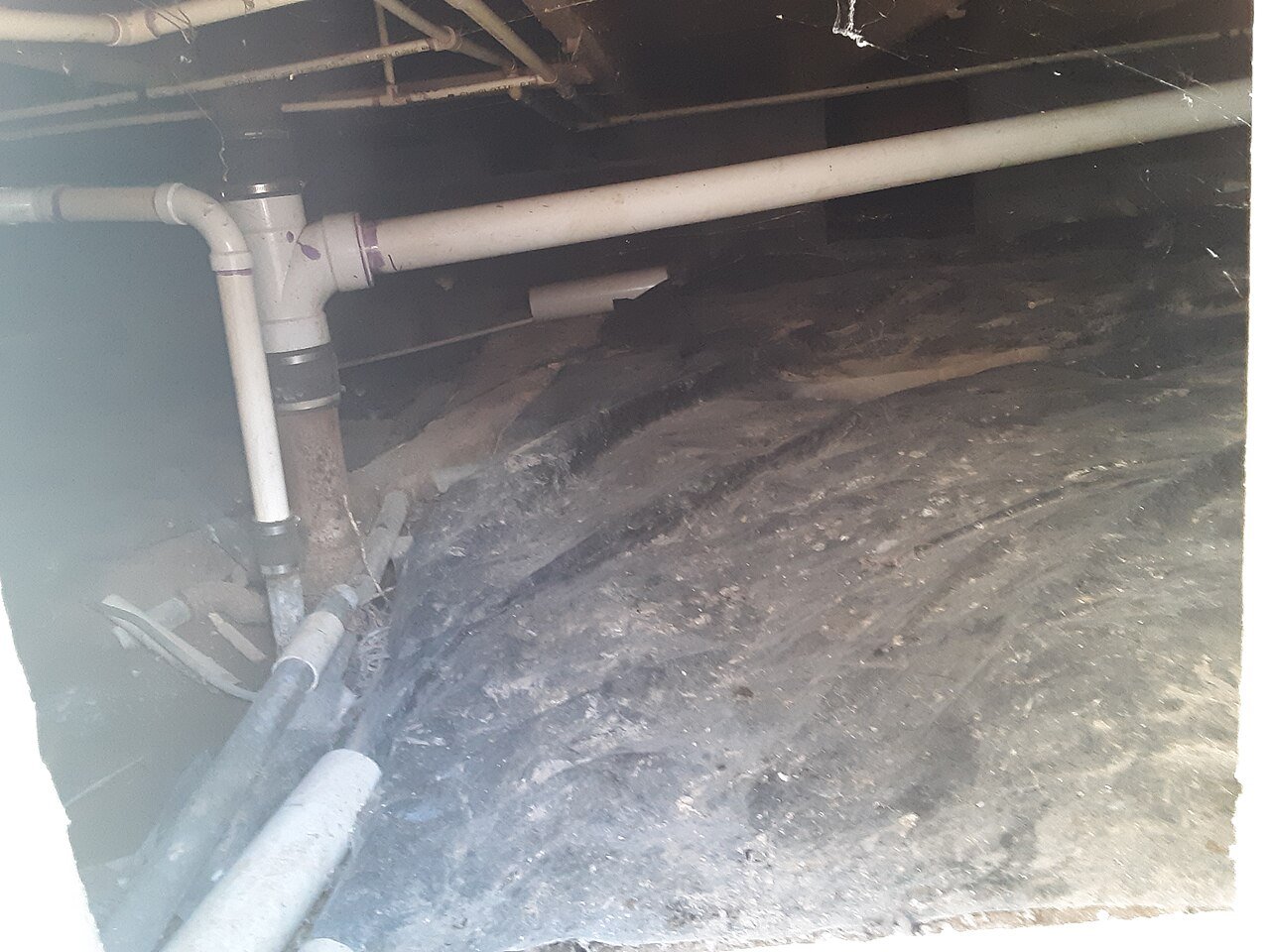
Why the open-vent doctrine backfires (the physics in one section)
The old logic sounded airtight: crawl spaces get damp, moving air dries things, therefore vents. The flaw is that the logic was written for winter air and applied year-round — and in an Ohio summer, the “drying” air is the wettest thing in the system. Run the numbers on a July afternoon: outside air at 88°F and a dew point of 70°F drifts through the vents into a crawl space whose surfaces — shaded earth, block walls, ductwork — sit at 65–70°F, at or below that dew point. The imported air doesn’t dry anything; it condenses, sweating onto the cool ducts, dampening the joist faces, and raising the space’s relative humidity into the 80s and 90s for the whole season. Meanwhile the bare earth floor exhales gallons of ground moisture daily into the same trapped air. The result is the ecosystem our inspections document under vented Ohio crawl spaces every summer: sustained wood moisture in the fungal-growth range, the musty note that reaches the living room through the floor penetrations (a third or more of a crawl space’s air ends up upstairs — the stack effect makes the house sip from the space below it), and the pest economy that wet, dark, undisturbed shelter always funds — termites scouting the damp sill line, the moisture-insect prey base, and the predators that follow it. Winter flips the logic back — cold dry air genuinely does dry the space, while also freezing pipes and chilling floors — which is why the seasonal open-summer-close-winter folk habit had it exactly backwards: if you do nothing else this page suggests, close the vents in July and open them in January, not the reverse.
The pest ledger: what vents cost regardless of the humidity debate
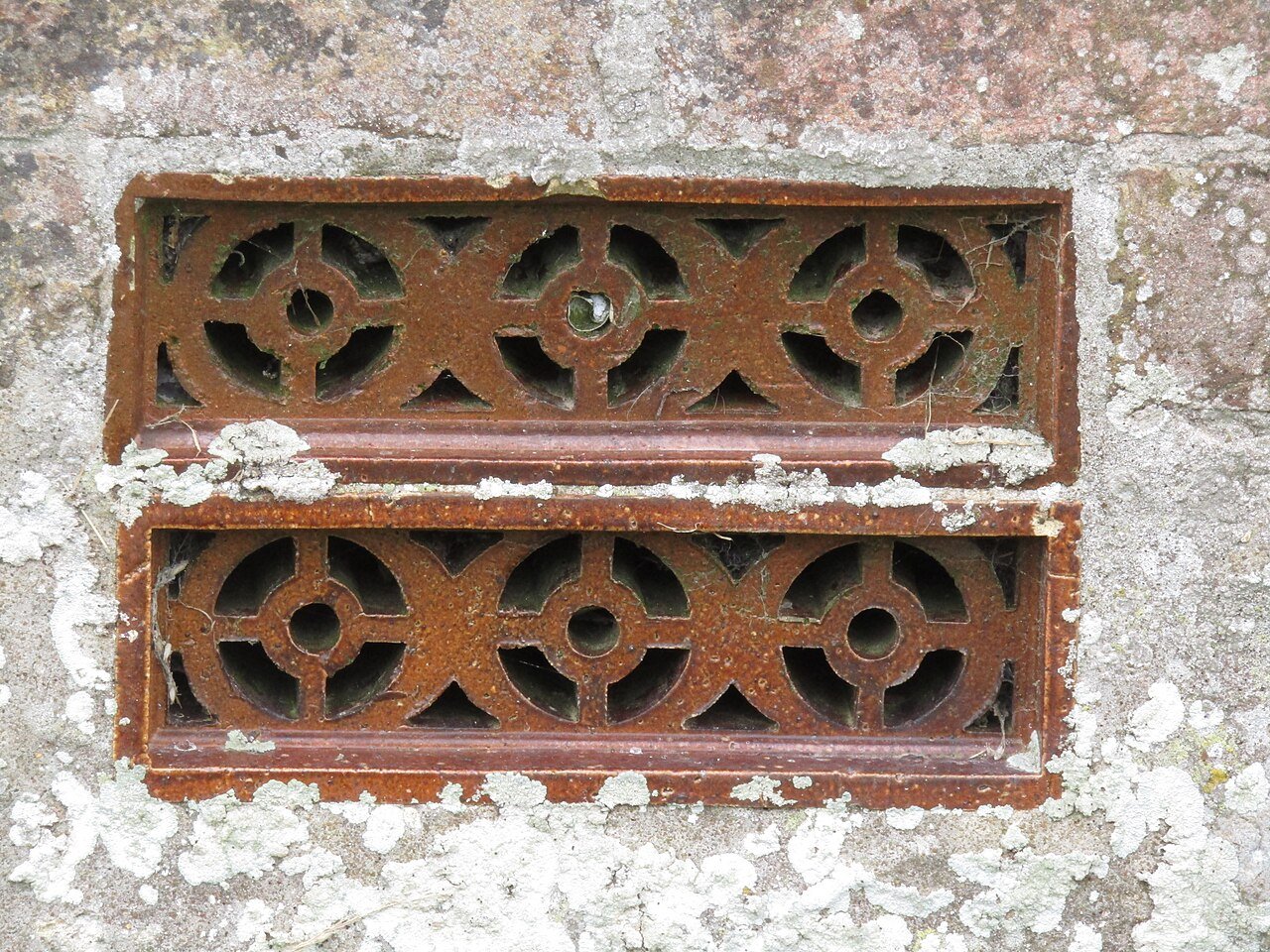
Set the building science aside for a paragraph, because the vents charge a second bill this site is uniquely positioned to itemize: every foundation vent is a doorway, and the factory louvers-and-window-screen combination guarding most of them stops precisely nothing that matters. The traffic our crawl inspections log through failed or unscreened vents: mice (a vent’s gap tolerances are generous beyond the dime-width standard, and a crawl space is the twelve-doors audit’s most-skipped chapter), wasp and European hornet colonies in the rim cavity behind broken louvers, the fall invader stream that treats south-facing vents as marked entrances, and — the expensive one — the vent wells that fill with mulch and leaf litter until the grade line buries the opening: soil-to-wood contact with a welcome mat, which is termite highway geometry whatever the humidity gauge says. The fix at this tier costs almost nothing and applies to every crawl space including the ones staying vented: quarter-inch galvanized hardware cloth over every vent opening (screwed, not stapled — raccoon-era staples are why so many are hanging loose), wells dug clear of mulch to restore the grade gap, broken louvers replaced with operable closable versions (~$20 each, and operable is the whole seasonal strategy above), and the access door gasketed and latched — the most commonly missing four square feet of exclusion in the county. Call it $100 and a Saturday morning for the average house, and it pays under every branch of the decision tree that follows.
The decision tree, tier by tier, with real numbers
Tier 1 — Screen, seal, and season (~$100–300 DIY): the hardware-cloth pass above, plus operable vents run on the counterintuitive calendar (closed in humid summer, cracked open in dry winter cold snaps short of pipe-freeze risk), plus the duct and floor penetrations above sealed so the space stops sharing its air with your living room. This is the floor every crawl space should stand on, and for the dry-lot house with no symptoms it’s often enough. Tier 2 — The vapor barrier (+$500–1,500 installed; the highest-value single move): 6-mil-minimum poly sheeting over 100% of the earth floor, seams overlapped and taped, edges run up the walls — this one layer shuts off the ground’s daily gallons at the source, and it’s the intervention our farm-route inspections recommend more than any other: the difference between a barriered and bare crawl space reads on a moisture meter within weeks and on the pest census within a season. (The fungus-gnat mystery-source and silverfish chapters of this library are, frequently, this tier in disguise.) Tier 3 — Sealed and conditioned (+$1,500–5,000): vents permanently closed, barrier upgraded, and the space given a moisture removal mechanism — a dedicated crawl-space dehumidifier on a condensate drain, or a small supply duct from the HVAC per code; this is the tier for houses with symptoms upstairs (allergies, musty rooms, cupping floors) or standing summer condensation. Tier 4 — Full encapsulation ($5,000–15,000, contractor scope): the reinforced liner sealed to walls and piers, insulation moved to the walls, drainage and sump where water table demands, dehumidification integrated — the premium finished version; genuinely worth it for chronic-water houses and high-end stock, oversold to everyone else, and the tier where the multiple-bid discipline from our repair page applies word for word. The honest sequencing for most Miami Valley homes: Tier 1 now, Tier 2 this season, and let the hygrometer — not the salesman — argue for anything higher.
One non-negotiable: the termite inspection gap
Whatever tier your crawl space lands on, one detail is licensed-professional territory and this page’s only hard warning: sealing and encapsulation must preserve termite inspectability. A liner run to the sill plate, or wall insulation covering the block from grade to wood, creates a concealed highway — termites tube up behind the liner unseen, and the beautiful white encapsulation becomes the reason nobody caught them for five years. The industry standard exists for this: a 3–4 inch inspection gap at the top of foundation walls where bare block stays visible, so the annual flashlight pass can still read mud tubes on their mandatory route. Encapsulation contractors who’ve worked with pest companies build the gap by default; some crews chasing a seamless look skip it, and that’s the single most consequential line to check in any encapsulation bid. Our part of the seam (the same two-trades bridge as the repair page): pre-encapsulation termite inspection so nothing gets sealed in, the inspection-gap conversation with your contractor, and — for the sealed space thereafter — the bait network whose exterior stations monitor the perimeter no matter what the interior finish hides. A dry crawl space that can’t be inspected traded one risk for another; the gap keeps both covered.
Crawl space vent questions, answered
Should I just buy those automatic temperature vents?
The wax-piston automatic vents open warm and close cold — the exact backwards calendar this page corrected: open all summer (importing the humid air), closed in winter (blocking the only genuinely drying season). They’re an automation of the old doctrine’s mistake. Operable manual vents on the right calendar beat them for a third the price; a Tier 2-plus space closes the question entirely.
My crawl space has standing water after storms. Which tier is that?
None of them yet — standing water is a drainage problem that precedes the humidity conversation: grading, downspout extensions, and possibly interior drain-and-sump work come first, because vapor barriers over ponds are boat covers. Fix the bulk water (often the cheap exterior stuff — our inspections flag the guilty downspout weekly), then re-enter the tree at Tier 2. Encapsulation salesmen who quote liners over standing water are the industry’s clearest self-identification.
Can I close vents on a crawl space with a gas furnace or water heater down there?
This is the code question, and it’s real: combustion appliances need combustion air, and a sealed space with atmospheric-draft gas equipment needs engineered makeup air — not guesswork. Tier 3-plus with gas equipment below means an HVAC contractor’s calculation joins the project. (Sealed-combustion and electric equipment sidestep the issue.) The seasonal Tier 1 calendar stays safe in all cases — “closed” summer vents still leak generously by combustion-air standards.
Does any of this actually reduce pest treatments, or is it just comfort?
It’s the most treatment-reducing money in this library: the vented-and-bare crawl space is upstream of half the recurring problems this site documents — the moisture insects and their predators, the fall mouse route, the termite-conducive sill line, the mystery gnats, the musty-room calls. Our own service history shows it plainly: Tier 2-plus crawl space customers simply call less, which we’re structurally fine with — the Protection Plan covers what remains, and the dry-building doctrine has been this library’s spine since the first silverfish page.
The verdict under the house
The little louvered rectangles were 1950’s best guess, and building science has since voted: moisture control beats air exchange, the ground needs a lid more than the walls need windows, and Ohio’s summer air is a wetting agent wearing a drying costume. Run the tree honestly — screen and season for free, barrier the earth this year, condition or encapsulate only when the hygrometer testifies, and guard the inspection gap like the termite evidence depends on it, because it does. The crawl-space assessment rides along free with any inspection we’re already doing — moisture readings, pest census, tube check, and a tier recommendation with no encapsulation franchise quota behind it: (937) 569-3330, Greater Dayton Pest & Rodent, Dayton and all eight counties. The house has been breathing through that space all along; this page just taught it to breathe dry.
The one-hour crawl space audit (bring a flashlight and low expectations)
For the homeowner ready to see for themselves, the inspection loop our technicians run, translated to civilian: gear — headlamp, gloves, coveralls or clothes you’ll sacrifice, an N95 (the droppings protocol’s rule applies underground doubly), and a cheap moisture meter if you own one. The entry read: before crawling anywhere, kneel at the access door and smell — musty means active moisture; sharp ammonia means rodents; neither is refusal-grade, both are data. The floor: bare earth or barrier? If barrier, what percentage of coverage and are the seams taped — a 70% barrier is a 30% problem. The wood: press a screwdriver flat against several joist faces and the sill line — frank softness routes to the damage page’s protocol; surface fuzz or white bloom means the humidity has been winning; a moisture meter reading above ~16–18% on framing in August is the Tier 2-plus argument in numeric form. The walls: mud tubes on block — the pencil-wide climbers from the swarm page — end the audit and start a phone call. The vents: screen condition, louver function, well depth, daylight visible where it shouldn’t be. The ceiling: duct sweat, sagging insulation (wet fiberglass hangs like laundry — and often hides the wet story above it), wiring chewed bright. Photograph everything odd; the pictures beat your memory and feed the free photo line. Most audits end boring — which is the good ending — and the ones that don’t end cheap compared to the same discovery five years later. Either way, you’ll know what the house has been standing on, which is more than the vents ever told anyone.
The eight-county crawl space census
Local texture, because the housing stock writes the odds: the farmhouse belt of Preble and western Miami County runs the classic case — century farmhouses whose additions ride shallow crawl spaces over bare earth, vented by tradition, and the vapor-barrier recommendation is practically a form letter on those routes (it’s also where the barrier delivers its most dramatic before-and-after readings). The mid-century suburbs — the ranches of Kettering, Fairborn and Huber Heights — are the open-vent doctrine’s home turf, built in exactly the decades the rule reigned, and their part-basement-part-crawl hybrids concentrate the condensation where the two foundations meet. The river towns’ water tables argue for the drainage-first answer more often than elsewhere — a levee-district crawl space skips no steps in the standing-water question. And the historic cores mostly opted out — full basements rule the pre-war stock — but their porch and addition crawls are the termite findings’ favorite blind spot: small, forgotten, vented into mulch beds, and worth the audit’s ugliest ten minutes. Wherever your rectangle of louvers sits on that map, the physics is the same, the tree is the same, and the flashlight is still free — the space under the house has been keeping score all along; the only question is who reads it first, you or the moisture.
Screen it, season it backwards from what grandpa said, lid the earth, guard the gap — and the most ignored square footage in the house quietly stops funding half the problems in this library. The louvers meant well; the physics just had other plans, and now, at last, so do you.
One closing calibration for the skeptical reader: none of this page’s doctrine requires the premium ending. The $15,000 encapsulation is real and sometimes right; it is also the industry’s favorite place to park a scare, and the honest sequence — hundred-dollar screens, five-hundred-dollar barrier, hygrometer verdicts before every further dollar — gets the median Miami Valley crawl space ninety percent of the benefit for a tenth of the spend. That ratio, not the liner brochure, is the number to carry out of here. And when a second opinion would help the decision — on the readings, the tier, the bid, or the tube-shaped shadow the flashlight found in the far corner — the crawl-under is part of every inspection we already run, and the verdict comes with prices published and no franchise quota attached.
Frequently asked questions
Should crawl space vents be open or closed?
The season-flip answer is outdated — modern building science mostly indicts open vents in Ohio’s humid summers: they IMPORT moisture (humid air condensing on cool surfaces), feeding the mold, pest, and rot cycle they were meant to prevent. The current best practice conversation is sealed-and-conditioned versus well-screened-and-managed, decided by your crawl space’s specifics.
What pests come through crawl space vents?
The full parade: mice (torn screens are a top-five entry), camel crickets, spiders, millipedes, ants, wasps prospecting cavities, and — via the moisture they admit — the entire damp-guild economy (springtails, centipedes, fungus feeders) plus termite-conducive conditions. The vent is a door and a humidifier at once.
How do I pest-proof crawl space vents?
Quarter-inch galvanized hardware cloth over every vent (screen mesh alone stops insects, not rodents), fitted and fastened at the edges rodents test, plus an annual walk to catch tears and rust-outs. The access door gets the same standard plus a real latch and sweep.
Is crawl space moisture really a pest issue?
It is THE pest issue down there: damp earth and joists feed termites, carpenter ants, camel crickets, and the prey base for everything else, while humid air wicks upward into the living space. Half the persistent-pest houses we work have a wet crawl space underneath the story.
What is crawl space encapsulation and does it help with pests?
Sealed vapor barrier across the floor and walls, closed vents, and conditioned or dehumidified air — converting the crawl space from outdoor-adjacent cave to indoor-adjacent utility space. Pest impact is dramatic: the moisture guild starves, entries seal as part of the work, and inspections become clean and easy. It is the premium fix; managed venting plus vapor barrier is the budget one.
What are the signs of pests in a crawl space?
The flashlight inventory: droppings on the vapor barrier, camel crickets on block walls, termite mud tubes on piers (the critical find), shredded insulation (rodent nesting), sagging ducts with gnaw marks, and the smell — musty means moisture, ammonia means active rodents.
How often should a crawl space be inspected?
Annually minimum — ours rides along with termite inspections and quarterly plans — plus after any flood event or plumbing leak. Crawl spaces hide problems precisely because nobody looks; the yearly flashlight hour is the cheapest structural insurance in the house.
Do crawl space vents cause winter pipe freezes too?
The other seasonal cost: open winter vents chill plumbing runs and floors above — the freeze-burst risk that spawned the old close-them-in-winter ritual. Sealed-and-managed spaces solve both seasons at once, which is half the encapsulation argument.
Can mice really get in through crawl space vents?
Routinely — aged screens tear, rust, and pop fasteners, and a dime-width gap at a vent frame is a mouse door with a welcome mat. Vent condition is a standing line on our exclusion audits; hardware-cloth retrofits close more rodent cases than homeowners would believe.
Who handles crawl space pest problems near Dayton?
We do — the inspection, the exclusion retrofit (vents, door, penetrations), the moisture consult, and the treatment of whatever the flashlight finds: (937) 569-3330. Crawl spaces are where our eight-county housing stock hides its secrets; we own coveralls for a reason.