
You’ve got welts on your ankles, a cloud of tiny flies somewhere in your day, and a search bar asking whether the two are connected. Here is the answer with the precision the itching deserves: “gnat” is not a species — it’s a bucket, an everyday word covering at least half a dozen unrelated tiny flies, and the bucket splits cleanly in two. The gnats most people actually have — fungus gnats around the houseplants, fruit flies at the bananas, drain flies on the bathroom wall — cannot bite you: their mouthparts physically cannot break skin, full stop, no exceptions for hungry ones. The gnats that CAN bite — biting midges (“no-see-ums”), black flies (“buffalo gnats”), and the occasional stable fly getting misfiled — are outdoor stream-and-marsh insects that come to you; they don’t hover over your fruit bowl, and their bites have signatures you can read. So this page does what the bucket word can’t: sorts your gnats, matches your bites, treats what’s treatable and reassures where reassurance is the honest product. With the usual free adjudication service attached: photo of fly and/or welts to (937) 569-3330, Greater Dayton Pest & Rodent.
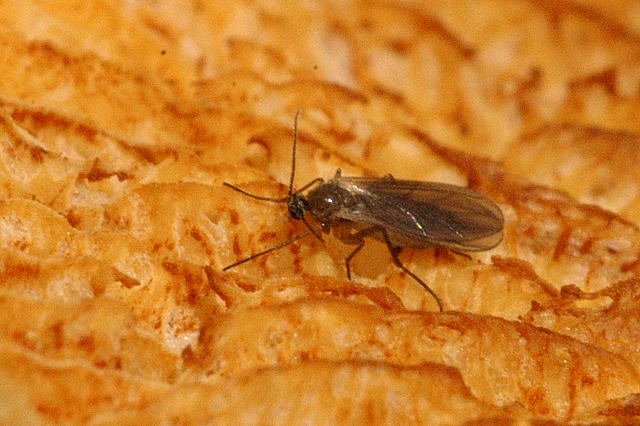
The indoor gnats: guilty of loitering, incapable of assault
Line up the household trio and their mouthparts settle the bite question by anatomy alone. Fungus gnats (the usual indoor suspect): delicate, dark, mosquito-silhouetted flies a sixteenth of an inch long, weak fliers that drift around potted plants and windows; their larvae live in damp potting soil eating fungus and root hairs; adult mouthparts are vestigial sponging structures — no blades, no piercing stylets, no bite, not once, not ever. Fruit flies: sponging mouthparts built for fermenting liquid films; incapable of piercing anything, per the full profile in our fruit fly guide. Drain flies: barely functional mouthparts at all — many don’t feed as adults; the biofilm story covers their whole racket. This anatomical fact carries a practical corollary that saves people real anguish: if your bites are appearing indoors, at night, in bed — the houseplant gnats are innocent, and the investigation should go straight to the sleep-window suspects (bed bugs first — the ten-minute mattress inspection from our bed bug guide — then fleas if there are pets). Every year we take calls from households spraying plants for weeks while a bed bug problem compounds; the gnat cloud and the bites were two unrelated stories that happened to share a house. Sort the flies AND the bites separately, and let each investigation follow its own evidence.
The outdoor gnats: the ones with knives
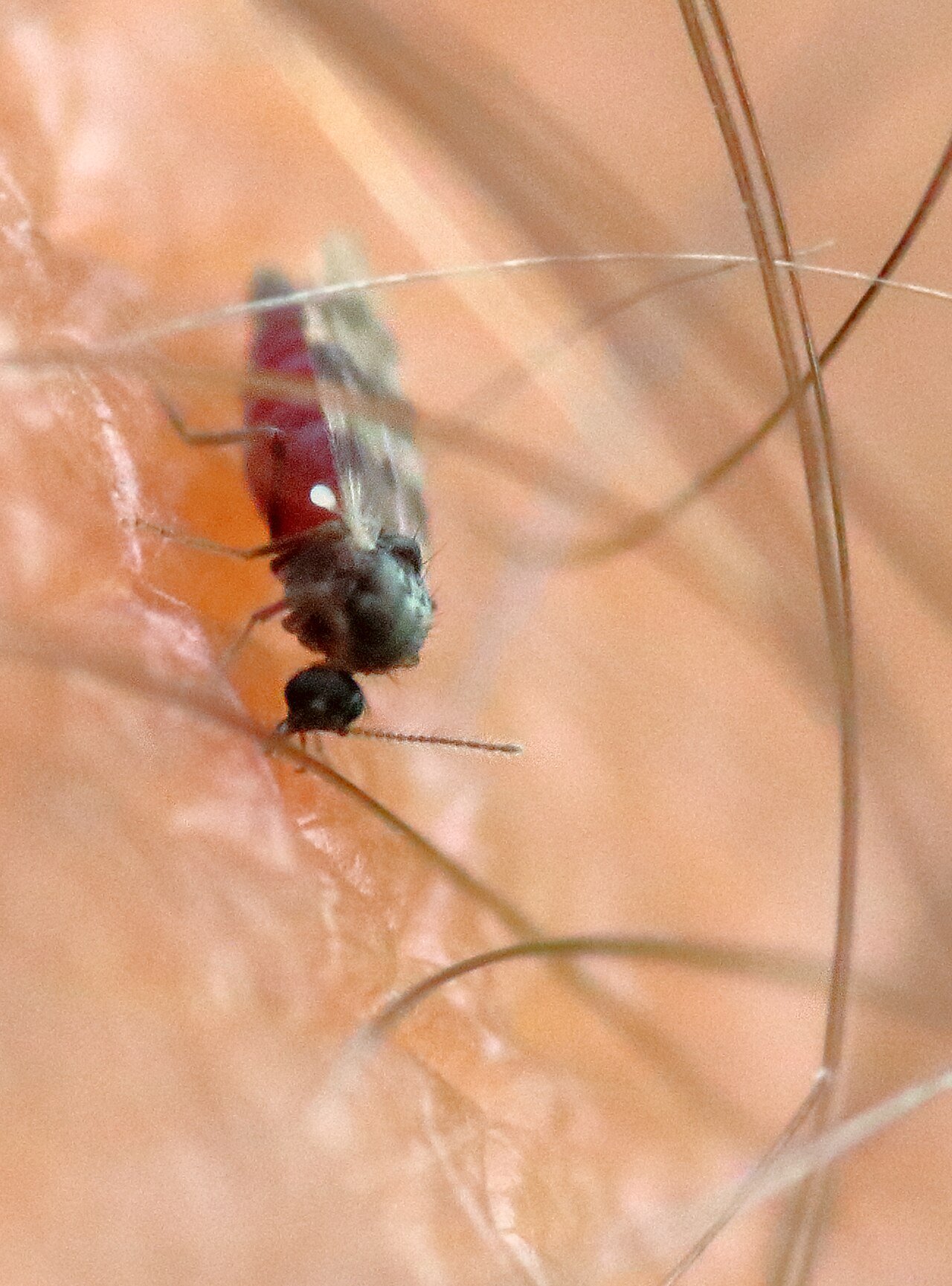
Now the guilty parties. Biting midges (Ceratopogonidae — “no-see-ums,” “punkies”): a millimeter or two of nearly invisible fly with scissor-like cutting mouthparts, breeding in wet pond-margin and marsh soils, active at dawn and dusk in calm humid weather; they can pass through standard window screens, which is how “something invisible is biting me on the porch at sunset” happens with the screens closed. The bite is a sharp pinprick out of proportion to the animal, rising into small intensely itchy red welts, often many at once on exposed skin — ankles, forearms, hairline. Black flies (“buffalo gnats”): stockier, humpbacked, daytime biters that breed exclusively in running water — the riffles of the Great Miami, Stillwater and Little Miami and every creek feeding them — with a late-spring season peak; they slash rather than pierce (blood-pool feeders), favor the hairline, ears and neck, and leave welts that bleed a little and swell impressively. Stable flies round out the lineup for rural and dog-park settings: house-fly look-alikes with a bayonet proboscis, ankle-biters around livestock and kennels, covered in our farm-country playbooks. All three share the crucial trait: they breed in landscapes, not houses — wet margins, streams, manure and straw — which reshapes what “treatment” can honestly mean, next section.
Read your bites like an inspector
Bites carry signatures the way droppings do, and the pattern narrows the suspect list fast. Where on the body: exposed skin at dusk outdoors (ankles, forearms, neck) = midges or mosquitoes; hairline, ears and behind the neck in May–June daylight = black flies; sock line and waistband after yard work or tall grass = chiggers, not flies at all; sleep-exposed skin discovered at morning = the bed bug inspection, tonight, before anything else. Pattern: scattered singles = flying biters taking one meal each; tight clusters or lines = bed bugs or fleas working a seam; dozens of uniform welts on one exposure = a midge swarm event. Timing of the itch: instant sharp sting = midge or black fly (you were there when it happened); itching that blooms hours later = mosquitoes, chiggers or bed bugs (delayed histamine response — the reason “nothing was there” bites are so confusing). Season: a bite mystery in January in Ohio is essentially never an outdoor gnat — midge and black fly seasons run spring through early fall — which points winter cases indoors to the usual suspects or to the honest non-insect explanations (dry-skin dermatitis chief among them) our what’s-biting-you triage lays out. Match location, pattern, timing and season, and the bucket word “gnat” resolves into an actual suspect with an actual fix.
What works on the biters (and what’s theater)
Honesty first about the shape of this problem: the biting gnats breed in waterways and wetlands you don’t own and shouldn’t poison — nobody treats a river, and the black fly larvae in it are trout food in good standing. Effective play happens at three lines. Personal defense (the workhorse): DEET and picaridin repellents genuinely work on midges and black flies (picaridin has the better midge data); permethrin-treated clothing for gardeners and anglers; long sleeves at the dawn/dusk midge windows; and for black fly season, the unglamorous champion — a hat, since they orbit the highest point and hammer the hairline. Property defense (real but bounded): midges breeding in YOUR wet margins are addressable — the pond-edge and drainage-swale management, plus fans on the porch (both midges and mosquitoes are feeble fliers; a box fan on the patio is the cheapest force field ever sold) and the fine-mesh screen upgrade for porches where no-see-ums pass standard mesh. Our yard program’s breeding-site elimination and resting-vegetation treatments suppress the midge population that shares mosquito habitat — two biters, one program. What’s theater: bug zappers (kill moths and beneficials by the tray-full, nearly zero biting flies — the research is embarrassing), citronella candles beyond arm’s reach, ultrasonic anything, and — worth saying plainly — any indoor insecticide purchased for an outdoor-breeding biter. Spray where the biology lives or don’t spray at all.
And the harmless cloud in the kitchen? Fix it by source
Since half the readers of this page arrived with the innocent kind, the treatment router in brief — each source has its own full guide. Fungus gnats: the fix is in the pot, not the air — let soil dry two inches down between waterings (larvae die in dry soil; overwatering is the entire epidemic), yellow sticky cards to census and cut adults, BTI dunks or bits watered in for stubborn pots, and quarantine new plants two weeks (nursery soil is the usual import route). Fruit flies: the fermentation hunt — ripe fruit, recycling residue, the forgotten potato; trap-and-source method in the full guide. Drain flies: the tape test and the brush — the biofilm method end to end. The unifying doctrine, one more time for the cheap seats: tiny flies indoors are always a moisture-plus-organic-matter address, and the spray can is always the wrong aisle. Find the wet thing, fix the wet thing, and the cloud ends on the biology’s schedule — usually inside two weeks, usually for free.
The Miami Valley biting-gnat calendar
Local texture, because season is half the diagnosis here. Late April–June: black fly season — the rivers run high and cool, the larvae mature in every riffle, and the daytime hairline-biters peak; riverside trail users, anglers and the levee-town yards nearest the water feel it most, and a ballcap plus picaridin covers most of the misery. Heavy years follow wet springs — the same hydrology that raises the rivers raises the hatch. June–September: midge season — calm, humid dawn-and-dusk windows around ponds, retention basins, creek margins and marshy edges; the subdivision backing onto a wet retention pond in Mason or Beavercreek gets the porch-hour no-see-um pressure, and the fan-plus-fine-screen combination earns its keep nightly. Storm-and-flood years amplify everything: 2019-style wet seasons produce the buffalo-gnat swarms that make regional news downstream. October frost closes the outdoor file — after which every “gnat bite” call we take is re-routed indoors, where it was probably headed anyway. Meanwhile the indoor innocents run twelve months flat: fungus gnats peak with winter (houseplants watered generously, windows shut), fruit flies with late-summer produce, drain flies with the heating-season dry-trap reveal. Two calendars, zero overlap — which is why “when did the bites start” is always our first question and such a quietly powerful one.
Gnat bite questions, answered
Something bites me every evening on the patio but I never see anything. Am I imagining it?
No — you’re describing biting midges with textbook accuracy: dusk timing, invisible culprit, sharp stings on exposed skin, welts that itch for days. Run the confirmation trifecta: a box fan pointed across the seating area (bites stop = feeble-flier confirmed), picaridin on ankles and forearms one evening (bites stop = repellent-responsive), and a look around for the wet margin within a few hundred feet. All three answers point the same direction every time.
Can fungus gnats or fruit flies bite babies or pets?
No — the mouthpart anatomy doesn’t change for softer targets. Any welt on a child in a gnat-cloud house has a different author, and the fly cloud is a separate (fixable) housekeeping note. Investigate both; connect neither.
Are black fly or midge bites dangerous?
In Ohio, they’re miserable rather than medical for most people: no disease transmission to humans from our local black flies or midges (unlike mosquitoes — the reason our mosquito pages take West Nile seriously). The caveats: impressive local swelling in sensitive individuals, secondary infection from scratching (the itch-management tricks in our bite-relief guide apply fully), and rare stronger allergic responses that deserve a physician. Cold compress, anti-itch, patience — and a hat next time.
Do I ever need professional treatment for gnats?
For the biters: when your own property is breeding them — wet margins, clogged drainage, pond edges — the yard program treats what you own and honestly maps what you don’t. For the indoor kinds: when the source hunt fails (that persistent fungus-gnat cloud sometimes traces to a crawlspace moisture problem or wet wall void rather than a flowerpot — at which point the flies are doing the same messenger work as the silverfish, and the finding matters more than the swarm). Both calls start the same free way: photos, story, verdict.
The bucket, sorted
“Gnat” walked into this page meaning six insects and walked out meaning two lists: the harmless indoor loiterers with their source-fix guides, and the outdoor biters with their calendars, repellents and honest boundaries. Your welts have an author and your fly cloud has an address, and they’re usually different stories — sort them separately and both get solved. For the ties, the mysteries and the “it’s 8 PM and something is eating my ankles RIGHT NOW”: (937) 569-3330, Greater Dayton Pest & Rodent, eight counties of sorted buckets and counting.
Why the confusion is universal (and costs real money)
The gnat bucket deserves the same autopsy as the mosquito hawk and the waterbug, because this one has a price tag attached. The confusion machinery: the flies are genuinely too small for casual identification (a fungus gnat and a biting midge at arm’s length are the same gray speck), the bites and the sightings co-occur by coincidence constantly (every summer house has both a fly cloud and an itchy person eventually), and the word “gnat” launders all of it into one false story — “the gnats are biting me” — that retail is delighted to monetize. Walk the “gnat control” aisle with today’s knowledge and notice what’s on offer: indoor foggers (wrong for every gnat, biting or not — the bug bomb file stands), generic “gnat sprays” that treat air while larvae mature in soil, drains or streams, zappers that murder the night shift of beneficials, and sticky plant stakes sold as bite protection. Meanwhile the actual fixes — drying a flowerpot, brushing a drain, a fan, a hat, picaridin, a mattress-seam flashlight pass — cost between nothing and fifteen dollars, and every one of them starts with the ID this page just gave you. The gnat economy runs on the bucket word; the household budget runs better on the sorted lists. Sort first, spend second, and let the free photo line carry the ties — it’s cheaper than the aisle and it’s always been the point.
The two-list cheat sheet
- CANNOT bite — fix the source, skip the repellent: fungus gnats (dry the soil), fruit flies (find the ferment), drain flies (brush the film), plus the midge look-alike chironomids — the harmless “lake flies” that swarm porch lights near water in mayfly-like clouds and alarm everyone for nothing.
- CAN bite — repel, screen, fan, and manage the wet margins: biting midges/no-see-ums (dusk, ponds, through-screen ankles), black flies/buffalo gnats (spring daylight, rivers, hairline), stable flies (barns, kennels, ankles), and honorary member the mosquito — the only one on either list carrying disease, and the one with a full program behind it.
- Neither list — your bites with no flies at all: bed bugs, fleas and chiggers first, dermatitis honorably second; the sleep-window inspection outranks every gnat theory ever proposed.
Pin those three lists to the season calendar above and you own this entire corner of the pest world — the smallest flies, fully sorted, for the price of one read. The ankles thank you; the houseplants were never guilty; and the porch fan was the hero all along.
One last note for the reader who arrived mid-swarm: whatever is happening on your patio tonight, it has a name, a calendar, and a countermeasure that probably costs less than dinner — and half the possible culprits will be gone on their own schedule within weeks regardless. That’s the strange comfort of the tiny-fly world: nothing in it is dangerous in Ohio, nothing in it is permanent, and everything in it responds to the same four moves — identify, dry, screen, repel. You now hold all four. The photo line holds the rest, and the porch is worth taking back: book the yard assessment if the wet margins need a professional eye, or just angle the fan and pour something cold. Both work tonight.
Six insects, one bucket word, two honest lists — and a bite map that finally points somewhere. Small flies, sorted for good.
Frequently asked questions
Do gnats bite humans?
Split the word in half: the indoor “gnats” (fungus gnats, fruit flies, drain flies) cannot bite — no cutting mouthparts exist. The outdoor biters people also call gnats — black flies (buffalo gnats) and biting midges (no-see-ums) — absolutely do, and they are the welts behind the question.
What are the tiny bugs biting me that I can barely see?
Biting midges — no-see-ums — a millimeter of insect delivering a disproportionate burn, worst at dawn and dusk near water, capable of passing through standard window screens. The bite-with-nothing-visible experience is their signature.
What are buffalo gnats and why are they so aggressive?
Black flies — humpbacked spring biters that breed in running water and swarm faces, ears, and hairlines in May and June. Ohio’s river-adjacent counties get real seasonal waves; the bites welt hard and the swarming is genuinely maddening.
Why do gnat bites itch so badly for their size?
Like their horse-fly relatives, the biters cut rather than pierce, and their saliva packs anticoagulants that trigger outsized histamine responses — pinhead insects, pea-to-coin welts, days of itch. Sensitivity varies wildly person to person.
How do I treat gnat and midge bites?
Wash, cold compress, hydrocortisone or antihistamine, and the no-scratching discipline — clustered small bites infect easily under fingernails. A ring of bites at sock lines and hairlines after an evening outside is the classic presentation and heals in days.
How do I keep biting gnats away outside?
DEET or picaridin works on black flies (less on midges); permethrin-treated clothing and fine-mesh head nets handle the swarm days; fans defeat both (weak flyers); and timing beats everything — the biters own dawn and dusk near water, and mid-day is mostly free.
Why are gnats biting me indoors?
They almost certainly are not — indoor gnat species cannot bite, so indoor “bites” plus visible small flies usually means two separate facts. Run the bite differential (fleas at ankles? mite history? bed bug evidence?) before blaming the fungus gnats on the windowsill.
Can no-see-ums get through window screens?
Standard 18×16 mesh, yes — their size defeats it. Fine “no-see-um” 20×20-plus mesh on porch and bedroom screens is the fix in midge-heavy waterfront settings, along with evening fans.
Do biting gnats carry disease in Ohio?
Human disease, no — the local file is welts and misery, not pathogens. Livestock and poultry take real black-fly harm in heavy years, which is why the farm-supply aisle carries the serious countermeasures.
When does gnat biting warrant pest control?
Property-level midge or black-fly pressure — waterfront and creek-adjacent yards — responds to habitat assessment, screen upgrades, and fan strategy more than spraying; we spec all three honestly. Indoor small-fly clouds are the source-hunt services from our gnat and drain-fly pages: (937) 569-3330.