
A tiny, fast, dark insect shot across the counter when you flipped the kitchen light — too small for a “real” roach, you tell yourself, probably just some beetle. Here is the sentence this page exists to deliver, as kindly as possible: a baby cockroach is worse news than a big one. An adult roach might be a wanderer that rode in with the groceries; a nymph — a juvenile — cannot have wandered far, was born nearby, and announces that a breeding population is established somewhere within a few yards of where you’re standing. And its source, the cockroach egg case, is a purpose-built armored capsule holding dozens of siblings that shrugs off sprays, foggers and most of what the hardware store sells. This guide covers the two searches that brought you here in full: how to identify a baby cockroach and tell it from every look-alike (some of which are harmless, and the difference is worth hundreds of dollars), and how to find, identify and destroy cockroach eggs — the ootheca — which is the actual battleground of any roach elimination that works. Straight biology, honest treatment math, and the free photo ID that settles it in minutes: (937) 569-3330, Greater Dayton Pest & Rodent.
What a baby cockroach looks like
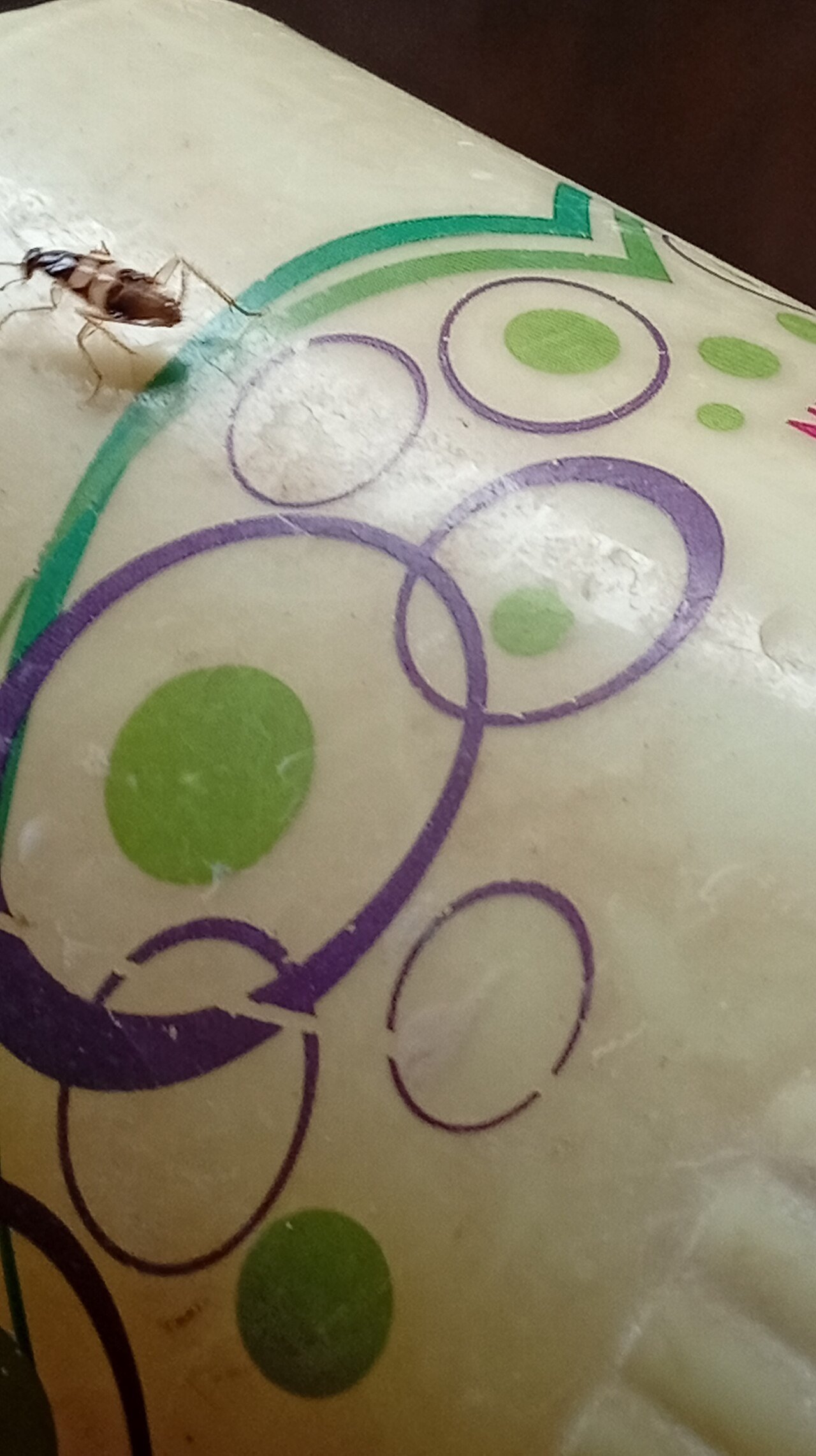
Cockroach nymphs are miniature, wingless editions of their parents — no larval “grub” stage, no metamorphosis theatrics; a roach hatches roach-shaped and simply gets bigger through five to seven molts. The universal nymph profile: flattened oval body from an eighth to a half inch, six spiny legs built for the sprint (nymphs are proportionally as fast as adults — that “shot across the counter” motion is field mark one), long antennae constantly sweeping, no wings at any nymph stage (wings arrive only at the final molt into adulthood), and coloring that runs darker and glossier than the adult of the same species. The species notes that matter in Ohio kitchens, drawn from our full four-species identification guide: German cockroach nymphs — the overwhelming majority of indoor finds — are dark brown to nearly black with a pale tan stripe running down the center of the back, an eighth to three-eighths of an inch, found in kitchens and bathrooms near warmth and water. American cockroach nymphs run redder-brown, uniformly colored, larger at later stages, and favor basements, drains and boiler rooms. Oriental nymphs are glossy dark red-black and slow-moving by roach standards, cellar-and-crawlspace insects. Brown-banded nymphs wear two pale bands across a dark body and turn up in warm, dry, high places — closet shelves, electronics, picture frames — the one species indifferent to the kitchen sink. Freshly molted nymphs of any species are briefly white with dark eyes — the source of every “albino roach” legend; they darken within hours.
A nymph means breeding rather than a stray, and breeding is the difference between a can of spray and cockroach control in Dayton.
The look-alike lineup: what it might be instead
Several innocent (or differently guilty) insects wear a roach-ish costume at a glance, and the fork in the road is expensive, so here is the honest lineup. Silverfish: silver-gray, carrot-shaped, three tail bristles, moves in a side-to-side wriggle — a moisture problem, not a sanitation one; full treatment in our silverfish guide. Carpet beetle adults and larvae: the adults are small round mottled beetles, the larvae fuzzy bristled ovals — closet and fabric insects covered in our carpet beetle page. Crickets: jumping hind legs and chirping give them away instantly; a roach never jumps. Bed bug nymphs: rounder, slower, found at mattress seams rather than kitchen counters — and a genuinely different emergency; see bugs that look like bed bugs for that fork. Wood roaches: the outdoor cousins that blunder in at porch lights, tan, daylight-active, and unable to breed indoors — the one “roach” sighting that genuinely means nothing (our four-species guide covers the tells). The stakes of the ID: a wood roach or silverfish costs you nothing; a German nymph unrecognized for three months costs a full kitchen protocol. Thirty seconds with a phone camera and our free ID line settles it before a dollar moves.
Cockroach eggs: the ootheca, nature’s armored nursery
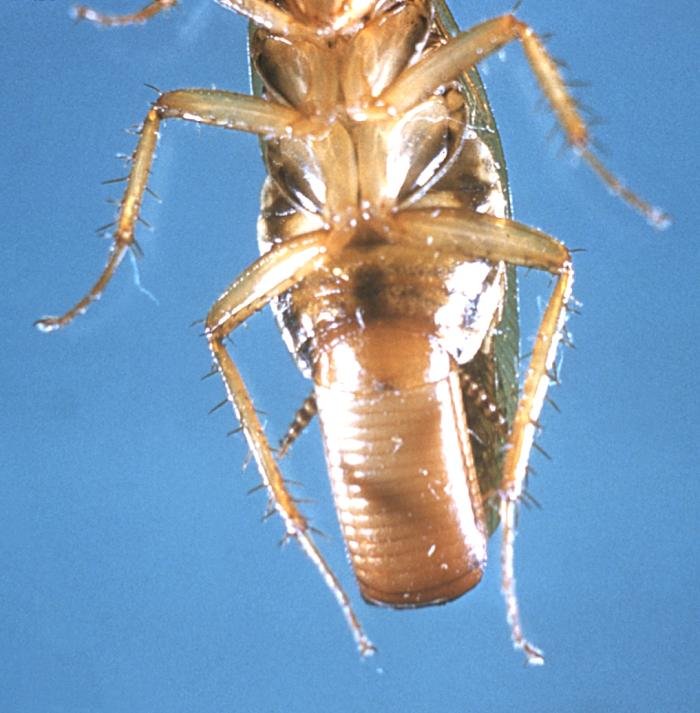
Cockroaches don’t lay loose eggs; they manufacture an ootheca — a hardened, purse-shaped protein capsule with eggs stacked inside in two neat rows like ammunition. It is one of the most successful pieces of packaging in nature, and it is the single biggest reason DIY roach control fails: the case’s shell resists desiccation, crushing pressure from casual contact, and — critically — insecticide sprays and fogger mists, which kill the insects walking around but leave every unhatched generation untouched. Fog a kitchen on Saturday and the population resumes from the oothecae on schedule two weeks later; that entire mechanism is documented in our bug bomb autopsy. The species math is what turns one sighting into arithmetic: a German cockroach ootheca is a quarter-inch tan-brown purse holding 30 to 40 eggs, and — the detail that makes Germans the species that infests — the female carries the case protruding from her body until a day before hatch, meaning the eggs travel with the mother, protected in her harborage crack, unreachable by anything you spray at surfaces. One female produces four to eight cases in her months of life; the textbook cascade from one pregnant German stowaway to tens of thousands of descendants inside a year is not scare copy — it’s multiplication. American oothecae are darker, chunkier eight-to-sixteen-egg cases glued into protected corners of basements and utility rooms; Oriental cases similar in cellars; brown-banded females glue small yellowish cases to furniture undersides and inside electronics — the species that ships itself in secondhand appliances.
Where to hunt for eggs (the ten-minute flashlight audit)
Oothecae get deposited in the same microhabitats the adults haunt — warm, tight, dark, near water. The audit, with a flashlight and a phone camera: kitchen — the hinge sides and top corners of cabinet interiors, the void where the countertop meets the wall, under and behind the refrigerator (the compressor’s warmth makes it prime real estate), the motor housing of the dishwasher, inside the microwave’s vent gaps, and the crack where the stove’s side meets cabinetry; bathroom — under the sink around pipe penetrations, behind the toilet tank, inside the vanity’s back corners; utility — water heater closets, laundry-machine motor housings, floor-drain margins; everywhere — cardboard (roaches eat it, hide in it, and glue eggs to its corrugations — the moving-box economy is how infestations change addresses), and the undersides of secondhand furniture and appliances, which deserve a garage quarantine inspection before anything crosses your threshold. What you’re looking for: the purse-shaped cases themselves, hatched cases (split open at one seam — old news but a confirmed nursery site), pepper-grain droppings concentrated in corners (the full forensic read is in our droppings guide), and the brown smear marks of traffic routes. Every find is a map pin — and the map is worth more than any spray you own, because treatment placed on the map works and treatment placed on vibes doesn’t.
Destroying eggs: what works and what pretends to
Found a case — now the honest options. Mechanical destruction works: crush it (it takes deliberate pressure — you’ll hear it), drown it in soapy water, or vacuum it and dispose of the sealed bag outdoors; simple and absolute. Heat works: steam or a wash cycle above 130°F kills eggs through the shell — relevant for fabrics and removable items. Cold mostly doesn’t: a winter garage won’t reliably kill oothecae; freezer temperatures held for days will — rarely practical. Sprays don’t: contact insecticides do not penetrate the case, full stop. What actually ends the egg pipeline at population scale is indirect: gel baits and insect growth regulators (IGRs). Baits kill the females carrying and producing cases — and cascade through the population as roaches eat the dead and each other’s droppings; IGRs are the specifically anti-egg chemistry, disrupting molting and sterilizing the reproductive cycle so the cases that do hatch produce nymphs that never make cases of their own. That pairing — bait plus IGR, placed on the map your flashlight audit drew — is the professional core of our roach elimination method, and the reason our kitchen protocol runs two visits: the follow-up lands inside the hatch window, meeting the nymphs that emerged after visit one with fresh bait instead of an empty kitchen. Any one-visit roach treatment, ours or anyone’s, is a coin flip against the ootheca’s calendar — the egg case is patient, so the protocol has to be.
One nymph: the honest threat assessment
So what does the single baby roach under the kitchen light actually prove? Run the logic like an inspector. A nymph cannot fly (no wings), rarely travels more than a few yards from its hatch site, and dies quickly away from water — so a live nymph on your counter puts an active nursery within roughly a room’s radius with near certainty. One nymph sighting therefore means: at minimum, a recently hatched ootheca nearby (30-plus siblings, most still hiding); at likely, an established breeding female or several; at worst, a mature multi-generation population of which you’ve seen the single boldest scout — because roaches are strongly nocturnal and thigmotactic (crack-hugging), and the visible fraction of any population is a small tax on the total. The corollaries: a nymph seen in daylight raises the estimate (daylight roaming signals crowded harborage pushing individuals out), and multiple sizes of nymphs seen over a week confirms multiple hatch cohorts — a population with history. This is why our advice diverges from the internet’s “set a few baits and see”: one confirmed German nymph in a Dayton-area kitchen justifies the full flashlight audit and monitor traps this week, because the difference between treating a one-ootheca problem and a six-month population is the difference between a $289 kitchen protocol and a whole-home job — the compounding math our species guide prices out. Early is cheap. The nymph is your early.
The apartment and rental chapter
Nymph sightings hit different in multi-unit buildings, because the nursery may not be in your unit at all. German populations move through shared walls along plumbing chases, and a spotless apartment beside a neglected one inherits scouts continuously — treating your side alone is renting relief by the month. What actually works is documented, building-aware response: photograph every sighting with dates, report in writing to management (Ohio landlord-tenant law puts extermination duties on the landlord in most multi-unit scenarios), and push for adjacent-unit inspection — the protocol our landlord program runs as standard, because the building-wide bait-and-IGR response is the only version that ends rather than relocates the problem. Renters: your part is sanitation and reporting, not purchasing — document, notify, insist. Landlords: the per-door economics of catching a one-unit problem before it’s a stack problem are the strongest argument in your maintenance budget. Both sides of that conversation get straight answers on our line.
Baby roach questions, answered
Can baby cockroaches fly or jump?
Neither. No nymph of any species has wings, and no cockroach jumps. Anything tiny that flew at the light or jumped off the counter was something else — moths, beetles and crickets respectively cover most of those reports. Sprinting darkly along edges: that’s the nymph signature.
I found what looks like a tiny white roach. What is it?
A freshly molted nymph — soft, white, dark-eyed, and briefly slow — darkening within hours. No albino strain exists. Practically, a white nymph is good intel: molting happens inside harborage, so you are very close to the hideout; note the spot for the audit.
Do egg cases mean the roaches are gone if they’re empty?
The opposite: a hatched case is a birth certificate, not an obituary. Each split-open German case put 30-plus nymphs into your walls at some datable point. Empty cases plus no live sightings for months suggests an old, resolved problem; empty cases plus any live sighting confirms an active pipeline.
Will cleaning alone starve them out?
Sanitation is necessary and insufficient — the honest split. Roaches survive weeks without food (and eat soap, glue and each other), so a deep-clean alone rarely ends an established population; but every crumb removed makes bait placements more attractive, so cleaning multiplies treatment instead of replacing it. Clean like it matters, treat like cleaning isn’t enough — both true at once.
The one-week response plan
- Day 1 — Photograph and ID: the nymph if possible, or text the photo to (937) 569-3330 for the free species call; the species decides the map (kitchen for Germans, basement for Americans/Orientals, closets and electronics for brown-banded).
- Day 1 — Flashlight audit: the full crack-and-appliance tour above; every ootheca found is mechanically destroyed, every location pinned.
- Day 2 — Monitor traps: sticky monitors in the corners the audit flagged — under sink, behind fridge, cabinet hinges. Monitors turn guesses into counts, and counts decide whether this is a DIY-scale or protocol-scale problem.
- Days 2–3 — Cut water and food: fix the drip, dry the sink overnight, pet food up, crumbs gone, cardboard out. Water discipline hits roaches harder than food discipline — they’re drought-fragile.
- Day 7 — Read the monitors: zero catches and no new sightings = stay vigilant two more weeks, likely a lone hatchling event. Nymphs in multiple sizes, or catches at multiple stations = established population; that’s protocol territory, and the two-visit bait-and-IGR program (both visits included in every quote, because the follow-up IS the treatment) takes it from there.
The bottom line
A baby cockroach is a message with a timestamp: something hatched near here, recently, and its siblings are behind a crack you haven’t opened yet. Answer it in week one and it’s a small, cheap, contained story — the audit, the monitors, maybe a kitchen protocol. Answer it in month three and the ootheca arithmetic has been compounding the whole time. Either way, don’t fog (the scatter effect turns one-room problems into whole-home ones), don’t guess the species (thirty seconds of photo beats thirty dollars of wrong product), and don’t fight the egg case with a spray can that biology already beat. Greater Dayton Pest & Rodent runs the two-visit, bait-and-IGR, monitor-verified version across Dayton and all eight counties — one-time or Protection Plan, with the re-treatment guarantee standing behind plan members. The nymph gave you the early warning. Use it: (937) 569-3330.
A field note on how infestations arrive
Route data from eight counties says baby-roach discoveries trace to a short list of arrival stories, worth knowing because every one is preventable at the door. The cardboard box leads by a mile — grocery flats, warehouse deliveries, moving boxes stored in a previous infested address; corrugations are roach housing and egg-glue substrate in one. Break down and recycle cardboard same-day, always. The secondhand appliance runs second — brown-banded and German populations ship inside microwave vents, fridge compressor housings and game consoles; the garage quarantine inspection before anything used comes inside is a two-minute habit that has saved our customers thousands. The overnight bag from an infested address, the food delivery staged in a restaurant back-of-house, and the holiday storage tote coming down from a shared attic round out the list. None of this is about housekeeping — the cleanest kitchen in Oakwood can receive a pregnant German female in a box flap, and her ootheca doesn’t check your mopping schedule. Arrival is luck; establishment is response time. This page just handed you the response.
Frequently asked questions
What does a baby cockroach look like?
A wingless miniature of the adult: German nymphs are dark with a tan stripe zone, sesame-to-pea sized; American nymphs run reddish-brown; all nymphs lack wings entirely (wings arrive at the final molt). Fast, crack-hugging, and — diagnostically — never alone for long.
Is one baby cockroach a big deal?
Bigger than one adult — nymphs hatch thirty-plus to an egg case and disperse poorly, so a single nymph means a hatch happened within feet of where you stand. One baby German roach in a kitchen is presumptive evidence of an on-site breeding colony; the flashlight census is your next move.
What are the white baby roaches?
Freshly-molted nymphs — every roach is ghost-white for a few hours after shedding, darkening as the new cuticle hardens. White sightings mean molting is happening in nearby harborage: you are standing close to the nursery.
How do I tell a baby roach from other small bugs?
Roach nymphs are flattened, glossy, fast, and antennae-forward; the usual confusions are carpet beetle adults (domed, slow, patterned), booklice (soft, pale, humid corners), and bed bug nymphs (rounder, slower, seam-dwelling). The sprint-for-a-crack escape is the roach signature.
Where do baby cockroaches hide?
Tighter than adults — nymphs fit hinge gaps, screw holes, and cardboard flutes, clustering near the warmth-moisture-food triangle: appliance voids, under-sink cabinets, drawer slides. Their aggregation pheromones keep them packed together, which concentrates both the evidence and the bait opportunity.
What do baby cockroaches eat?
Everything the adults do plus the adults’ droppings (how gut microbes transfer between generations) — meaning the fecal focal points feed the next generation directly, and sanitation of those corners is literally taking food from the babies.
How fast do baby roaches grow up?
German nymphs run egg-to-breeding-adult in about sixty days at kitchen temperatures — six molts on a warmth-and-calories schedule. That sixty-day clock is why our treatment protocols always include the follow-up: it meets the generation that hatched after visit one.
Do baby roaches mean the foggers/spray failed?
Nymph sightings after ANY treatment mean egg cases survived it — which foggers and contact sprays always leave behind. It is the predictable relapse, not a mystery: the fix is gel bait plus growth regulator placed on the nursery routes, not another can.
Can baby cockroaches fly or bite?
Neither — no wings until adulthood, and no meaningful bite at any age. Their entire threat profile is what their presence announces: an active, breeding, on-site colony.
What should I do after finding a baby cockroach?
Run the flashlight census tonight, bait the harborage-adjacent cracks this weekend (never spray them), and score honestly: nymphs in numbers or by daylight put you in the call tier — the growth-regulator layer that ends the nursery is a professional tool: (937) 569-3330.