
Fairborn has a wasp problem shaped like a flight schedule. Not the aircraft — the town’s own rhythm: student rentals that empty in May exactly when paper wasp queens are scouting eave sites, base families who PCS out in June leaving sheds and swing sets unwatched through peak colony growth, and a housing stock that cycles occupants faster than almost anywhere in the region. Wasp and hornet removal in this town is therefore a story about attention — colonies establish where nobody is looking, and Fairborn generates more unwatched eaves per square mile than any city we serve. We call it the empty-porch season, and it explains why August here delivers softball-sized nests that surprise everyone: the nest was a golf ball in June, but nobody was home to see it.
The Empty-Porch Season
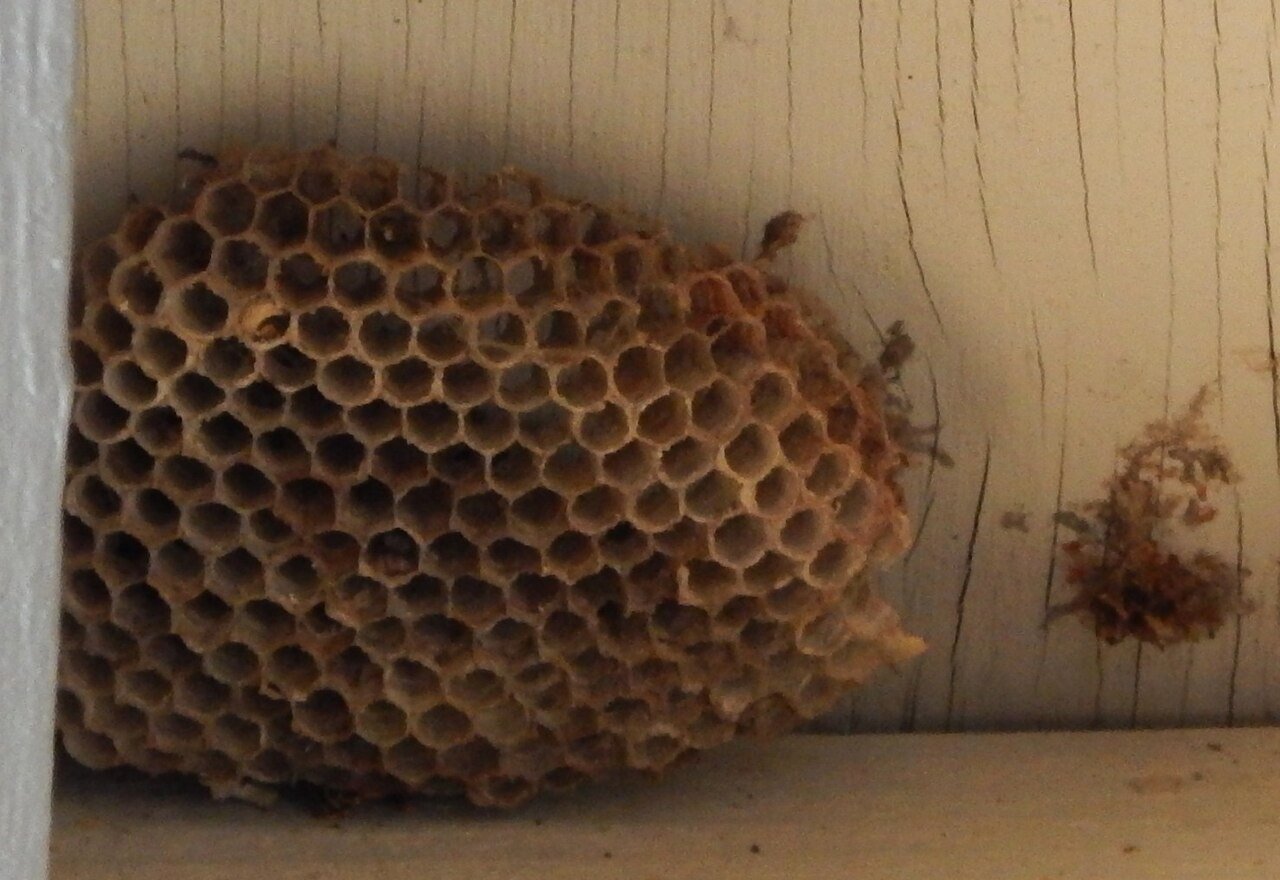
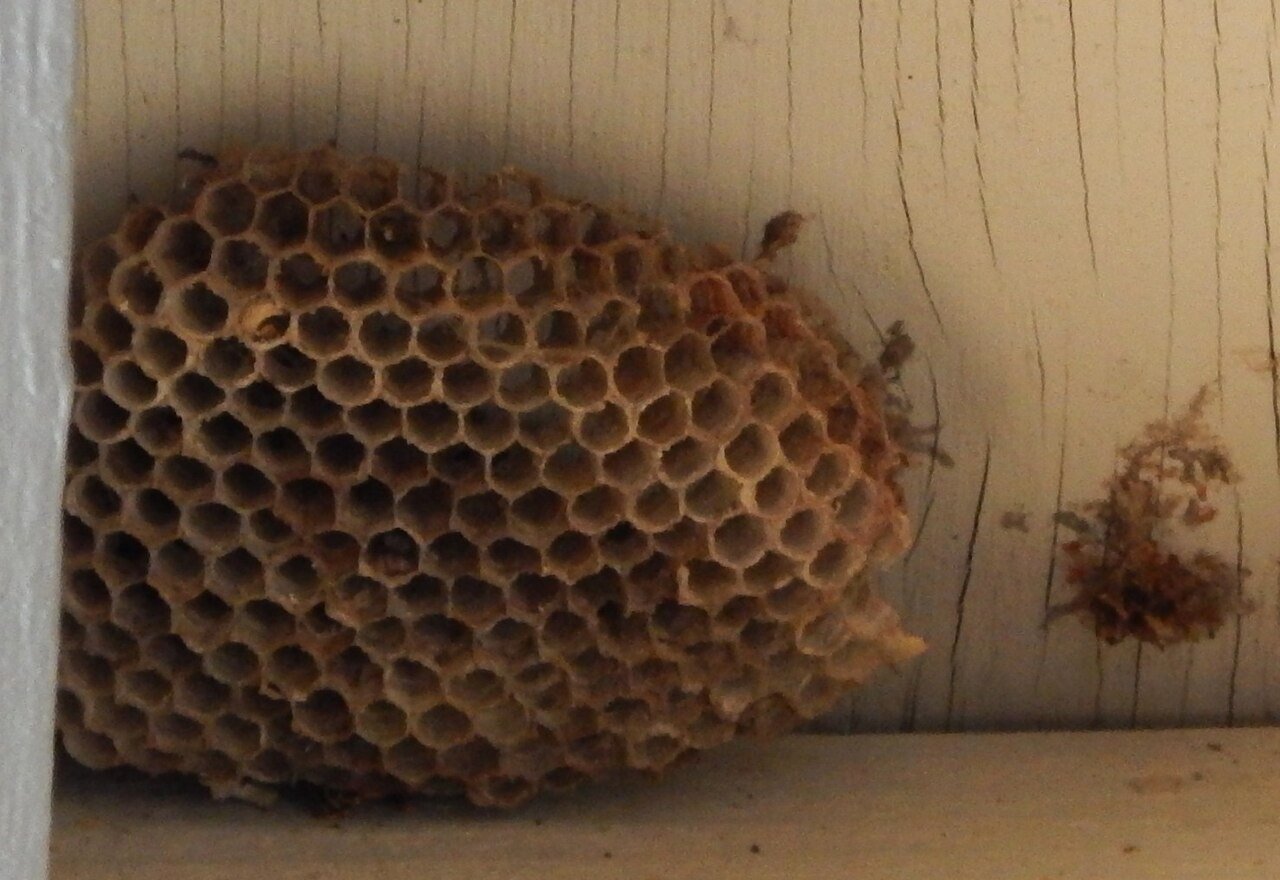
A paper wasp colony’s whole trajectory is set by whether anyone interrupts it early. A queen founding a nest in April builds alone for weeks — a dozen cells, easily knocked down with a broom, no defenders. By July the colony runs dozens of workers; by late August, when a new tenant moves in or a family returns from a summer away, it runs hundreds and defends a territory. Fairborn’s turnover calendar guarantees a yearly crop of colonies that pass through their whole vulnerable phase unobserved: the May student move-out, the June PCS wave, the sublet whose occupant never once looks up at the porch ceiling. Our route knowledge fills the gap — we know which streets turn over on which months, and our early-summer inspection sweeps target exactly the addresses whose occupants just left or haven’t arrived.
Move-In Week: The Highest-Risk Seven Days
The most predictable sting cluster in Fairborn’s calendar is move-in week. New occupants arrive in August — peak colony strength — and immediately do everything a wasp colony reads as an attack: banging doors, carrying furniture past the eave line, propping the porch storm door open against its own nest, mowing an overgrown yard over a ground-nesting yellowjacket entrance. If you are taking possession of a Fairborn address in late summer, walk the exterior BEFORE the truck unloads: eave lines, porch ceilings, shutter backs, the grill, the shed, and the yard’s bare-soil patches. Five minutes of looking up prevents the emergency-room version of moving day — and if you find an established nest, that’s a phone call, not a hardware-store project.
What We Remove and How
- Paper wasp nests: eaves, porch ceilings, shutters, and fixtures — treated and removed, with the anchor point treated against re-founding
- Yellowjacket colonies: ground nests and void nests (the dryer-vent hum, the gap under the siding) — the dangerous ones, handled with professional equipment and never sealed before the colony is dead
- Bald-faced hornet nests: the gray footballs in Fairborn’s mature street trees — removed at height, safely
- Landlord turnover sweeps: scheduled between-occupant inspections for the rental portfolio, timed to the queen-founding window — the cheapest wasp control that exists
The one thing we ask Fairborn residents not to do: the ladder-and-spray-can approach on an established colony. August nests hold defenders with a chemical alarm system, a can’s spray pattern guarantees survivors, and the combination of a startled colony and a human on a ladder writes the same incident report every year. The turnover economics that run this town’s other pest files apply here too — prevention during the empty months costs a fraction of an emergency removal during move-in week.
The Fairborn Ledger, Complete
This page closes Fairborn’s set — all eight files now read the town through its defining rhythm: the turnover that lets bed bugs ride the PCS cycle, hands roaches and ants the vacancy pantry, gives rodents their unwatched inheritance, lets the spiders bloom in the vacancies, leaves termite evidence unnoticed between occupants, primes the flea pupae for wake-up, and grows the wasp colonies nobody was home to knock down. One town, one rhythm, eight files — and one provider whose service calendar is built around when Fairborn’s doors actually open and close. The full picture lives on our Fairborn service page.
Look Up Before You Move In
Taking possession of a Fairborn address? Book the exterior sweep before the truck arrives. Landlords: the between-occupant inspection window is the cheapest wasp control on the market. Established nest already overhead? That’s our ladder, not yours.
Frequently asked questions
Why are wasp nests in Fairborn so big by the time people find them?
Because the town’s turnover calendar leaves eaves unwatched through the colony’s whole vulnerable phase — the May move-outs and June PCS wave mean nests founded in April grow undisturbed until an August move-in meets them at peak strength.
I’m moving into a rental in August — what should I check?
Walk the exterior before the truck unloads: eave lines, porch ceilings, shutter backs, grill, shed, and any bare-soil yard patches (ground yellowjackets). Five minutes of looking up is the difference between a phone call and an ER visit on moving day.
Can I just knock down a small nest myself?
A April–May founding nest — a dozen cells, one queen, no workers — yes, a broom at dusk handles it. Anything with visible workers patrolling, no: established colonies defend with alarm pheromones, and a spray can plus a ladder is the classic incident report.
What’s the humming in my wall or dryer vent?
Likely a yellowjacket void colony — the most dangerous residential case. Never seal the opening: trapped colonies chew through interior drywall. Professional treatment kills the colony first; the seal comes after.
Do wasps come back to the same spot every year?
The colony dies each fall, but successful anchor sites get re-founded by new queens reading the same architecture. Treating the anchor point at removal and again in early spring breaks the tradition.
Are the big gray football nests in trees dangerous?
Bald-faced hornets — aggressive defenders with a large no-go radius. If it’s within reach of the yard’s activity, it needs professional removal at height; if it’s high in a street tree and away from traffic, it can sometimes be left to die with frost. We’ll tell you which honestly.
I’m a landlord with several Fairborn units — what’s the smart play?
The between-occupant sweep: a scheduled exterior inspection during each vacancy, timed to the founding window. It costs a fraction of one emergency removal and it’s the single highest-leverage wasp control in this town’s rhythm.
What does wasp removal cost in Fairborn?
Single-nest removal at a flat price, whole-property treatment when the walk-around finds multiples — and the honest downgrade when what you have is a founding nest you could broom yourself, or dauber tubes that never needed removal at all.