
Beavercreek’s wasps work in three dimensions the flatter suburbs never see. The wooded lots and creek corridors that define the city hang aerial habitat over every backyard — the mature canopy where bald-faced hornet footballs grow hidden all summer — while the deck-and-walkout architecture below builds the mid-level nest zone (rail ends, pergolas, the shaded understructure), and the big established lawns host the ground-level yellowjacket cities. Three altitudes, three species profiles, three discovery seasons — and one annual Beavercreek tradition: the August afternoon someone finally sees the basketball-sized gray nest that’s been thirty feet up the back oak since June. Here’s the full three-level map, and the honest triage for each floor.
The Three Altitudes
- The canopy (20–60 feet): bald-faced hornet footballs in the oaks and maples, plus European hornet colonies in old-tree hollows — the inch-plus night flyers at the porch lights are their scouts. Canopy nests grow invisibly behind summer foliage and reveal themselves in August or at leaf-drop.
- The deck level (3–12 feet): paper wasp umbrellas under rails, pergolas, and eave lines; the walkout’s sheltered understructure; and the grill, playset, and shed inventory — the family-contact zone where most Beavercreek stings actually happen, and the level the spring patrol protects.
- The ground floor: yellowjacket colonies in the established lawns’ old rodent burrows, peaking exactly when fall yard work puts mowers and rakes over them — the September multi-sting scenario, and the reason pre-mow glances earn their keep from August on.
- The harmless giant file: July’s cicada killers hovering over sunny lawn patches — two inches of drama, zero sting risk, and a free character reference instead of an invoice, every time.
The Football Question: When a Canopy Nest Matters
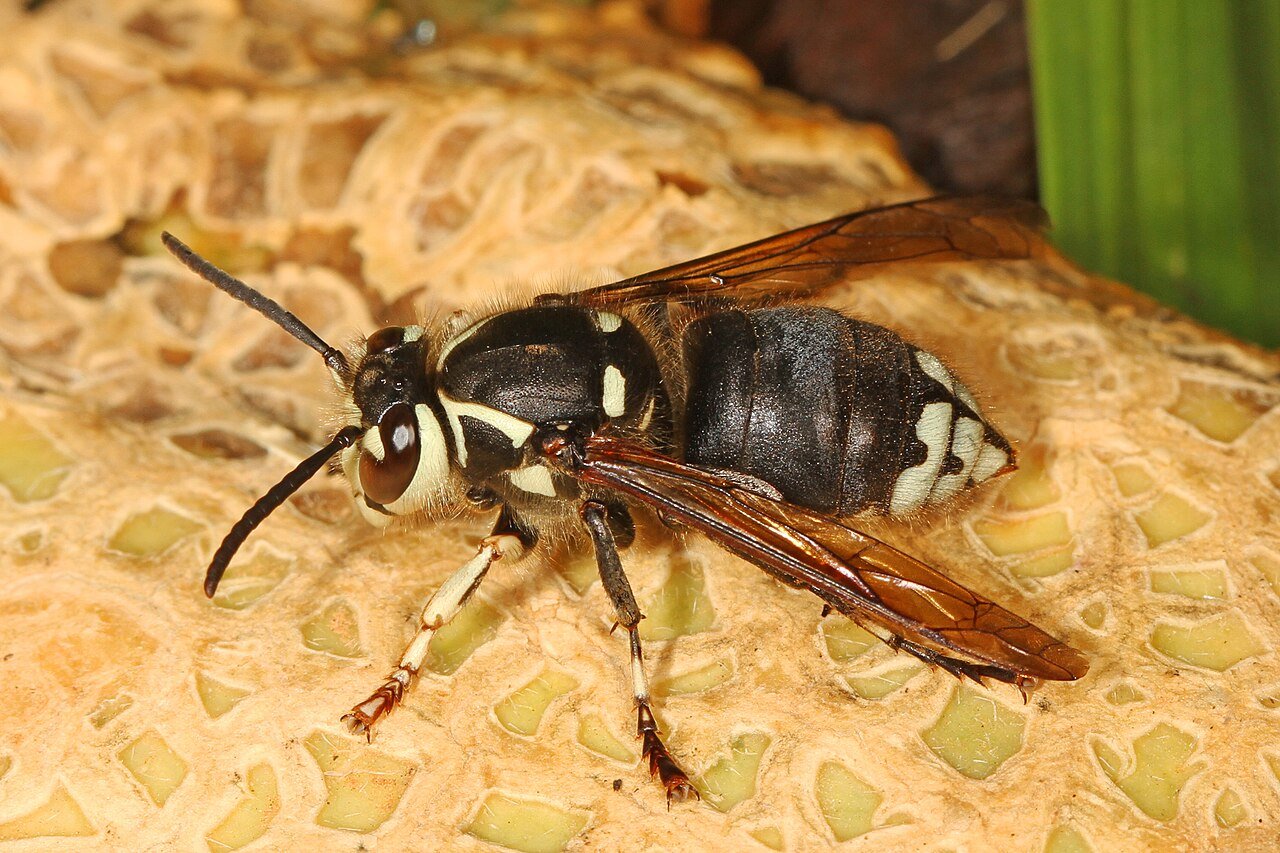
The dramatic discovery deserves an undramatic framework. A bald-faced colony thirty-plus feet up, away from decks and traffic, is a fly-and-caterpillar removal service with an intimidating exterior — it dies completely at frost, is never reused, and can be left to finish its season with a clear conscience; we decline those removals honestly and often. The footballs that warrant action sit lower or closer: head-height nests along walks and fence lines, anything over a deck, patio, pool, or play zone, nests beside second-story windows that get opened, and any colony within the daily orbit of a sting-allergic household member — automatic, same-week work. Treatment is a dusk operation with proper gear (the colony’s defense radius and face-memory are real — these are the most coordinated defenders in Ohio), the nest comes down whole after treatment, and ladder-and-height jobs are precisely what professional equipment exists for. The species’ full file lives at hornets in Ohio, with the family taxonomy at wasp vs. hornet and the nest gallery at nest identification.
Deck Level and Ground Floor: the Working Calendar
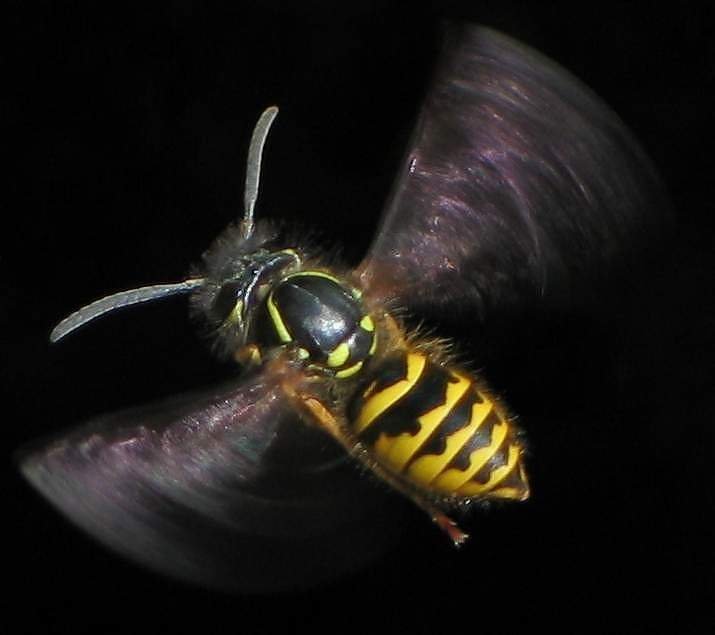
The deck zone runs on the spring patrol: weekly April-through-June walk-arounds of rails, pergola joints, eave lines, grill, and playset catch paper wasp starter nests at the one-queen, broom-solvable stage — the cheapest wasp control in existence, detailed at wasp prevention. Established summer umbrellas in traffic zones get the standard dusk treatment; the shed’s far-gable colony quietly clearing garden caterpillars earns its season pass. The ground floor runs on traffic reading: a July lawn walk flags entrance holes while colonies are hundreds instead of thousands, steady in-and-out traffic at one spot is the tell, and found colonies get professional dusk treatment — never a plugged hole (rerouted angry workers, occasionally into the walkout), never the gasoline folklore (dead lawn, live colony). And the wooded-lot bonus rule: check the trees themselves before hanging swings or treehouse projects — cavity colonies in old trunks are exactly where the big European hornets live, and a rope test beats a surprise. The DIY-appropriate remainder lives at getting rid of wasps; stings get the first-aid file at sting treatment.
The Beavercreek Bottom Line
Three altitudes, one discipline: identify before acting (photo from distance, free verdict same day), triage by location rather than fear (the canopy football and the cicada killer both usually earn passes; the deck umbrella and the lawn city usually don’t), and give the genuine jobs the dusk-and-gear treatment they require. September peaks everything — maximum colonies, sugar-switched yellowjackets at the cider, and the fall reveal of summer’s hidden architecture — and October’s frost closes the season for free, with the sealing-and-prevention notes carrying into next year. Same-week response, same-day for doorway nests and allergy households, one flat price quoted first: the service is at professional wasp nest removal — and the city’s whole file, termites and spiders included, at Beavercreek pest control.
Football in the Oak — or Traffic at the Deck Rail?
Photo from a safe distance, free triage by altitude and location, and dusk removal for the nests that earn it. Flat-priced and guaranteed across Beavercreek.
Frequently asked questions
There’s a huge gray nest high in my Beavercreek oak — is it dangerous?
At thirty-plus feet away from decks and traffic, usually not — it’s a bald-faced hornet colony eating flies and caterpillars all season, dying completely at frost, never reused. We decline those removals honestly; the footballs that matter sit low or close to daily life.
When did that basketball-sized nest appear?
It’s been growing since June — canopy nests build invisibly behind summer foliage and reveal themselves in August or at leaf-drop. The size at discovery reflects months, not days, which is why it looks so sudden.
What is the giant wasp at my porch light at night?
A European hornet — the only big social wasp here that flies after dark, scouting insects at the light from a colony in an old-tree hollow. Killing the porch light usually ends the visits; the trunk colony matters only if it’s in your traffic.
Where do yellowjackets nest in Beavercreek yards?
Old rodent burrows in the established lawns — a thumb-width hole with steady in-and-out traffic, peaking in September exactly when mowing and raking pass over it. A July lawn walk finds colonies at hundreds instead of thousands.
Should I plug the yellowjacket hole in my lawn?
Never — plugged colonies reroute through any gap they find, occasionally into walkout basements. Ground colonies get dusk treatment that reaches the nest itself, then the burrow collapses; the gasoline folklore kills lawn, not colony.
What are the huge wasps hovering over the sunny part of the yard in July?
Cicada killers — two-inch solitary diggers whose hovering males can’t sting and whose females essentially never do. Free character reference, no invoice; manage the bare sunny soil if the digging bothers you.
When should I check the trees before a swing or treehouse project?
Before every one — cavity colonies of European hornets live in exactly the old trunks those projects use. A rope-tug test and a minute’s traffic watch beat a surprise twenty feet up.
How fast can you get to a wasp nest in Beavercreek?
Same-week standard, same-day for doorway nests and sting-allergy households — flat price quoted before the ladder comes off the truck, dusk treatment with proper gear, and re-treatment guaranteed.