
Oakwood’s houses are old enough to have met termites before — nearly every one of them. A century of occupancy means a century of encounters, treatments, repairs, and rumors, and termite control in this town is therefore less about discovery than about reading: almost every Schantz Park and Far Hills basement carries some mark — an old gallery in a joist, a patched sill section, drill holes in the slab from a 1970s treatment, a previous owner’s half-remembered story — and the skill this housing stock demands is telling a house’s termite history from its termite present. We call it the century audit, and it’s the difference between a town that panics at every old scar and one that knows, house by house and in writing, exactly where it stands.
Reading a Hundred Years of Evidence
An Oakwood basement is a termite archive. The drill-hole rows in the slab perimeter are the signature of decades-old liquid treatments — evidence of both a past problem and a past solution, and a barrier that expired long ago regardless. Dry galleries in a floor joist are archaeology: a colony that worked here once, almost certainly killed by whichever treatment left the drill holes, harmless now but indistinguishable — to a worried eye — from the real thing. Patched sills and sistered joists are the repair record. And somewhere in a minority of these basements, the present tense: fresh mud tubes on the stone foundation, moist soil-packed galleries, spring swarmers from a baseboard — the current colony that all the history was practice for. The audit’s job is sorting every mark into its century: what happened, what was fixed, what’s active, and what the moisture conditions — the slate-era gutters, the stone foundation’s damp, the grade a hundred years crept up — say about what comes next.
The Slate-and-Stone Moisture Story
The architecture that defines Oakwood writes its termite risk profile. Stone foundations hold ground moisture against sills the way modern concrete doesn’t; box gutters and slate valleys, when they slow, deliver roof water exactly where the foundation line least wants it; and the mature canopy’s shade keeps foundation soil damp through summers that bake newer neighborhoods dry. None of it dooms anything — these houses have outlasted every threat for a century — but all of it means moisture maintenance is termite maintenance here: the gutter that drains, the grade that sheds, the downspout that discharges away from the stone are as much a part of the program as any treatment, and our audit says so with the same honesty the carpenter ant file applies to the same wet wood.
The Oakwood Ledger, Complete
This page closes the town’s five-file set, and the through-line is the one every file found: Oakwood’s pests read its architecture — the canopy’s carpenter ants, the detail-file wasps in the cornices, the lateral-file rodents under the streets, the estate-route roaches in the appliance economy, and the termites in the century archive. Five files, one truth: houses this good deserve service that reads them this closely, and the whole set lives on our Oakwood service page.
- The century audit: full basement-and-perimeter reading with every mark sorted — history, repair, or present tense — documented in photos and plain language
- Preservation-grade treatment: barrier or monitored bait matched to stone foundations and mature landscaping, placed to protect the fabric it defends
- The moisture program: the gutter-grade-downspout list, stated as the termite work it is
- Swarm triage: April–May emergences ID’d free — in an archive town, the present tense announces itself in spring, and same-week means same-week
Commission the Century Audit
One visit reads your basement’s whole archive — the drill holes, the dry galleries, the patches, and anything current — and hands you the documented verdict a hundred-year house deserves. History labeled, present handled, moisture list included.
Buying or selling in Oakwood? What a lender, a VA file, or a listing agent asks for is not a treatment — it is a written report. That is a termite and WDI inspection in Oakwood: $99 flat on the lender-ready NPMA-33, next business day, PDF the day we inspect. Treatment only enters the conversation if the report actually finds something.
Frequently asked questions
I found termite damage in my Oakwood basement — how worried should I be?
Sort before worrying: nearly every century basement carries some mark, and most are archaeology — dry galleries from a colony a decades-old treatment killed. The present tense announces itself differently: fresh mud, moist packed galleries, live workers, spring wings. The audit sorts every mark, in writing.
What are the rows of drill holes in my basement slab?
The signature of a past liquid treatment — likely 1970s–90s — meaning both a past problem and a past solution. The barrier itself expired long ago; the holes are history worth documenting, not protection worth trusting.
Does a stone foundation raise termite risk?
It holds ground moisture against the sills the way modern concrete doesn’t, and moisture is the invitation — which is why the gutter-grade-downspout list is termite work here, not just maintenance. Managed dry, these foundations have outlasted everything for a century.
Do slate roofs and box gutters really connect to termites?
Through water: a slow box gutter or clogged slate valley delivers roof water to the foundation line, and damp foundation soil under canopy shade stays workable for colonies all summer. The roofer’s and our program share a goal at the ground line.
My house was treated decades ago — am I still covered?
No — liquid barriers last years, not decades, and any protection older than its paperwork is archaeology. If the evidence of coverage is drill holes and a previous owner’s story, the honest status is “unprotected until audited.”
Can treatment be done without damaging original fabric?
That’s the preservation standard we work to: monitored bait where trenching would cost landscaping or fabric, targeted placement where injection is right, and documentation that respects what makes the house worth the care.
What should I do about spring swarmers at a baseboard?
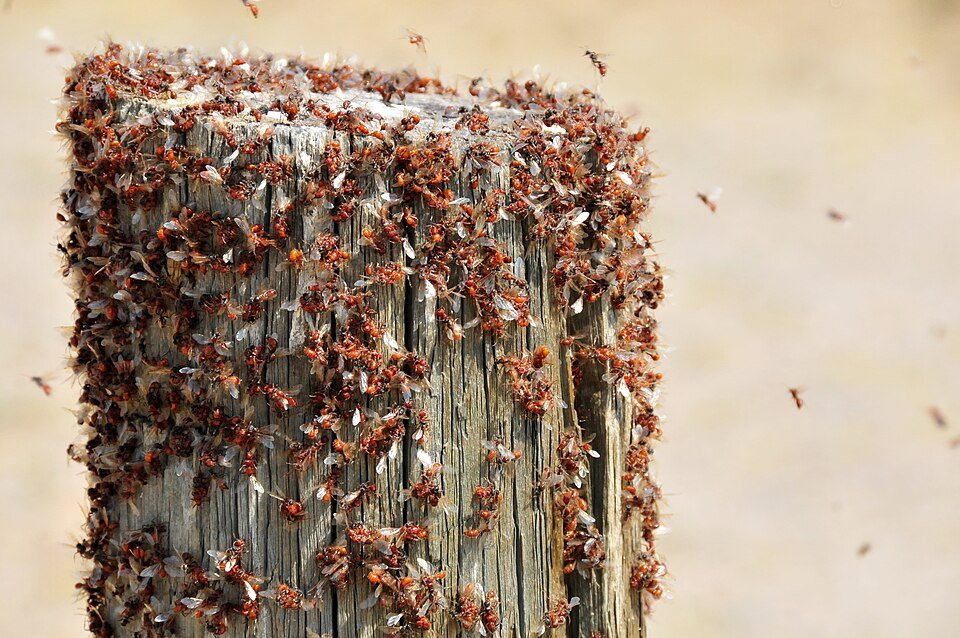
Same-week call — an interior swarm is the present tense announcing itself. Straight antennae and equal wings confirm termite (elbowed and pinched means ants); the photo ID is free and the audit that follows finds the source.
What does termite control cost in Oakwood?
The century audit prices as the reading it is — and pays for itself the first time it converts a panic into labeled archaeology. Treatment quotes from foundation and access; every number lands small against uninsurable sill repair on a house like these.