
Oakwood’s architecture was drawn before aluminum soffit existed, and its wasps have been reading the original plans ever since. The town’s 1910s–1920s housing carries details modern construction abandoned — open eave returns, slate-edge gaps, deep porch cornices, box gutters, half-timbered gables, attic vents louvered in wood — and every one of them is a nesting alcove no vinyl-era house offers. Wasp and hornet removal in Oakwood is therefore a craftsman’s file: the colonies here occupy architecture worth protecting, the removals happen around slate and copper that a careless ladder can cost more than the job, and the exclusion conversation — how to close a 1920 eave without vandalizing it — is half the value of the visit. We call it the detail file, and it rewards a provider who knows what they’re leaning a ladder against.
Where the Details Host
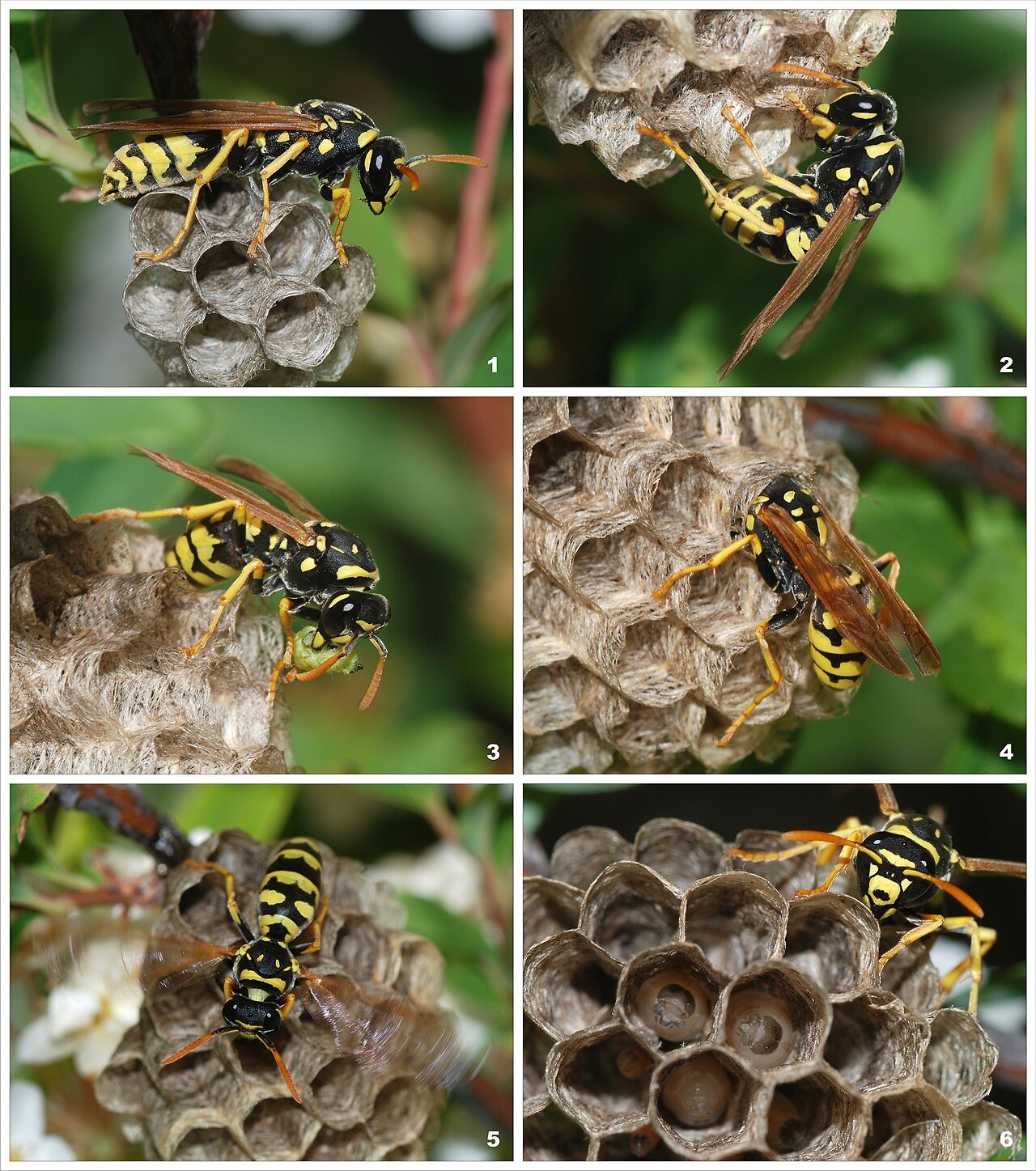
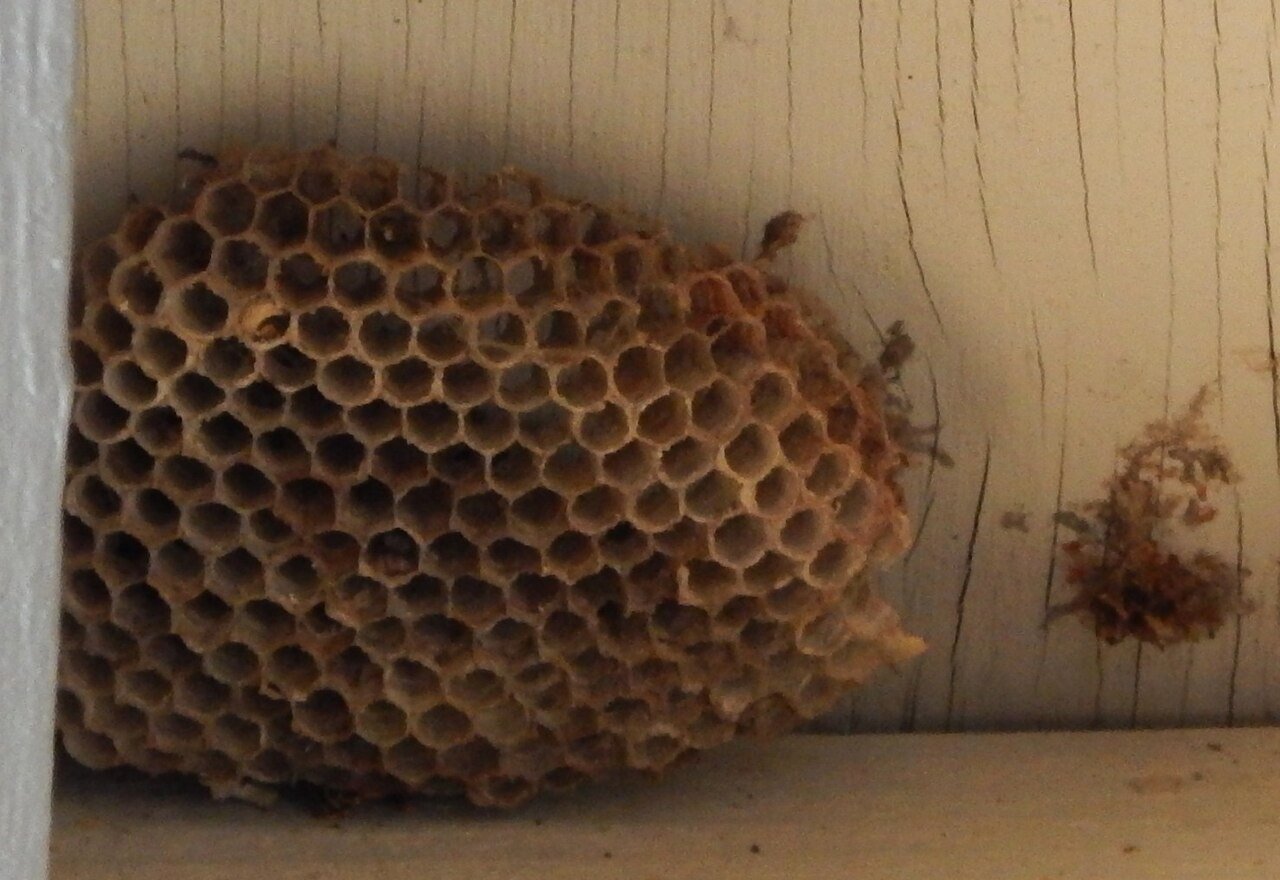
The pattern maps to the millwork. Paper wasps take the porch cornices and eave returns — the deep, shaded overhangs of the classic Oakwood porch are founding-queen real estate of the first order, and the annual spring sweep here catches more early nests per house than anywhere in our footprint. Yellowjackets take the voids: box gutters that have gone dry behind a slow leak, the gap where a slate course meets a copper valley, the louvered attic vent whose screen rusted through in the Reagan years — void colonies at height, in architecture that muffles the hum until the colony is serious. And the mature canopy adds the bald-faced hornet file, footballs hung invisible in the same century oaks that run the town’s carpenter ant economy — discovered at leaf-drop, or by the tree crew, or by a frisbee.
Working Around Slate and Copper
The practical difference between wasp work here and wasp work in a vinyl subdivision is the substrate. Slate cracks under a misplaced ladder foot; box gutters dent; copper valleys scratch; and a hundred-year-old eave return will not forgive an impatient pry bar. Our at-height protocol on this housing stock uses standoffs, padded contact points, and — where the roof itself is the risk — treatment approaches that keep boots off the slate entirely. The exclusion work follows the same ethic: attic-vent screens replaced in kind, eave gaps closed with materials and profiles that match the original detail, and the box-gutter conversation held honestly, because a dry, sound box gutter hosts nothing and a leaking one hosts everything, which makes the roofer’s bill part of the pest program whether anyone likes it or not.
The Oakwood Calendar
- April–May founding sweeps: the porch-cornice and eave-return circuit, catching queens at broom stage — the deepest-value appointment on this housing stock
- Void-colony response: box-gutter and vent-gap yellowjackets treated with the fixed sequence — colony dead first, opening closed second, screens and profiles matched to the house
- Canopy triage: hornet footballs judged honestly — conflict removals over play areas and walks, leave-for-frost verdicts over the ravine edges, and coordination with tree crews before pole-saw season
- Fall detail audit: post-frost walk of the eaves, vents, and gutter lines, closing this year’s openings before next year’s queens read them
The counsel that saves Oakwood owners the most money isn’t chemical at all: keep the details maintained and the wasps lose their housing stock. A repainted eave return, a rescreened vent, a box gutter that drains — each is one fewer alcove on next spring’s founding-queen tour, and unlike a treatment, it appreciates the house. That’s the detail file’s honest bottom line: in a town where the architecture is the asset, wasp control done right is a maintenance partnership, and we’re glad to be the half of it that owns the ladder. The town’s full pest picture lives on our Oakwood service page.
Book the Detail Sweep
One spring circuit covers every cornice, return, and vent on the house — queens at broom stage, gaps on the audit list, and a ladder that respects the slate. Void hum or canopy football already underway? That’s the same call, today.
Frequently asked questions
Why does my Oakwood house get so many more wasps than my friend’s newer place?
Architecture: open eave returns, deep porch cornices, box gutters, and wooden louvered vents are nesting alcoves vinyl-era construction simply doesn’t offer. The 1920s details that make the house worth owning are founding-queen real estate — which is why the spring sweep earns most here.
Is it safe to put a ladder against my slate roof to reach a nest?
Yours, no — slate cracks under a misplaced foot and a century eave won’t forgive a pry bar. Our at-height protocol uses standoffs and padded contact, and where the roof itself is the risk, approaches that keep boots off the slate entirely. The nest costs less than the repair.
There’s a hum near my box gutter — what is that?
Likely a yellowjacket void colony in a dry section behind a slow leak — classic Oakwood. Fixed sequence applies: colony treated and confirmed dead first, opening closed second with matched materials. And the honest add-on: a draining box gutter hosts nothing, so the roofer’s bill is part of the fix.
When should the spring sweep happen?
Late April into May, when founding queens are building golf-ball nests alone — one circuit of the cornices, returns, and porch ceilings catches them at broom stage. The same nest in August is a full-protocol removal at ten times the fuss.
A huge gray nest appeared in my oak when the leaves dropped — now what?
If frost has run, it’s empty — colonies die at frost, old nests are never reused, and a bare-branch football is a photograph. The verdict that matters is September’s: active nests over walks and play areas get removed; ravine-edge neighbors get left for frost, and we’ll say which free.
Can the old attic vents be wasp-proofed without ruining the look?
That’s the exclusion ethic on this housing stock: screens replaced in kind, gaps closed with profiles matching the original detail, nothing that reads as a patch from the street. Done after frost, it closes next spring’s listings without touching the character.
Do wasps damage slate or copper?
No — the risk runs the other direction: careless access damages the roof. The colonies themselves are a stinging hazard and, in voids, an eventual drywall-and-plaster one; the architecture’s enemy is the amateur ladder, not the insect.
What does wasp removal cost in Oakwood?
Flat single-nest pricing, the spring detail sweep priced as the season’s best value, and at-height or void work quoted by access and protocol — always cheaper than a cracked slate course, which is the comparison that actually matters on this street.