Lebanon’s most valuable timber isn’t in its houses — it’s in its barns. The horse country’s working structures carry framing no lumberyard sells anymore: bank-barn timbers a forearm thick, hay lofts floored in full-dimension plank, stall framing that holds half-ton animals against it daily — and all of it stands on the arrangement subterranean termites like best, timber sills at grade on stone or early block, in buildings whose moisture runs high by design. Termite control in Lebanon gives the barn file top billing for a reason the county’s owners feel in their stomachs: a compromised sill in a house is a repair bill, but a compromised stall partition or loft beam is an animal-safety event, discovered — if the inspection cadence fails — by the loaded hay wagon or the horse that leans. We call it the barn frame file, and it runs on the same rule as everything equestrian: check the structure the way you check the animal, on schedule, before it tells you itself.
Why Barns Feed the File
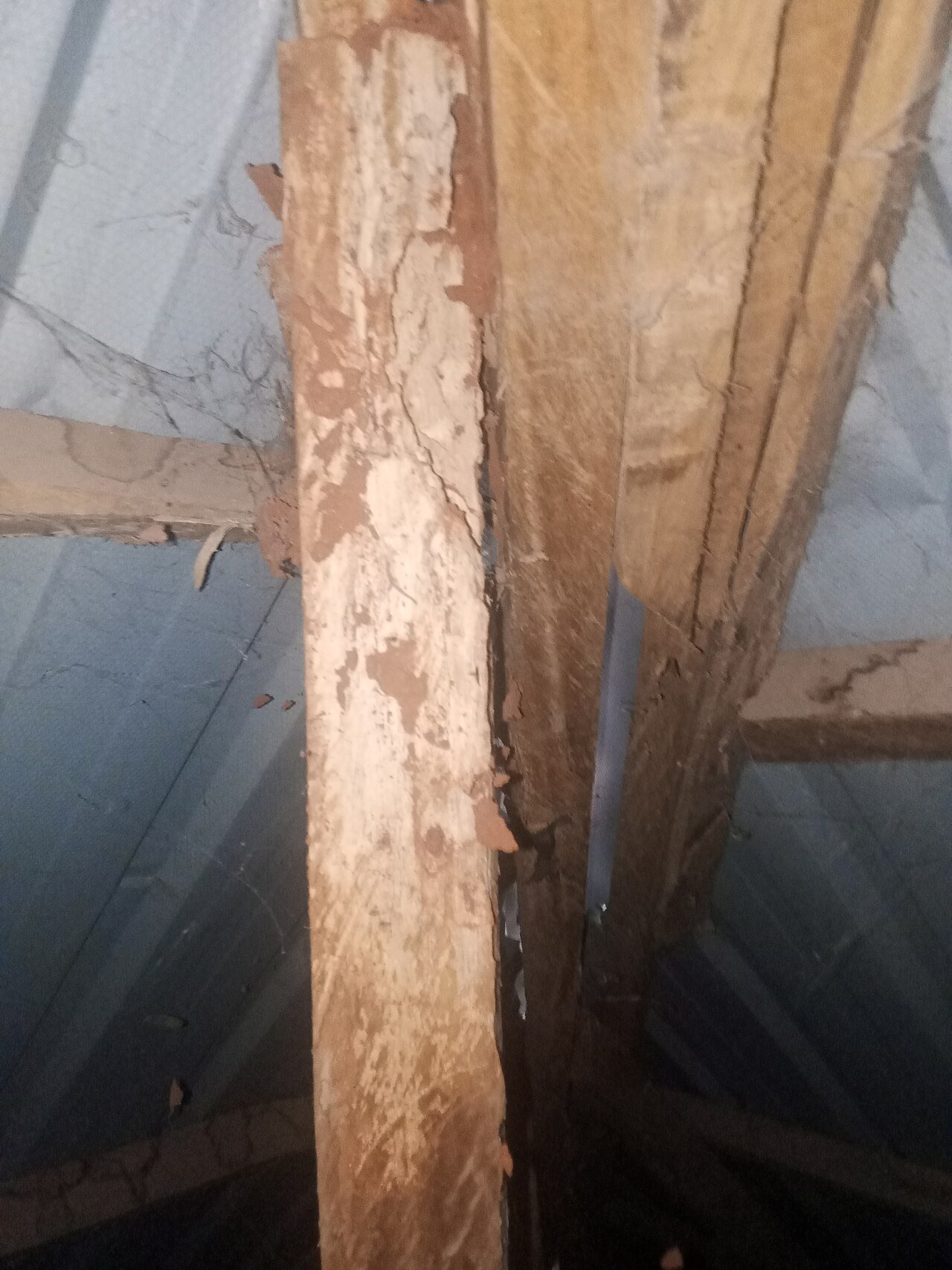
A working barn assembles the risk factors deliberately. Moisture is operational: wash racks drain across grade, stall floors hold wet bedding against partition bases, water troughs overflow, and manure handling keeps organic moisture cycling at the exact soil line the sills occupy. Timber meets soil constantly — grade boards, door posts, the bank side’s earth-bermed wall — and the buildings’ age means much of that contact has run for a century. And observation fails structurally: the sill lines hide behind stall mats, stacked hay, and equipment, so the visual sweep a farmhouse basement gets never happens in the barn’s working clutter. The result our inspections keep finding: active colonies in barn timber years before any house on the parcel shows evidence — the barn is both the parcel’s biggest termite asset and its earliest warning system, exactly as the farmstead-perimeter logic predicts, with higher stakes on the outcome.
The Stall-Line Inspection
The barn protocol is the crawl-space discipline adapted to livestock architecture: sill lines walked with the mats lifted and the hay moved — annually, on the calendar, not when someone notices — pier and post bases probed at grade, the bank wall’s interior face read for tubes, loft support beams sighted from below, and the moisture map drawn honestly (which wash-rack and trough corrections would dry the highest-risk soil). Treatment respects the occupants the way everything in a barn must: monitored bait lines are the default — verifiable, animal-remote, and suited to foundations trenching can’t honestly reach — with any liquid work placed and timed around the animals’ access, never across it.
The Lebanon Ledger, Complete
This page closes the town’s five-file set, and the through-line rode the whole way on horseback: Lebanon’s pest files are its two economies read honestly — the feed-room and molasses economies provisioning the barns, the stable-and-streetside calendar guarding animals and patios alike, the oldest-kitchen file keeping heritage hospitality boring, and the barn frames themselves under structural watch. Five files, two economies, one consolidated calendar — the whole set lives on our Lebanon service page.
- Barn programs: the annual stall-line walk, monitored bait perimeters, and the moisture map — scheduled with the same visits that run the rodent stations and wasp sweeps
- Downtown’s historic standard: archaeology-grade inspections and preservation-minded treatment for the county seat’s timber-sill commercial blocks
- Residential service: the standard inventory — older frames inspected on cadence, newer streets’ builder pretreatments assessed against the expiry clock
- Swarm triage: spring emergences ID’d free — and a barn swarm outranks a house swarm on the response list, because of what stands on the timber
Walk the Stall Line
One annual visit lifts the mats, probes the posts, reads the bank wall, and hands you the verdict a working barn deserves — with bait-line protection placed animal-remote and the moisture list drawn honest. The horses trust the timber; somebody should verify it.
Buying or selling in Lebanon? What a lender, a VA file, or a listing agent asks for is not a treatment — it is a written report. That is a termite and WDI inspection in Lebanon: $99 flat on the lender-ready NPMA-33, next business day, PDF the day we inspect. Treatment only enters the conversation if the report actually finds something.
Frequently asked questions
Are barns really at higher termite risk than houses?
Structurally, yes: timber sills at grade on century stone, operational moisture (wash racks, wet bedding, troughs) cycling at the soil line, and sight lines blocked by mats, hay, and equipment. Our parcel inspections find active barn colonies years before any house evidence — the barn is the early-warning system.
Why is barn termite damage a safety issue and not just a repair?
Because of what stands on the timber: a compromised stall partition, loft beam, or bank-wall sill is load-bearing structure over and around half-ton animals. Discovery by the loaded hay wagon or the leaning horse is the failure mode the annual walk exists to prevent.
What does the stall-line inspection involve?
The crawl-space discipline adapted to livestock architecture: mats lifted and hay moved along every sill run, post and pier bases probed at grade, the bank wall’s interior face read for tubes, loft supports sighted, and the moisture map drawn — annually, on the calendar.
Is termite treatment safe around horses?
Done our way: monitored bait lines are the default — verifiable, placed animal-remote, and suited to foundations trenching can’t reach — and any liquid work is placed and timed around the animals’ access, never across it. Every placement is walked with the owner.
Which moisture fixes matter most in a barn?
The ones at the sill line: wash-rack drainage routed away from grade contact, trough overflow corrected, wet bedding pulled back from partition bases, and downspouts discharging clear of the bank wall. Dry soil at the sills is half the protection.
I found wings on a stall ledge this spring — how urgent?
A barn swarm outranks a house swarm: it means an established colony inside foraging range of load-bearing timber over animals. Photo the wings (straight antennae, equal wings = termite — ID free) and book the same-week walk.
Do the downtown historic buildings get different treatment?
The preservation standard: archaeology-grade inspections that date the additions, active-vs-historical stated plainly, and treatment planned around original fabric — monitored bait where trenching or drilling would cost character.
What does termite control cost in Lebanon?
Barn programs ride the consolidated equestrian calendar — one visit rhythm for rodent, wasp, ant, and termite files — priced per structure; residential and downtown work quotes from the walk; and every number stays small against a loft beam no insurance covers.