Sweet feed is named honestly: it’s grain dressed in molasses, and every barn in Lebanon’s horse country stores gallons of the stickiest sugar in agriculture. To the local ant population, that inventory is the county’s richest standing resource — and ant control out here runs on the consequences. The same feed rooms whose spilled grain finances the rodent economy run a parallel sugar market at ant scale: molasses film on bin rims, sweet-feed fines swept into corners, supplement tubs with syrup residue, the treat shelf’s open bag — a provisioning network that recruits odorous house ant colonies from every fencerow within range and concentrates them exactly where tack, feed, and daily work happen. We call it the molasses economy, and closing it is husbandry first, chemistry second — the same order as everything else that works in a barn.
How the Sugar Market Runs
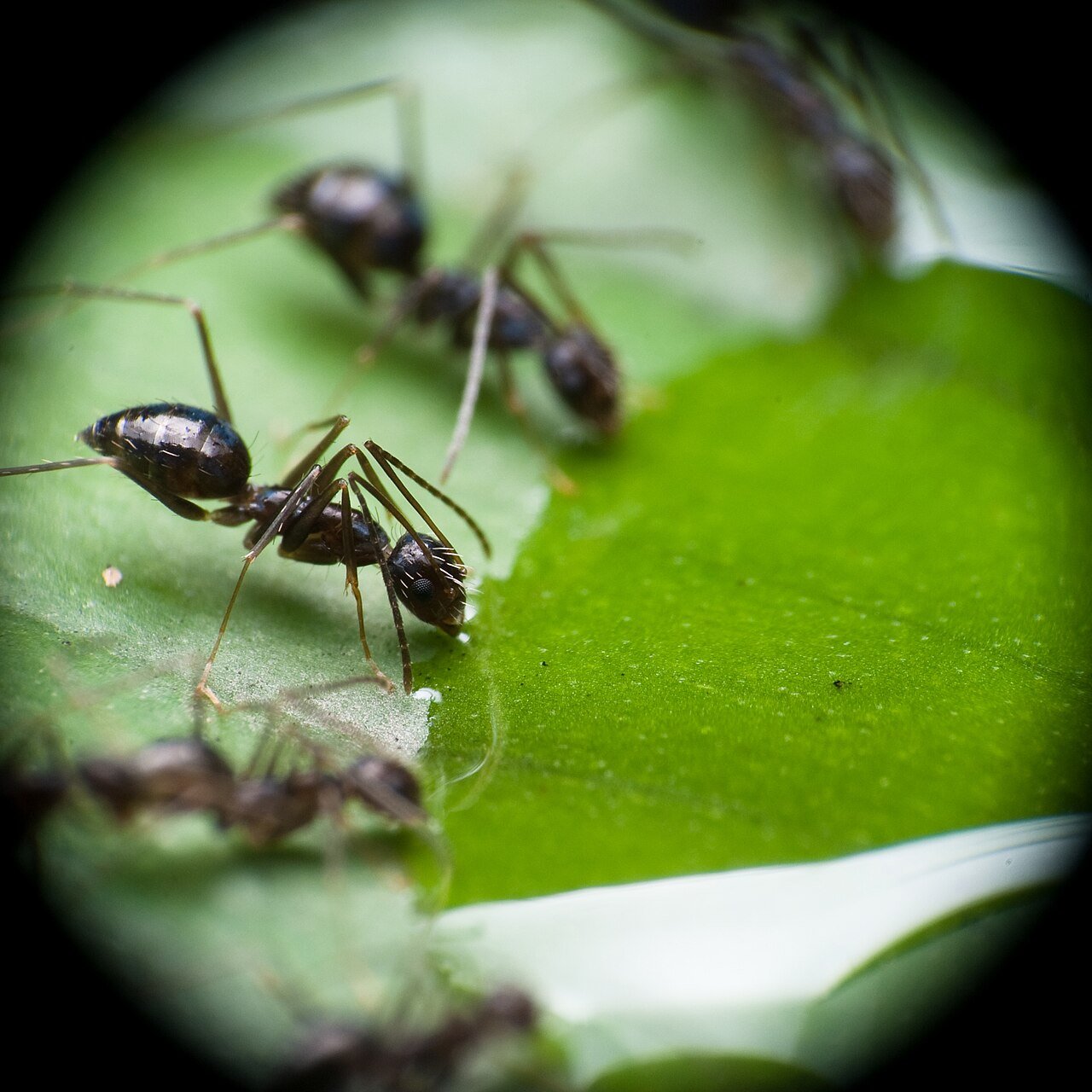
Odorous house ants are sugar specialists with a budding habit — colonies split into satellite nests wherever food and moisture justify a franchise — and a working barn justifies several: the feed room (the flagship store), the wash-rack drain line (water), the tack room’s treat shelf, and the hay loft’s condensation edges. Once established, the network runs trails along wall plates and rafter lines with rush-hour reliability, and the summer surge after every wet week brings the fencerow colonies in on top of the residents. The husbandry that closes the market mirrors the rodent playbook with a sugar accent: feed in sealed steel with the bin rims wiped (the molasses film on the rim recruits harder than the grain inside), the fines swept weekly, supplement lids rinsed, the treat bag clipped shut, and the wash-rack’s standing water corrected. What remains after the market closes gets the chemistry that works on this species: non-repellent baits on the actual trail lines, carried home through the whole satellite network — never repellent sprays, which split a barn’s network into more barns’ worth of nests.
Placement Around Animals
The rule that governs everything in a barn governs this: placements are designed around the animals. Ant baits go in enclosed stations along rafter lines, wall plates, and other above-muzzle, behind-barrier locations — never open gel where a curious lip or a barn cat’s paw can reach, never anything in the feed room at feed height. The products themselves are chosen for enclosed-station use, and the placement map gets walked with the owner so every station’s location is known. A program that requires trusting luck around livestock isn’t a program; it’s a liability with an invoice.
The Rest of Lebanon’s File
- The historic core: downtown’s stone foundations and brick walks run the standard old-town file — wet-week surges, wall-void satellites, and pavement ants in the joint mileage, handled bait-first with the mortar honesty
- Residential service: the subdivisions between horse country and downtown get the usual seasonal calendar — spring surge, summer joints, fall tightening
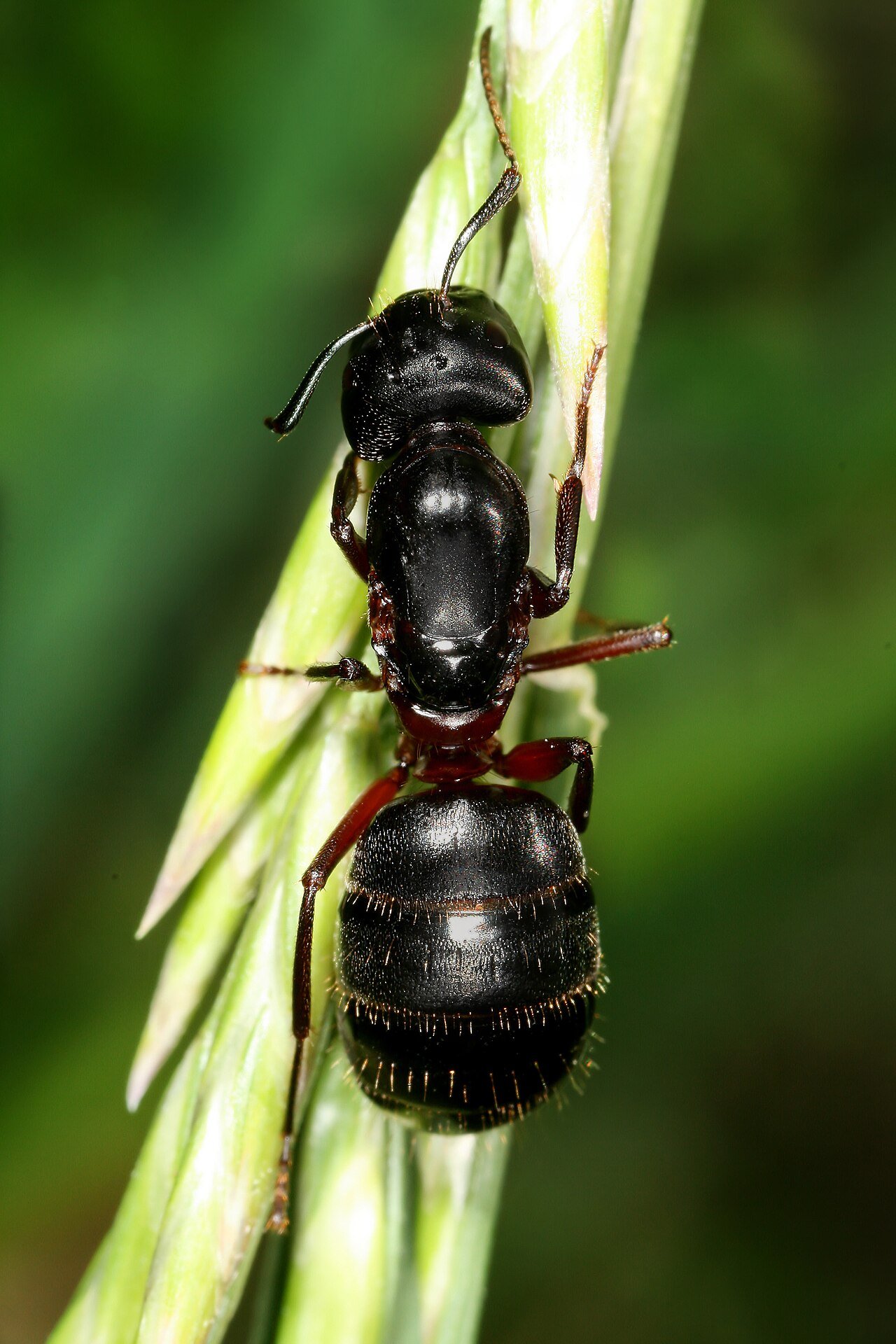
- The carpenter check: big black ants near the county’s wooded creek corridors get the residency inspection — foraging trail or wall-void satellite, sorted by the night test and said plainly
- Pasture mounds: field ant domes in turnout ground get the honest triage — distant ones stay (they’re soil-workers, not threats), and the ones in high-traffic paddock zones get colony-deep treatment that respects the ground horses work on
The through-line with the town’s other files is deliberate: Lebanon’s barns already run one consolidated pest calendar for rodents and wasps, and the ant program rides the same visits — one truck, one placement map, one logbook, every file read per stop. That consolidation is the working answer for properties with animals: fewer service windows, known placements, and a provider who learns the building’s whole biology instead of one species’ slice of it. The town’s full picture lives on our Lebanon service page.
Close the Sugar Market
One barn walk maps the molasses economy — rims, fines, tubs, trails — and one program closes it: husbandry list first, enclosed-station baiting second, placements designed around every animal and walked with you. The horses keep the sweet feed; the ants lose the franchise.
Frequently asked questions
Why does my barn have so many ants?
It runs the county’s richest sugar market: molasses film on sweet-feed bin rims, fines in the corners, supplement-tub residue, the treat shelf — a provisioning network that recruits odorous house ant colonies from every fencerow in range. The barn isn’t dirty; it’s stocked.
What’s the first fix — spray or cleanup?
Husbandry first, always: sealed steel feed storage with the rims wiped (the film recruits harder than the grain), weekly fines sweep, rinsed lids, clipped bags, wash-rack water corrected. Close the market and the chemistry that follows has a fraction of the work to do.
Is ant bait safe around horses and barn cats?
Only the way we place it: enclosed stations at rafter lines and wall plates — above muzzle height, behind barriers, never open gel, never anything at feed height — with the placement map walked with the owner. Around livestock, unknown placements aren’t a program; they’re a liability.
Why did spraying the feed room make it worse?
Odorous house ants respond to repellents by budding — the barn’s network split into more satellites in more rooms. Non-repellent baits carried home along the trail lines are the chemistry that ends a network; sprays are the chemistry that franchises it.
Are the big dirt mounds in the turnout a problem?
Field ant domes — soil-workers, not stingers-that-swarm, and distant ones honestly stay: they aerate ground and eat pest insects. Mounds in high-traffic paddock zones get colony-deep treatment chosen for ground horses work on.
What about the big black ants near the creek trees?
Carpenter ants off the wooded corridors — they get the residency inspection: a trail in from the yard is foraging (bait and exclusion), frass and wall rustle mean a satellite in moist timber, which is the structural conversation. The night test sorts it, free.
Does downtown Lebanon have its own ant situation?
The standard historic-core file: stone foundations surging after wet weeks, satellites in generous wall voids, pavement ants working the brick-walk joint mileage — all bait-first, with the honest note when a mortar patch beats a second treatment.
What does ant control cost in Lebanon?
Barn programs ride the same consolidated visits as the rodent and wasp files — one truck, one placement map, one logbook — priced per property; residential runs the flat seasonal calendar; and the husbandry list that does half the work comes free with every quote.