
Every Ohio kid knows the roly-poly, and every Ohio basement owner eventually meets its darker mood: dozens of little armored tanks — gray, segmented, slow — along the basement wall, in the window wells, under the welcome mat, occasionally dead in drifts behind the storage boxes. Pillbugs and sowbugs are among the most common creatures homeowners ask us about and among the least dangerous things that will ever walk into your house — but their presence indoors is a message worth reading, because these animals cannot survive in a healthy basement. Here is the full story: what they are (the answer is genuinely delightful), pillbug versus sowbug, what they eat, why they are in your house, and how to make them leave by fixing what actually invited them.
The delightful part: you have crustaceans
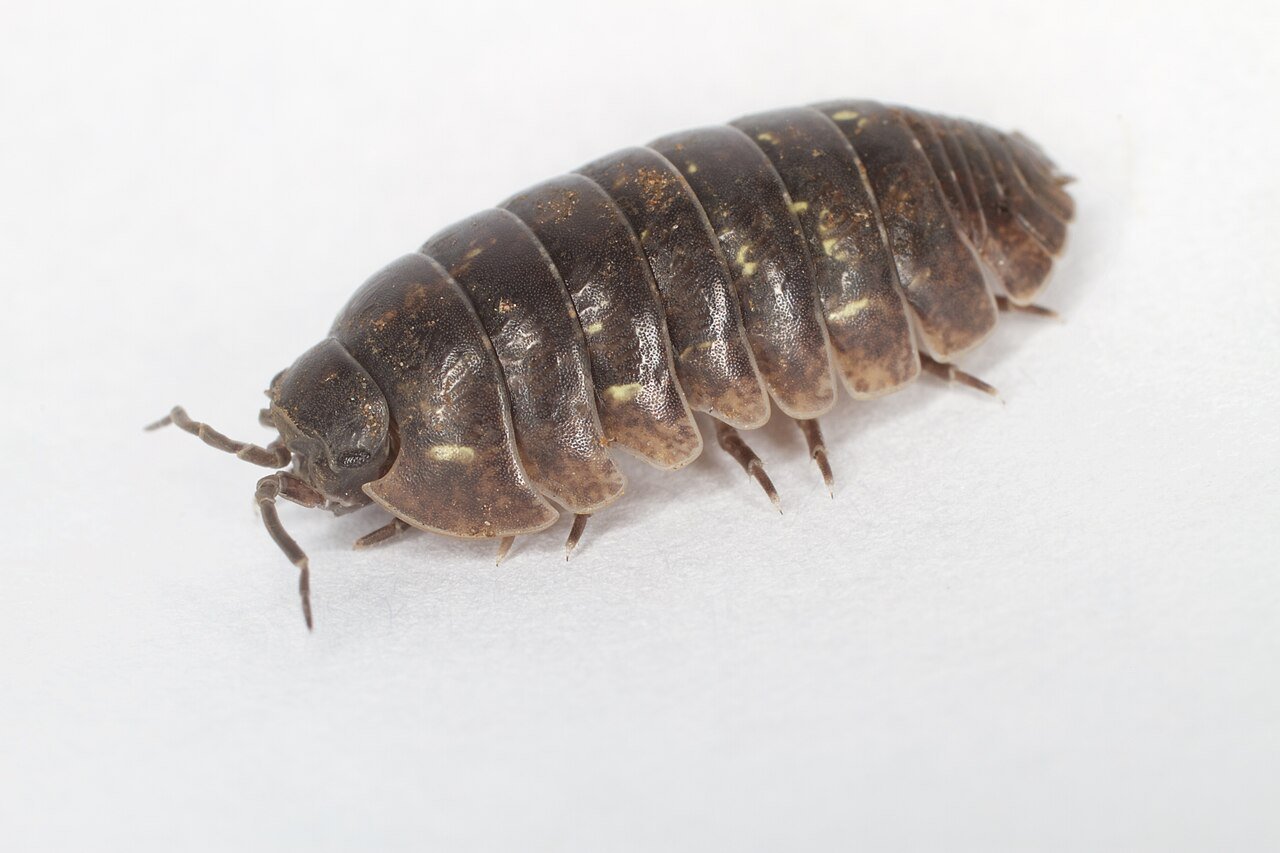
Pillbugs and sowbugs are not insects. They are woodlice — terrestrial crustaceans, family Armadillidiidae and relatives, kin to shrimp, crabs, and lobsters — and they never fully left the sea behind. They breathe through gill-like structures (pleopods) that must stay moist to function, which is the single fact that explains everything else on this page: where they live, why they invade after rain, why they die in your dry hallway, and why moisture control defeats them completely. They carry their young in a fluid-filled brood pouch like tiny kangaroo-lobsters, they molt in halves (back first, front later — a two-tone woodlouse is mid-wardrobe-change, not diseased), and some can drink through their tail end. As household guests go, they are more aquarium escapee than pest.
Pillbug or sowbug: the playground test
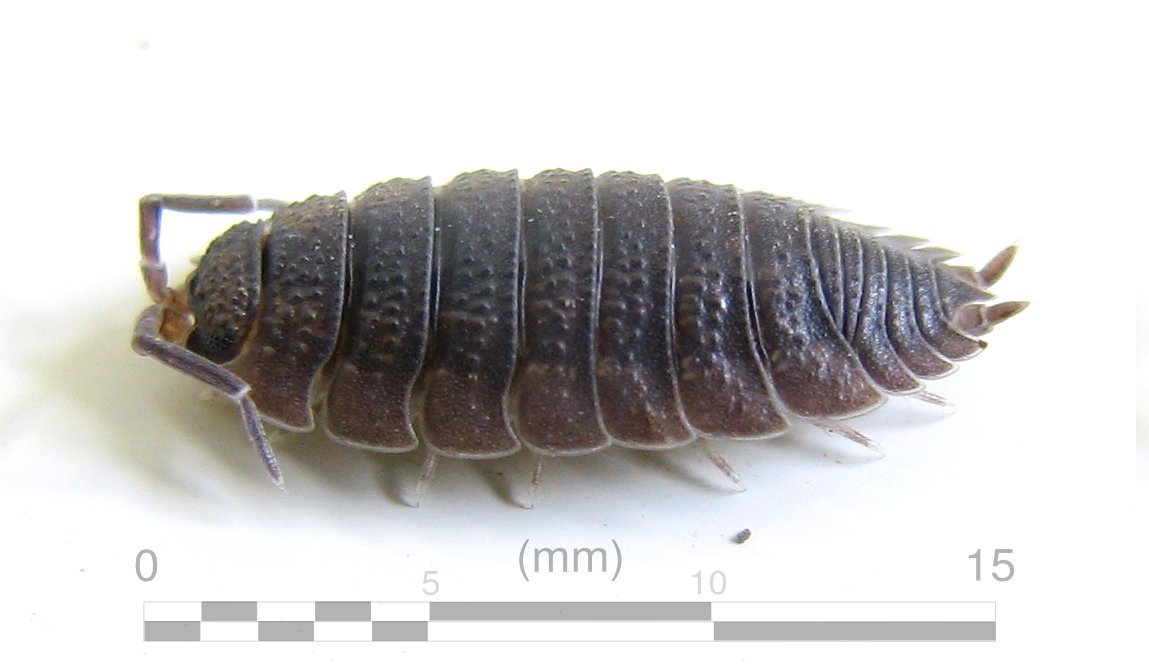
Both are half-inch, gray, fourteen-legged, and armor-plated; the split takes two seconds. Pillbugs (Armadillidium vulgare and kin — the true roly-poly) roll into a perfect sphere when poked, have a rounded rear with no visible appendages, and a domed profile. Sowbugs (Porcellio scaber and kin) cannot roll — they run instead, faster and flatter, and carry two small tail-like spikes (uropods) off the back end. The distinction is trivia for the homeowner (identical habits, identical fix) but useful for the field: sowbugs tolerate slightly drier conditions and travel farther indoors, so a woodlouse found far from any door in a dry room is more often a sowbug on its last legs.
What do pillbugs eat? (The Armadillidiidae menu)
Decay. Pillbugs and sowbugs are detritivores — nature’s cleanup crew — eating decomposing leaves, rotting wood, fungus, algae film, dead plant roots, the occasional dead insect (including each other, unsentimentally), and sometimes their own molted shells for the calcium. In gardens they are overwhelmingly beneficial, shredding litter into soil; their only botanical sin is nibbling seedlings and soft fruit touching damp ground (the strawberry with the excavated underside was probably them). What they do not eat: your house. No wood damage, no fabric, no pantry interest, no bites, no stings, no disease. Indoors they starve as fast as they dry — the drift of dead ones behind the boxes was a colony that wandered in and found nothing a crustacean could live on.
Why they are in your house: the moisture-meter reading
A woodlouse indoors is a walking humidity report. They enter from dense outdoor populations living within a few feet of the foundation — under mulch, leaf litter, stones, planters, and door mats — and they persist indoors only where relative humidity stays high enough for gill-breathing: damp basements, crawl spaces, under sinks with slow leaks, around floor drains and sump pits, in the cardboard-on-concrete storage zone. A handful of wanderers after a soaking rain means nothing (rain floods their outdoor harborage and sends refugees under every door in the neighborhood; they will be dead by Thursday). A standing population — live ones every week, juveniles among them — is a diagnostic finding: some part of your basement or crawl space is running damp enough to farm crustaceans, and the same conditions are quietly feeding mold risk, camel crickets and their spiders, springtails, and centipedes. We tell customers plainly: the pillbugs are the cheapest moisture inspection you will ever get. Read them.
The fix: dry first, seal second, spray almost never
- Drop the humidity: a properly sized dehumidifier holding the basement under 50% is the single decisive move — populations collapse within weeks because the animals literally cannot breathe dry air
- Fix the water: downspouts extended, grading corrected, the slow leak under the sink and the sweating pipe insulated, window wells cleaned and covered
- Starve the harborage: mulch pulled back to a six-inch visible foundation strip, leaf litter cleared, stones and boards lifted, cardboard off the concrete onto shelving
- Seal the routes: door sweeps that touch the threshold, caulk at the sill plate and basement window frames, weep holes screened
- Chemical control: honestly optional — a perimeter treatment knocks down a heavy outdoor population while you fix the fundamentals, and that is the one context where it earns its cost; interior sprays for woodlice are theater against animals already dying of dryness
Notice this is the same moisture playbook our earwig and bathroom bug guides prescribe — the whole damp-basement guild falls to one dehumidifier. When we treat “pillbug jobs,” the invoice usually reads like a building consultation with a light perimeter application, because that is what actually works, and the re-treatment guarantee means we would rather fix your gutter angle than sell you a quarterly crustacean subscription.
In the garden: mostly ally, occasionally nibbler
Before anyone declares war on the mulch bed, the ledger: woodlice are premier decomposers, converting leaf litter and dead roots into soil faster than almost anything else their size, aerating as they go, and feeding the birds, toads, and ground beetles that eat your actual pests. Their damage column is short and specific — germinating seedlings girdled at the soil line in cool wet springs, and soft fruit (strawberries especially) excavated where it touches damp ground. The garden-side fixes are surgical, not chemical: seedlings started in trays or collared with cut cups until stems toughen, strawberries mulched with straw so fruit rides dry, drip irrigation in the morning instead of evening soakings, and the decorative mulch kept a hand-span off tender stems. A garden without woodlice would decompose slower and feed fewer songbirds; the goal is boundaries, not extermination.
Roly-poly rapid-fire: the questions we actually get
Are they harmful to my kids or pets who touch (or eat) them?
Harmless on both counts — no bite, no sting, no toxin, no parasites transmissible to people or pets. Kids handling roly-polies is a rite of passage we fully endorse, and the dog that crunches a few gets fiber and regret, nothing worse. They are, in fact, one of the best starter “pets” in nature — a jar terrarium with damp soil, dead leaves, and a piece of bark will sustain a pillbug colony for years and teach more biology than a textbook.
Why do I find them dead in drifts?
Because the indoors is a desert wearing a house costume. Wanderers follow humid night air under the door, the sun rises, the furnace runs, and the gill-breathers desiccate where they stand — the drift is accumulation, not a die-off event or a treatment effect. Vacuum, then read the message: a big drift means a big outdoor population within feet of that door, which means harborage to clear and a sweep to fit.
Hundreds appeared in the window well — infestation?
Habitat. A leaf-filled window well is a woodlouse resort: shaded, damp, food-stocked, and walled against predators. Clean it, fit a cover, and the resort closes. The well-and-basement combination is exactly why our mid-century neighborhood pages keep mentioning window-well maintenance — one afternoon, four pest species evicted.
The deeper biology, for the curious
A few more facts that make the basement visitor more interesting than alarming. Woodlice run on a molting economy: they grow by shedding armor roughly monthly through their two-to-five-year lives (long-lived, for something underfoot), and a population’s shed shells in a window well can read as more animals than exist. Their blood runs on hemocyanin — copper-based, faintly blue, the lobster inheritance again. Mother woodlice carry dozens of young in the marsupium pouch for weeks, then shepherd pale miniature versions of themselves through their fragile first molts — the tiny white “baby pillbugs” homeowners photograph in flower pots. And ecologically they concentrate heavy metals from soil into their tissue, making them both a bioremediation curiosity in contaminated ground and a reason songbirds thrive where woodlice do. None of this changes the fix — dry the basement — but it might change how you feel about the little armored refugee crossing the floor. It has been perfecting that armor since before the dinosaurs; your dehumidifier will still win.
The bottom line
Pillbugs and sowbugs are harmless, beneficial, gill-breathing crustaceans whose only offense is telling you the truth about your basement’s humidity. Wanderers after rain: sweep and shrug. A standing indoor population: thank them for the free moisture report, run the dry-seal-starve playbook, and watch the whole damp-basement guild leave with them. And when the population is heavy enough to want professional help — or the moisture report turns out to have a bigger story behind it — the inspection is free and the advice is honest either way: (937) 569-3330, Greater Dayton Pest & Rodent, Ohio licensed #170858.
The damp-basement guild: earwigs · bathroom bugs · the spiders that hunt them · common Ohio spiders.
A month-by-month woodlouse forecast for the Miami Valley
March–April: the spring emergence — populations wake under mulch as soil thaws, and the first rain-refugee wanderers appear under basement doors. Anything indoors now overwintered in your walls or well; note where. May–June: breeding season and peak garden presence; seedling protection matters these six weeks and barely matters otherwise. July–August: drought behavior — in dry stretches they retreat deep under harborage and indoor sightings nearly stop; after thunderstorms they surge under doors in numbers (the “invasion” calls we field every muggy August morning are this, and they self-resolve). September–October: the big migration indoors as nights cool — the season a standing basement population usually establishes, and the right month for sweeps, sealing, and well covers. November–February: outdoor populations dormant; every live woodlouse you see indoors in January is certified locally grown, breathing your basement’s excess humidity. A juvenile in winter is the strongest possible signal the dehumidifier is losing.
That last diagnostic deserves its own sentence, because it is the page in one line: adult wanderers tell you about the weather; juveniles indoors tell you about the building. Halfsized pale woodlice in the basement mean reproduction inside the envelope, which means standing moisture, which means the fix is a moisture fix — and if finding that moisture takes more than a flashlight, that is exactly the kind of inspection we do free.
Look-alike check: what else is armored and gray down there
Three basement residents get filed under “roly-poly” by mistake, and two of them matter more. Millipedes — longer, rounder, many more legs, and they coil into a spiral rather than a ball; same moisture message, same fix, slightly more odor when crushed. Silverfish — teardrop-shaped, silvery, three tail bristles, fast: unlike woodlice these do eat things you own (book bindings, starched fabric, wallpaper paste) and a standing silverfish population earns actual treatment along with the humidity work. Carpet beetle larvae — fuzzy, banded, slow, found near baseboards and closets: also a genuine fabric pest, covered in their own guide. The sorting rule: armor plates and fourteen legs, relax and dehumidify; bristles or fuzz, keep reading this site. And when the flashlight verdict is ambiguous, the photo-text to (937) 569-3330 remains the free tiebreaker it has been all along.
Do pillbugs mean my house has termites or wood rot?
They flag the conditions, not the pests. Woodlice eat wood only after fungus has already softened it — so a cluster feeding on a sill plate or joist end is announcing rot in that wood, and chronically damp wood is also the welcome mat subterranean termites look for. Finding woodlice on structural lumber (rather than floors and litter) upgrades the situation from “dehumidify” to “get the wood looked at” — a free call for us either way, and one of the odd little early-warning services this humble crustacean provides.
The crawl-space chapter: where woodlouse populations actually live
The heaviest indoor populations we find are never in finished basements — they are under the additions. Crawl spaces with bare-earth floors, the standard construction under countless Miami Valley family rooms and sunrooms, run at ground humidity year-round and stock everything a woodlouse economy needs: damp soil, fallen insulation, scrap lumber from the original build, and darkness. A colonized crawl space seeds the rooms above through every plumbing penetration and duct chase — the mystery of “pillbugs upstairs in the hall bathroom” is almost always a crawl space downstairs running its own climate. The fix scales with the finding: a vapor barrier over bare earth (six-mil plastic, lapped and taped — a weekend job that transforms the space), insulation refitted off the ground, scrap wood removed, vents balanced seasonally, and where chronic wetness persists, the conversation about drainage happens with facts instead of guesses. We inspect crawl spaces on every rodent and moisture-guild job because they are where the building tells the truth — and if yours has been farming crustaceans under the family room, better to learn it from a flashlight than from the floor joists a decade later.
What about diatomaceous earth for pillbugs?
It works where it stays dry — which, for an animal that only lives where it is damp, is the whole joke: the places DE would kill woodlice are places woodlice refuse to be. A thin band in a genuinely dry entry gap or under a raised threshold can intercept wanderers; everywhere else the humidity that sustains the pillbugs deactivates the powder within days. Our full DE guide covers the chemistry; the woodlouse-specific verdict is: fix the moisture and you will not need the powder, keep the moisture and the powder will not work. There is no product on any shelf that outperforms sixty dollars of dehumidifier against this particular guest — and any company that quotes you a quarterly spray program for roly-polies without once saying the word “humidity” has told you everything you need to know about the quote.
So the next time a small gray tank trundles across the laundry-room floor, you will know the whole story: an ancient, harmless, lobster-blooded decomposer, lost indoors, breathing your basement’s report card through its gills. Roll it gently onto a dustpan, return it to the mulch it came from, and go check what the report card said — and if the answer needs more than a dehumidifier, the free inspection is one call away.
Frequently asked questions
What is the difference between pillbugs and sowbugs?
The roll test: pillbugs (rolly pollies) curl into perfect spheres; sowbugs stay flat and carry two small tail-like appendages — and cannot roll. Both are terrestrial crustaceans (land woodlice), moisture-bound, harmless, and managed identically.
Are sowbugs and pillbugs harmful?
Completely benign — no bites, stings, disease, or structural damage; at most a nibble on seedlings in wet years. Indoors they are moisture refugees dying of dryness; their entire significance is what their presence says about damp.
Why are they in my basement or garage?
The humidity report: land crustaceans breathe through gill-like structures and survive only where moisture persists — a standing indoor population certifies a damp space (seepage, condensation, poor ventilation). Dry below 50% and they physically cannot stay.
How do I get rid of pillbugs and sowbugs inside?
Vacuum the visitors, run the dehumidifier, and close the grade-level doors: sweeps, thresholds, foundation-seam caulk. No insecticide warranted — the population is always resupplied from outside, and the outside fix (below) is the durable one.
What attracts them to my foundation?
The damp organic band: deep mulch, leaf litter, stones and boards on soil, downspout swamps — the same moat violations every crawling pest on this site exploits. Pull the mulch to a dry band and their staging area evaporates.
Do sowbugs damage plants or gardens?
Marginal seedling grazing in the wettest years — they are detritus recyclers by trade, converting dead leaves to soil. In compost they are workforce; in the garden they are mostly janitors caught near the damage others did.
Why do they die curled up on my floor?
Desiccation — indoor air kills them within days, leaving the coiled shells along baseboards that mark last week’s migration and this month’s entry gap. The bodies are a map: their line points at the door that needs a sweep.
Are they related to shrimp, really?
Genuinely — terrestrial isopods are crustaceans, closer kin to shrimp and crabs than to any insect, still carrying the gill heritage that chains them to moisture. The backyard’s land shrimp: the fact that wins the dinner table.
Do pillbugs and sowbugs signal other pest problems?
Directionally — a foundation damp enough for isopod congregations is auditioning for ants, millipedes, camel crickets, and termite-conducive conditions. Treat their masses as a free perimeter-moisture audit with legs.
When would these ever need professional attention?
The conditions, not the crustaceans: persistent indoor populations mean hidden moisture worth diagnosing, and mass foundation congregations mean the drainage-and-habitat consult: (937) 569-3330. The isopods themselves remain acquitted — and mildly delightful.