
Somewhere on an Ohio dock, boathouse wall, or lakeside tree right now, somebody is meeting the biggest spider they will ever see in this state — legs spanning three to four inches, body the size of a thumb, flat against the boards like something that escaped from a nature documentary about somewhere else. That’s the fishing spider — called the dock spider at every marina and the dark fishing spider in the field guides — and this page is its complete file: what it is, why it’s enormous, the walking-on-water and diving tricks that earn the name, what it means when one is on your house instead of your dock, and the acquittal it has earned about as thoroughly as any spider in this library.
Meet Dolomedes: the Spider Built to Palm-of-Your-Hand Scale
Ohio hosts several fishing spider species, and the one behind nearly every alarmed dock photo is the dark fishing spider (Dolomedes tenebrosus) — mottled gray-brown with banded legs, the female’s leg span reaching three-plus inches, making her comfortably the largest spider Ohioans encounter. The camouflage reads as tree bark because that’s the day job: despite the name, dark fishing spiders spend most of their lives on vertical wood — tree trunks, dock pilings, boathouse walls, and the sides of lake cottages — hunting at night and flattening motionless by day. Their striped cousin (Dolomedes scriptus) and the six-spotted fishing spider (Dolomedes triton, greenish with white racing stripes) stay closer to the water itself. All of them share the family superpowers: velvety water-repellent legs that let them stand and sprint on the water’s surface, and the ability to dive below it — clutching a bubble of air on their body hairs — where they can stay submerged for many minutes waiting out threats or chasing prey.
Ohio’s largest spider is harmless and lives by water. For the ones that keep rebuilding in your basement, there is spider control in Dayton.
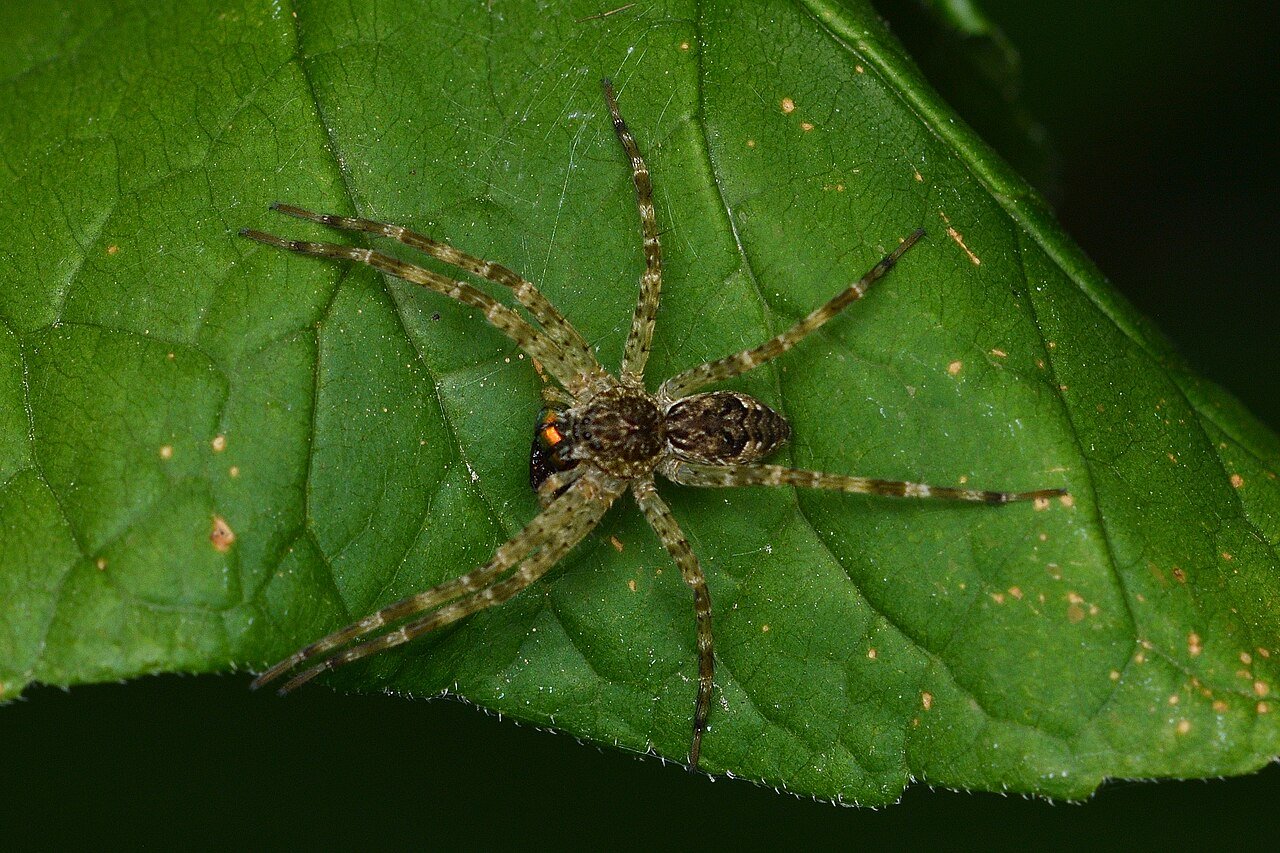
Do Fishing Spiders Actually Catch Fish?
Occasionally, yes — genuinely. Fishing spiders detect ripples the way web spiders read silk vibrations, anchor a couple of hind legs to a dock or lily pad, and rush surface prey: aquatic insects overwhelmingly, but documented catches include tadpoles, and small minnows up to several times the spider’s weight. The fish-catching is a bonus round, though — the family’s bread and butter is the insect traffic of the shoreline, which makes every marina fishing spider a quiet volunteer in the war on the mosquitoes and midges that breed exactly where it hunts. A boathouse with a resident dock spider runs measurably lighter on the insects that actually bite you.
The Sting of the Thing: What a Fishing Spider Can Do to You
Here’s the entire honest threat assessment: a cornered, grabbed, or squashed-against-skin fishing spider can bite, and the bite is routinely compared to a bee sting — brief pain, minor swelling, done. They are not aggressive, not venomous in any medically meaningful way, not inclined to be anywhere near you if given a vote, and their overwhelming response to a human is the sideways scuttle to the far side of the piling. No verified serious medical outcome attaches to this spider anywhere in the literature. The gap between how it looks and what it can do is as wide as any animal in Ohio — which is precisely why it anchors the acquittal series alongside the great black wasp and cicada killers: in this yard, the terror scales inversely with the danger.
The Devoted Mother (the Part That Wins People Over)
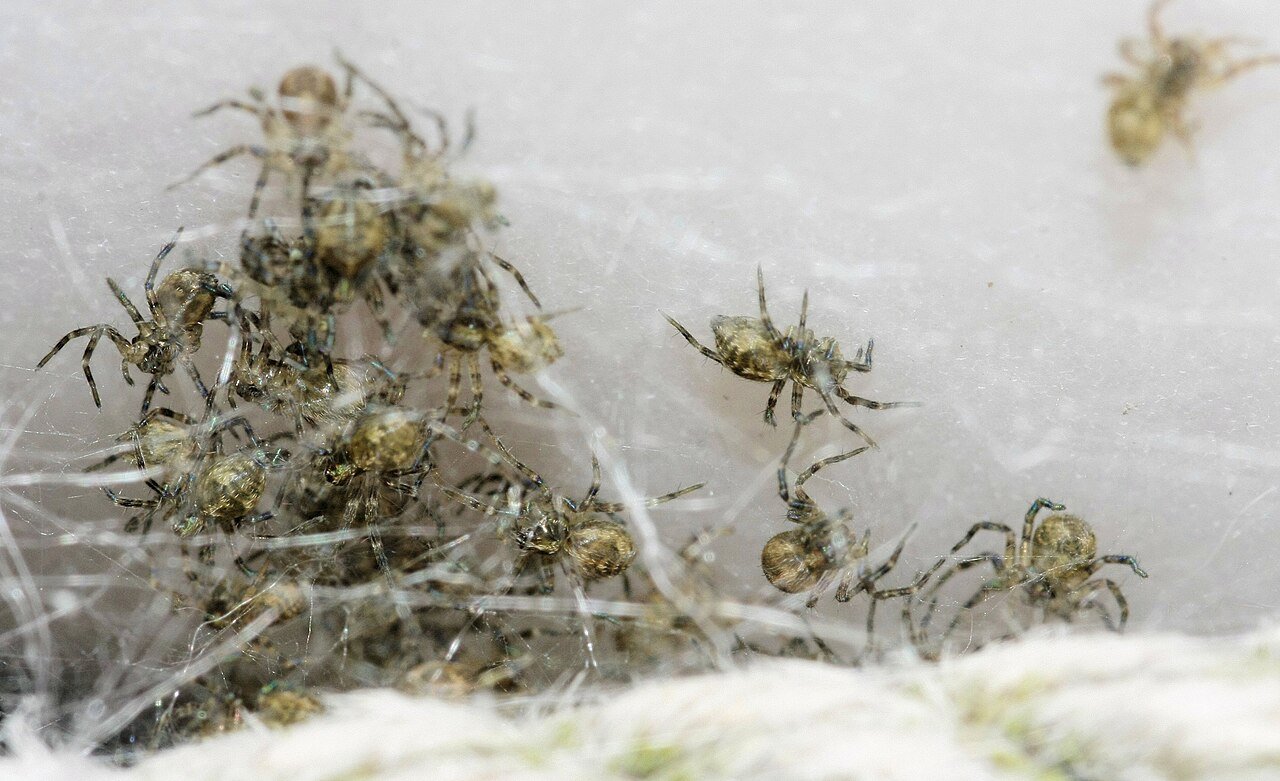
Fishing spiders belong to the nursery-web family, and the females are among the animal kingdom’s more committed mothers: she carries her egg sac in her jaws for weeks — unable to eat the entire time — then lashes together a silk nursery tent in vegetation, stands guard over the hatchlings until their first molt, and only then returns to her own life. The male’s story is darker — dark fishing spider males spontaneously die during mating, an evolutionary strategy documented with some astonishment in the literature — making the big spider on your dock almost certainly a female with a family history worth respecting.
Fishing Spider or Wolf Spider? The Two-Second Sort
The confusion is constant because both are big, brown, fast, and web-less. The sort: location first — near water, docks, boathouses, or flattened on vertical wood favors fishing spider; ground-level in lawns, garages, and window wells favors wolf spider. Then posture: fishing spiders rest with legs spread laterally, almost crab-like, hugging the surface; wolf spiders stand on their legs like the runners they are. Then eyes, if you’re close enough to care: wolf spiders have two headlight eyes over a row of four; fishing spiders wear two neat rows of similar-sized eyes. And the mother test, seasonally: a big spider carrying a sac in her JAWS is a fishing spider; carrying it attached at the rear spinnerets — or wearing a coat of live babies — is a wolf spider. Either answer is a harmless answer; the sort just decides which acquittal page you read.
When the Dock Spider Comes to the House
Away from lakes, dark fishing spiders regularly turn up on Dayton-area houses — brick walls, garages, basements, the damp corner behind the garden hose — because vertical-surface woodland hunting is their actual specialty and a house is a fine cliff. The appearances spike in early summer (wandering males, before their dramatic exit) and again in fall. A single fishing spider on the house is a visitor, not a colony: no web, no nest, no reproduction indoors in any sustained way, and it will move on or die with frost. The management menu, in order: nothing (it’s eliminating other pests while it visits), the cup-and-cardboard relocation to the nearest tree, or — if spiders on the structure are a recurring theme — the general spider program: lighting adjustments, web sweeps, sealed gaps, and the perimeter treatment that manages the whole cast rather than one alarming guest star.
One dock-specific honest note: marinas and lake cottages will always have fishing spiders, because docks are ideal habitat wearing lumber — treating a dock “for dock spiders” is selling you a war against the lake itself, and we decline it. What a lakeside pest program legitimately does is manage the structure: seal the boathouse, light it smart (lights feed spiders by feeding insects — aim them away from doors), and keep the cabin’s own envelope tight. The dock belongs to Dolomedes; the cottage doesn’t have to.
Big spider you’d like named — or a lakeside structure that needs its envelope tightened before next season? Send the photo or get a quote. Serving Dayton and all of Montgomery, Greene, Miami, Clark, Warren, Butler, Preble, and Darke counties.
A Season on the Dock: the Fishing Spider Year
Knowing the calendar defuses most encounters. May–June: mating season — this is when the big females are boldest and the males make their strange one-way exits, and when dock sightings spike with the first warm boating weekends. July: egg-sac season — females carrying gray spheres in their jaws, fasting for weeks, often holed up under dock boards and boathouse eaves; disturb them as little as your nerves allow, since a jaw-carried sac means she cannot even bite while burdened. August: nursery webs appear in shoreline shrubs and under rails — the silk tents people mistake for webworm nests — each one a guarded crèche that empties within two weeks. September–October: the young disperse (half-grown spiders turning up on cottages and pontoon covers), adults fade, and the year’s last big females tuck into hibernacula under bark and boards. Closing the cottage: shake out the boat cover, sweep the boathouse corners, and know that whatever winters in the dock boards emerges next May to run the shoreline’s insect control for free, again.
For anglers, one professional courtesy: hellgrammite hunters flipping rocks and dock skirts meet fishing spiders constantly — same waterfront, same prey base. Both of you are after the shoreline’s insect economy; the spider was just there first, works nights, and doesn’t need a license.
The Science Footnote: Sailing, Diving, and the Physics of a Water-Walker
The fishing spider’s water tricks reward a closer look, because they’re genuinely elegant physics. The legs are coated in short hydrophobic hairs that trap air and refuse to break the water’s surface tension — the spider doesn’t float ON the water so much as stand on a molecular trampoline, and researchers have documented three distinct gaits: the ripple-reading ambush stance, a rowing stride for travel, and a gallop for lunging at prey. When wind rises, several Dolomedes species raise their front legs like sails and simply let the breeze push them across the surface — free transportation, formally studied under the name “sailing dispersal.” And the dive is a portable scuba system: the same hair layer drags a silvery envelope of air below the surface, from which the spider breathes while clinging to submerged stems, routinely for ten-plus minutes, occasionally longer in cold water. Every one of these tricks is on display at any Ohio marina on a calm June evening, performed by an animal most people flee. Bring the kids and a flashlight instead — shoreline eyeshine at night includes fishing spiders’ — and the dock monster becomes the best free nature show on the lake.
Ohio’s Fishing Spider Map
Where the sightings actually cluster in our eight counties: the dark fishing spider is everywhere there’s mature wood — riverside parks along the Great Miami, Stillwater, and Mad River corridors, wooded backyards in Beavercreek and Washington Township, and any structure with damp shade — while the true water-huggers (six-spotted and striped fishing spiders) concentrate at the region’s stillwater: Eastwood and Englewood MetroPark lakes, Caesar Creek, Cowan Lake, farm ponds, and every marina dock on all of them. Cottage and pontoon owners from Indian Lake to Cowan know the drill by August. The practical translation: a “huge brown spider” report from a Dayton basement is usually a wolf spider; the same report from a dock, boathouse, or tree-shaded patio is usually Dolomedes; and either way the response starts with a photo, not a shoe — which is, as ever, the cheapest pest control advice this site gives.
(Name-collision note for travelers: Canada’s cottage-country “dock spider” is this same Dolomedes family at its northern grandest, and the “raft spider” of British nature programming is the European cousin. One genus, one reputation, one verdict — everywhere it occurs, the biggest spider on the lake is the least of the lake’s problems.)
And if the reason you found this page is less curiosity than a standing policy on large spiders and structures you sleep in: fair. The general spider program above works on fishing spiders exactly as well as on everything else eight-legged — perimeter management, lighting strategy, sealed envelopes — and nobody at this company will make you explain yourself. We just wanted you to know who she was first.
Frequently Asked Questions
What is the giant spider on my dock?
Almost certainly a dark fishing spider (Dolomedes tenebrosus) — the dock spider of marina vocabulary and Ohio’s largest spider, with female leg spans over three inches. Bark-patterned, flat against wood, and harmless: its bite (only when grabbed) compares to a bee sting.
Are fishing spiders dangerous?
No — no medically significant venom, no aggression, and an overwhelming preference for fleeing. The entire documented risk is a bee-sting-grade defensive bite from handling. The gap between appearance and danger is the widest in Ohio.
Do fishing spiders really catch fish?
Yes, occasionally — they read water ripples like web vibrations, sprint across the surface, and take aquatic insects mostly, plus documented tadpoles and small minnows. They can also dive and stay submerged for many minutes carrying an air bubble.
Can fishing spiders walk on water?
Genuinely — water-repellent leg hairs distribute their weight on the surface film, letting them stand, sprint, and even sail (legs raised to catch wind) across it. It’s the family’s signature trick and the origin of the name.
Why is there a fishing spider on my house nowhere near water?
The dark fishing spider is really a vertical-wood specialist — tree trunks by trade — and a house wall is a fine cliff. Summer and fall wanderers turn up on brick, garages, and basements as visitors, not colonists: no web, no nest, gone with frost.
Fishing spider or wolf spider?
Water/vertical wood + crab-flat posture + jaws-carried egg sac = fishing spider. Ground level + upright runner’s stance + sac at the spinnerets or babies aboard = wolf spider. Both harmless; different acquittal pages.
What is the biggest spider in Ohio?
The female dark fishing spider — leg spans commonly three inches and beyond, the state’s only palm-scale spider. (Wolf spiders take the runner-up spot.)
Should I kill the fishing spider on my dock?
We’d argue no — each one is running free shoreline insect control, mosquitoes included, and docks will always recruit replacements from the lake. Relocate with a cup if it’s badly placed; save treatment for structures, where sealing and lighting fixes actually hold.