
Beavercreek’s roach file opens with the same honest asymmetry as every wooded suburb’s: the creek corridors that drive the town’s ant, spider, and termite pressure contribute almost nothing here, because Ohio’s serious roaches are indoor commerce animals. What Beavercreek does run — harder than most towns its size — is the modern importation economy at full volume: the region’s heaviest delivery traffic (the daily cardboard tide of an affluent online-ordering suburb), the retail corridor’s stockroom-to-home flow, and the appliance-and-furniture upgrade cycle that moves warm motor voids between households weekly. Low ambient pressure, high importation exposure: the town’s roach math in one line, and the playbook follows it.
The Delivery-Economy Routes
- The cardboard tide: daily package volume means daily corrugated flow — and corrugated flutes are the kitchen species’ sleeper cars, riding from warehouse to doorstep to (the mistake) the garage’s storage stack. The same-week breakdown-and-recycle discipline closes the town’s widest route free.
- The upgrade cycle: the affluent appliance-and-electronics turnover moves warm motor voids between households constantly — the flashlight-and-vacuum inspection before anything secondhand (or floor-model) plugs in remains the single highest-value habit in the file.
- The retail-corridor flow: the Fairfield Commons economy’s stockroom cardboard and pallet traffic runs standard commercial pressure — the businesses themselves on documented programs, the households downstream inheriting only what their own boxes carry.
- The standard remainder: storm-following drain commuters in the walkout-level plumbing (the water-the-traps protocol), June’s creek-corridor wood roaches at the porch lights (the free dustpan verdict), and the false-alarm gallery a wooded town generates (the lineup).
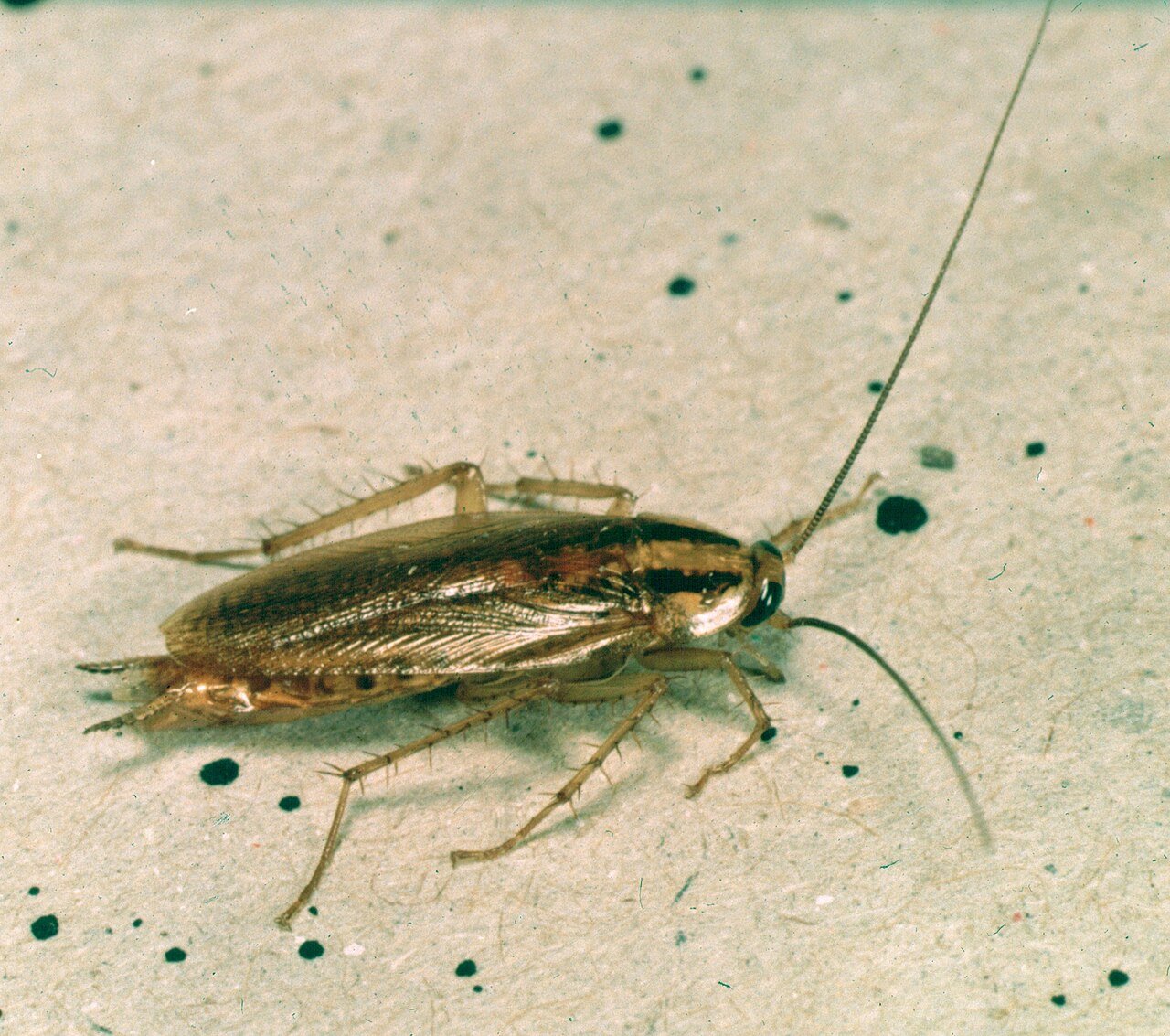
When an Importation Lands
The response runs the placement standard with the town’s advantages working for it: detached housing (no party-wall repopulation — cleared kitchens stay cleared), modern construction (fewer void systems than the mid-century stock, making placement maps shorter), and low ambient pressure (single-cycle clears as the local norm). The program: crevice gel with insect growth regulator through the hinge lines and appliance voids, monitors reading the trend, follow-ups inside the 50-day reproduction window — and the two-stripe check settling every identification before a dollar moves, since the town’s wooded edges send enough harmless lookalikes to the porch lights to keep the free-verdict service busy all June. The don’t-do list holds at standard volume: no foggers (the indictment), no bleach campaigns, and no treating the nymph alarm as anything but the early gift it is.

The Beavercreek Calendar and Bottom Line
The file runs quiet and commerce-clocked: importation risk tracks the delivery and upgrade calendars year-round (with the holiday cardboard surge the town’s one seasonal spike), storm season brings the walkout drain commuters, and June brings the wood roaches on schedule. The response map: cardboard and appliance discipline as standing habits, the drain protocol ahead of spring storms, and same-week verification for any striped sighting — free, from a photo, and half the time a relieved dustpan verdict. One flat price, single-cycle expectations honestly set, the method at cockroach control — and the wooded suburb’s ledger, now six services deep, at Beavercreek pest control.
Stripes in the Kitchen — or Just June at the Porch Light?
Free photo verdicts sort commerce from corridor — and the placement program clears the real cases in a cycle. Flat-priced across Beavercreek.
Frequently asked questions
Do the creek corridors bring roaches into Beavercreek homes?
Almost none — Ohio’s serious roaches are indoor commerce animals: the kitchen species has no outdoor population, and the drain species lives in plumbing. The corridors’ one contribution is June’s harmless wood roaches at the porch lights.
Why would an affluent Beavercreek house get roaches?
The delivery economy: daily cardboard flow, the appliance-and-electronics upgrade cycle, and retail-corridor commerce move the kitchen species between buildings constantly. Low ambient pressure, high importation exposure — and clean habits close the routes free.
Is our daily package volume really a roach risk?
Corrugated flutes are the kitchen species’ sleeper cars, and the garage’s stored box stack is the classic mistake. Same-week breakdown and recycling closes the town’s widest route at zero cost.
Should I inspect a new or floor-model appliance?
Anything with a warm motor void that sat in a stockroom or another home — flashlight and vacuum pass before it plugs in. It’s the file’s single highest-value habit, secondhand or showroom.
What is the black roach at the walkout-level floor drain?
A storm-following drain commuter — plumbing traffic, not infestation. Monthly water plus mineral oil in unused traps and a screened sump close the route before spring storm season.
How fast do Beavercreek roach cases clear?
Single-cycle is the local norm: detached walls prevent repopulation, modern construction shortens the placement map, and low ambient pressure means the program meets the whole population. Six weeks, verified by monitors.
Are the roaches at my porch light in June a problem?
Wood roaches off the corridors — unable to breed indoors, dead in days, and identified free. The two-stripe check separates the one that matters from the season’s wanderers.
What does cockroach control cost in Beavercreek?
One flat price when genuinely needed — species confirmed free, crevice placement with growth regulator, monitors, and follow-ups inside the reproduction window — with honest dustpan verdicts the rest of the time.
The Guest-Bath and Finished-Basement Footnote
Two Beavercreek-specific interiors round out the file. The finished lower level — the walkout’s carpeted rec rooms and wet bars — puts plumbing, warmth, and occasional food service below grade in a way the mid-century towns’ bare basements never did: the wet-bar sink’s rarely-used trap dries into an open drain door, and the mini-fridge’s motor void offers the standard warm harbor. The monthly water-and-oil pour extends to every below-grade fixture, and the mini-fridge joins the appliance inspection list. And the guest bath — the seldom-used full bath the town’s larger homes run — carries the same dry-trap arithmetic upstairs: any fixture unused for a month is a candidate, and the whole-house trap audit takes ten minutes a season. Neither footnote changes the town’s happy math — low pressure, commerce-borne exceptions, single-cycle clears — but both explain the occasional “how did it get to the basement bar” call, and both close for the cost of a water pitcher on a calendar reminder.
The wooded suburb’s roach story, complete: the corridors keep their innocence, the commerce carries the risk, and the household that breaks down its boxes, inspects its appliances, and waters its traps runs the region’s quietest kitchen file — with the free photo verdict standing by for the June wanderers that test it.
And if the sighting count ever climbs past the single-import story — multiple rooms, daylight activity, the pepper-fleck droppings accumulating in hinges — the escalation reads the same here as everywhere: an established case on the 50-day clock, met with the full placement program and the follow-up schedule that outruns it. The town’s advantages make that outcome rare; the program makes it brief.