
Carpenter ant bait occupies a strange corner of the pest aisle: it’s a real product category, backed by real chemistry, targeting the one common ant where bait failure has structural consequences — and it’s the ant that takes bait most erratically. If you’ve got big black ants patrolling the kitchen at midnight, this page gives you the honest version: which baits carpenter ants actually accept, why acceptance is so fickle, the two-week protocol that maximizes your odds, the evidence that should end the baiting experiment and start an inspection, and where bait fits inside the professional playbook (it does — just not where the box art suggests).
Why Carpenter Ants Are the Hard Baiting Case
Three biological facts stack against the bait station. They’re gourmets with a schedule: carpenter ants feed heavily on honeydew (the sugar secreted by aphids they tend outdoors), plus insect protein, and their preference swings hard by season and even by week — a bait that pulled heavy traffic in May sits ignored in July, not because the colony left but because the menu rotated. They forage far and at night: workers routinely travel a hundred feet or more from the nest, mostly between dusk and dawn, so the trail you notice at noon is the tired end of a supply line whose source may be a stump three yards over — or your own wall void. The colony is structured to survive your bait: a mature network runs a parent colony (queen, brood, moisture-critical — often outdoors in a stump, log, or wet structural wood) plus satellite colonies of workers and older brood tucked in drier voids around your house. Bait that wipes a satellite reads as total victory for a month — then the parent restaffs the outpost. None of this makes baiting pointless; it makes baiting a probe, and the results — where they feed, when, how heavily, which direction they haul — are reconnaissance an inspection can use even when the bait alone doesn’t finish the job.
Carpenter ant baiting is fickle because the colony is usually eating something it likes better. When baiting is the wrong plan, ant control in Dayton is the other one.

Which Baits Carpenter Ants Actually Take
The products with genuine track records: protein/carbohydrate granular baits formulated for carpenter ants (abamectin or hydramethylnon actives — the specialty granules professionals scatter along foraging routes), sweet liquid/gel baits (borax, indoxacarb, or fipronil-class actives) during honeydew-hungry stretches, and — often the sleeper winner — running both flavors simultaneously a few feet apart on the discovered trail, then doubling down on whichever draws recruitment within 48 hours. Placement rules differ from kitchen-ant practice: outdoors and at entry points beat countertops (you’re intercepting the supply line, not decorating the destination), dusk deployment matches the shift change, and stations belong on the physical trail — carpenter ants follow structural edges (sill plates, deck rails, cable runs) with real fidelity. Expect slower verdicts than with ordinary ant baits: recruitment within two nights is a good sign; a week of steady feeding is a campaign actually underway; total indifference after three nights means rotate flavors or accept that this colony, this week, isn’t buying.
The Two-Week Protocol (If You’re Going to DIY It)
- Nights 1–2 — scout, don’t spray: follow the ants by flashlight (red film over the lens keeps them calm) between 10 p.m. and midnight. Map the trail both directions; note where it enters the structure and where it goes to ground outside. This map is worth more than the bait.
- Night 3 — deploy both flavors on the trail: sweet gel and carpenter-ant granules, a few feet apart, at the entry point and along the outdoor leg. Nothing sprayed, wiped, or disturbed anywhere near them.
- Nights 4–7 — read the vote: recruitment to one flavor → consolidate on it, refresh nightly (dried gel is dead gel). Indifference to both → swap brands/actives once.
- Days 8–14 — hold and count: traffic should thin week two. Log counts at the same hour nightly; falling numbers with steady feeding is the win curve.
- Day 14 — the honest checkpoint: traffic gone and staying gone → finish with exclusion (caulk the entry, fix the moisture that invited them). Traffic reduced but persistent, or vanished-then-returned → you cleared a satellite and met the parent colony; the experiment has done its job as reconnaissance. Escalate with your trail map in hand.
The Evidence That Should End the Baiting and Start the Inspection
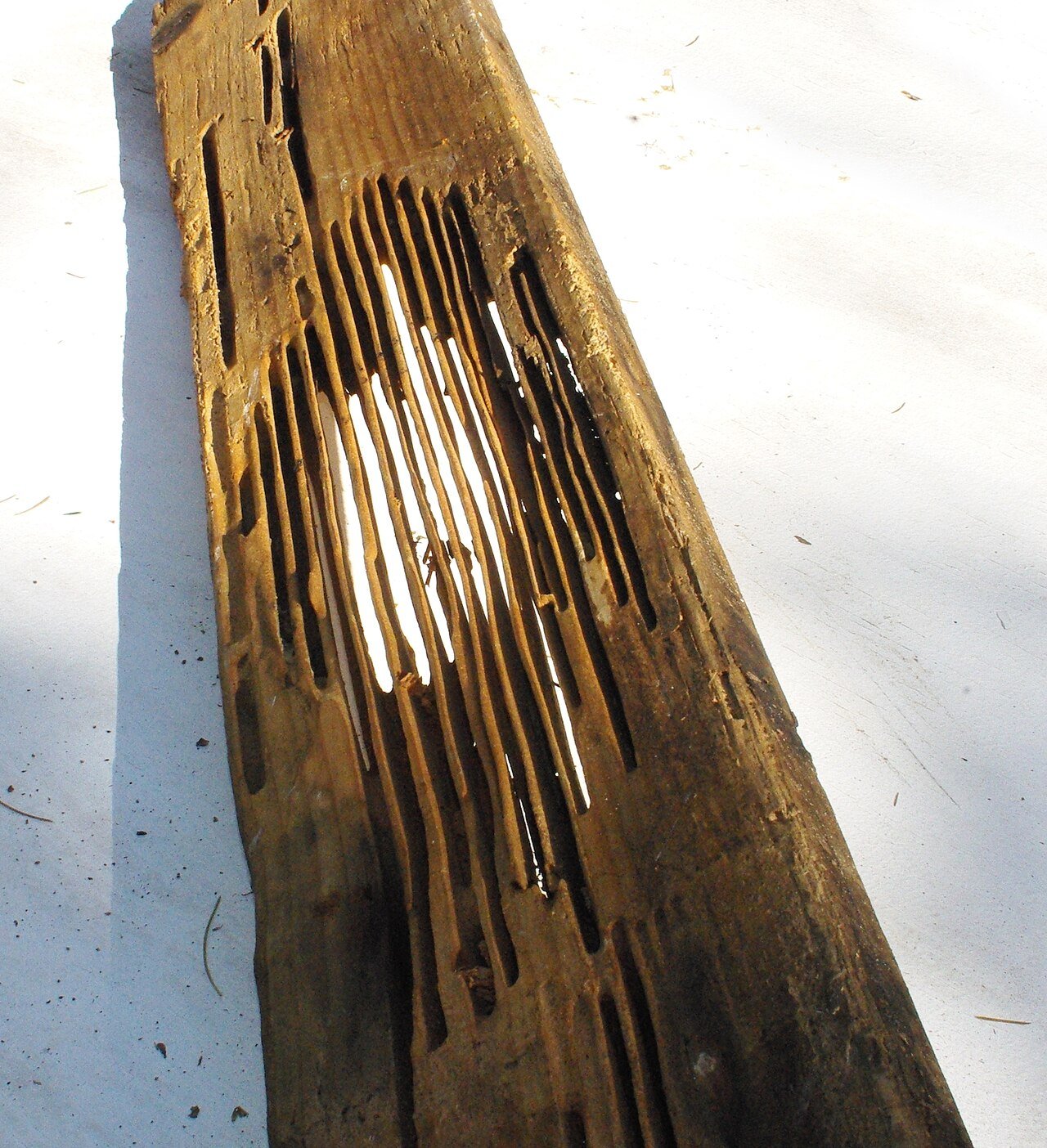
Some findings change the game from “ant problem” to “structure problem,” and bait should never be the response to them. Frass piles: cone-shaped dumps of what looks like coarse sawdust mixed with insect fragments, appearing below baseboard cracks, window frames, or ceiling seams — that’s gallery excavation debris, and it means active nesting in the wood behind the pile. Rustling in walls: a dry, crinkling-cellophane sound in a quiet room, often at night — workers excavating. Winged ants indoors in late winter or spring: reproductive swarmers emerging inside mean a mature parent colony within the structure (check flying ant vs. termite immediately — the pinched waist and elbowed antennae matter enormously here, because the termite version of this sighting is a different emergency). Consistent activity at one interior spot with no outdoor trail: the colony isn’t visiting; it’s home. Any of these puts you in inspection territory: finding the nest (moisture meter, listening, sometimes opening a small section), correcting the leak or wet wood that made the site viable — carpenter ants are a moisture symptom wearing an ant costume — and treating the galleries directly with non-repellent chemistry. Our carpenter ant guide covers the full structural picture, and the damage-repair page covers what comes after when wood needs attention.
Where Bait Fits in the Professional Job
For the record, we do use carpenter ant bait — as one instrument in a sequence: inspection finds the nests and the moisture driver; non-repellent perimeter and void treatment (chemistry the ants walk through undetected and transfer nest-deep) does the heavy killing; specialty granular bait covers the far-foraging traffic and any satellite we haven’t located; and exclusion plus moisture correction closes the loop so next year’s scouts find nothing worth colonizing. What the professional version never does is bait instead of finding the nest when structural evidence is on the table — that’s the failure mode the DIY aisle quietly encourages, a month of feeding station theater while galleries lengthen. Bait is a fine scout and a good finisher; it’s a poor substitute for knowing where the colony lives.
Big black ants on the night shift — or frass you just recognized from this page? Get a quote; we’ll find the nest, fix the invitation, and use bait where bait belongs. Serving Dayton and all of Montgomery, Greene, Miami, Clark, Warren, Butler, Preble, and Darke counties.
The Moisture Map: Where Ohio Carpenter Ant Colonies Actually Live
Since baiting success ultimately depends on colony location, here’s the location intelligence from our own service files. Outdoors — where most parent colonies sit — the rankings run: dead stumps and buried root systems within fifty feet of the house, firewood stacked against or near siding, landscape timbers and railroad ties, wet fence posts, and hollow porch columns. Indoors, satellites and the occasional parent concentrate wherever wood stays damp: under-sink cabinet floors with slow leaks, dishwasher and washing-machine walls, window and door frames with failed flashing, bathroom subfloors, attic sheathing under roof leaks, and the rim joist behind clogged gutters. The pattern is so consistent that we often locate nests by following the water rather than the ants — a moisture meter finds in minutes what a flashlight takes all night to trace. Two prevention moves fall straight out of the map: keep firewood off the ground and away from the house, and treat every “minor” leak as the carpenter ant invitation it is. A dry house with tight gutters is nearly bait-proof in the best way — there’s nothing there for a queen to found on.
Bait Safety and the Borax Question, Carpenter Edition
The homemade-borax tradition meets its limits with this species. The sugar-water-and-borax recipe that legitimately dents odorous house ant colonies (full analysis here) underperforms against carpenter ants for every reason on this page — protein-swinging appetite, satellite structure, and the sheer distance between the feeding station and the queen. Worse, open saucers of sweet liquid sit exactly where pets investigate, and a carpenter ant campaign runs weeks, not days. If you’re DIYing this species, spend the extra twelve dollars on enclosed commercial stations and labeled carpenter-ant granules; save the borax folklore for the tiny kitchen ants it was born fighting. And whichever route you take, resist the satisfying-looking move — spraying the trail with a repellent aerosol — which fragments the colony’s foraging pattern, can trigger satellite budding deeper into the structure, and converts a mappable supply line into scattered guerrilla traffic. With carpenter ants more than any other species, the visible trail is an asset. Spend it on intelligence, not on a can of spray.
Last calibration: seeing two or three big black ants a week indoors in summer is normal foraging traffic from outdoor colonies and warrants crumb control and a caulk gun, not a campaign. Nightly parades, frass, rustling, or spring swarmers indoors are the genuine escalation signs. Carpenter ants punish both overreaction and underreaction — the goal is matching the response to the evidence, which is exactly what the two-week protocol above is designed to reveal.
Frequently Asked Questions
What is the best bait for carpenter ants?
Specialty carpenter-ant granules (abamectin or hydramethylnon) and sweet gel baits (borax, indoxacarb, fipronil-class) — deployed together on the discovered trail, letting 48 hours of recruitment pick the winner. Acceptance is seasonal and fickle; running both flavors is the pros’ hedge, not indecision.
Why won’t carpenter ants take my bait?
Menu rotation — they swing between honeydew-sugar and insect-protein cravings by season and week. Add wrong placement (countertop instead of the actual structural-edge trail), daytime deployment against a night-shift forager, and nearby spray contamination, and indifference is the default outcome. Rotate flavors, move to the trail, go at dusk.
Do ant traps from the store work on carpenter ants?
Standard sweet kitchen-ant stations: rarely, and unreliably. Carpenter ants need the specialty formulations and outdoor/entry-point placement — and even done right, bait alone often clears only satellite colonies while the parent colony restaffs. Treat store-bait success that fades in a month as diagnostic, not disappointing.
How long does carpenter ant bait take to work?
Slower than ordinary ant bait: recruitment within two nights is promising, visible decline runs into week two, and satellite-only kills reveal themselves when traffic returns weeks later. A fair trial is two weeks of nightly counts at the same hour.
What does carpenter ant frass look like?
Cone-shaped piles of coarse, sawdust-like shavings mixed with insect fragments, dumped below cracks in baseboards, window frames, or ceilings. It’s excavation debris — active nesting in the wood above the pile — and it ends the baiting experiment in favor of an inspection, immediately.
Are carpenter ants as bad as termites?
Different mechanism, slower clock: carpenter ants excavate wood for housing rather than eating it, so damage accumulates more slowly — but a years-established network in moist structural wood is genuinely expensive. And every carpenter ant nest marks a moisture problem that’s doing its own damage in parallel.
Why do I only see carpenter ants at night?
That’s their shift — foraging peaks between dusk and dawn, with workers ranging a hundred feet or more from the nest. Midnight kitchen patrols with a flashlight are the honest census; a noon look-around proves nothing.
Flying ants in my house in spring — is that carpenter ants?
If they’re large, black, pinch-waisted with elbowed antennae and unequal wings: yes, likely carpenter ant swarmers, and emerging indoors means a mature colony in the structure. Straight waist, straight antennae, equal wings is a termite swarm — sort it on our flying-ant-vs-termite page before anything else, because the two answers have very different price tags.
Do carpenter ants mean my house has a water problem?
Almost always, somewhere — parent colonies need moist wood, and indoor nests track leaks, condensation, and wet framing with great reliability. Treating the ants without fixing the moisture is renting the solution; the correction is what makes it permanent.