
Franklin’s houses stand on wood the way newer towns stand on concrete — porch posts, pier blocks, skirting frames, deck structure — and ant control here follows the wood down to where it meets the ground. The elevated river-era housing that runs the town’s rodent and termite files runs its ant file through the same architecture: post bases wicking soil moisture inside skirted voids, porch framing shaded and damp in the under-floor dark, step stringers and deck ledgers aging at exactly the moisture level carpenter ants read as an address listing. We call it the porch-post file, and it gives Franklin’s ant work a structural center of gravity most towns’ kitchens-first files never have: the colonies that matter here live in the housing’s wooden legs, and the kitchen trails are usually the last symptom, not the first.
The Legs of the House
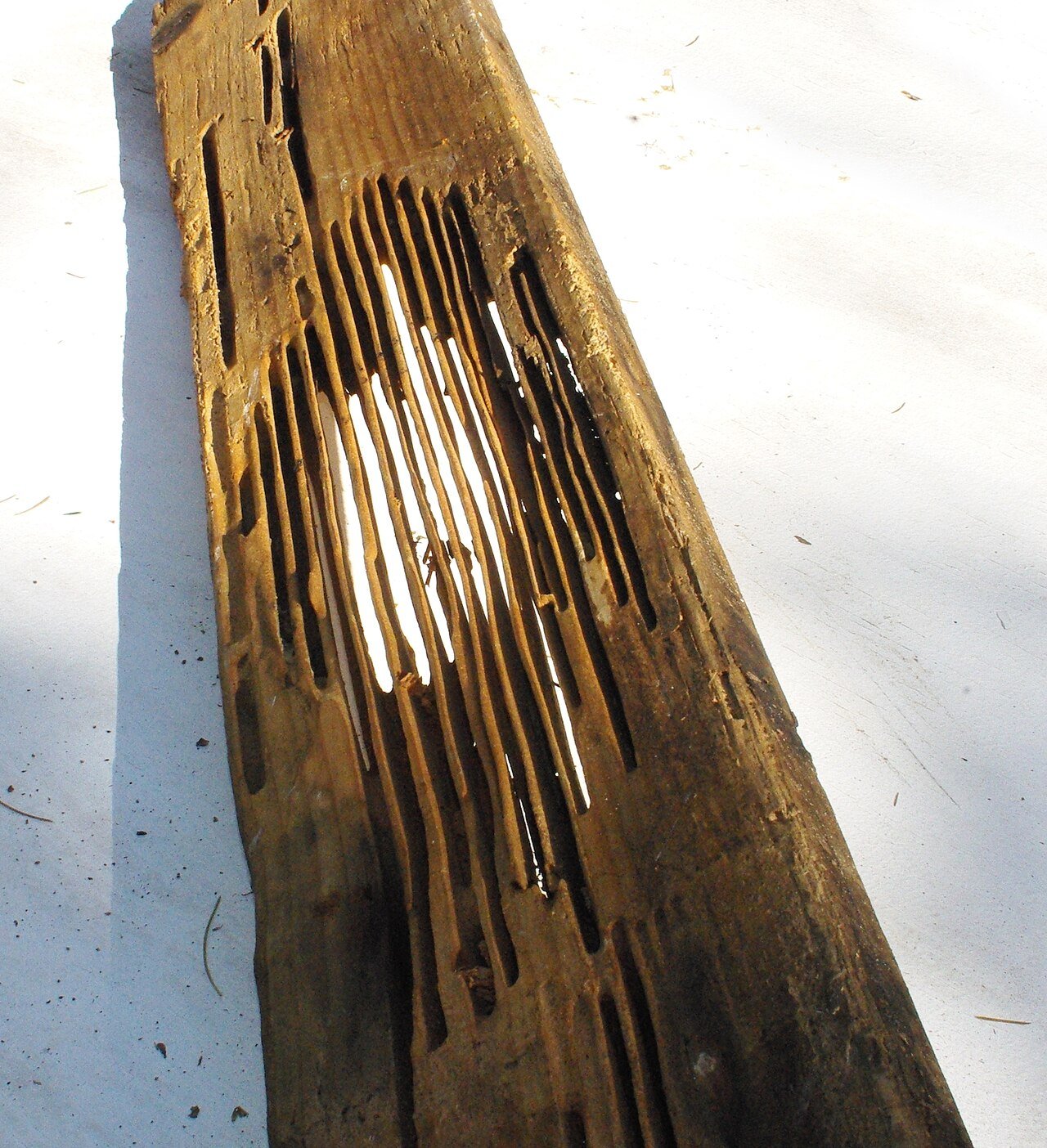
Carpenter ants excavate moisture-softened wood, and elevated construction ages its wood into eligibility on a schedule: a porch post’s base takes splash and ground damp for decades until its lower inches soften; skirting frames hold humidity against their own lumber; and the under-floor voids’ stored wood and construction scraps stage colonies the way they stage everything else. A satellite established in a post base or stringer works quietly — the frass sifting into the skirted dark where nobody sees it — and announces itself upstairs only when foraging trails reach the kitchen or big winged ants emerge indoors in spring. Which sets the inspection logic: Franklin’s ant work enters the underworld the way the termite file does, reading post bases, stringers, and ledgers with a probe and the night test’s help, because the residency question — commuters from the yard or residents in the structure — gets answered under the porch, not at the baseboard.
The Two-File Overlap
The overlap with the termite file is deliberate service design: the same annual under-floor entry that walks the sill lines for mud tubes probes the post bases for galleries, and the same moisture list serves both verdicts — the skirting ventilation restored, the downspouts routed away, the under-floor wood stock cleared, the grade corrected. Wet structural wood is the shared invitation; drying it is the shared fix; and a household that books the annual entry gets both files read in the same hour. The surface file rounds out the usual way: odorous house ant surges off the river terrace’s moisture after wet weeks, pavement ants in the older walks, both handled bait-first with the standing no-repellent rule that keeps budding species from franchising into the generous old wall voids.
The Franklin Ledger, Complete
This page closes the town’s five-file set, and every file found the same truth from a different angle: Franklin’s pests read its elevation. The rodents stage in the skirted underworld, the termites inherit the crawl, the wasps work the hundred-gap clapboard, the roaches run the split-house voids, and the ants live in the wooden legs. Five files, one architecture, one annual entry that reads most of it in an hour — the whole set lives on our Franklin service page.
- The under-floor ant read: post bases, stringers, and ledgers probed on the same annual entry as the termite walk — two files, one hour, one honest report
- Residency verdicts: the night test and frass evidence sorting yard commuters from structural residents, with void treatment only when it’s earned
- The shared moisture list: ventilation, downspouts, wood-stock clearance, and grade — the fix both files bill against, quoted as the carpentry it is
- Surface service: wet-week surge baiting and the no-repellent rule, flat-priced on the village calendar

Read the Legs Once a Year
One annual entry probes every post, stringer, and ledger — ant and termite files in the same hour — and hands you the verdict with the moisture list attached. Kitchen trails answered honestly too, but down here is where Franklin’s answer usually lives.
Frequently asked questions
Why do you inspect under the porch for a kitchen ant problem?
Because in Franklin’s elevated housing the kitchen trail is usually the last symptom: the colonies that matter live in the structure’s wooden legs — post bases, stringers, ledgers softened by decades of ground damp — and the residency question gets answered under the floor, not at the baseboard.
What are the signs of carpenter ants in porch structure?
Frass piles — fine wood shavings with insect fragments — sifting into the skirted dark below the work, wood that probes soft at post bases, rustling in quiet evening structure, and big winged ants emerging indoors in spring. Most of it invisible until someone enters the void and looks.
Do carpenter ants in a post mean the house is failing?
It means one member has a moisture problem and a tenant: a localized repair plus the moisture fix, caught early — not a structural event. The annual entry exists to catch it at the one-post stage instead of the ledger-and-stringer stage.
Is this the same visit as the termite inspection?
Deliberately: the annual under-floor entry walks sills for mud tubes and probes posts for galleries in the same hour, and the shared moisture list — ventilation, downspouts, wood-stock clearance, grade — serves both verdicts. Two files, one entry, one report.
Why does my kitchen get little ants after every wet week?
The river terrace’s moisture pulse: odorous house ants surging off the damp, handled bait-first — never repellent sprays, which split budding colonies into the old housing’s generous wall voids and multiply the problem.
What should I clear out from under the porch?
The wood: stored lumber, scraps, and anything cellulose in the skirted voids stages ant and termite colonies alike — and the same clearance serves the rodent file’s staging-habitat rule. One Saturday, three files improved.
Can the posts be protected without replacing them?
Mostly: moisture correction (splash, grade, ventilation) stops the softening that makes wood eligible, treated residents get void-and-gallery work, and only bases already structurally gone need the carpenter. The probe tells which, honestly.
What does ant control cost in Franklin?
The annual entry prices as the hour it is and reads two files; residency treatment quotes by access; surface programs run the flat village calendar — and when the honest answer is a $60 downspout extension and a wood-pile Saturday, that’s the quote.