
The itch is a chemistry problem, and chemistry problems have answers. When a mosquito, flea, or chigger bites, your immune system floods the site with histamine — the compound that raises the welt, dilates the vessels, and drives the maddening itch-scratch loop that turns a thirty-second bite into a three-day ordeal (and, scratched raw, occasionally into an infected week). This guide is the complete evidence-based itch playbook from Greater Dayton Pest & Rodent: the fast relief that actually works ranked by the research, the folk remedies audited honestly, the scratch cycle explained (and broken), the bite-identification cues that tell you what got you — because relief and response both improve with a suspect — and the short, serious list of symptoms that mean a doctor outranks a pest page. One disclaimer, stated plainly and meant: we are pest professionals, not physicians — this page summarizes mainstream medical guidance for ordinary bites, and anything beyond ordinary belongs to your doctor or, for emergencies, to 911 before any website. For the other half of the problem — making the bites stop happening — every link on this page leads back to the library that does exactly that: (937) 569-3330.
The relief ladder: what works, ranked by evidence
Rung one — cold, immediately: a cold compress or ice cycle (ten minutes on, ten off) is the fastest evidence-backed relief in existence — cold constricts the vessels delivering the histamine flood, numbs the nerve endings carrying the itch signal, and knocks down swelling, all drug-free and refrigerator-cheap. Rung two — topical steroids and anti-itch creams: over-the-counter 1% hydrocortisone is the workhorse for ordinary bites (thin film, few days maximum, not on broken skin); calamine and pramoxine-based lotions add alternatives, and menthol formulations trade on the same nerve-distraction physics as cold. Rung three — oral antihistamines: for multiple bites, big reactors, or itch that wrecks sleep, an oral antihistamine addresses the chemistry system-wide — the modern non-drowsy options for daytime, the classic drowsy one at night when sleep is the casualty (pharmacist guidance for kids, pregnancy, and drug interactions, always). Rung four — the heat trick: concentrated brief heat (a spoon dipped in hot-not-scalding water, held to the bite; or the commercial heat-pen devices) has genuine trial support for mosquito bites — heat appears to disrupt the local histamine response and overrides the itch signal, often for hours; burns are the failure mode, so no children unsupervised and no sleeping-limb experiments. Rung five — protect the site: keep it clean, trim the nails, cover the bite if scratching is winning — because the ladder’s whole purpose is beating the cycle below.
Treating the itch is the short game; finding what is biting you is the long one, and that is pest control in Dayton.
The scratch cycle: why it feels so good and costs so much
Scratching works — for about ninety seconds, which is precisely the trap. The mechanics: scratching sends a competing pain signal that temporarily gates the itch out of your nervous system’s attention (why it feels magnificent), but the minor tissue damage it inflicts triggers more histamine release and inflammatory response, resetting the itch louder than before — a chemical debt cycle where every scratch borrows relief against a bigger balance. Ride the cycle hard enough and the real costs arrive: excoriation (skin scratched open), secondary infection — the genuinely common complication of ordinary bites, where fingernail bacteria colonize the broken site (impetigo in kids, cellulitis at worst; the warning list below covers the signs), and lichenification, the leathery thickening of chronically scratched skin. Breaking the cycle is a two-front campaign: chemical (the ladder above lowers the itch volume until the loop starves) and behavioral — pressure or a firm slap on the bite delivers the competing signal without tissue damage, covering bites removes the absent-minded access that does most of the scratching, night gloves or trimmed nails protect the sleeping hours when discipline is unconscious, and for kids, the “press a cold spoon, count to twenty” ritual replaces nails with something that works. Ninety seconds of pleasure versus three extra days of itch: the cycle only wins when nobody names the exchange rate.
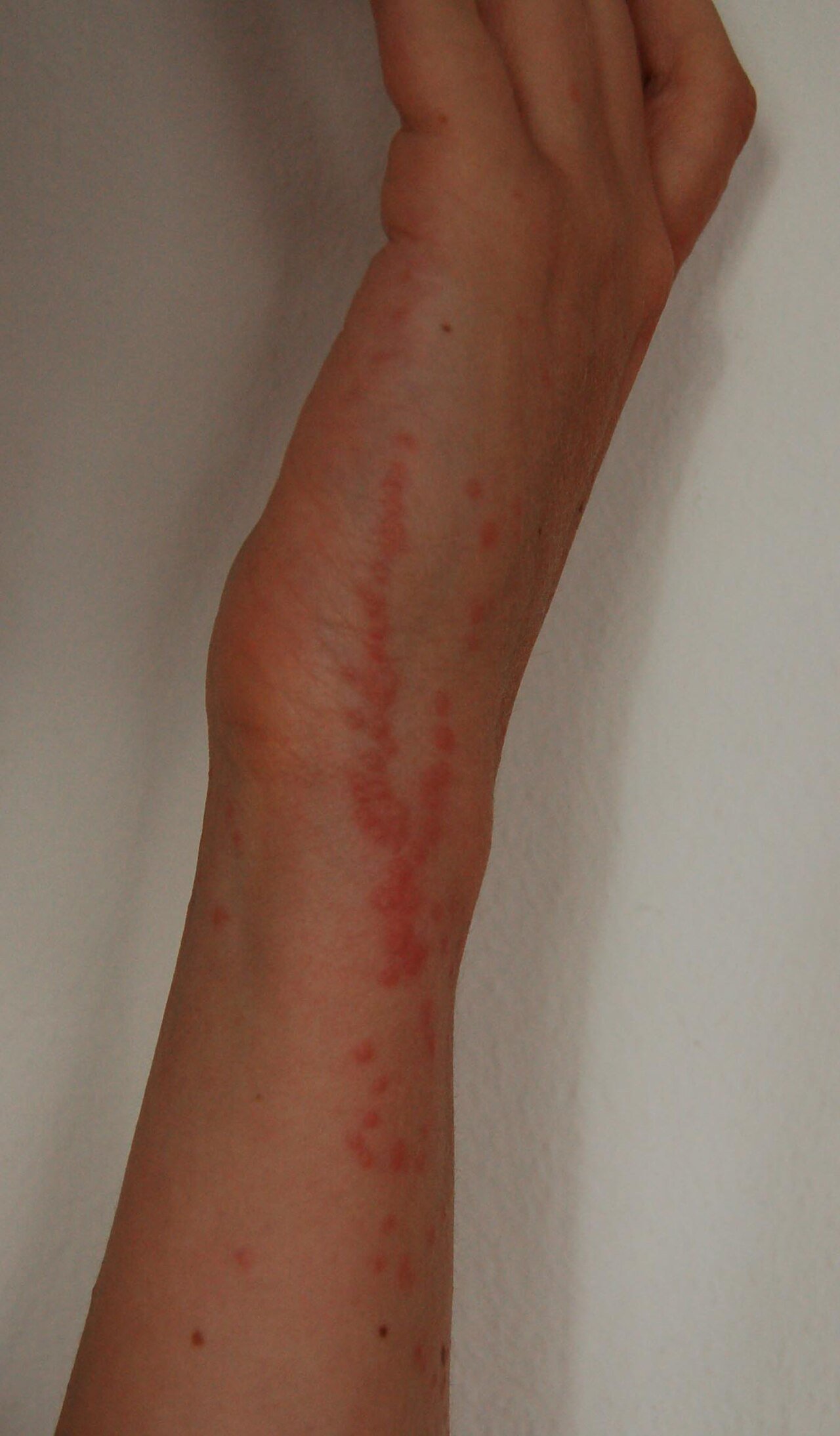
The folk remedy audit: kitchen-shelf claims, graded
- Baking soda paste: modest pass — mildly soothing, plausibly pH-mediated, harmless; a reasonable rung-1.5 while the hydrocortisone is at the store
- Oatmeal (colloidal) baths: genuine pass — real anti-inflammatory support with dermatology backing, and the method of choice for the many-bites scenario (chigger season’s sock-line constellation, the flea-week ankles)
- Aloe vera: pass for soothing — cooling and skin-calming, itch-specific evidence thin but the comfort is real and the risk is nil
- Honey: half-credit — antimicrobial properties are legitimate for scratched-open sites in a pinch, but it’s sticky bait for more insects; wash it off outdoors
- Toothpaste: fail with an explanation — the menthol tingle mimics relief briefly, but the additives irritate as often as they soothe; menthol formulations made for skin beat the bathroom improvisation
- Vinegar, lemon, alcohol dabs: fail — acid and alcohol on inflamed skin trade itch for sting and dry the site into itching harder; the alcohol bottle’s losing streak extends to dermatology
- The X scratched into the bite, hot spoons at scalding temps, nail-polish suffocation (chigger edition): fail, hazard, and myth respectively — chiggers don’t burrow (the mite file covers the confusion), so there’s nothing to suffocate; the welt is enzymatic aftermath, not occupancy
- The pattern: soothe-and-support remedies pass; punish-the-skin remedies fail — inflamed skin wants calm, not chemistry experiments
Read the bite: what the pattern tells you (and this library does about it)
Relief improves with a suspect, and prevention requires one — so run the pattern check. Single welts on exposed skin, evening-acquired: mosquitoes — the yard program and repellent chart await. Ankle-and-lower-leg clusters, indoors, pets or vacant-house history: fleas — white-sock test, three-front program. Sock-line and waistband constellations hours after grass or trail time: chiggers — outdoor calendar, hot shower after exposure, and the oatmeal bath earns its keep. Morning-discovered welts with any bedroom evidence: the ten-minute test before conclusions — bed bugs demand speed and reward evidence. Diffuse itch without discrete bites, bedroom-tracking, morning congestion: the dust mite allergy file — no biter exists, and the fix is encasements, not treatment. Painful sting-site with immediate onset: the stinging insect protocol, a different chemistry (venom, not saliva) with its own first-aid sequence. Each identification routes to a page that ends the supply of future bites — which is the honest division of labor here: this page manages the welt you have; the library prevents the one you’d get tomorrow.
The doctor list: when the itch outranks this page
Ordinary bites itch, swell modestly, and fade over days — everything beyond that pattern gets medical eyes, and this list is deliberately conservative. Emergency, 911-grade: any signs of anaphylaxis after bites or stings — throat or lip swelling, wheezing or trouble breathing, dizziness, widespread hives, vomiting — especially with a known allergy or epinephrine prescription (use it first, then call). Same-day medical visit: spreading redness, warmth, and swelling around a bite (the cellulitis pattern), red streaking from the site, pus, fever with any skin symptom, or a bite near the eye swelling shut. Prompt appointment: welts persisting or worsening past a week, bites that ulcerate or blister dramatically (the spider-bite conversation, with its capture-the-specimen rule), any tick-bite aftermath — expanding bullseye or otherwise unusual rash, fever, aches within weeks (Ohio’s Lyme reality makes this list item non-optional), and the relentless night-itch with burrow lines that suggests scabies, a diagnosis and prescription no pest page can provide. The overriding rule: when skin and instinct disagree with a webpage, the webpage loses — this one included, by its own instruction.
Special populations: kids, big reactors, and the summer-camp forecast
Three audiences need the playbook tuned. Children scratch harder, break skin faster, and infect more often — the pediatric adjustments: cold-spoon rituals over willpower, nails trimmed Sunday nights all summer, hydrocortisone per the pediatrician’s comfort (many endorse short courses for ordinary bites; ask once and know), dosing-appropriate antihistamines only with pharmacist or physician guidance, and impetigo vigilance — honey-crusted spreading sores around scratched bites are a same-week appointment. Big reactors — the family member whose every mosquito bite balloons — likely have skeeter syndrome, a localized allergy to mosquito saliva: dramatic, uncomfortable, rarely dangerous, and manageable with pre-emptive antihistamines during peak season plus aggressive early cold; enormous local reactions still aren’t anaphylaxis (that requires the systemic signs above), but a physician can confirm the pattern once and retire the annual worry. The exposure-heavy household — campers, anglers, scouts, landscapers — should build the kit this page implies: cold packs, hydrocortisone, oral antihistamine, oatmeal packets, and the EPA-registered repellent that makes most of it unnecessary; prevention remains the only rung of the ladder that works before the bite. And one cross-cutting note for every audience: bite counts are data — a household’s sudden bite surge is this library’s cue to identify and interrupt the source, which is the pest-side house call the medicine cabinet can’t make: (937) 569-3330.
The one-screen itch card
- Fast relief, in order: cold compress cycles → 1% hydrocortisone or calamine → oral antihistamine for multiples/sleep → the careful heat trick → cover and protect the site
- Break the scratch cycle: pressure or cold instead of nails; cover bites; trim nails; night protection for kids — every scratch borrows 90 seconds against 3 days
- Folk shelf verdicts: oatmeal baths and baking soda pass; aloe soothes; toothpaste, vinegar, alcohol, and scalding spoons fail; chigger nail-polish is myth (nothing’s burrowed)
- Read the pattern: evening/exposed = mosquito · ankle clusters = flea · sock-line post-hike = chigger · morning + bedroom evidence = run the ten-minute test · diffuse no-punctum = allergy file
- Doctor list: anaphylaxis signs = 911; spreading redness/streaking/fever = same day; week-plus welts, ulcerating bites, tick-bite rashes, burrow-line night itch = prompt appointment
- End the supply: every bite pattern routes to a prevention page in this library — the itch card treats tonight; the programs cancel tomorrow: (937) 569-3330
Cold first, chemistry second, discipline third, doctor when the list says so — screenshot the card, stock the kit, and let the histamine lose on schedule. The bite was thirty seconds; with this page, the aftermath finally is too.
Why the itch exists at all: the thirty-second heist behind the three-day welt
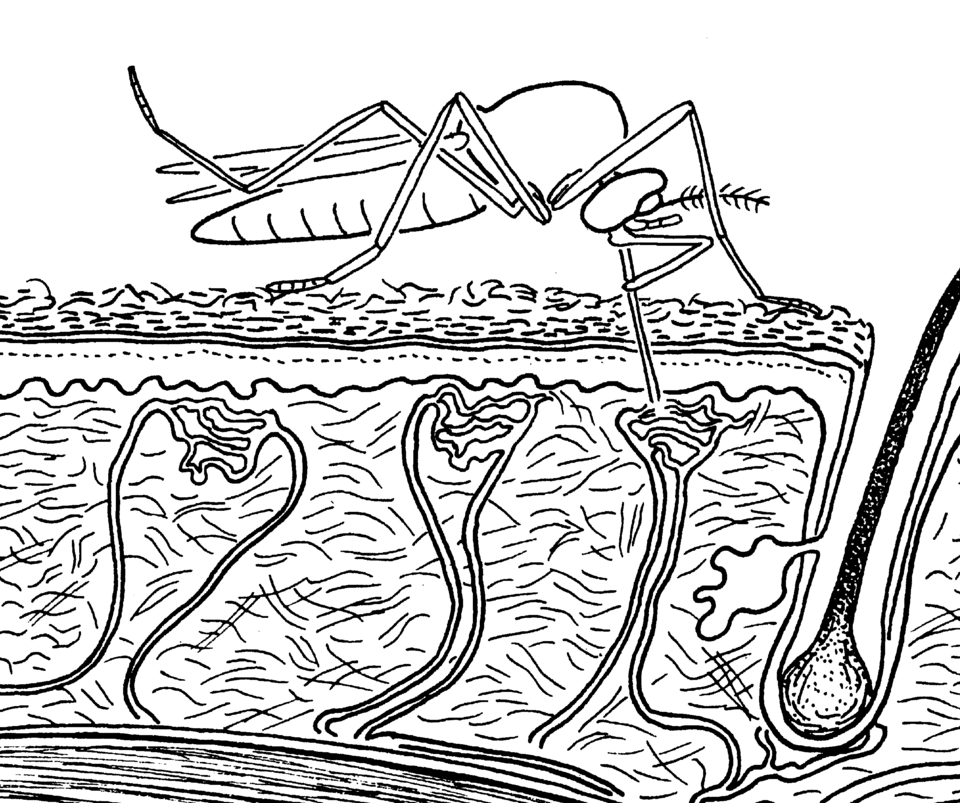
Understanding the mechanism makes the whole playbook click, so here’s the biology in one passage. A biting insect’s saliva is a pharmacological toolkit — anticoagulants to keep the blood flowing, vasodilators to speed the meal, mild anesthetics so you don’t notice the thirty-second heist in progress — and every compound in it reads as foreign protein to your immune system. The welt and itch are your body’s customs inspection arriving late: mast cells recognize the saliva proteins, release histamine and inflammatory mediators, and the site swells, reddens, and itches not because of ongoing damage but because your defenses are processing evidence of a crime already completed. That’s why the itch peaks hours after the bite (the immune response builds), why reactions vary so wildly between people and shrink with repeated exposure (immune recognition is personal and adaptive — the reason adults often react less than kids, and why the bed bug page’s one-third-don’t-react statistic exists), and why every rung of the relief ladder targets your own chemistry rather than any lingering venom — there is none; the perpetrator left before you knew it arrived. The philosophical consolation, for what it’s worth at 2 AM with an ankle on fire: the itch is proof the system works, a fully-functioning immune response doing exactly its job on exactly the wrong evidence. The practical consolation is the ladder above — and the pest-side programs that arrest the perpetrators before the next heist: (937) 569-3330.
The Miami Valley bite calendar: what’s biting when
Local seasonality turns bite patterns into near-certain identifications, so here’s the regional schedule. April–May: the year’s first mosquito welts (evening, exposed skin) and the tick season’s opening — post-hike checks begin now, and the doctor-list’s bullseye vigilance runs through fall. June–July: peak mosquito economy — the tiger mosquito’s daytime ankle work joins the evening Culex shift, and bite geography (daytime garden versus dusk patio) actually distinguishes the species. August–September: chigger high season in tall grass and creek margins (the sock-line constellation hours after outdoor time), flea pressure peaking in yards with wildlife traffic, and the year’s heaviest sting weeks — a different chemistry with its own protocol. October–November: biting slows outdoors while indoor suspects take over the differential — new bites in cold months point the bedroom test and inherited-flea directions, since the outdoor cast has largely stood down. December–March: the honest season — genuine new bites are scarce, which makes winter welts diagnostic gold: bed bugs, fleas, bird/rodent mites from a wall-void history, or the no-biter allergy file account for nearly everything, and each has a findable indoor source. Twelve months, one rule: the calendar plus the pattern names your biter before the welt fades — and naming it is how this page’s subject stops recurring.
The last page of the shelf, and what it closes
This guide completes a circuit the library has been wiring for weeks: the panic-shelf audits (alcohol, bleach, foggers) told you what not to spray at the bugs; the DE file covered the one powder worth keeping; the identification guides (look-alikes, dust mites, swarms) taught the naming discipline that aims every response; and this page finishes the loop at the skin itself — the place every pest story becomes personal. The through-line, one final time, because it’s the entire operating system: evidence before action, biology before folklore, cheap-and-early before expensive-and-late, and the right professional for the right problem — physician for the skin that breaks pattern, state portal for the invader, arborist for the tree, and us for everything that crawls, stings, drills, tunnels, or swarms across the Miami Valley’s houses and yards. Some seventy pages now run on that system, every one ending at the same free line, and the household that’s read even a handful holds a better pest education than most of the industry’s sales scripts assume exists. The itch fades tonight; the calibration is permanent. Cold pack in the freezer, encasements on the bed, buckets tipped, gaps sealed, photos ready — and the number, as always, saved: (937) 569-3330.
(One genuinely useful parting fact for the kit-builders: the humble cold spoon’s superiority is measurable — dermatology’s itch researchers consistently find cooling among the fastest-acting antipruritics known, working within seconds via the same nerve channels menthol mimics chemically. The most effective bite remedy in your house has been in the silverware drawer all along, it never expires, and it doubles for teething babies and black eyes. Some medicine cabinets are born; the best ones are assembled from the kitchen.)
And for the record-keepers: a simple bite log — date, body location, and where you’d been the prior 24 hours — turns three mystery welts into a solvable pattern faster than any single identification, and it’s exactly the evidence our free line and your physician both wish more households arrived holding. Phone notes suffice; a week of entries usually names the culprit; and the named culprit, in this library, always has a page waiting with its eviction papers already drafted.
Frequently asked questions
How do I stop bug bites from itching fast?
The evidence-backed quick stack: wash with soap and water, ten minutes of cold compress (the fastest single reliever), then 1% hydrocortisone or calamine, with an oral antihistamine for widespread or nighttime itch. Heat works too — a spoon warmed under hot tap water pressed briefly on the bite degrades the itch proteins.
Why do bug bites itch in the first place?
Histamine — your immune response to insect saliva proteins, not the bite wound itself. That is why itch intensity varies wildly between people from identical bites, and why antihistamines out-perform every folk remedy: they address the actual chemistry.
Why does scratching make bites worse?
Scratching spreads saliva proteins, re-triggers histamine release, and — the real cost — breaks skin under fingernails, opening the door to the secondary infections that are most bites’ only genuine medical risk. Trimmed nails and covered bites beat willpower.
What home remedies actually work on bite itch?
The graded shelf: cold (A), heat-spoon (B+), oatmeal baths for many bites (B), baking-soda paste (C+, brief), aloe (C). The folklore Fs: toothpaste, vinegar, and banana peel — skin irritants cosplaying as medicine. Hydrocortisone outranks the entire pantry.
How long should a bug bite itch?
Mosquitoes: hours to two days. Fleas and chiggers: up to a week-plus for the sensitized. Bed bugs: variable, sometimes delayed days after the bite. Beyond two weeks, or expanding rather than fading — that is a doctor visit, not a remedy question.
When does an itchy bite need a doctor?
Heat, spreading redness, red streaking, or pus (infection); hives beyond the bite site, facial swelling, or breathing changes (systemic reaction — emergency); bullseye rashes (tick territory); or the two-week non-healer. Everything else is compress-and-cortisone territory.
Why do some people get bitten and itch more than others?
Two separate lotteries: attraction (CO₂ output, skin chemistry — mosquito magnets are real) and reaction (histamine sensitivity spectrum — the couple where one person “never gets bitten” is usually one person who never reacts). Both are documented; neither is imagined.
Do anti-itch creams work on all bug bites?
The histamine mechanism is universal, so yes across mosquitoes, fleas, chiggers, bed bugs, and gnats — with two escalations: chigger clusters may warrant prescription-strength steroid cream, and suspected spider or unusual bites deserve identification before symptomatic treatment.
How do I stop bites from itching at night?
The nighttime protocol: oral antihistamine an hour before bed (sedating formulations serve double duty), cortisone application, covered bites (scratch-proofing), and cool bedroom — heat amplifies itch. Nighttime scratching in sleep does most of the infection damage; the prep prevents it.
What if bites keep appearing — how do I stop the source?
Itch treatment buys comfort; source identification buys the ending. Run the differential our bite pages map — geography (ankles = fleas), timing (overnight + seam evidence = bed bugs), season and venue (grass = chiggers) — and bring us the pattern: (937) 569-3330. Every bite guide on this site ends at the same truth: the best anti-itch cream is eliminating the biter.