
The short answer: no — bug bombs do not work on any pest you’re likely to be fighting, and for the two most common targets they actively make the infestation worse. That’s not contrarianism; it’s the settled finding of university research, the reason no professional operation uses total-release foggers, and — for the households that learn it the hard way — occasionally the reason a kitchen explodes. Foggers feel decisive: the whole-room mist, the evacuate-the-house gravity, the “bombing” vocabulary borrowed from actual warfare. What they deliver is a thin film of repellent pyrethroid on the tops of surfaces — while the roaches sit in crevices the mist never enters, the bed bugs press deeper behind the baseboards, the eggs of everything sit untouched, and the survivors inherit a scattered, warier, harder-to-treat territory. This is the complete audit from Greater Dayton Pest & Rodent — what a fogger actually releases, the research on what it reaches, the pest-by-pest scorecard, the genuine hazards (fire, ignition, residue, and the pilot-light incidents that make the news every year), and what each fogger-tempting situation actually calls for instead: (937) 569-3330, free honest answers included.
What a bug bomb actually does when you pull the tab
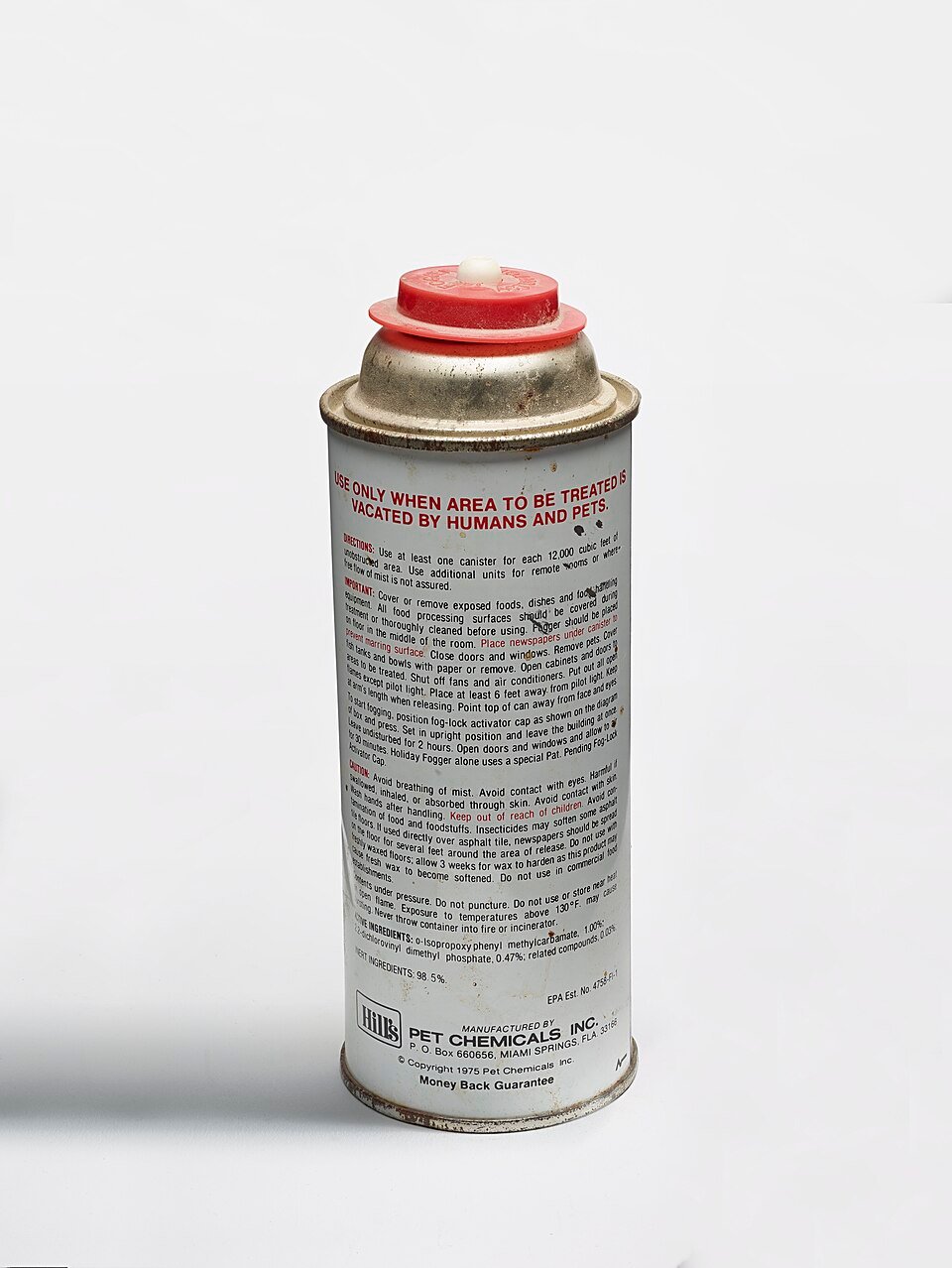
A total-release fogger is an aerosol can that empties itself upward in one continuous discharge, filling the room with a fine mist of insecticide — almost always a pyrethroid (permethrin, cypermethrin, tetramethrin and kin) plus propellants and carriers. Physics takes over from there, and physics is the product’s undoing. The mist behaves like fog: it hangs, drifts, and settles downward onto exposed horizontal surfaces — countertops, floors, tabletops, the top of the couch — coating the places pests don’t live while barely penetrating the places they do. Aerosol droplets do not turn corners, do not climb into the wall voids where German roach colonies sit, do not slip behind baseboards or into mattress seams where bed bugs harbor, do not enter cabinet hinge gaps, outlet boxes, or the underside of the slab. University testing has made the point with brutal simplicity: researchers placing roaches in open dishes during fogging watched them die, while roaches given any shelter — a cardboard square to hide under — largely survived in the same room. The product kills exposed insects at the moment of fogging and leaves a light, fast-degrading residue afterward; everything about a real infestation’s architecture is engineered, by evolution, to be somewhere else at that moment.
Foggers scatter what they fail to kill, which is how a kitchen problem becomes a whole-house one. What does work is pest control in Dayton.
The backfire: repellency, scatter, and resistance
If foggers merely failed, they’d be a harmless tax on panic. They fail actively, three ways. Scatter: pyrethroids are repellent — insects detect and flee them — so the fog’s arrival doesn’t trap the colony, it evacuates it: German roaches retreat deeper into voids and spread laterally into adjacent rooms and units (the multifamily disaster our property management page fights building-wide), and bed bugs disperse from the treatable bed-zone harborages into walls, ceilings, and neighboring bedrooms — converting a contained problem into a distributed one. Rutgers’ bed bug program has documented foggers achieving essentially zero control of bed bugs while professionals inherit the scattered aftermath. Resistance: both flagship pests already carry heavy pyrethroid resistance in Ohio populations — the fogger applies a sublethal dose of the exact chemical class they’re best defended against, killing the susceptible fraction and leaving the resistant core to rebuild — evolution’s version of a training exercise, run at your expense. Contamination of the real fix: fogger residue on surfaces repels roaches from the gel baits that actually eliminate colonies (the same sabotage as the bleach mistake), forcing the professional program that follows to wait out or work around your fog. The net effect of “bombing” a house, measured honestly: fewer visible insects for a week, a larger and more distributed population within a month, and a harder job for whoever finishes it.
The hazard file: when the bomb is literal
Foggers carry the panic shelf’s most concrete safety record, and it’s worth stating plainly. The propellants and carriers are flammable, and a discharging fogger fills a room with an ignitable aerosol — which is why the label’s pilot-light warning exists and why fogger explosions destroy kitchens somewhere in America every year: a water-heater or stove pilot, a refrigerator compressor spark, a thermostat click during discharge, and the “bomb” nickname collects its dues. Multi-can overuse (the “one per room plus extras” instinct) multiplies both the ignition load and the residue, and CDC surveillance of fogger incidents finds the same recurring injuries: respiratory irritation from re-entering too soon, contaminated dishes and food-prep surfaces nobody covered, and the exposure of the person who set off a can and couldn’t exit fast enough. None of this requires rare bad luck — it requires only the normal conditions of an occupied home meeting a product whose safe use assumes a preparation checklist most buyers never read. Add the mundane costs (evacuating the family and pets for hours, wiping every exposed surface afterward, the lingering odor) and the fogger’s full price is remarkable for a product that, per the sections above, was never going to reach the colony anyway. It is the only entry in our myth series whose failure mode includes the fire department.
The pest-by-pest scorecard
- German cockroaches: the classic target, the classic backfire — scatter into voids and neighboring units, bait contamination, resistance selection; the gel-bait-and-IGR program exists because it does the opposite of everything a fogger does
- Bed bugs: near-zero contact with harborage populations, documented dispersal into walls and adjacent rooms — the single worst thing a household can do before treatment, per every extension bulletin and our own takeover experience
- Fleas: the fogger’s one partial-credit case — open-carpet larvae take some contact — but the armored pupae shrug it off and the source (untreated pets, the three-front program) is untouched, so the two-week rebound is standard
- Ants: kills foragers, misses the colony, and repellency triggers the budding that turns one odorous house ant colony into three
- Wasps in walls: genuinely dangerous — fog neither reaches a wall-void colony nor kills it, but it does enrage it, and trapped agitated yellowjackets chew toward interior light
- Spiders, stink bugs, lady beetles: minimal contact with crevice-dwellers and void-overwinterers; the exterior-timing program outperforms by design
- The empty-cabin flea bomb of family legend: the one scenario with folk success — maximum exposure, zero shelter, nobody’s dishes — and even there, modern flea programs beat it on the pupal window
What each fogger impulse actually calls for
The fogger is always a proxy for a real situation, so here’s the honest routing table. “Roaches everywhere” → identification first (species changes everything), then baiting-and-IGR — visible results in days, colony collapse in weeks, no evacuation required. “Bites at night” → the ten-minute bedroom test before any purchase; if it’s bed bugs, speed matters and the fogger is the one move that makes speed impossible. “Fleas in the carpet” → the pet-home-yard three-front week, with the growth regulator doing what no fog can. “We’re moving into a place that had bugs” → the vacant-unit turnover treatment our property pages describe — targeted, documented, and done before the boxes arrive, the professional version of the impulse the fogger monetizes. “I just want to nuke everything” → we understand the feeling sincerely, and the honest translation is a whole-home inspection plus a scoped program: the “everything” a fogger promises is exactly what an integrated plan actually delivers, room by room, with evidence. Every route above starts with the same free call — (937) 569-3330 — and costs less than the fogger aftermath it prevents.
Why the fogger survives its own track record
As with every entry in this myth series, the product’s immortality has an anatomy worth dissecting — inoculation being the durable half of debunking. The fogger sells on ritual: the evacuation, the sealed house, the countdown — a ceremony whose gravity implies proportionate power, the exact inverse of the boring truth that pest control’s real weapons are a bait dot and a caulk gun. It sells on immediate evidence: the post-fog floor of dead insects — the exposed, susceptible fraction — photographs like victory, while the sheltered core’s survival is invisible by definition. It sells on vocabulary: “bomb” borrows warfare’s decisiveness for a product whose actual mechanism is a light ceiling mist. And it sells on the relapse loop’s own logic: when the population rebounds in three weeks, the lesson drawn is “should have used more cans,” not “wrong tool” — escalation that the product line happily accommodates with multi-packs. The professional immunity to all four is structural: we’re accountable to the six-week outcome, not the six-minute spectacle, and every tool on our truck was chosen by that accounting. The household version of that immunity is one habit — judge any pest remedy at day thirty, not day one — and it retires the fogger, the bleach, the alcohol, and whatever the panic shelf invents next, all in a single stroke.
The one-screen verdict
- Do bug bombs work? No — surface mist for crevice pests; university-tested: any shelter defeats it, eggs untouched, residue light and brief
- Worse than nothing for the big two: scatters roach colonies deeper and wider; disperses bed bugs from treatable zones — both documented, both what professionals inherit
- Resistance surcharge: sublethal pyrethroid dosing of Ohio’s already-resistant populations — evolution’s training camp
- Real hazards: flammable aerosol + pilot lights = annual explosion headlines; respiratory and residue exposure; whole-family evacuation for a product that misses
- The bait saboteur: fogger residue repels roaches from the gel placements that actually win — it pre-defeats the cure
- What works instead: ID → targeted program (baits/IGR for roaches, integrated protocol for bed bugs, three-front for fleas) → verification — every route on this site, none involving a countdown
- The free routing call: (937) 569-3330 — tell us what made you reach for the can, and we’ll name the plan that reaches the colony
Put the can back, pocket the receipt, and spend it on the inspection that sees what the fog never touches — the crevices were always the whole war, and nothing that falls from a ceiling fights in them.
“But my landlord / the store clerk / my uncle swears by them” — the testimony problem
Fogger endorsements deserve the same forensic respect as any secondhand cure, so run the three standard checks. What was actually infested? The success stories that survive scrutiny cluster in the fogger’s one favorable niche — vacant spaces with open-exposure pests: the empty lake cabin’s fleas, the cleared-out garage’s crickets. Occupied homes with crevice pests supply the failures, which outnumber the successes and get retold less. What happened at day thirty? The endorsement almost always dates from the visible-knockdown week; follow-up is folklore’s blind spot, and the relapse got attributed to “new bugs from somewhere.” What else changed? The deep clean that preceded the fogging, the trash-habit reform that followed it, the summer ending — foggers harvest credit from every concurrent improvement, the same attribution error our mouse-repellent page documented with grandma’s peppermint. None of this makes the endorsers dishonest; it makes them human, reporting a vivid ritual and a quiet week in good faith. But your kitchen deserves evidence over anecdote, and the evidence has been unanimous for decades across every extension service that’s tested it: the fog dies at the crevice line, and the crevice line is where every infestation lives. Landlords especially, take note — a fogger-first policy in a multifamily building isn’t frugality, it’s a building-wide dispersal program billed as savings.
If you already set one off: the recovery checklist
No lecture — just the cleanup order that protects your household and your next treatment. Ventilate hard: windows open, fans crossing, the full airing time the label specifies plus margin before anyone (especially kids, pets, or asthmatics) reoccupies. Wash the food chain: any dishes, utensils, prep surfaces, pet bowls, or toys that sat exposed get soap and water — fogger residue on eating surfaces is the incident’s most common genuine exposure. Wipe, don’t marinate: damp-wipe counters, tables, and high-touch surfaces; floors get a normal mop; there’s no need to deep-strip walls, and over-cleaning with harsh chemicals just adds the bleach chapter to the story. Preserve the evidence: photograph the dead insects before sweeping — species and count are genuinely useful diagnostics for whoever treats next, a silver lining the fog paid for. Expect the rebound and don’t re-bomb: survivors resurface within days to weeks; the second can performs worse than the first (warier, more resistant, more scattered targets) and doubles the residue. Then route correctly: call with your photos and the honest timeline — fogger included; we genuinely don’t care, we care about the map — and the real program starts from an accurate baseline. Households reach this page in two moods, before and after; both get the same judgment-free next step, and only one of them had to wash every dish first: (937) 569-3330.
The forty-year verdict, and the shelf’s last word
Total-release foggers have now been studied, extension-bulletined, and emergency-roomed across four decades, and the professional consensus hasn’t wavered in any of them: no licensed operation fogs an occupied home for crawling pests, because the tool’s physics never matched the target’s biology and no formulation update changes geometry. That durability makes this page’s conclusion unusually future-proof — whatever the can’s next redesign promises, the crevice line holds — and it completes our panic-shelf trilogy with a clean sweep: alcohol (kills on contact, misses the war, burns), bleach (same, plus ruined mattresses and gas hazards), and the fogger (misses the war and arms the enemy and occasionally detonates). Three products, one lesson, now fully documented for the Miami Valley: the infestation you can see is never the infestation, and nothing sold on immediate spectacle fights where the real one lives. The tools that do — inspection, placement, residual chemistry, verification, and the patience the biology demands — don’t fit in an aisle, but they do fit in a phone call, and the call’s been free this whole time: (937) 569-3330. The panic shelf’s best remaining use is the walk past it.
(Historical footnote for the curious: the fogger’s DNA traces to genuinely heroic technology — the WWII-era “bug bomb” aerosol developed to protect Pacific-theater troops from malarial mosquitoes, one of the war’s quiet lifesavers and the ancestor of every spray can on Earth. Against free-flying mosquitoes in enclosed spaces, total-release aerosol made perfect sense; the postwar leap to marketing it against crevice-dwelling roaches is where the physics and the promises parted ways, and they’ve never reunited. Honor the ancestor; skip the descendant.)
Frequently asked questions
Do bug bombs actually work?
No — and this page exists because the answer surprises people: foggers coat exposed surfaces with pyrethroid mist while the pests live in cracks, voids, seams, and appliance interiors the fog never enters. Kansas State’s landmark study found essentially zero effect on German roaches; bed bug results are worse.
Why do bug bombs make infestations worse?
Scatter — the repellent mist drives roaches deeper into walls and bed bugs into adjacent rooms and units, splitting concentrated populations into distributed ones. Post-fogger jobs are measurably harder, which is why our techs sigh at the empty canisters.
Are bug bombs dangerous to use?
Genuinely: pilot-light and spark explosions (multi-canister kitchen deployments make the news yearly), pesticide residue across every dish and counter, respiratory exposure on re-entry, and pet poisoning — all purchased for near-zero pest effect. The risk-benefit math is the worst in the aisle.
Do foggers kill fleas at least?
The one partial credit: foggers knock down exposed adult fleas — while missing eggs, larvae in carpet base, and every treatment-proof pupa, guaranteeing the two-week relapse. The IGR-spray-plus-vacuum program beats the bomb on every metric including price.
Do bug bombs work on bed bugs?
Worst case on the label: bed bugs’ seam-and-void harborage is fog-proof, pyrethroid resistance is widespread, and the scatter spreads them through walls — Ohio State field research documented foggers achieving essentially nothing against them. The fogger-to-whole-building-infestation pipeline is real.
What about roaches — the box says roach bomb?
The box is marketing a 1960s theory — modern German colonies sit in appliance voids and hinge cracks, avoid the fog, absorb the repellent lesson, and scatter into new harborage. Gel bait placed WHERE they live outperforms the bomb by orders of magnitude at a third the price.
Is there ANY situation where a fogger makes sense?
Vanishingly few — an empty, sealed, spark-free outbuilding with exposed flying insects approaches the use case. In occupied homes: no scenario we will endorse; every target pest has a better, cheaper, safer tool.
What should I do instead of bombing my apartment?
The pest’s actual protocol: gel bait and IGR for roaches, the professional protocol or heat for bed bugs, the four-move system for rodents — and for apartments specifically, written landlord notification: Ohio habitability rules put treatment on the owner, and building-wide problems need building-wide answers.
I already set off a fogger. Now what?
Ventilate hard, wipe food-contact surfaces, re-launder exposed textiles — then expect the scatter: monitors placed now re-map where the population relocated, and the real program starts from that map. Tell us the fogger happened; it changes our placement strategy and we have seen hundreds.
Why do stores still sell bug bombs if they fail?
Because they sell the FEELING of decisive action — visible fog, empty canister, no bugs in sight for a satisfying week. The colony’s survivors do not leave reviews. Our whole library exists to out-inform that shelf: (937) 569-3330 when you want the version that works.