The video is always the same: a huge blue-black wasp with orange wings dragging a paralyzed tarantula across the desert, narrated by someone reading from the Schmidt Sting Pain Index — “blinding, fierce, shockingly electric” — and by the time it’s over, half of Ohio has searched some version of are tarantula hawks here? Short answer: no — and the wasp you saw dragging a spider across your Dayton patio is its much smaller, much milder local cousin. This page covers both: the genuine tarantula hawk (a deserving legend that deserves accurate geography), and Ohio’s own spider wasps — the family’s hometown franchise, which hunts wolf spiders instead of tarantulas and has never ruined anyone’s afternoon. Plus the blue-black wasp lineup that generates the confusion, and the honest answer on whether any of it ever needs treating.
The Real Tarantula Hawk: a Legend, Accurately Told
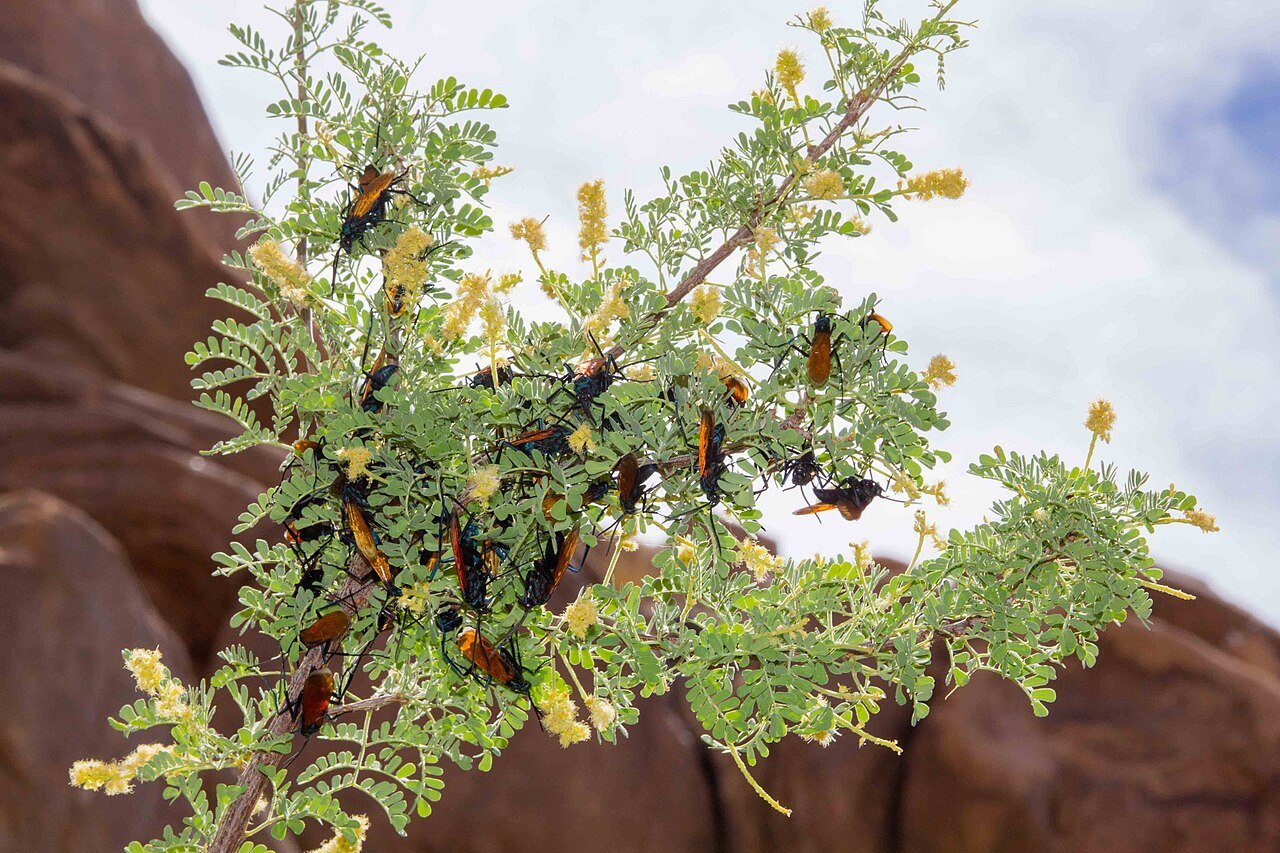
Tarantula hawks (genus Pepsis) are the giants of the spider wasp family — up to two inches of gunmetal blue-black armor with defiant orange wings, native to the deserts and scrublands of the American Southwest down through South America, wherever tarantulas dig burrows. The female’s business model is the family’s trademark rendered at maximum scale: sting a tarantula into permanent paralysis, drag it — a spider several times her weight — back to a burrow, lay one egg on it, seal the door. The sting that manages tarantulas earns its fame honestly: entomologist Justin Schmidt ranked it second most painful on Earth (behind only the bullet ant), describing pain so absolute the scientific advice is literally “lie down and scream” — but here’s the counterweight the videos skip: the pain lasts only about five minutes, does no lasting tissue damage, and the wasps are so famously non-aggressive that researchers handle them; stings essentially require grabbing one. Males can’t sting at all, and adults of both sexes are devoted nectar-drinkers — milkweed regulars, like our own great black wasp.
Ohio’s spider wasps are solitary and no threat to a house. The social nests that are a threat come under wasp and hornet removal in Dayton.
The Geography: Why Ohio Is Off the Map
Tarantula hawk range tracks tarantula range for the obvious reason, and wild tarantulas stop around Missouri and the southern Plains — the giant Pepsis species follow the same line, with established populations from Texas and the Southwest, thinning to occasional records in the lower Midwest. Ohio has no established tarantula hawks and no tarantulas for them to hunt; a genuine stray riding a produce truck would be a one-wasp curiosity, not a colonization. This puts the tarantula hawk on the same shelf as our Jerusalem cricket and lovebug files: a real animal, a deserved reputation, and a range map that ends the Ohio conversation before it starts. What Ohio DOES have — abundantly — is the rest of the family.
Ohio’s Own Spider Wasps: the Hometown Franchise
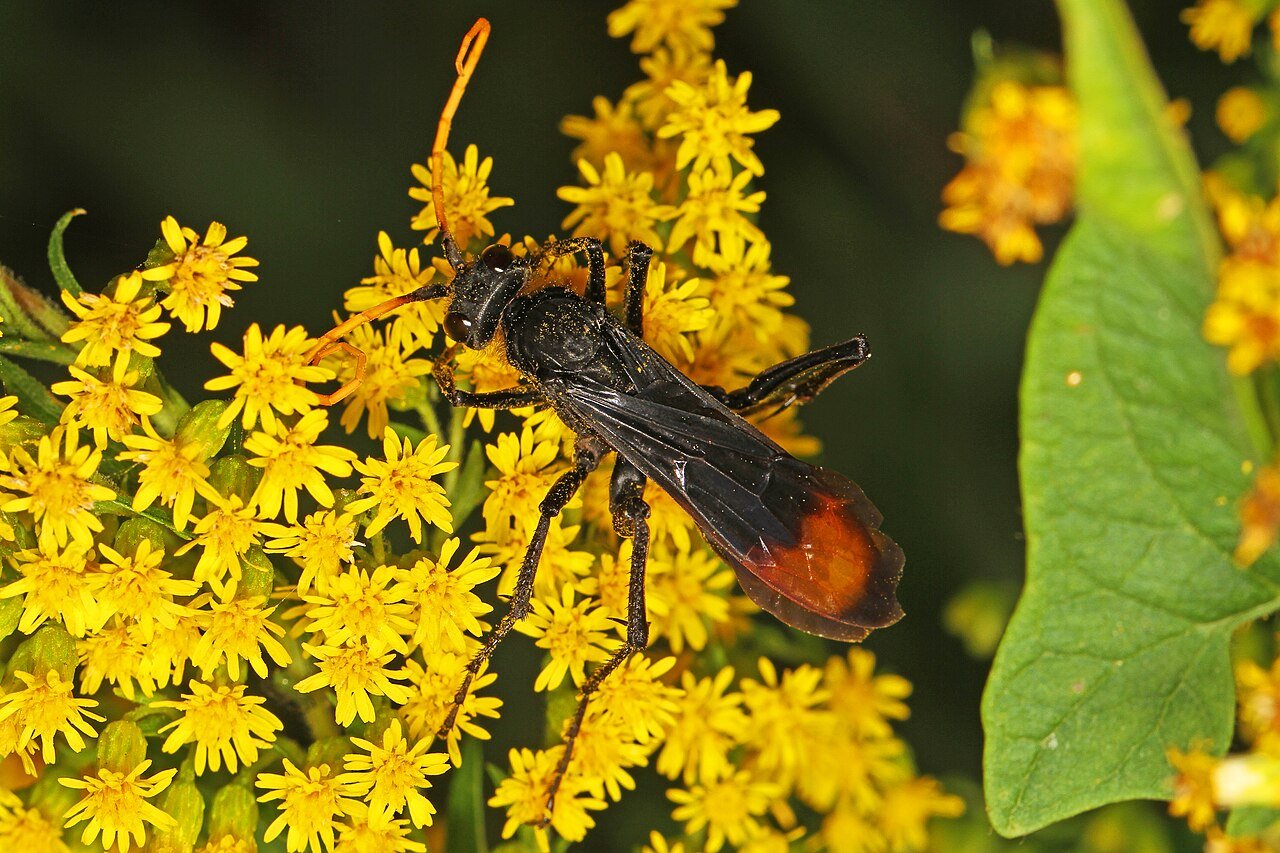
The spider wasp family (Pompilidae) runs to thousands of species, and dozens work Ohio yards all summer — the commonest sightings being sleek blue-black wasps a half-inch to an inch long (genera like Entypus and Anoplius, some with amber wings in tribute to their desert cousins) doing exactly what the videos show, scaled to local game: stinging, paralyzing, and dragging wolf spiders across patios, sidewalks, and mulch beds to burrows in soft soil. The field marks are unmistakable once known: constant twitchy motion, wings flicking in nervous semaphore, and that unmistakable cargo-hauling — a wasp walking backward towing a spider is a spider wasp, full stop. The sting: real but reluctant, delivered essentially only when handled, and rated far below the desert legend — a sharp few minutes, no medical significance for the non-allergic. The service they provide, on the other hand, is significant: every dragged wolf spider is one fewer basement visitor come fall, making the spider wasp one of the few insects that does OUR job on OUR customers’ behalf, free.
The Blue-Black Wasp Lineup: Who You Actually Saw
- Spider wasp (Pompilidae): twitchy, wing-flicking, ground-hugging, often towing a spider. Solitary, mild, beneficial. The usual answer.
- Blue mud dauber: steel-blue and slender — the mud dauber that repurposes old mud nests and specializes in hunting black widows (read that again — it hunts BLACK WIDOWS). Virtually sting-proof in practice.
- Great black wasp: the inch-and-a-half katydid hauler — bigger, calmer, flower-focused. Full file on its own page.
- Cuckoo wasp: the jewel — half an inch of metallic emerald-blue armor that parasitizes other wasps’ nests and CANNOT sting humans at all; it curls into an armored ball when threatened. Finding one is birding-with-insects.
- Steel-blue cricket hunter: deep indigo, drags crickets instead of spiders — same solitary story, different cargo.
- Black and white ruled out: a chunky black wasp with bold white face/markings and a papery nest is a bald-faced hornet — the one entry that earns distance and a call; see hornets in Ohio.
Does Any of This Need Pest Control? The Honest Verdict
For the solitary blue-black cast above: almost never, and we’ll talk you out of it cheerfully. No colonies, no nest defense, no picnic interest, sting-shy to a fault — and their cargo manifests read like our own service tickets: wolf spiders, crickets, black widows, katydids. Spraying spider wasps is firing your unpaid subcontractors. The legitimate exceptions, same as the great black wasp’s: a burrow field directly in a barefoot play zone, a household anaphylaxis risk that makes ANY stinging insect a medical question, or the discovery that your “spider wasps” are actually social wasps with a hidden nest — the misdiagnosis that matters, and the reason a photo beats a guess. Send the picture; if it’s towing a spider, we’ll congratulate you both. If it’s streaming in and out of a wall void at one point, THAT’s a yellow jacket colony, and now we’re talking.
Big blue-black wasp doing something dramatic in your yard? Send the photo — the ID is free, and it’s usually the best pest control news of your week. Serving Dayton and all of Montgomery, Greene, Miami, Clark, Warren, Butler, Preble, and Darke counties.
The Paralysis Pantry: How the Family Business Actually Works
The spider wasp method deserves its two paragraphs, because it’s among the most studied behaviors in entomology and every step happens in Ohio yards at patio-eye level. The female hunts visually — that twitchy, wing-flicking patrol is a search pattern — and when she finds a wolf spider, the fight is genuinely dangerous for her: the spider is often larger, armed, and defending its life. Her win condition is a single precise sting through the underside nerve center, inducing permanent paralysis without death. What follows is the logistics phase the videos love: she may amputate a few of the spider’s legs for easier towing (documented, practical, grisly), then hauls the cargo backward — sometimes fifty-plus yards, up walls, across driveways — to a pre-dug burrow, deposits it, lays exactly one egg on the abdomen, and seals the chamber. The larva develops on living, preserved provisions, eating non-essential tissues first; entomologists including Darwin himself famously wrestled with the moral aesthetics of exactly this arrangement. One egg per spider, a dozen-odd burrows per female per season: multiply by every spider wasp working your neighborhood and the family removes hundreds of wolf spiders per acre per summer.
Two behavioral quirks worth knowing because they generate calls: spider wasps will sometimes cache a paralyzed spider in a temporary spot — a porch corner, a windowsill, once memorably a mailbox — while excavating, which produces the “dead giant spider appeared on my porch and then VANISHED” mystery we get asked about every August (she came back for it). And males of several species patrol hilltops and porch railings in territorial loops that read as menacing but involve an insect that cannot sting at all. As with every solitary wasp in this library: the drama is real, the danger isn’t, and the cargo manifest is on your side.
Why the Tarantula Hawk Video Owns Your Feed (a Short Media Study)
It’s worth naming why this particular insect launched a thousand Ohio searches for a wasp that’s never lived here: the tarantula hawk is algorithmically perfect. It has a superlative (second-worst sting on Earth), a monster-versus-monster narrative (wasp defeats tarantula), a quotable scientist (Schmidt’s “lie down and scream” is the most shared line in sting literature), and a visual — orange wings on gunmetal blue — that reads on a phone screen from across the room. What the algorithm strips out is the geography and the duration: a range map ending in Missouri, and a pain clock ending in five minutes. This is the recurring pattern our acquittal library keeps documenting, from murder hornets to lovebugs: the internet’s pest anxieties are imported from other people’s ecosystems, while the pests that actually cost Ohio homeowners money — quiet, brown, unphotogenic — never trend. Calibrate your alarm to your zip code, not your feed, and half of pest panic evaporates before breakfast.
Spider Wasp Season in the Miami Valley
The local calendar, for the patio-watchers: adults fly June through September, peaking in the July–August heat when wolf spider populations crest — which is why the dragging spectacles cluster in exactly the weeks your patio sees the most use. They favor the same yards our spider pages describe as spider-friendly: mulch beds, stone borders, wood piles, unmown edges — the habitats that grow the prey. Burrows go into soft, sunny soil (garden beds, sandbox margins, the gaps between pavers), each used once and abandoned; you will never find a “spider wasp nest” to treat because the species doesn’t build one. By October the year’s females have provisioned their last chambers and died; the next generation waits underground on its grim groceries until the following summer. If you want fewer spider wasps, the honest lever is fewer wolf spiders — tidy the mulch lines and wood piles — but consider the accounting first: you’d be evicting the exterminator to protect the pest, which is the one trade this company will always advise against.
(Schmidt Index completists: the man stung himself with over eighty species to build his four-point scale, describing each like a wine critic — the tarantula hawk’s entry reads “blinding, fierce, shockingly electric: a running hair dryer has just been dropped into your bubble bath.” Ohio’s entire realistic sting roster tops out around his 2.0 — honest pain, no poetry required. We keep the quote on this page because it’s the finest sentence in entomology, and because it describes an experience precisely 1,200 miles from your patio.)
Frequently Asked Questions
Are tarantula hawks in Ohio?
No — their range tracks wild tarantulas, which stop around Missouri and the southern Plains. Ohio has neither. The blue-black wasp you saw dragging a spider here is a native spider wasp: same family, same technique, fraction of the size and sting.
How painful is a tarantula hawk sting really?
Second on the Schmidt Sting Pain Index (behind the bullet ant) — described as blinding and electric — but lasting only about five minutes with no lasting damage, from a wasp so non-aggressive that stings essentially require grabbing one. It’s a five-minute legend, not a danger.
What is the blue-black wasp dragging a spider in my yard?
A native spider wasp (family Pompilidae) — Ohio’s hometown version of the tarantula hawk. She’s paralyzed a wolf spider and is hauling it to a burrow as larval provisions. Solitary, mild, and doing free spider control.
Do spider wasps sting people?
Only if handled — no colony, no nest defense, no interest in you or your food. The sting is a sharp few minutes without medical significance for the non-allergic, and avoiding it requires only not grabbing wasps.
What wasp hunts black widows?
The blue mud dauber — the steel-blue dauber of porch fame provisions its nests heavily with black widows. If you have blue daubers, they’re running a widow-control program on your behalf; treating them is genuinely counterproductive.
What is the metallic green-blue wasp I found?
A cuckoo wasp — a jewel-armored parasite of other wasps’ nests that physically cannot sting humans; it curls into a ball when threatened. Purely a lucky find.
Should I get rid of spider wasps?
We’d rather you didn’t — their cargo list (wolf spiders, crickets, widows) reads like our own service menu. The exceptions: burrows in a barefoot play area, an anaphylaxis-risk household, or the discovery that the traffic is actually a social-wasp colony in a void — which is a different animal and a real service call.
What’s the most painful sting in the world?
Schmidt’s ranking: the bullet ant first, the tarantula hawk second, warrior wasps close behind — all tropical or southwestern. Ohio’s most painful realistic sting remains the bald-faced hornet/yellow jacket tier: modest by comparison and, unlike the legends, actually worth calling about when the nest is by your door.