
You found silverfish — except they’re not quite silver, they’re mottled gray-and-brown, and they’re not in the damp basement where silverfish belong: they’re streaking across the furnace room floor, or behind the water heater, or under the oven. Meet the firebrat — the silverfish’s heat-worshipping cousin, an insect so committed to warmth that its entire domestic career maps onto the hottest square yards of your house. Same ancient body plan, same paper-and-starch appetite, nearly opposite address. This page covers the ID (the two are constantly confused, and the fix is easy), the heat-map biology that makes firebrat control weirdly specific, what they damage, and the room-by-room eviction that works without spraying your utility room.
ID: Firebrat vs. Silverfish in Five Seconds
Both are bristletails — wingless, carrot-shaped, three tail filaments, darting movement, among the most ancient insect designs still running (their lineage predates wings themselves by a comfortable margin). The sort: a silverfish is uniform gunmetal-silver, slightly larger-looking, and found in cool damp zones — basements, bathrooms, closets (its full file is our silverfish page). A firebrat (Thermobia domestica) is mottled — gray-brown with darker banding and speckling, like a silverfish in desert camouflage — slightly stubbier, and found where it’s hot: their thermal sweet spot runs 90–106°F, temperatures that would kill most household insects and that firebrats treat as spa conditions. Color plus location settles nearly every case: silver-and-cool versus mottled-and-hot. (Both are harmless to people and pets — no bites, no stings, no disease — and both trigger the same “prehistoric wriggling thing” alarm wildly out of proportion to their rap sheet.)
Firebrats live where it is hot and damp, which narrows the search to a handful of rooms. Clearing them is pest control in Dayton.
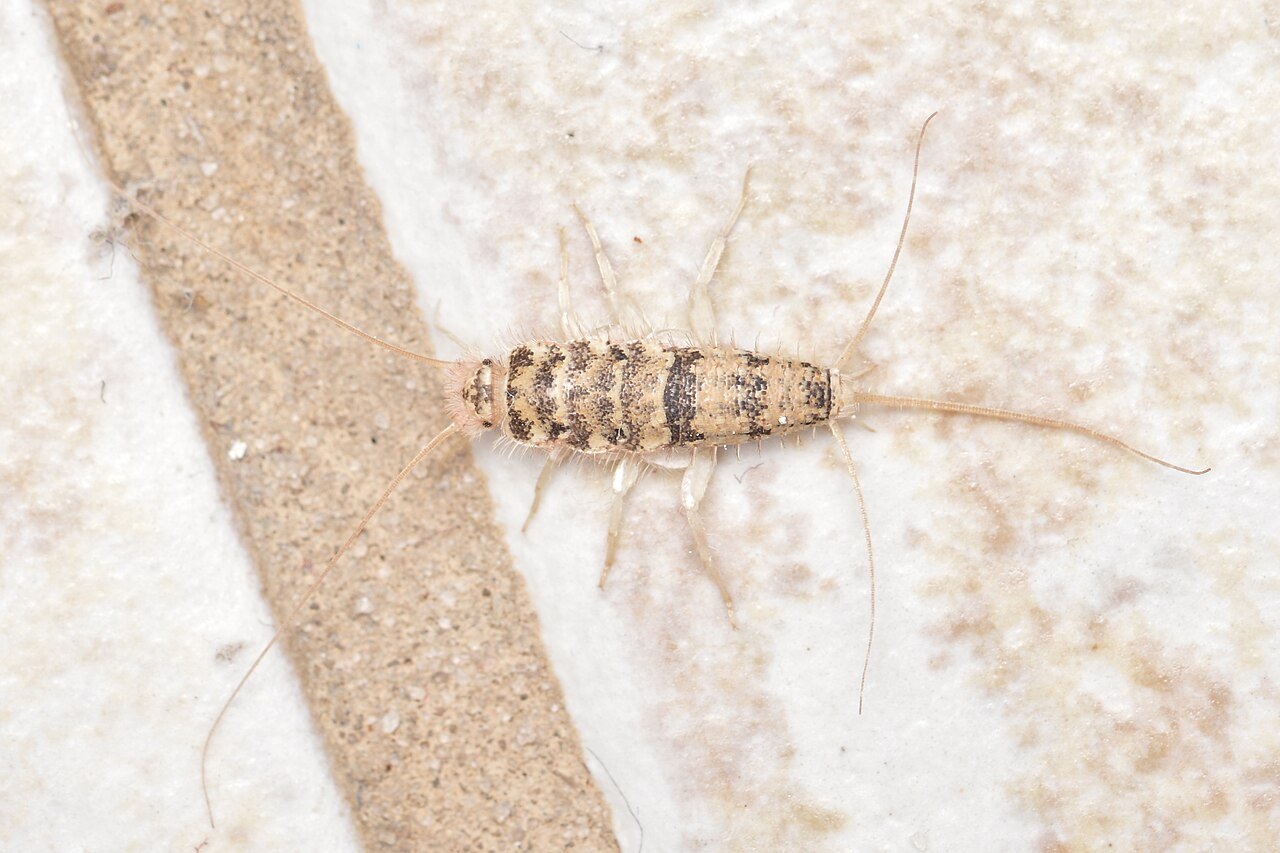
The Heat Map: Why Firebrats Live Where They Live
Firebrat biology is a thermostat with legs. At their preferred 90-plus degrees they sprint through development — egg to adult in as little as two to four months, versus a year-plus for silverfish in a cool basement — and a female lays thousands of eggs across a multi-year life, tucking them into cracks near the heat source. Below about 60°F they essentially stop reproducing. The consequence: firebrat infestations are geographic in a way almost no other pest matches — the population concentrates within feet of the furnace, water heater, boiler, oven surround, fireplace insert, or hot attic, and the rest of the house sees only stragglers. Their historic strongholds tell the story: bakeries (the name comes from centuries of hearth-side living), boiler rooms, and commercial kitchens. In a modern Dayton-area home, the census almost always maps to the mechanical room — which is excellent news, because a pest that must live near the heat source is a pest whose entire world you can audit in twenty minutes with a flashlight.
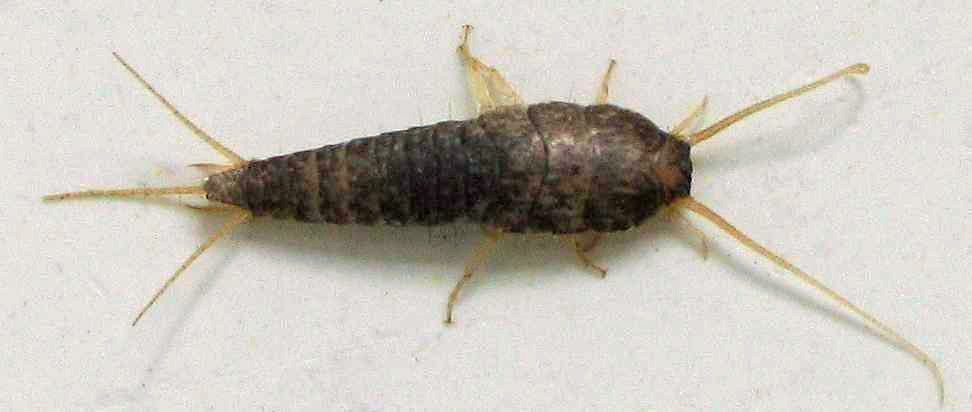
What Firebrats Actually Damage
The appetite is starch, protein, and cellulose — the same menu as silverfish, grazed in the same nibbling style: surface-etched paper, grazed book bindings and wallpaper paste, irregular holes in stored fabrics (starched and sized textiles especially), raided dry goods near warm appliances (flour, cereal, pet food dust), and the dead-insect debris every utility room accumulates. Damage accrues slowly — firebrats are grazers, not borers — but the geography raises specific stakes: the boxes people store beside the furnace and water heater are exactly the wedding albums, tax records, and holiday linens a colony works through over years of undisturbed access. The classic discovery isn’t an insect sighting at all; it’s opening a stored box after a decade and finding the lace edged, the paper etched, and a scatter of molted skins — the firebrat calling card, since bristletails molt lifelong and leave translucent shed shells wherever they’ve settled. If your keepsakes live in a mechanical room, this paragraph is the whole reason to keep reading.
The Eviction: Environmental First, Chemical Barely
- Audit the hot zone: flashlight and twenty minutes around every heat source — behind the water heater, furnace surround, oven kick space, fireplace, hot-attic hatch. You’re looking for live firebrats, shed skins, pepper-fine droppings, and the cracks they shelter in. Sticky traps at each station turn the audit into a running census.
- Starve the neighborhood: everything stored within ten feet of a heat source goes into sealed plastic totes — paper, fabric, and pet food especially. Cardboard beside a furnace is a firebrat all-inclusive resort: food, shelter, and nursery in one box.
- Fix the micro-humidity: heat plus moisture is the full recipe — a sweating water heater, a boiler-room condensate drip, a humidifier on the furnace. Correct the drips and the hot zone becomes hot-and-dry, which supports far fewer of them.
- Seal the commuter cracks: caulk the gaps in the mechanical room’s walls, floor penetrations, and trim — the same crevice-denial that runs our prevention playbook everywhere else.
- Chemicals, sparingly and last: a labeled crack-and-crevice dust or bait at confirmed harborages outperforms any spraying, and whole-room fogging of a utility space is exactly the fogger mistake in a new costume. Most household firebrat problems resolve without any chemistry at all.
When It’s More Than a Utility-Room Curiosity
Escalation signs: firebrats appearing rooms away from any heat source (suggests a bigger reservoir — often a hot attic or a shared mechanical wall in multi-unit buildings), steady reappearance after a clean environmental pass, or the commercial version — bakeries, restaurants, and boiler-served buildings, where firebrat populations scale with the square footage of warm harborage and sanitation stakes are contractual. Those cases get the professional treatment: source-tracing, growth-regulator-backed crack-and-crevice work, and the monitoring that proves the census back to zero. For everyone else, the honest summary is friendly: the firebrat is a harmless, ancient, weirdly specialized housemate whose entire strategy — live where it’s too hot for anyone to look — collapses the moment somebody looks. Be the somebody, or send us to be.
Mottled speedsters in the furnace room — or opened a stored box to find the calling cards? Get a quote or just send the photo; the ID is free. Serving Dayton and all of Montgomery, Greene, Miami, Clark, Warren, Butler, Preble, and Darke counties.
An Insect Older Than Wings: the Bristletail Backstory
The firebrat’s family deserves its footnote, because you’re hosting living paleontology. Bristletails — the order Zygentoma, holding firebrats and silverfish — split from the rest of the insect line before flight evolved: they never had wings, never lost them, and their body plan has run essentially unchanged for something on the order of 400 million years, predating the dinosaurs by a margin wider than the one separating dinosaurs from us. Their other archaic habits track: they molt throughout adult life (most insects stop at maturity), can regenerate lost appendages between molts, survive months without food, and perform one of the animal kingdom’s odder courtships — the male deposits a sperm packet and spins guide-threads to walk the female over it, a system invented long before anything flew, sang, or swarmed. None of this changes the eviction plan, but it reframes the encounter: the thing that startled you behind the water heater is running software older than trees. Respect costs nothing; the sealed totes evict it anyway.
The Multi-Unit and Commercial Chapter
Two settings where firebrats stop being a curiosity. Apartment and condo buildings with shared boiler rooms and heated utility chases can host building-scale populations that seed individual units through wall penetrations — the tell is firebrats in units nowhere near a heat source, and the fix is treating the reservoir, not the symptoms, which is landlord-and-property-manager work by definition. Bakeries, pizzerias, and commercial kitchens are the species’ ancestral kingdom — ovens, proofers, and flour dust recreate the hearth-side niche it evolved beside — and there the stakes are inspection scores and product protection rather than keepsakes; monitored crack-and-crevice programs on a maintenance schedule keep the census at zero and the paperwork clean. Both settings share the residential lesson at larger scale: firebrat control is always a map of heat plus food plus crevices, and whoever controls the map controls the insect.
The Seasonal Rhythm: Why Firebrat Sightings Spike in Winter
Firebrat reports run opposite to most household pests: they peak in the cold months, for reasons the heat map predicts. Winter is when furnaces and boilers run constantly, expanding the hot zone to its annual maximum; when basements and utility rooms get their holiday-storage traffic (people finally open the boxes); and when the surrounding cool rooms push any wandering firebrats back toward the warmth, concentrating the population where flashlights eventually find it. Summer reverses everything — the furnace idles, the hot zone shrinks to the water heater’s orbit, and sightings fade so completely that homeowners assume the problem solved itself. It didn’t; it contracted. The strategic read: winter is the discovery season, but any season works for the eviction, and a summer audit of the water heater closet — the one hot spot that never idles — catches the year-round core of almost every household population. Mark it on the same calendar as the fall mouse-exclusion sweep and the spring wasp patrol; twenty minutes a year keeps the whole ancient family accounted for.
Firebrat or Something Else Fast and Gray? The Utility-Room Lineup
Three other speedsters share the firebrat’s beat and collect its blame. The house centipede — many-legged, faster still, and a predator that eats firebrats among everything else (its presence in the mechanical room often means prey lives there too, a food-web hint worth taking). The camel cricket — bigger, humpbacked, a jumper rather than a darter, mapping dampness rather than heat. And the odd roach nymph — which matters, because a small oriental cockroach in a boiler room is the one lineup member that upgrades the response from totes-and-caulk to a real program. The sort is quick: three tail filaments and a carrot shape says bristletail; thirty legs says centipede; jumping says cricket; and glossy-oval with no tail filaments says start the roach protocol. Photograph before vacuuming — the ten-second ID picks the plan, which has been this page’s moral (and this site’s) all along.
Final housekeeping fact, because it decides real cases: firebrats and silverfish can coexist in one house without contradiction — the firebrats holding the mechanical room, the silverfish holding the damp basement corner forty feet away, each in its own climate. Finding both isn’t a super-infestation; it’s two small specialist populations reading your house’s temperature-and-humidity map more carefully than you have. Fix the map — dry the damp, seal the hot-zone storage — and both stories end the same quiet way.
Frequently Asked Questions
What is a firebrat?
The silverfish’s heat-loving cousin (Thermobia domestica) — a mottled gray-brown, wingless, fast-darting bristletail that thrives at 90–106°F and colonizes furnace rooms, water heater closets, oven surrounds, and bakeries. Harmless to people and pets; hungry for starch, paper, and fabric.
What’s the difference between a firebrat and a silverfish?
Color and address: silverfish are uniform gunmetal silver and live cool-and-damp (basements, bathrooms); firebrats are mottled with darker banding and live hot (90°F+, near heat sources). Same body plan, same appetite, opposite habitat maps — color plus location settles the ID in five seconds.
Do firebrats bite?
No — no bites, no stings, no disease, no risk to pets. The alarm they cause is entirely about how they look and move; the actual rap sheet is grazed paper, etched bindings, and holes in stored fabric, accumulated slowly.
Why are firebrats in my furnace room?
Because that’s their whole biology: they reproduce fastest in the 90s, stall below 60°F, and so concentrate within feet of furnaces, water heaters, and boilers. It makes them unusually easy to control — their entire world fits in a twenty-minute flashlight audit.
What do firebrats eat?
Starches, proteins, and cellulose: paper and bindings, wallpaper paste, starched fabrics, flour and cereal dust, pet food, and dead-insect debris. The at-risk items are whatever’s stored in cardboard near heat sources — archives and linens beside the water heater are the classic casualty.
How do I get rid of firebrats?
Environment first: seal stored items in plastic totes, fix drips and condensation in the hot zone, vacuum harborages, caulk the mechanical room’s cracks, and run sticky traps as a census. A crack-and-crevice dust or bait at confirmed harborages is the only chemistry most cases ever need — never fog a utility room.
Are firebrat molted skins a sign of infestation?
Yes — bristletails molt throughout life, so translucent shed skins accumulating in a box or corner mark an established, settled population (and distinguish real residency from a wandering straggler). Skins plus pepper-fine droppings plus grazed paper is the full signature.
When should I call a professional about firebrats?
When they’re appearing far from any heat source (a bigger reservoir — hot attic, shared boiler wall), when they persist after a clean environmental pass, or in commercial settings — bakeries and boiler-served buildings, where populations scale and inspections have stakes. Source-tracing plus targeted crack-and-crevice work resolves those.