
Here’s the number that explains why flea problems keep “coming back” after every bomb, spray, and bath: at any moment, only about 5% of a flea infestation is adult fleas. Half of it — fully 50% — is eggs. Kill every adult flea in the house tonight and you’ve treated one-twentieth of the problem; the eggs hatch on schedule, and three weeks later the “new” infestation is just the old one keeping its appointments. This page is the complete flea egg file: what they look like and where they actually are, the salt-grain-or-egg identification, the hatching math that dictates treatment timing, why the washing machine and vacuum out-kill most sprays, and how egg biology explains the two great mysteries of flea season — the empty-house infestation and the treatment that “didn’t work.”
What Flea Eggs Look Like (and Where They Really Are)
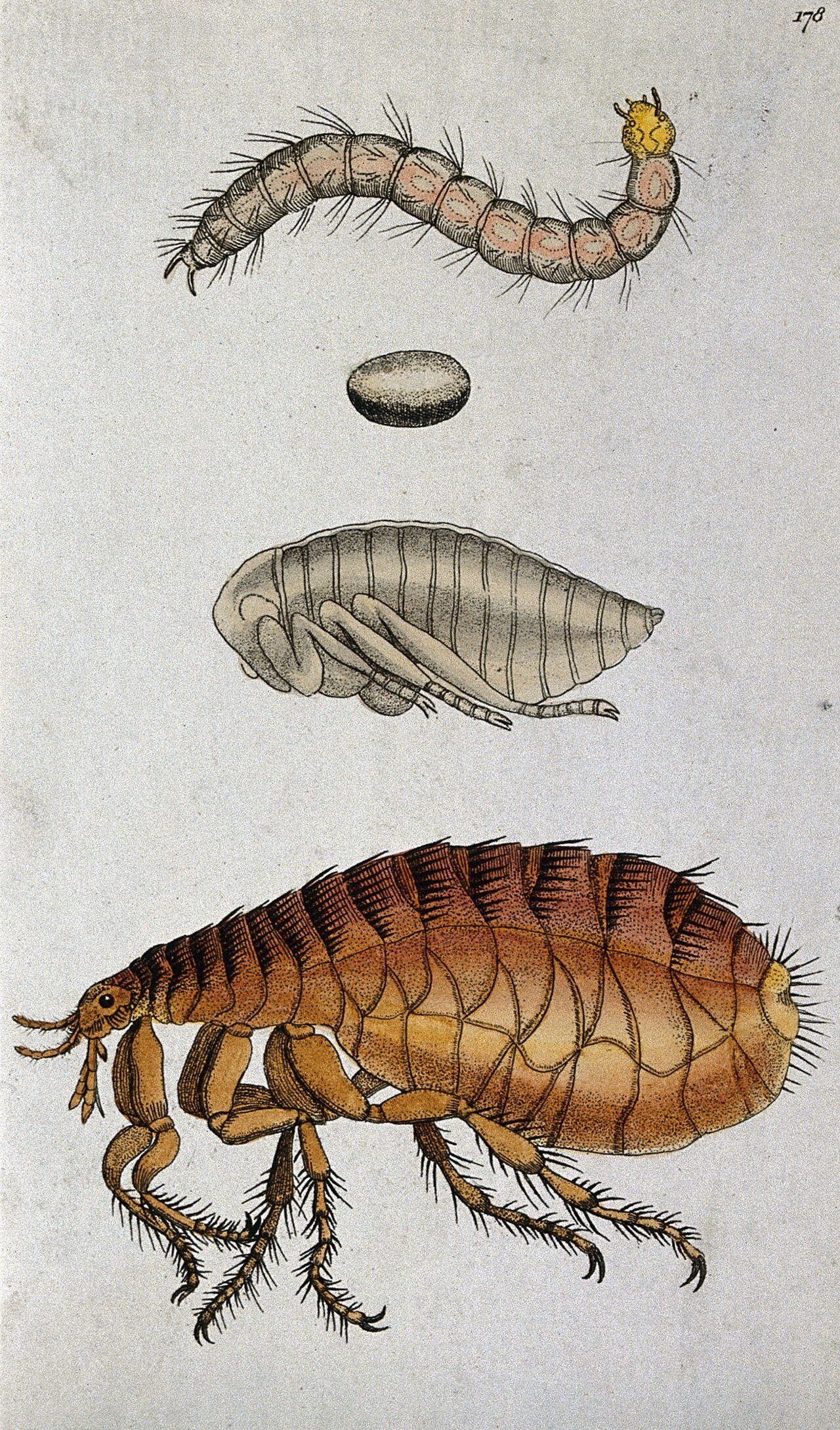
A flea egg is a tiny oval about half a millimeter long — salt-grain territory — smooth, pearly white to off-white, and slightly translucent. You will essentially never see one on your pet, and this is the fact the whole page turns on: flea eggs are laid on the animal but are dry and unattached, engineered to fall off. Within hours of laying, they’ve rained off the host into wherever the animal spends time — pet bedding first and always, carpet where the dog naps, the couch cushion under the cat, car seats, the base of the cat tree, and the carpet edges along baseboards. Your pet is not the nursery; your pet is the salt shaker, and the house is where the seasoning lands. A female cat flea lays 20 to 50 eggs a day — several hundred over her weeks of life — so a modest ten-female population is planting several thousand eggs a week into the resting zones.
Half the infestation is eggs you cannot see, which is why timing matters more than the first spray. That is flea treatment in Dayton.
The look-alike sorting matters because “white specks in pet fur or bedding” has three suspects. Flea eggs: smooth ovals, loose, roll off fur easily. Flea dirt: black pepper flecks that smear rust-red on a wet paper towel — digested blood, and the confirmation our flea-signs guide is built around; finding dirt and white ovals together is diagnostic. Dandruff: irregular flat flakes that cling to fur rather than rolling. (Tapeworm segments — rice-grain, sometimes moving — are a fourth find with its own veterinary meaning, and a reminder that fleas carry passengers.)
The Hatching Math That Dictates Everything
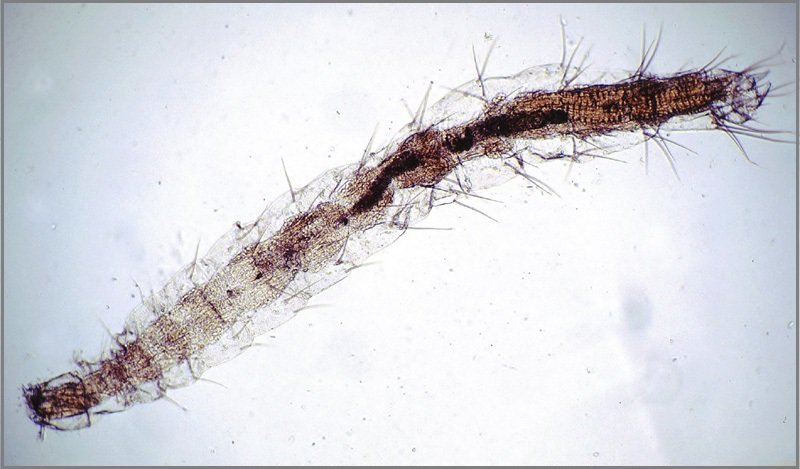
Eggs hatch in one to ten days depending on warmth and humidity — two to three days in an Ohio summer house, longer in dry winter air. Out comes not a flea but a larva: a bristly, light-shunning worm a few millimeters long that burrows deep into carpet pile and bedding seams and eats, primarily, the flea dirt raining down from adults above — the system is, grimly, self-provisioning. One to two weeks of that, then the larva spins the pupa — the sticky, vacuum-resistant, insecticide-proof cocoon that is the single most important object in flea control, because pupae can sit dormant for months, waiting for the vibration and CO2 of a passing host to trigger emergence. Add it up: egg to biting adult runs three to four weeks in good conditions, and any single-day kill — however total — leaves the pipeline’s other 95% on schedule. This is why every honest flea protocol, including ours, is a three-to-four-week campaign with a built-in “week two hatch” warning, and why the pupal window explains the classic “we treated and they came back” call — nothing came back; the cocoons opened.
Killing Flea Eggs: What Actually Works
- The vacuum — genuinely the heavy weapon: vacuuming lifts a large share of eggs (they’re loose by design) and, crucially, its vibration triggers pupae to open into the spray-vulnerable adult stage. Daily passes over pet zones, carpet edges, and under furniture for two to three weeks, bag or canister emptied outside every time — this single habit does more than any consumer spray.
- The washing machine: hot wash plus high-heat dry kills every stage, eggs included, with total certainty. All pet bedding, throws, and washable pet-zone fabric, weekly through the campaign. If the dog sleeps on it, it either fits the washer or gets replaced.
- IGR sprays (the egg-specific chemistry): insect growth regulators — methoprene or pyriproxyfen on the label — don’t kill adults but sterilize the egg-and-larva pipeline, and they’re the reason professional treatments hold for months while adulticide-only bombs fail in weeks. Any spray without an IGR is treating the visible 5%. Our own treatments pair adulticide with IGR for exactly this reason (and it’s why the flea service page keeps using the word “program”).
- Modern vet flea prevention — the upstream shutoff: today’s prescriptions kill fleas before they can lay, converting your pet from salt shaker to dead end. With the tap off, the house’s existing eggs age out in weeks. No home-only program survives an untreated pet, and no pet-only program clears a heavily seeded house fast — the pincer is the plan.
- What doesn’t work: flea bombs (fog settles on surfaces, never reaching eggs deep in pile — and pupae shrug it off entirely), salt and baking soda carpet myths, essential-oil sprays (some are outright toxic to cats), and treating the pet alone while the house holds ten thousand timed charges.
The Empty-House Mystery, Solved by Eggs
The classic case: a family moves into a house vacant for two months, and within days everyone’s ankles are under attack — “the fleas survived with nobody here!” They didn’t survive; they waited. The previous occupants’ pets seeded the carpet with eggs; eggs became larvae, larvae became pupae, and the pupae — the months-capable dormancy stage — held until footsteps and breath announced hosts again, then opened in a coordinated hatch. Same mechanism behind the post-vacation ambush in your own home and the “fleas with no pets” apartment: the eggs were banked before the animals left (or arrived via the previous tenant, or a rodent host in the walls — wildlife fleas are their own storyline). Flea problems are never spontaneous; they’re scheduled, weeks in advance, by the egg rain nobody saw.
Fleas outlasting every remedy you’ve thrown at them? That’s the pipeline talking. Get a quote for the IGR-backed program that treats all four stages on their own schedule. Serving Dayton and all of Montgomery, Greene, Miami, Clark, Warren, Butler, Preble, and Darke counties.
The Humidity Lever: Why Ohio’s Flea Season Peaks in August
Flea eggs and larvae are moisture-dependent in a way adults aren’t — eggs desiccate and die below roughly 50% relative humidity, and larvae are even thirstier. That single fact writes the regional calendar: Ohio’s muggy July-through-September is peak egg-survival season (which is why flea calls crest in late summer), while furnace-dried January air quietly kills a large share of eggs in heated rooms. It also maps the house: egg survival concentrates in humid microclimates — basements, bathroom-adjacent carpet, under-furniture shade, and the packed insulation of pet bedding — and drops on open sunlit floor. You can pull this lever deliberately: running dehumidifiers hard during a flea campaign (the same dry-basement doctrine we preach for other pests) measurably suppresses the next generation while the vacuum and IGR handle the current one. It won’t clear an infestation alone — the bedding microclimate stays humid regardless — but in the margins where campaigns are won, dry air is on your side.
The same lever explains the yard: outdoor flea development happens in shaded, moist soil where pets and wildlife rest — under decks, in crawl spaces, along foundation plantings — never in open sun-baked lawn. Shade plus moisture plus host traffic is the entire outdoor flea map, and it’s where yard treatment earns its keep when infestations keep re-seeding from outside.
The Two-Week Egg Audit: How to Know You’re Winning
Because eggs are invisible in carpet, campaigns need proxies for progress, and these three work. The white sock patrol: walk pet zones in tall white socks at the same hour daily; adult fleas jump to the warm target and show against the white. Counts should fall week over week — with an expected bump in week two as banked eggs hatch (the bump is the pipeline emptying, not failure; its absence by week three is victory). The comb census: flea-comb the pet over white paper nightly; falling flea-dirt yield means the adult population feeding on the animal is thinning, which means egg production is collapsing upstream. The bedding check: after each weekly hot wash, inspect seams before reuse — fresh white ovals reappearing mean an untreated adult source is still laying (usually a missed pet, a wildlife host in the crawl space, or a skipped room). Three quiet weeks across all three checks and the pipeline is genuinely empty — which is the finish line our own follow-up visits verify before we call a flea job done.
One veterinary footnote worth carrying to your next appointment: if you’re finding eggs and dirt on an animal that’s “on flea prevention,” the usual culprits are lapsed doses, a product outgrown by the pet’s weight, bathing that stripped a topical, or resistance to an older over-the-counter active. Modern prescription preventives remain highly effective — but only at full dose, on schedule, on every animal in the house, cats included. The one untreated barn cat visiting the porch can re-seed a cleared house in a week; egg math forgives nothing.
Frequently Asked Questions
What do flea eggs look like?
Tiny smooth ovals about half a millimeter long — pearly white, slightly translucent, salt-grain sized. They’re loose and roll freely, which is the ID tell: dandruff clings in flat flakes, and flea dirt is black and smears rust-red when wetted.
Where do fleas lay their eggs?
On the pet — but the eggs are unattached by design and fall off within hours, landing wherever the animal rests: bedding, nap-spot carpet, couch cushions, car seats. The pet is the salt shaker; the house is where the seasoning lands. That’s why treating only the animal never clears a house.
How long do flea eggs take to hatch?
One to ten days — two or three in a warm summer house. They hatch into larvae, not fleas; add one to two weeks of larval feeding and a pupal stage that can wait months, and egg-to-biting-adult runs three to four weeks. All treatment timing flows from that clock.
Can you see flea eggs on your pet?
Rarely — they fall off too fast. You’re more likely to spot them in bedding seams and nap zones, ideally alongside flea dirt, which together are diagnostic. On the animal itself, flea dirt at the fur base (rust-red smear test) is the reliable evidence.
Does vacuuming get rid of flea eggs?
It’s the single best physical weapon: eggs are loose and lift easily, and the vibration also triggers dormant pupae to open into the vulnerable adult stage. Daily passes on pet zones for two to three weeks, emptied outside every time — it outperforms any consumer spray.
Do flea bombs kill flea eggs?
Effectively no — fog settles on exposed surfaces and doesn’t penetrate carpet pile or bedding where eggs and larvae live, and pupae are nearly impervious. Bombs kill the visible 5% and leave the 95% pipeline intact, which is why they “work” for two weeks.
What kills flea eggs?
Heat (hot wash + high dry kills every stage with certainty), vacuuming (physical removal), and IGR chemistry — methoprene or pyriproxyfen — which sterilizes the egg-larva pipeline and is what separates professional treatment from adulticide-only sprays. Modern vet preventives shut off new egg production entirely.
How can an empty house have fleas?
Pupae — the stage after eggs — can sit dormant for months and open when vibration and CO2 announce a host. A vacant house’s carpet holds the previous pets’ banked eggs matured into waiting cocoons; the new family’s footsteps ring the dinner bell. Nothing survived; it waited.
Why do fleas keep coming back after treatment?
Because single-day kills treat the adult 5% while eggs and pupae keep their schedule — the “return” two or three weeks later is the pipeline delivering. Breaking it takes the full campaign: IGR + adulticide, daily vacuuming, hot-wash cycles, and pet prevention, run for three to four weeks.