
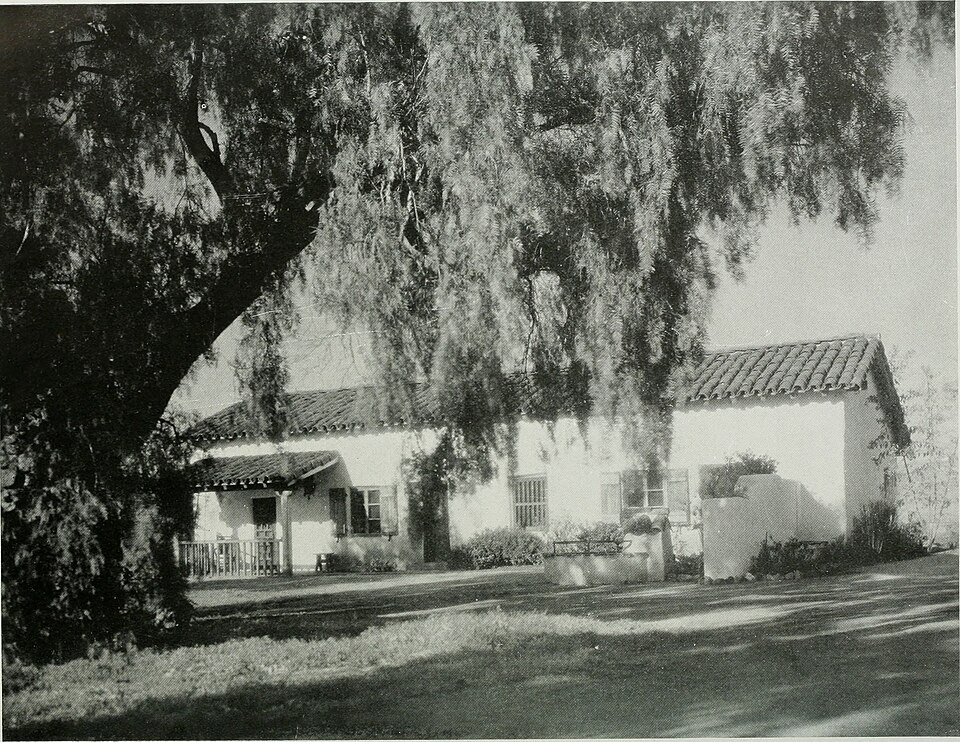
Around Eaton, a termite inspection that stops at the house has read one chapter of a five-building book. The Preble County farmstead — and the town’s edges are stitched with them, working and retired both — is a wooden archipelago: the 1900s farmhouse, the bank barn with its timber sills, the machine shed, the corn crib, the summer kitchen or smokehouse surviving as storage, and the woodshed leaning against something since Truman. Every one of those structures puts wood at or near soil, and termite control out here has to think the way the colonies do — parcel-wide. We call it the farmstead perimeter, and its first principle is the one that surprises people: on a working parcel, the house is rarely where the termites start. It’s where they finish.
The Outbuilding Head Start
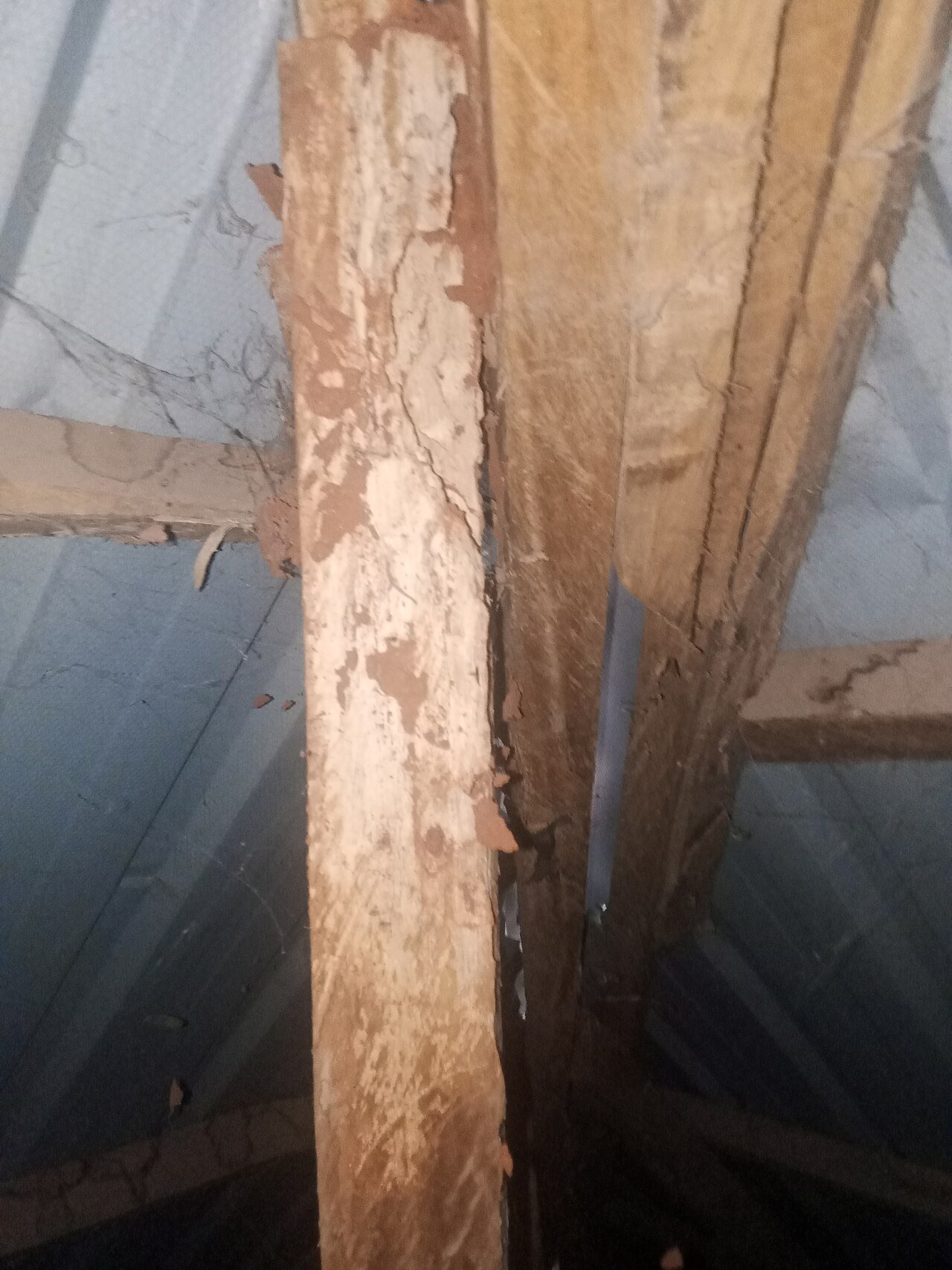
Subterranean termites colonize by proximity and ease, and the outbuildings offer both. A barn’s timber sills sit on stone or early concrete at grade, often earth-bermed on the bank side; a machine shed’s grade boards touch soil by design; the woodshed is literally a food cache with a roof; and none of them get the incidental human observation a lived-in house provides. Colonies establish in that unwatched wood, sometimes for years, building population and range — and then the foraging network, which probes outward continuously, finds the farmhouse. By the time a homeowner sees swarmers at a kitchen window in April, the parcel may have carried the colony’s infrastructure for a decade in buildings nobody thought to check. The practical inversion follows: out here, outbuilding evidence is the early warning system, and the annual walk that reads barn sills and shed grade-boards is worth more than any gadget on the market.
The Farmhouse’s Own File
The houses themselves run the classic old-frame inventory, with two Preble County signatures. First, the additions: a century farmhouse is usually three or four building campaigns wearing one roofline — the summer kitchen absorbed, the back porch enclosed, the bathroom added over a shallow crawl — and every campaign’s junction is a seam of cold joints, buried sills, and grade changes, the same addition-seam logic that runs suburban remodels, at farm scale. Second, the cellars: stone-walled, dirt-floored in part, and holding moisture the way stone does — which keeps the soil against the sills workable for colonies straight through summer. The inspection that matters enters the cellar and the crawl, probes the sills at the additions’ seams, and separates active evidence — fresh mud, live workers, new wings — from the archaeology a century of farming always leaves.
Parcel-Wide Protection
- The five-building walk: every wooden structure on the parcel inspected — barn sills, shed grade-boards, crib posts, woodshed contact — because the colony’s map doesn’t stop at the lawn
- Treatment matched per structure: liquid barrier work at the farmhouse where trenching reaches; monitored bait lines where berms, slabs, and additions block it; and honest triage on outbuildings — a retired crib may warrant monitoring rather than treatment, and we’ll say so
- The woodpile rule: firewood off the ground, away from every foundation, and never against the house — the cheapest termite decision a farm parcel makes
- Swarm triage: April–May winged emergences ID’d free from a photo — and on a farmstead, where the swarm emerged from matters as much as what it is
The town side of Eaton runs the standard county-seat inventory — the courthouse-square commercial blocks with their timber bones, the older residential streets, and the newer edges with their aging builder pretreatments — and all of it gets the same honest framework: inspection before evidence, active-versus-archaeology stated plainly, and treatment sized to the structure rather than the script. The full local file lives on our Eaton service page.
Walk the Whole Parcel
One visit reads all five buildings — sills, seams, cellars, and the woodpile against the shed — and hands you the parcel map: what’s active, what’s archaeology, what needs treatment, and what just needs watching. The house gets protected best when the whole perimeter gets read first.
Buying or selling in Eaton? What a lender, a VA file, or a listing agent asks for is not a treatment — it is a written report. That is a termite and WDI inspection in Eaton: $99 flat on the lender-ready NPMA-33, next business day, PDF the day we inspect. Treatment only enters the conversation if the report actually finds something.
Frequently asked questions
Why inspect the barn if I’m worried about the house?
Because on a farmstead the colony usually starts in the unwatched wood — barn sills, shed grade-boards, the woodshed — and reaches the house years later through its expanding foraging network. Outbuilding evidence is the parcel’s early-warning system; the house swarmer is the late chapter.
What should I look for on my own annual walk?
Pencil-wide mud tubes climbing stone or block at any building, mud packed in sill joints, wood that probes soft at grade contact, and spring wings on cellar or shed sills. Ten minutes per building, once a year — the highest-value habit a wooden parcel can keep.
My farmhouse cellar has old damage in the joists — emergency?
Only if it’s active: fresh mud, live workers, or new wings. A century of farming leaves archaeology in nearly every cellar — dry, empty galleries from colonies long dead. The inspection states which yours is, plainly, because the difference is thousands of dollars.
Can you treat a bank barn or is it a lost cause?
Treatable — usually with monitored bait lines, since berms and stone foundations block conventional trenching. The honest triage matters too: a working barn warrants protection; a retired crib may only warrant monitoring, and we’ll say which rather than sell both the same service.
Does firewood against the house really matter?
It’s the cheapest termite decision a parcel makes: a woodpile at the foundation is a baited bridge — food stock touching soil touching structure. Off the ground, away from every building, and the bridge never gets built.
Why do farmhouse additions get termites at the seams?
Every building campaign — the absorbed summer kitchen, the enclosed porch, the added bath — left cold joints, buried sills, and grade changes where eras meet. Those seams are soil-to-wood highways invisible under flooring, and they’re where our probing concentrates.
Are termite swarmers in the shed as serious as in the house?
They’re the same parcel file at an earlier, cheaper stage: a shed swarm means an established colony within foraging range of everything else you own. Where the swarm emerged matters as much as what it is — photo both, free ID either way.
What does termite control cost in Eaton?
Quoted from the five-building walk: farmhouse barrier or bait programs at the standard residential range, outbuilding protection triaged honestly per structure, and monitoring lines priced as the small standing insurance they are against repairs no policy covers.
Eaton’s full service picture continues with ant control in Eaton and wasp & hornet removal in Eaton.