
Every summer, somewhere around Eaton, a homeowner mowing a rural lawn hits a knee-high dome of thatched soil boiling with ants, reaches for a phone, and searches the five words we can predict from here: “fire ants in Ohio map.” Let’s answer that first, because it’s the answer this county deserves to have on record: there are no established fire ants in Ohio — the winters still say no — and the mound in your pasture is the work of field ants, a native genus that builds the biggest ant architecture in the state and gets wrongly accused of being fire ants every single July. Ant control in Eaton runs heavier on this file than anywhere we serve, because field ants build where Eaton lives: open sun, undisturbed turf, pasture edges, fence lines, and the big rural lawns of a farm county. We call it the mound file, and it starts with an acquittal.
Reading a Mound
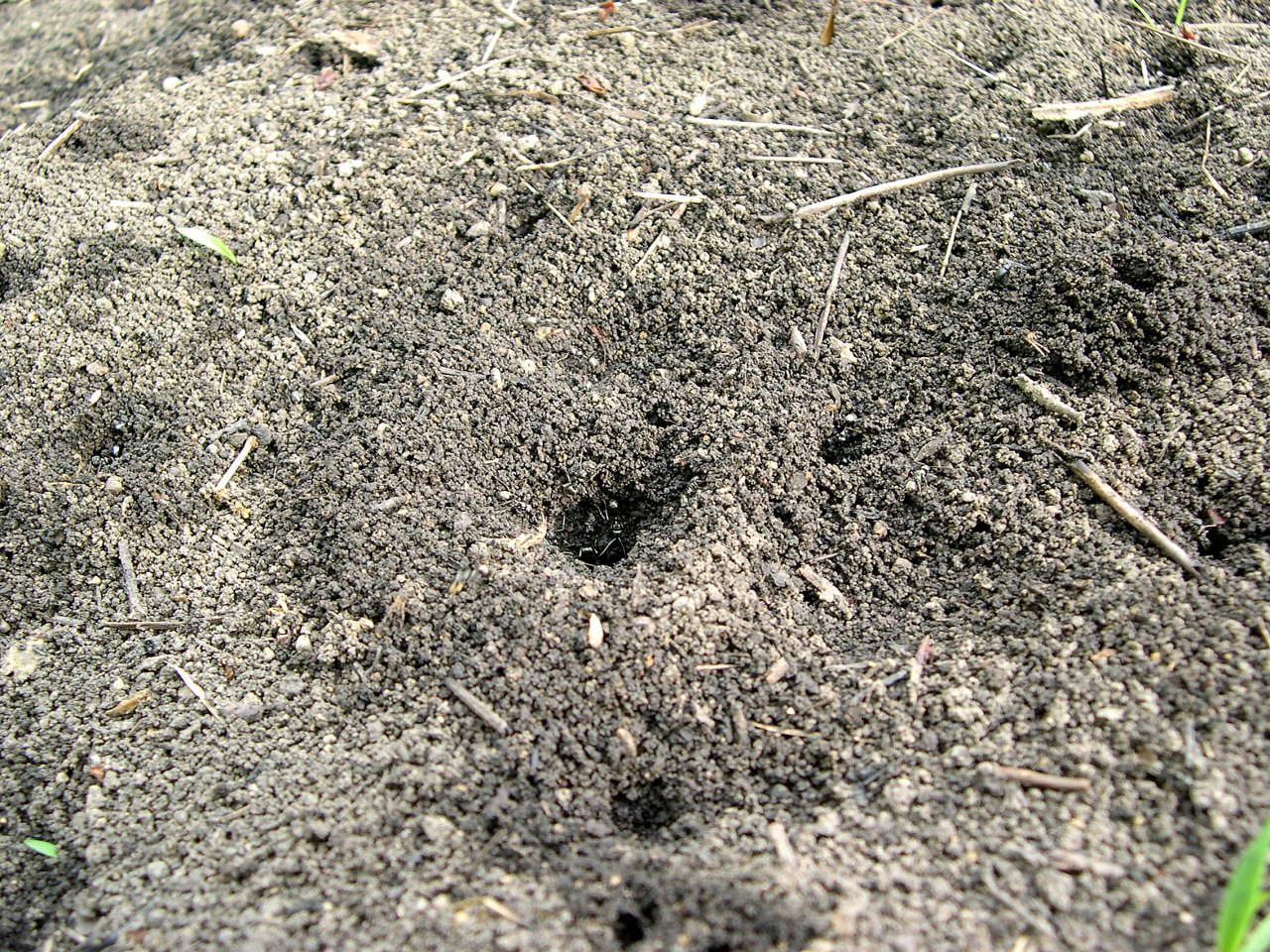
The tells are quick. Field ant mounds are thatched domes — soil worked with grass clippings and stems — sited in open sun, often against a fence post or at the pasture edge, occupied by big reddish-brown-to-black ants that rush the surface when disturbed but bite (a pinch, no venom sting) rather than swarm-and-burn. They’re farming aphids on the nearby vegetation and hunting the turf around them, and their colonies run years-deep with thousands of workers. What they essentially never do is enter houses: field ants are outdoor obligates, and the mound by the barn and the trail in your kitchen are almost always two unrelated stories. That’s the file’s central sorting: the mound is a lawn-management question with an honest do-nothing option; the kitchen trail is the standard village-and-farm ant file — odorous house ants on the moisture calendar, pavement ants in the walks — handled with the usual bait-first protocol.
When a Mound Warrants Action
Honesty first: a mound at the pasture’s far edge hurts nothing — field ants aerate soil, suppress other insects, and predate pest species, and we tell rural owners to leave distant mounds alone as routine counsel. Action earns its keep when the siting conflicts: mounds in the mowed lawn proper (mower strikes hurt the machine and scatter nothing — the colony just rebuilds), mounds against foundations or in kids’ play areas, mounds hosting aphid farms on ornamentals you care about, and the electrical wrinkle this genus shares with its southern cousins — field ants colonize well casings, meter bases, and AC pads often enough that any ant activity at equipment deserves a look. Treatment that works is colony-deep: mound drenching or baiting timed to active season, done right once, rather than the surface sprays that harvest a few hundred workers off a colony of ten thousand and change nothing by August.
The Eaton Program
- The mound verdict: free photo ID on any mound — the fire-ant acquittal, the species call, and the honest leave-it-or-treat-it recommendation by siting
- Colony-deep treatment: drench or bait protocols for the mounds that conflict — lawn, foundation, play area, equipment — done to kill the colony, not to harvest workers
- The house file: the standard rural-county calendar — wet-week odorous house ant surges baited at the foundation, pavement ants in the walks, and the carpenter ant residency check on the big black ones
- Equipment checks: well casings, meter bases, and AC pads inspected on any ant activity — the one mound habit that costs real money if ignored
The county-seat close: Eaton’s ant pressure is honest, visible, and mostly outdoors — a farm county’s ants doing farm-county things — and the service that fits is triage-first rather than treatment-first. Half our Eaton ant calls end with an acquittal and advice; the other half get colony-deep work that actually ends what it treats. Both halves start the same way: a photo, a verdict, and no invoice until there’s a reason for one. The town’s full pest picture lives on our Eaton service page.

Get the Mound Verdict
Photo the dome, send it, and get the answer this county deserves: not fire ants, here’s what it is, and here’s whether it’s worth a dollar to treat. Kitchen trails and equipment-pad activity get the same free triage — and the colony-deep fix when they earn it.
Frequently asked questions
Are there fire ants in Ohio?
No established fire ants — Ohio winters still say no, and the big boiling mound in your Eaton lawn is field ants: a native genus, the state’s biggest ant architects, and the wrongly accused party in every July’s panic searches. The photo ID confirms it free.
How do I tell a field ant mound from something dangerous?
Thatched soil-and-grass dome in open sun, big reddish-to-black ants that rush the surface and pinch (no venom sting, no swarm-and-burn), usually at a fence line or pasture edge. Fire ant contact feels like fire and leaves pustules — and it doesn’t happen here.
Will the mound ants invade my house?
Essentially never — field ants are outdoor obligates. The mound by the barn and the trail in your kitchen are two unrelated stories: the kitchen file is the usual odorous-house or pavement ant calendar, handled bait-first like everywhere.
Should I just mow the mound flat?
It costs your mower more than the colony — the dome rebuilds in days from a nest running feet deep with thousands of workers. Distant mounds deserve a pass; conflicting ones deserve colony-deep treatment, not a blade.
When is a mound actually worth treating?
When siting conflicts: in the mowed lawn proper, against the foundation, in play areas, farming aphids on ornamentals you care about — or at equipment. Otherwise the honest answer is leave it; field ants aerate soil and eat pest insects for free.
Why do you check well casings and AC pads?
Field ants colonize equipment housings often enough to matter — soil-packed meter bases, well casings, and condenser pads are the one mound habit that costs real money. Any ant activity at equipment earns a look before it earns a repair bill.
What actually kills a mound colony?
Colony-deep work timed to active season: drench protocols or baits that reach the queenright core — done right once. Surface sprays harvest a few hundred workers off a colony of ten thousand and change nothing by August.
What does ant control cost in Eaton?
The verdict is free — photo, species call, leave-it-or-treat-it advice. Colony-deep mound work runs flat per mound; the house file prices as the standard seasonal program; and half our Eaton calls honestly end at the free part.
For the rest of what this town actually deals with, see cockroach control in Eaton and termite control in Eaton.