The 2019 tornado did one thing to Trotwood that nobody lists among its effects: it re-armed part of the town’s termite defense. Every home rebuilt since carries a fresh builder-applied soil pretreatment — which makes the rebuilt streets, for the next stretch of years, some of the best-protected housing in Montgomery County. Termite control in Trotwood therefore runs on a split map that no other town we serve has: protection that tracks the storm path. The blocks the tornado missed — the intact postwar neighborhoods, the older village-core houses, the rural west’s farmhouses — carry pretreatments that expired decades ago, or never existed at all. Knowing which side of the map your foundation sits on is the entire strategic question, and it’s answerable from your own front porch.
Reading the Split Map
The rebuilt side’s story is short and good: a post-2019 foundation carries a barrier inside its reliable window, and the job for those households is simply not to squander it — every flower bed dug against the foundation, every patio, every irrigation trench cuts the treated zone, so fold a re-treat of the disturbed segment into any project that opens soil at the perimeter. Mark the calendar honestly, too: barriers age out in years, not decades, and the rebuild cohort will reach its expiry window together, street by street, the way same-vintage subdivisions always do. The unhit side carries the live file now. Postwar slab and crawl homes whose original treatments are long gone, the older frames with timber sills and decades of grade creep, and the western townships’ farmhouses with outbuildings, wood piles, and soil-contact porches — that inventory is where Trotwood’s active colonies actually turn up, and where the inspection cadence belongs.
The Crawl-Space Majority
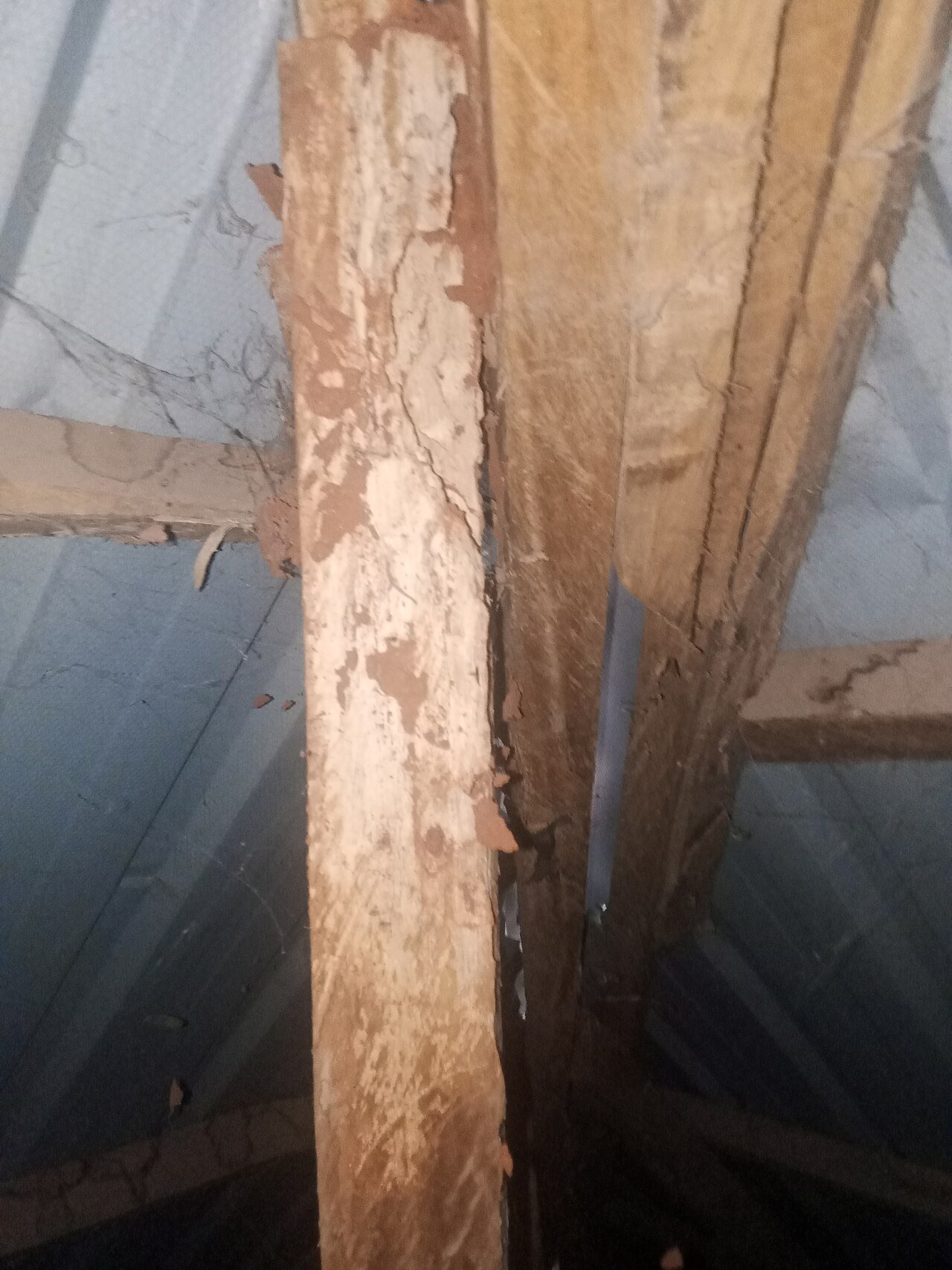
A working share of the unhit stock sits over crawl spaces, and crawls are where Trotwood’s termite evidence hides in plain dark. Shelter tubes climbing block piers, moisture-softened sill plates at the far corner nobody visits, and the humid, vented-but-stagnant conditions that keep soil workable for colonies straight through summer. The inspection that matters here is the one that actually enters the crawl — flashlight on every pier line, probe on the sills, moisture reading at the corners — because a doorway glance at a crawl-space house is not an inspection, it’s a drive-by. Where moisture runs chronic, the fix is joint: vapor management and downspout correction alongside the treatment, since wet soil against wood is the invitation no barrier fully revokes.
The Program, Both Sides
- Unhit-side inspections: full crawl-and-perimeter work on the postwar and village stock, active-vs-archaeology stated plainly, and treatment matched to the foundation — trench-and-treat where access allows, monitored bait where it doesn’t
- Rebuilt-side stewardship: the don’t-squander counsel — segment re-treats folded into any soil-opening project, and the honest calendar for the cohort’s shared expiry
- Rural-west parcels: whole-property walks that include the outbuildings and wood piles, because a colony’s first structure is rarely the house
- Swarm triage: April–May winged emergences ID’d free from a photo — straight antennae and equal wings is the file going active, elbowed and pinched is ants
One more Trotwood-specific note: vacant and still-unrepaired structures from the storm carry their own termite logic — an unwatched building with moisture intrusion is colony habitat improving annually, and if one neighbors your parcel, its file eventually touches yours. As with the wasp reservoir, we can’t treat property you don’t own, but your own perimeter’s monitoring cadence can and should account for the neighborhood’s realities. The town’s full file lives on our Trotwood service page.
Find Your Side of the Map
Rebuilt or original, the first visit answers the only question that matters — what’s actually protecting your foundation right now — and sets the honest cadence from there: stewardship for the new barriers, real inspections for the old stock, and free swarm IDs for everyone.
Buying or selling in Trotwood? What a lender, a VA file, or a listing agent asks for is not a treatment — it is a written report. That is a termite and WDI inspection in Trotwood: $99 flat on the lender-ready NPMA-33, next business day, PDF the day we inspect. Treatment only enters the conversation if the report actually finds something.
Frequently asked questions
My house was rebuilt after the 2019 tornado — do I need termite service?
You’re on the protected side of the map: a post-2019 foundation carries a fresh pretreatment inside its reliable window. The job now is stewardship — don’t cut the barrier with unre-treated landscaping or patio digs, and mark the honest calendar, because the rebuild cohort will age out together.
My street wasn’t hit — what does that mean for termites?
It means your protection is whatever remains of a treatment applied decades ago, which is usually nothing. The unhit postwar and village stock is where Trotwood’s active colonies actually turn up, and it’s where real inspection cadence belongs.
What should a crawl-space inspection actually include?
Entry — not a doorway glance: flashlight on every pier line, probing at the sills (especially the far corners nobody visits), and moisture readings. Tubes on block piers and softened sill plates are the crawl’s classic evidence, and none of it is visible from the hatch.
We’re putting in a patio and new beds — does that affect our termite barrier?
Directly: every project that opens soil at the foundation cuts the treated zone. The cheap move is folding a segment re-treat into the project while the trench is open — it costs least at exactly that moment.
Does the vacant storm-damaged property near me increase my risk?
Over time, yes — an unwatched structure with moisture intrusion is colony habitat improving annually, and neighboring files eventually touch. We can’t treat property you don’t own, but your perimeter’s monitoring cadence should account for it.
How do I tell termite swarmers from flying ants in spring?
Straight antennae, two equal wing pairs, thick waist = termite — the file going active, same-week call. Elbowed antennae, unequal wings, pinched waist = ant. The photo ID is free and settles it before the wrong treatment gets bought.
Do the rural west’s farm properties need different treatment?
A wider walk: colonies establish in outbuildings, wood piles, and soil-contact porches before the house, so the inspection covers the parcel, not the doorstep. Barn sills and pole-building grade boards are part of the file out there.
What does termite control cost in Trotwood?
Inspection quotes it by foundation and access: unhit-side barrier or bait programs run a fraction of one sill repair no insurance covers, and rebuilt-side households often need nothing but the stewardship counsel — which we’ll say plainly rather than sell a redundant treatment.