
A Miami Valley backyard in July should belong to its family — not surrendered at dusk to the whining air force that turns every cookout into a slap-fight. Mosquito control is now a core service at Greater Dayton Pest & Rodent, and we built the program the way we build everything: on the actual biology of the actual local species, with source reduction doing the quiet heavy lifting, barrier treatments doing the visible knockdown, and an honest conversation about what any company’s mosquito service can and cannot promise. Seasonal programs run May through September; one-time event treatments cover the graduation party, the backyard wedding, and the reunion weekend; and every yard starts with the walk-through that finds the breeding water hiding in plain sight — because the most effective mosquito treatment in Ohio is still a bucket, tipped over. Free quotes, Ohio-licensed application (ODA Pesticide Business License #115079), and the same guarantee that backs the rest of this site: (937) 569-3330.
Know your enemy: the three mosquitoes that matter here
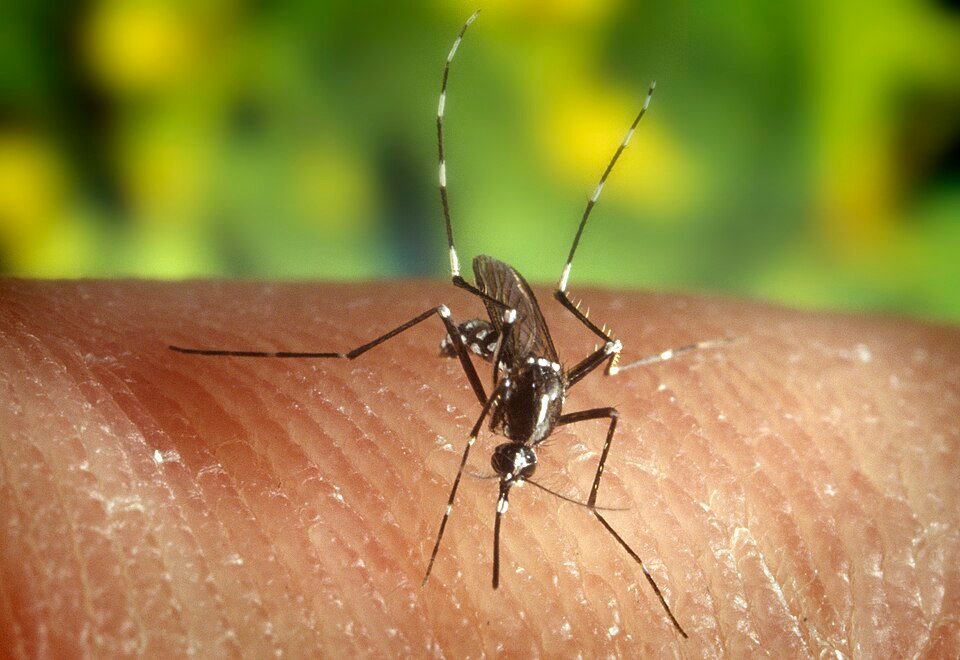
Ohio hosts around sixty mosquito species; three groups run your backyard. The house mosquitoes (Culex species) are the classic dusk-and-evening biters — brown, persistent, breeding in any stagnant nutrient-rich water from clogged gutters to neglected birdbaths to the storm catch basin down the street. They’re also the region’s West Nile virus vectors, which is why county health districts trap and test them all summer. The Asian tiger mosquito (Aedes albopictus) is the game-changer of the last two decades: a small, black-and-white striped daytime biter — the ankle-attacker of the afternoon garden — that breeds in tiny containers (a bottle cap will do), travels barely a hundred yards from its birthplace, and has spread through Ohio’s urban and suburban counties. Its container habit and short range mean the tiger mosquito biting you was very likely born on your property or your neighbor’s — which is bad news that contains excellent news, because it means your yard’s water discipline directly controls your daytime bite rate. The floodwater and swamp breeders (Aedes and Anopheles cousins) boom after wet springs along our river corridors and retention systems, fly farther, and account for the regional waves that follow soggy weeks. Different species, different hours, different waters — one integrated program covers the set.
Mosquito work sits alongside the rest of the year rather than replacing it — most households pair it with pest control in Dayton.
Source reduction: the tipped bucket that outperforms every sprayer
Every mosquito in your airspace began as an egg in standing water, most of it within a stone’s throw, and no treatment we or anyone sells outperforms denying that water. Our first visit walks the property with the trained eye: gutters holding a wet leaf-dam (the number-one hidden nursery on the mature-tree streets of Kettering and Oakwood); corrugated downspout extensions cradling water in every ridge; tarps over firewood and boats; plant saucers, tire swings, wheelbarrows, toys, and the recycling bin’s lid; birdbaths and pet bowls on a refresh cycle longer than five days; ornamental ponds without fish or agitation; and the low spot that holds a week of water after every storm. Each finding gets a fix: dump-and-scrub for the containers (tiger mosquito eggs glue to container walls and survive dry spells — the scrub matters), gutter and grading correction referrals where structure is involved, BTI larvicide dunks — a bacterial larvicide harmless to pets, birds, fish, and pollinators — for the water that legitimately stays (rain barrels, ponds, French drain basins), and a homeowner map of the weekly thirty-second circuit that keeps it all dry. Families who run the circuit cut their resident population dramatically before a drop of product is applied — and it’s why our program leads with it instead of burying it under the spray pitch.
Barrier treatments: what the misting visit actually does
The treatment half of the program targets a behavior most people don’t know mosquitoes have: they rest. Between blood meals, mosquitoes shelter on the cool undersides of leaves and in shaded, humid vegetation — the hosta beds, the ivy, the arborvitae line, the underside of the deck, the tall grass against the fence — and a barrier treatment applies a residual product precisely to those resting surfaces with a backpack mister. Mosquitoes landing there over the following weeks contact the product and die before their next bite, which is how one visit suppresses a yard for roughly three to four weeks (rain and growth-rate dependent — our seasonal cadence runs on that clock). Placement discipline is where licensing shows: we treat resting vegetation, not blooming plants — pollinator protection is label law and house policy both, so the coneflowers and the bees working them are explicitly off-target — and we skip vegetable gardens, water features, and play surfaces, covering them in the pre-visit checklist. What barrier treatment honestly is: a suppression tool that, layered over source reduction, drops bite pressure by a large and family-noticeable margin. What it honestly isn’t: a force field — mosquitoes from the untreated block still drift in on a breeze, floodwater waves still crest after soggy weeks, and anyone promising a mosquito-free yard in Ohio is selling the adjective, not the entomology.
Programs, events, and what fits which yard
- Seasonal program (May–September): the walk-through and source-reduction map, then barrier treatments on a ~3–4 week cadence (five to six visits), dunk service for permanent water, and mid-season adjustments after major rains — the right fit for families who live in their yard
- Event treatment: a single barrier visit 24–48 hours before the wedding, graduation, or reunion, timed and mapped to the gathering areas — the guest-comfort insurance that costs less than the ice
- Problem-yard consult: for the address that’s miserable while the neighbors aren’t — usually a hidden breeder (gutter dam, crawlspace water, treeholes in the old silver maple) that the inspection finds and the fix retires
- Edge properties: homes on the greenway and river corridors — Englewood, Miamisburg’s riverfront, Trotwood by the park — carry floodwater pressure no yard program erases; we say so upfront and tune expectations (and cadence) accordingly
- Commercial patios: restaurant and venue mosquito service rides on the commercial program with documentation to match
The disease file, without the sirens
Ohio’s mosquito-borne disease story is real but specific: West Nile virus circulates in Culex populations every summer — county health districts’ trap-and-test programs (Public Health Dayton & Montgomery County runs a good one) track it, most human infections are mild or silent, and the serious cases skew older, which is reason enough for bite discipline without being reason for panic. La Crosse encephalitis, carried by the treehole-breeding eastern mosquito, is Ohio’s notable pediatric arbovirus — rare, but concentrated in kids, and tied to exactly the habitat our inspections flag: water-holding tree cavities and forgotten containers in wooded yards. Exotic headliners (Zika, dengue) remain travel-associated here, not locally transmitted. The household translation: the same program that makes the deck livable — source reduction, barrier suppression, dunks in the treeholes — is also the meaningful local disease-risk reduction, with EPA-registered repellents (DEET, picaridin, oil of lemon eucalyptus) covering the hours and places beyond any yard’s perimeter. We’ll leave the repellent chart with the quote; it’s the one part of mosquito defense that travels with you.
What we deliberately don’t sell (and why)
A mosquito page earns trust by its refusals, so here are ours. Foggers and candles as strategy: citronella, thermacell-style diffusers, and yard foggers buy hours at best — fine for a picnic table, not a program, and we’d rather you know the difference than buy the ambiance twice. Bug zappers: decades of research agree they execute moths and beneficial insects by the thousand while barely denting mosquitoes (which hunt CO2 and skin chemistry, not UV light); the June-beetle body count is theater. Broadcast fogging of whole properties on calendar autopilot: blanket-spraying lawns and blooms hits pollinators hard for marginal gain over targeted resting-site work — it’s cheaper to perform and worse to receive, which is exactly backwards. Mosquito-free guarantees: the insect flies; the promise can’t. Our guarantee is the honest version — if suppression fails between visits, we re-treat free — and our program’s architecture (sources first, targeted barriers second, dunks for standing water, expectations in writing) is built so the guarantee rarely gets exercised. The industry’s mosquito gold rush produced plenty of the other kind of program; this page is the alternative, and the biology is on its side.
Mosquito questions, answered straight
Is the treatment safe for my kids, pets, and garden?
Applied per label — the legal and house standard — yes, with specifics: products go on resting foliage, not play equipment, edibles, or blooms; re-entry is once dry (typically under an hour); BTI dunks are among the most benign products in all of pest control; and pollinator-protective placement is non-negotiable. Bring us the specifics of your yard — the beehive two doors down, the koi pond, the toddler’s grass obsession — and the map adjusts, same as every service we run.
My neighbor doesn’t maintain anything. Is my program pointless?
No — but it changes the mix. Tiger mosquitoes’ hundred-yard range means an untended neighboring lot does export biters; your source reduction still removes the share born on your side, the barrier still intercepts arrivals at their resting sites, and the fence-line conversation (or the group-rate one — adjacent yards treated the same visit price kindly) closes the rest. The block that tips its buckets together wins together; we’ve watched it happen street by street.
When should the season start and end?
First treatments land in May as overwintered populations wake; the season runs hard through September’s warm evenings and dies with the first hard frosts of October. Book the walk-through in April and the source-reduction fixes are done before the first hatch — the cheapest month of mosquito control is the one before there are mosquitoes.
Do the county spray trucks make yard programs unnecessary?
They’re different tools: public-health adulticiding responds to trap data and disease detections at neighborhood scale — a thin, episodic knockdown — while your yard program manages the daily bite pressure where your family actually sits. The two coexist; neither replaces the other; and the bucket circuit outranks both.
The Miami Valley mosquito calendar
- April: the prevention month — walk-throughs, gutter and grading fixes, first dunks in permanent water; overwintered Culex females stir on warm evenings
- May: season opens — first barrier treatments; tiger mosquito eggs from last fall hatch as containers refill
- June–July: peak breeding arithmetic (egg to biter in under two weeks in the heat); daytime tiger pressure builds in the suburbs; evening Culex pressure builds everywhere; cadence treatments carry the load
- August: the itchiest month — populations peak, WNV trap indices peak, and event-treatment season (weddings, reunions, back-to-school parties) peaks with them
- September: pressure tapers but warm spells keep biters flying; floodwater booms follow any tropical-remnant rains; last cadence visits
- October: first hard frost ends the flying season; tiger eggs wait glued in containers for spring — which is why the fall scrub-and-store of saucers, barrels, and toys is next year’s first treatment
The yard you actually wanted
Here’s the outcome this service exists for, described plainly: a deck where dinner runs past dusk without the citronella ritual, a garden weeded at 2 PM without ankle tribute, a play set that doesn’t come with repellent instructions, and an August evening that belongs to the family that pays the mortgage rather than the insects that don’t. The Miami Valley’s mosquito hand — humid summers, river corridors, sixty species with staggered shifts — is genuinely challenging, and the honest program meets it in layers: the water discipline that denies the nurseries, the dunks that sterilize what must stay wet, the barrier that thins every arrival, the calendar that times it all, and the straight talk about the share no program controls. That stack, run season after season, is the difference between managing mosquitoes and merely complaining about them — and it’s available with one call, one free walk-through, and one guarantee that means the re-treatments are our risk, not yours: (937) 569-3330. The bucket tip is free forever, program or not. Start there this Saturday; we’ll handle the rest of the stack whenever you’re ready.
Special situations our mosquito route sees every summer
A few recurring Miami Valley scenarios deserve their own playbooks, because the standard program bends for each. The rain barrel household: harvesting roof water is admirable and, unscreened, it’s a Culex factory — fine mesh over every inlet and overflow plus a monthly BTI dunk keeps the conservation and loses the larvae. The pool family: a maintained pool breeds nothing (chlorine and circulation see to it), but the cover pumping season — that lens of spring water on the winter cover — is a classic April nursery, and the neglected kiddie pool behind the shed is a summer-long one; both make the walk-through map. The pond and water-feature yard: moving water and mosquito fish solve most of it; the still margins get dunks; and the “natural balance” hope without either is how ornamental ponds run whole cul-de-sacs’ bite pressure. The horse and hobby-farm property: troughs on a weekly refresh or dunk cycle, tire piles addressed (the classic floodwater nursery), and barn-side resting-site treatment — rural Greene and Warren County programs lean here. The new-construction street: graded-but-unbuilt lots and silt-fence low spots hold water beautifully; Springboro and Carriage Trails families, your mystery pressure often lives two addresses down, and the builder’s site manager is a phone call we’re happy to make with you. Each scenario is a line item on the free walk-through — which is the point of walking before quoting.
One more honest sentence about bats, birds, and gadgets
Purple martin houses, bat boxes, and dragonfly ponds are wonderful additions to a yard — we’ve recommended the bat box on this very site — but the research consensus is that none of them measurably reduce mosquito bites (martins and bats hunt higher and broader than your patio’s airspace; dragonflies help at the margin). Build them for the wildlife, not the marketing, and let the bucket circuit and the barrier do the mosquito math. Every gadget dollar redirected to a gutter cleaning is a trade your ankles will feel by July.
A closing word on why this service joined the roster now: our clients asked, the license covers it, and — candidly — the competitive landscape was full of mosquito programs built on marketing calendars rather than mosquito calendars. The Miami Valley deserved the version this page describes: species-literate, source-first, pollinator-careful, and honest about its edges. It slots naturally beside the rest of the yard’s seasonal work — the stinging-insect patrols, the fall barrier, the edge-property spider cadence — and for households running several, the combined seasonal scheduling prices the way route density always prices here: kindly. One yard, one company, one standard, every season — and the standard starts with a bucket, tipped over, free of charge, this weekend.
What counts as mosquito habitat (the audit vocabulary)
“Mosquito habitat” in a yard audit means two distinct things, and the program above treats both: breeding water — any standing water that lasts a week, from plant saucers and clogged gutters to the tiger mosquito’s entire container economy — and resting cover: the shaded, humid, still vegetation (ivy walls, under-deck margins, overgrown foundation beds) where adult mosquitoes wait out the daylight between flights. Dump and screen the first; treat and thin the second; and the yard stops qualifying as habitat in either sense — which is the entire program, restated as vocabulary.
Related: When Ohio mosquitoes actually stop for the year.
Frequently asked questions
How does professional mosquito control work?
Barrier treatments applied to the shaded vegetation where adult mosquitoes rest by day, paired with a property audit that finds and fixes the breeding water — gutters, containers, low spots — and Bti larvicide for water that cannot be dumped. The barrier intercepts adults; the audit shuts the nursery.
How much does mosquito treatment cost?
Per-visit pricing scales with lot size, and season packages cover the visits from May through the first frost. Ask for current rates when you call — quotes are free: (937) 569-3330.
How long does a mosquito treatment last?
Roughly three to four weeks per barrier application depending on rainfall and vegetation density, which is why season service runs on a recurring schedule rather than one heroic spray in June.
Is mosquito treatment safe for bees and butterflies?
Applied correctly, yes — barriers target shaded resting foliage, not blooms, and we skip flowering plants and pollinator gardens by design. The larvicide side (Bti) is specific to fly larvae and harmless to bees, fish, pets, and birds.
Why is my yard so bad even though I dump standing water?
Three usual suspects: a neighbor’s source within flight range, a hidden reservoir (clogged gutter, corrugated downspout extension, tarp fold, toy dump truck), or the after-rain floodwater species that commute in from miles away. The audit finds the first two; the barrier handles the third.
What actually attracts mosquitoes to people?
Carbon dioxide first, then body heat and skin chemistry — which is why some people genuinely are magnets and why a box fan on the patio table is the best two-dollar defense in the business: it out-blows their flight and disperses your CO₂ plume.
Do citronella candles, zappers, or ultrasonic apps work?
No — citronella manages a few feet in still air, zappers kill moths by the tray while mosquitoes barely register, and ultrasonic apps have failed every test ever run on them. Repellent on skin, a fan, and source removal are the honest toolkit.
When does mosquito season start and end in Ohio?
Roughly May through the first hard frost, peaking July through September. Season service starts ahead of the first big hatch and holds through the fall biting peak — the calendar is built into the package.
Can mosquitoes in Dayton carry disease?
West Nile virus is the local headline risk, cycling through birds and Culex mosquitoes with a late-summer human case peak — rare, mostly mild, worth normal precautions rather than alarm. Dusk repellent discipline in August is the practical takeaway.
Why are there mosquitoes inside my house?
Usually a door-gap commuter or a breeding source very close to an entrance — and occasionally an indoor source: a neglected plant saucer, a drain, a forgotten vase. Indoor mosquitoes in winter almost always mean an indoor water source worth finding.
What can I do between treatments?
The weekly tip-and-toss (every container, saucer, and fold), gutter checks after storms, Bti dunks in the permanent water, the fan on the patio, and picking up fallen fruit. Customers who run the checklist get dramatically more out of every barrier application.
Do you treat for special events like weddings or graduation parties?
Yes — a barrier application a day or two ahead of an outdoor event is one of the most satisfying jobs we do. Book a week out when you can; the calendar fills in peak season.