
Xenia sits where town meets country harder than anywhere else we serve spiders — the county seat’s older housing on one side, Greene County farmland and the bike-trail corridors on the other — and its spider file reads exactly like that border. The agricultural edge runs the region’s densest outdoor spider economy (grain, hay, and field margins feed the insects that feed everything with eight legs), the pre-war housing’s stone-and-block basements shelter the indoor species, and the barn-and-outbuilding properties ringing town add the one habitat category — undisturbed dark storage — where Ohio’s two genuinely medically significant spiders occasionally, actually turn up. That last fact earns Xenia the most honest version of our venomous-spider conversation, and this page delivers it — along with the ordinary web-and-wanderer management that covers ninety-nine percent of the county seat’s actual spider life.
The Ag-Edge Spider Economy
- Field-margin pressure: the farmland ring produces insect biomass at agricultural scale, and the spiders staff it — funnel weavers sheeting the fence rows and foundation beds, orb weavers rigging every outbuilding eave, and fall’s wolf spider migration running heavier on the edge streets than anywhere in the suburbs.
- The old-basement residents: the county seat’s stone and early-block foundations host the standard cellar crew — long-legged cobweb builders whose population tracks basement humidity, and the fast funnel weavers that generate most “is this dangerous?” photos (answer: no).
- The outbuilding category: barns, sheds, and the deep storage of rural properties — undisturbed, dark, cluttered — are different habitat than any house, and they’re where the serious conversation below actually applies.
- The trail corridors: the bike-path network’s wooded margins function like linear parks, running the same insect-and-spider economy along every adjacent backyard.
The Venomous Question, Answered Like Adults
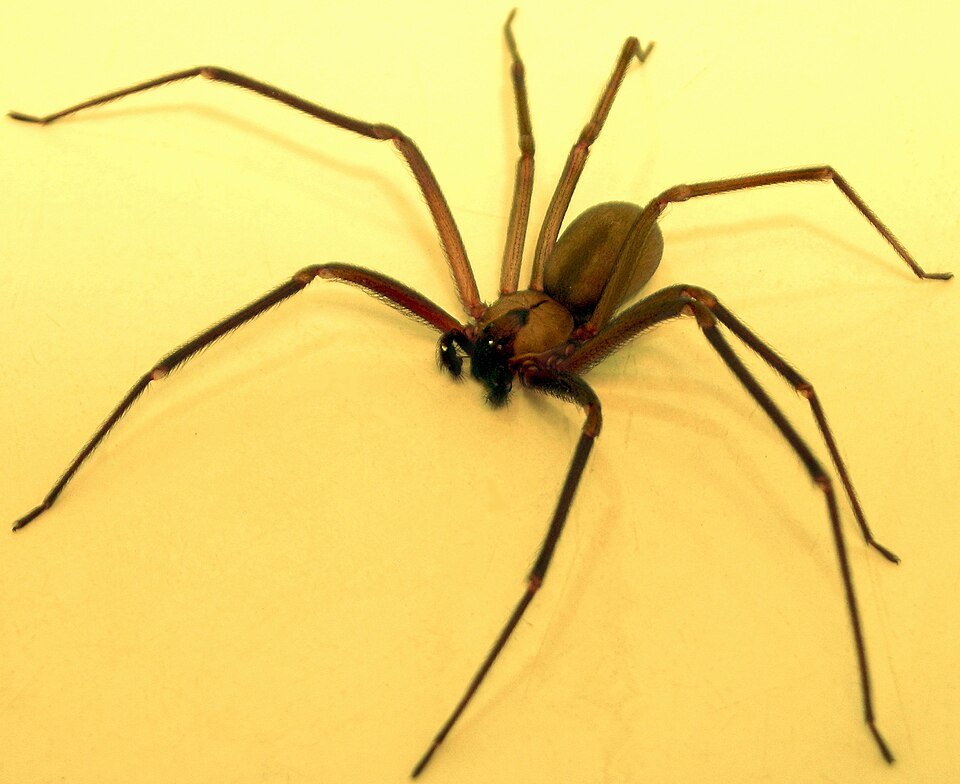
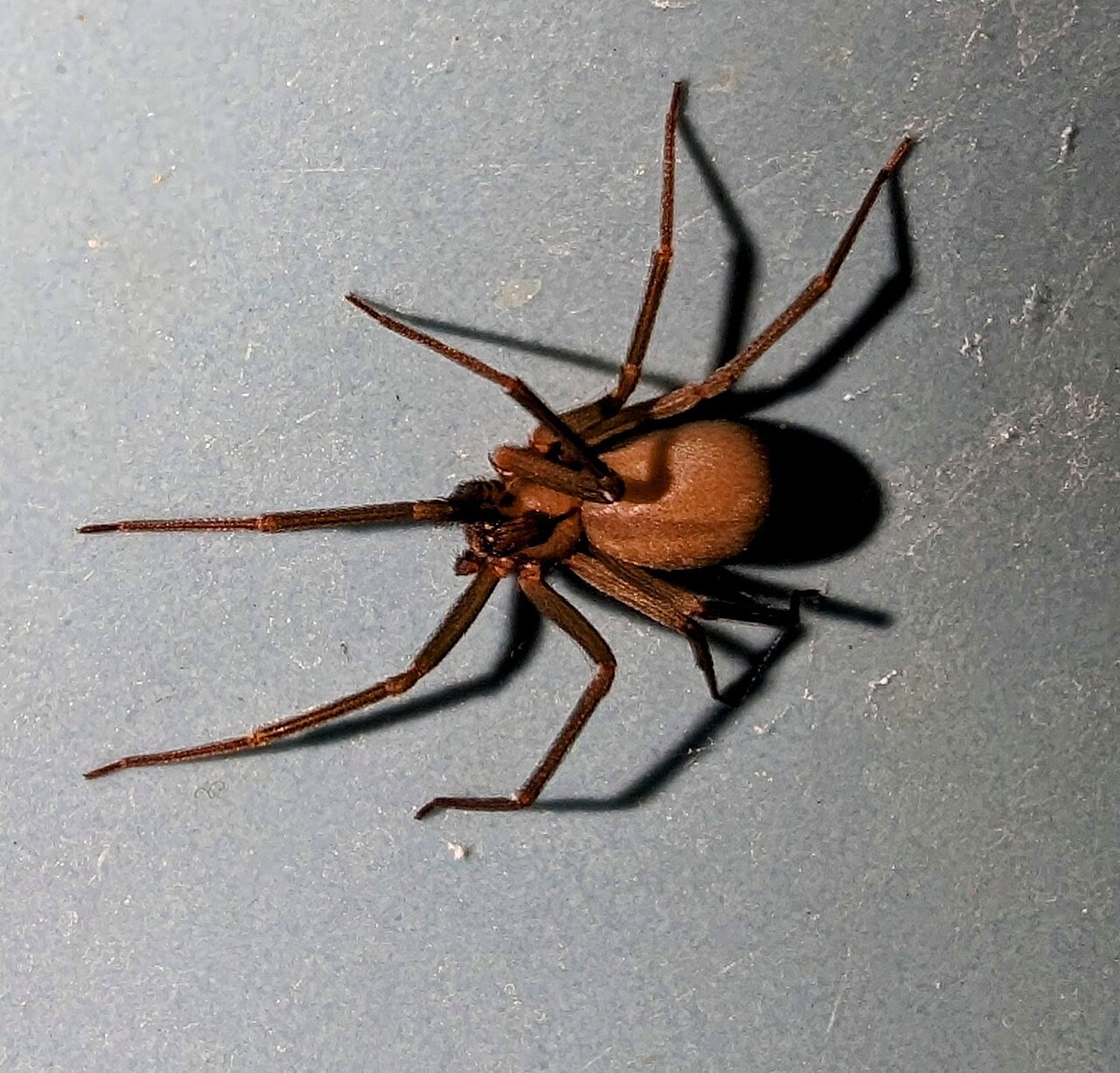
Most of our service area gets the short version of this conversation; Xenia’s rural ring earns the full one. Black widows are real but scarce: they favor exactly what farm properties offer — undisturbed woodpiles, meter boxes, barn corners, and equipment that sits — and the glove-before-blind-reaches rule is genuine wisdom here, not paranoia. The identification (glossy black, red hourglass underneath) and the sober risk picture live at black widows in Ohio. Brown recluses are the harder honesty: Ohio sits at their range edge, verified specimens are genuinely uncommon, and most “recluse” photos are harmless funnel weavers — but rural storage buildings with decades of undisturbed boxes are the one local habitat where real ones occasionally establish. The six-eye check, the no-web tell, and the keep-calm protocol are at Ohio’s venomous spiders; the practical Xenia rules are simpler: gloves for the barn boxes, a shake for stored work clothes and boots, sticky monitors in the outbuildings you actually use, and a photo to us — free, always — before anyone panics or shrugs. Verified findings get the serious targeted response (monitoring grids, harborage treatment, storage overhaul, follow-up verification); the ninety-nine percent that come back “harmless” get named honestly and left on payroll.
Ordinary Spider Work, County-Seat Edition
Beneath the headline question, Xenia’s day-to-day spider management runs the standard playbook tuned to the housing: scheduled de-webbing of eaves, porch ceilings, shutters, and the stone coursing on every quarterly visit, egg sacs removed before each becomes next season’s hundred spiders; perimeter treatment at the foundation band and the damp margins where the prey economy concentrates; light strategy — warm bulbs and relocated fixtures, doubly effective on the edge streets where ag-scale insect traffic makes every white flood a spider job fair; and ground-floor exclusion — sweeps, well screens, and the basement sill sealing that thins the fall wanderer traffic. Interior chemistry stays surgical (crack-and-crevice at sill lines and corners, never broadcast), because the biology hasn’t changed: spiders starve out, not spray out, and the full reasoning lives at how to get rid of spiders with the identification gallery at common spiders in Ohio. September and October bring the annual peak — adult webs everywhere, wanderers crossing floors — and the winter page explains the reset that follows.
The Xenia Bottom Line
The county seat’s spider math: heavier outdoor pressure than the suburbs (the ag edge), ordinary indoor risk (the same harmless cellar crew as everywhere), and one habitat category — the undisturbed outbuilding — where the serious species get an honest protocol instead of either panic or dismissal. Our service matches: quarterly de-webbing and perimeter work for the ordinary file, monitoring and targeted response where evidence warrants, free photo identification always, and the written counsel — gloves, monitors, storage practice, lights — that makes rural spider wisdom a checklist instead of folklore. One flat price, guaranteed under the Protection Plan; the service at spider control, and the county seat’s whole file, termites included, at Xenia pest control.
Spider in a Jar and a Question?
Free identification, honest verdicts, and the rural protocol for the one percent that matters — flat-priced spider work across Xenia and Greene County.
Frequently asked questions
Are there brown recluses in Xenia?
Rarely, but more honestly than most of the region: Ohio sits at the range edge, most “recluse” photos are harmless funnel weavers, and the one local habitat where real ones occasionally establish is the undisturbed rural outbuilding. The six-eye check and a free photo verdict settle any specimen.
Where do black widows turn up in Greene County?
Undisturbed dark storage — woodpiles, meter boxes, barn corners, idle equipment — on exactly the properties the ag edge is full of. Glossy black with a red hourglass; gloves before blind reaches is genuine wisdom here, and verified finds get targeted treatment.
Why does my Xenia house have more spiders than my old house in the suburbs?
The agricultural edge — field margins produce insect biomass at farm scale, and spiders staff the supply. Edge streets and trail-adjacent yards run the region’s heaviest outdoor pressure; management aims at the interface, not eradication.
What should I do before reaching into barn or shed storage?
Gloves, and a shake for anything wearable that sat — boots, work clothes, tarps. Add sticky monitors in the outbuildings you actually use: two weeks of trapping answers the “what lives here” question with evidence instead of dread.
What are the big spiders crossing my floors every fall?
Male wolf spiders roaming for mates from the field margins — harmless, fast, and heavier on the edge streets than anywhere in the suburbs. Door sweeps and dimmer exterior lights cut the traffic; there’s no colony behind them.
Do you spray inside the house for spiders?
Sparingly — crack-and-crevice placements where populations concentrate, never broadcast through living space. The results come from de-webbing, egg-sac removal, prey-source perimeter work, and light strategy; spiders starve out, not spray out.
What does removing spider egg sacs actually accomplish?
Each sac is roughly a hundred next-season spiders cancelled — the single highest-leverage action in spider work, and standard on every quarterly visit’s de-webbing route through eaves, shutters, and outbuilding entries.
What does spider control cost in Xenia?
One flat price: the de-webbing route, perimeter program, written rural protocol (gloves, monitors, storage, lights), and free identification always — with targeted response included where verified evidence warrants, and re-treatment free under the quarterly plan.