
Beavercreek built itself into spider country on purpose — it just called the spiders’ habitat “amenities.” The wooded creek corridors that thread the city, the big treed lots, the walkout basements opening onto shaded backyards, the deck-and-window-well architecture of its housing eras: every feature that sells a Beavercreek listing also shortens the distance between the woodland spider economy and the family room. The result is a predictable local pattern — heavy web pressure on the wood-facing sides of houses, wolf spider traffic through walkout levels every fall, and window wells that farm funnel weavers all season — and a management approach that works with the geography instead of pretending to erase it. Here’s the Beavercreek-specific version of spider control.
Where the Woods Meet the House
- The tree-facing wall: web pressure concentrates on whichever side of the house faces woods or creek corridor — orb weavers rig the eaves and deck rails there first, restocked nightly by the insect traffic off the trees. That wall is where scheduled de-webbing earns its keep.
- The walkout level: Beavercreek’s walkout basements put living space at ground level against shaded yards — prime entry for fall’s wandering wolf spiders and the everyday ground-layer species. Door sweeps on walkout sliders repay themselves faster here than any other exclusion item.
- Window wells as pitfall farms: the deeper wells of split-level and walkout construction trap insects and host funnel weavers by default — screens or covers convert the farms back into windows.
- Decks and play sets: the underside world — joists, rail corners, the slide’s shadow — carries the summer web load families actually touch; it’s on the de-webbing route every visit.
- The rare-file calibration: woodpiles and utility boxes near the tree line occasionally host a black widow (glove rule applies), recluse presence stays near zero, and the full sober rankings live at Ohio’s venomous spiders.
The Approach: Geography-Aware, Not Chemistry-Heavy
You cannot spray a creek corridor into not being a creek corridor — and shouldn’t want to, since the same woods run the beneficial-insect economy that keeps the neighborhood’s actual pests down. Effective Beavercreek spider work concentrates on the interface: scheduled de-webbing of the tree-facing walls, deck understructure, and well rims every quarterly visit, with egg sacs removed before each becomes next season’s hundred spiders; a perimeter band at the foundation and walkout level that thins the ground-layer prey economy right where the house meets the shade; light strategy — warm-toned bulbs and fixtures pulled off the walkout doors, because a white flood lamp on a wooded lot is a spider-employment program; and exclusion at the ground floor — slider sweeps, well screens, and the garage-door gasket that ends most wolf spider entries. Interior work stays surgical: crack-and-crevice placements at sill lines and the walkout’s corners, never broadcast spraying through a family room. The full reasoning — why spiders starve out rather than spray out — lives at how to get rid of spiders, with the who’s-who at common spiders in Ohio.
The Beavercreek Spider Year
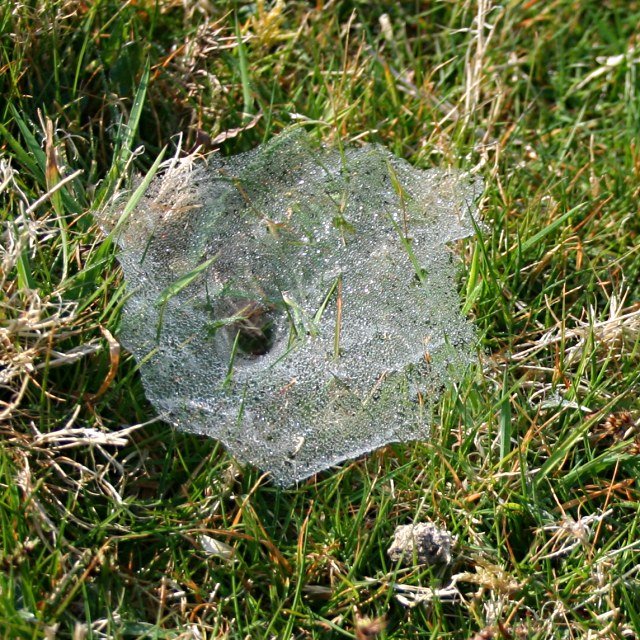
Spring: dispersal season — invisible, and the right window for well screens and slider sweeps before anyone’s watching. Summer: the buildup — deck webs, porch-light rings on the wood-facing corners, and the first “every morning there’s a new web” calls from the creek-adjacent streets. Late August through October: the visible peak — adult orb webs at face height across walks and rails, dew-marked funnel sheets in every shrub mass, and the walkout-level wolf spider traffic that defines fall here (males roaming for mates; alarming, harmless, and ended by sweeps and less light, not by treatment of the animal). Winter: quiet outdoors, cobweb species working any humid basement corner — and the winter page explains where everyone went. Service rhythm to match: the fall visit does the year’s heaviest de-webbing and egg-sac harvest, spring resets the exclusion, and the quarterly Protection Plan keeps the interface managed year-round with free re-treatment between visits.
Honest Verdicts, Flat Price, Local Pattern Knowledge
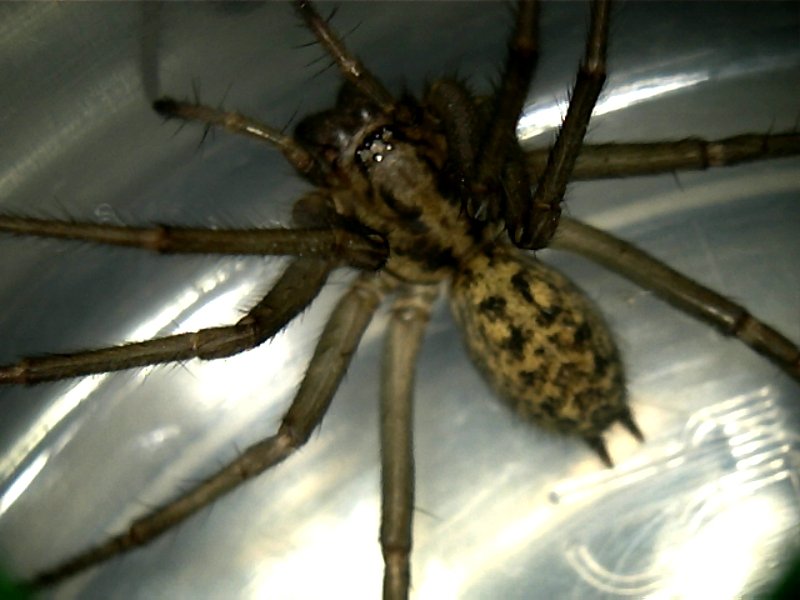
Most of what Beavercreek fears in its window wells is staff: funnel weavers and jumping spiders get named as the harmless workers they are, photo identifications stay free, and the rare genuine widow question gets the targeted response it deserves — monitoring, harborage treatment, verification. One flat price covers the de-webbing route, the perimeter program, and the written counsel (lights, wells, sweeps, woodpile practice); the method and pricing live on spider control, and everything else we do in town — from the creek corridors to the newer flats — is on the Beavercreek pest control page.
New Web Every Morning on the Woods Side?
Interface management built for wooded lots — de-webbing, perimeter, light strategy, and walkout exclusion. One flat price, guaranteed, across Beavercreek.
Frequently asked questions
Why does the woods side of my Beavercreek house get all the webs?
Because that’s where the insect traffic is — the creek corridors and tree lines run the prey economy, and orb weavers rig the nearest structure’s eaves and rails to intercept it. Scheduled de-webbing of that wall, plus light strategy, manages the interface permanently.
What are the big spiders coming into my walkout basement every fall?
Male wolf spiders roaming for mates from the wood edges — harmless, fast, and not residents. Walkout sliders sit at ground level in their traffic lane; door sweeps and warmer, dimmer exterior light cut the entries more than any treatment.
How do I keep spiders out of my window wells?
Screens or covers — deep wells on walkout and split-level construction are pitfall traps with catering, and funnel weavers farm them by default. Covering the well removes the food supply and the resident in one move.
Can you spray my yard so the spiders stay in the woods?
That’s not how the biology works — spiders follow prey, and broadcast yard spraying mostly kills the beneficial economy while the woods restock. We manage the interface: de-webbing, foundation-band treatment, lights, and exclusion. It holds; fogging doesn’t.
Are there dangerous spiders in Beavercreek?
Rarely — the occasional black widow in an undisturbed woodpile or utility box near the tree line (gloves before blind reaches), and near-zero verified recluse presence. The window-well and deck spiders people actually meet are harmless workers.
Do the spider egg sacs on my deck matter?
Each sac is roughly a hundred next-season spiders pre-installed — removing them during fall de-webbing is the highest-leverage single action in spider control. It’s standard on every visit’s route here.
Why are there suddenly webs everywhere in September?
The year’s spiders reach adult size together in late summer — peak web season runs late August to frost, then resets. It’s a calendar event beside wooded corridors, not an infestation, and the fall service visit is built around it.
What does spider control cost in Beavercreek?
One flat price covering the de-webbing route, egg-sac removal, perimeter program, and written exclusion counsel — with the quarterly Protection Plan holding it year-round and re-treating free between visits. Photo identifications are always free.
The companion files for Beavercreek households: wasp & hornet removal in Beavercreek, ant control in Beavercreek, and rodent control in Beavercreek.