
Are roaches nocturnal? Emphatically yes — and the yes is worth a full page, because the roach’s relationship with the dark is one of the most useful diagnostic instruments in pest control. Cockroaches don’t just prefer night; they run on a hard-wired circadian clock, older than the dinosaurs, that schedules their entire economy into the hours after lights-out — which means the timing of your sightings is data of the first order. A roach at midnight and a roach at noon are not the same fact: one is an animal keeping normal office hours, the other is a distress signal from a crowded colony that should reorganize your whole week. This page runs the science and then cashes it in: how the roach clock actually works, what they do all night while the kitchen is theirs, the flashlight test that censuses a colony in ninety seconds, exactly what daytime sightings mean at each level, and how every good roach protocol — from bait placement to follow-up timing — is quietly built on the night shift’s schedule.
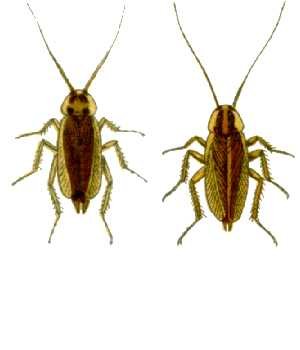
The clock in the roach: how the night shift is actually scheduled
Roach nocturnality isn’t a mood — it’s hardware. Cockroaches carry a genuine circadian oscillator (the classic neurobiology experiments locating it in the optic lobes were done on roaches; the species is a founding animal of circadian science) that drives a daily activity rhythm even in constant darkness: locked in a lightless lab box, a roach still “wakes” on schedule, runs its subjective night, and rests through its subjective day, for weeks. Under normal conditions the clock synchronizes to your light cycle, and the resulting schedule is remarkably consistent: activity begins roughly one to two hours after the room goes dark, peaks in the first half of the night, and tapers toward dawn. Layered on the clock is a straightforward threat response — light-avoidance and a touch-the-walls instinct (thigmotaxis) that keeps bodies pressed into cracks and shadows — but the clock is the scheduler; the light-fleeing is just the security policy. Two practical corollaries fall out immediately. First, leaving the kitchen light on all night doesn’t stop the shift — it delays and disperses it while the clock keeps time underneath, and the colony simply works the shadowed zones (behind the fridge, inside the cabinets) where your light bulb has no vote. Second, the schedule’s consistency is a gift: if you want to know the truth about a kitchen, the truth clocks in about ninety minutes after you turn the lights off — which is exactly when the flashlight test below is scored.
Seeing one in daylight means the harborage is crowded, and that is the point where cockroach control in Dayton stops being optional.
What the night shift actually does from midnight to five
While the household sleeps, a roach colony runs a complete economy on a schedule biologists have mapped in detail. The early shift — the first two or three hours of darkness — is foraging: workers fan out from harborage along scent-marked wall routes to water first (the dripping faucet, the sink basin, the pet bowl — water outranks food every night), then calories: crumbs, grease film, the trash can’s open buffet, the cardboard they’ll eat when nothing better offers. Mid-shift is social hours: roaches are gregarious — they aggregate in response to pheromones in their droppings (the “fecal focal points” that make sanitation half the battle), exchange microbial gut flora, and in German colonies the females carrying egg cases seek the warm, tight crevices where the next generation incubates. The last hours before dawn are the retreat: traffic reverses along the same routes, bodies pack back into the harborage cracks — pressed together, touch-comforted, day-dormant. The whole cycle explains the classic homeowner experience with midnight snack runs: flip the light at 1 a.m. and the floor scatters; at 1 p.m. the same kitchen looks immaculate. Neither view is wrong — you’re seeing the same colony at opposite ends of its clock, and the entire art of roach diagnosis is knowing which view to trust. (The 1 a.m. one. Always the 1 a.m. one.)
The flashlight test: a ninety-second census, scored
The night shift’s reliability makes possible the single best free diagnostic in roach control. The protocol: kitchen dark and undisturbed for at least ninety minutes after normal lights-out; enter quietly; hit the light switch (or sweep a strong flashlight) and count what you see in the first five seconds — the honest window before everyone reaches cover. Score it: Zero roaches: repeat two more nights before concluding anything — but three clean flips in an active-suspicion kitchen genuinely argues against an established German colony. One to three: early infestation, likely single-digit-to-dozens overall; the gel-bait protocol from the main roach guide, run this weekend, ends most of these stories. A handful scattering from multiple directions: established colony, population plausibly in the low hundreds; run the full program and expect follow-up rounds. Double digits, including on open floor: mature, crowded infestation — and the moment to skip to the phone, because populations at this density have saturated the good harborage and are about to start appearing in daylight anyway. Repeat the flip weekly during any treatment campaign: it’s your progress meter, and a count that halves every week is a program working on schedule.
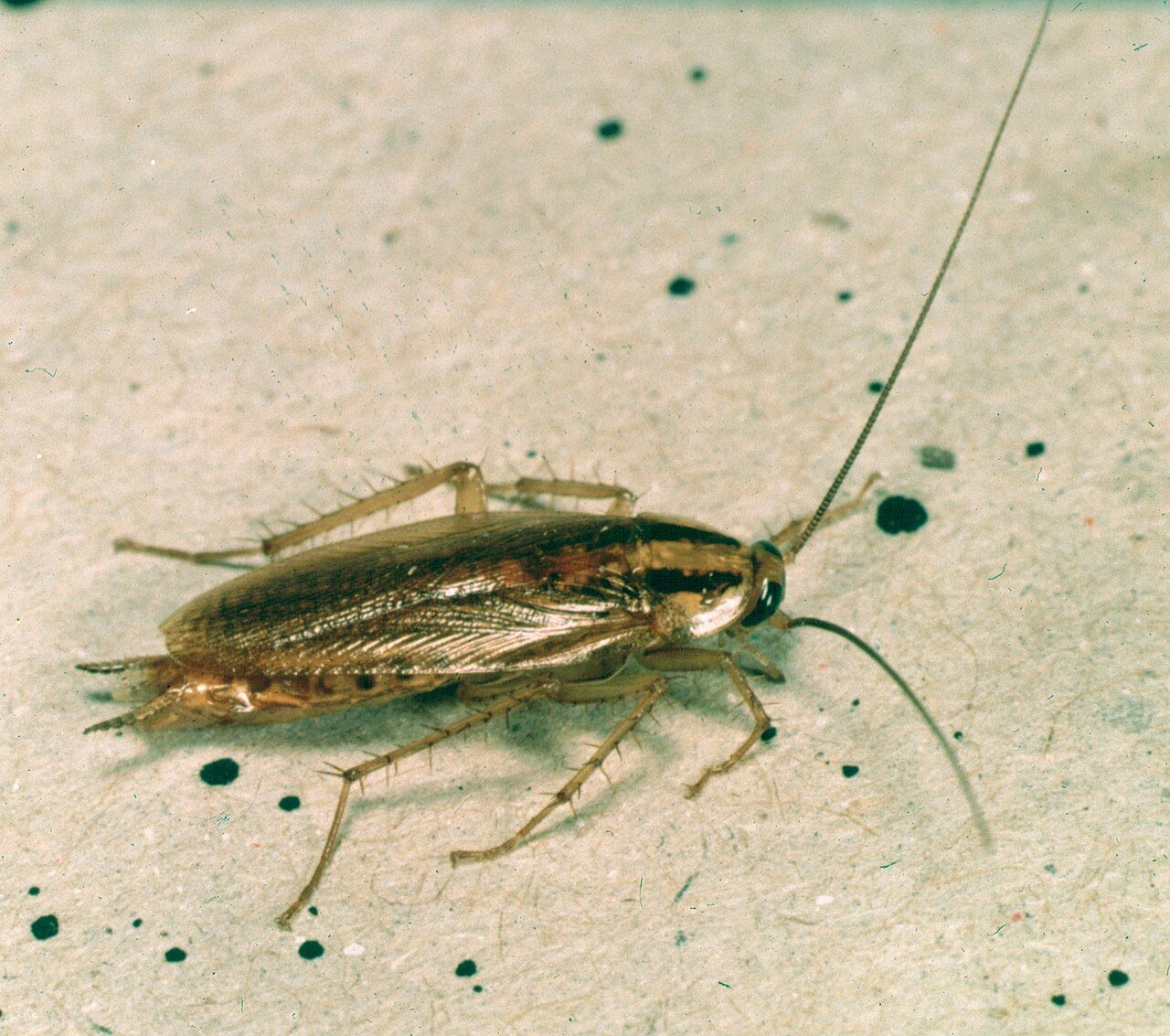
The daytime roach: what breaking curfew actually means
Now the diagnostic that runs the other direction. Because the clock is hardware, a roach abroad in daylight is paying a cost — predation instinct, light stress, security policy overridden — and animals pay costs only under pressure. The pressure, in ascending order of concern: One daytime sighting, near a recent disturbance (you just moved the fridge, sprayed a cabinet, or set off a bug bomb): displacement, not census data — refugees flushed from harborage. Note it and watch. Occasional daytime sightings, no disturbance: the crowding signal — harborage past capacity, subordinate and juvenile roaches forced onto the dangerous shift because the night economy can’t feed everyone. The field rule our techs carry: every casual daytime German roach implies a colony in the hundreds. This is the “one roach at noon beats one at midnight” triage rule from our origins guide, and it’s why the noon call gets scheduled ahead of the midnight one every time. Regular daytime traffic, multiple rooms: saturation — populations in the high hundreds to thousands, harborage overflowing, and a job for professional-grade placement and growth regulators, not another can of anything. One honest exception to the whole framework: the solo American cockroach — the big mahogany infrastructure tourist — wanders at odd hours as a matter of course, and a single daylight American in the basement implies nothing about a colony. The daytime rule is a German roach rule; species ID comes first, as always.
Fighting an animal that owns the night: how the clock shapes every protocol
- Bait placement follows the night map: gel dots go on the routes the 1 a.m. traffic actually uses — wall-crack junctions, hinge-side cabinet corners, the warm void behind the fridge — not the daylight-logical open shelves. The flashlight flip isn’t just a census; it’s reconnaissance.
- Water beats food as a lure and a lever: the shift’s first errand is the sink. A dry kitchen at night — basin wiped, dishes done, pet bowl up, drip fixed — forces longer, riskier foraging past your bait.
- Sticky monitors work the clock for you: placed on night routes, they census around the clock and tell you (by catch direction and life stage) where harborage sits and whether juveniles dominate — the colony’s age, printed on a card.
- Night work, not day work: inspecting at noon and concluding “it’s not that bad” is the classic under-scoping error — the reason our inspections trust flushing agents, monitors, and evidence over daylight eyeballs.
- The lights-on myth, retired: a lit kitchen relocates the shift into the walls and appliances — concealing your progress meter while saving zero roaches’ lives. Dark kitchen, honest data.
Night-shift questions from the call log
“I hear clicking/rustling in the kitchen at night. Roaches?”
Possibly, at high densities — a heavy colony’s combined movement is genuinely audible in a silent kitchen, a dry papery rustle from cabinet voids. But nocturnal kitchen sounds have a differential: mice (scratching, gnawing — the rodent file, and the more common culprit by far), water heater ticks, and settling cabinetry. The flashlight flip plus a sticky monitor sorts it in two nights — evidence over ears.
“Do roaches sleep?”
Functionally, yes — the day-dormant phase is a genuine rest state with reduced responsiveness, not just hiding, and sleep-like states in roaches are an active research literature. The practical version: the colony’s guard is measurably down in mid-afternoon, which is why professional crack-and-crevice treatments and harborage vacuuming are day work — you’re raiding the dormitory during nap time.
“Why do I only ever see them in the bathroom at night?”
Water. A bathroom offers the shift’s scarcest resource — standing moisture in the tub, sink, and toilet tank overflow — and roaches commuting from kitchen or wall harborage to bathroom water are following the night economy’s first errand. Bathroom-only sightings usually mean harborage elsewhere plus a water route; fix the kitchen and the bathroom traffic dries up with it.
“If they hate light, why did one run AT me when I flipped the switch?”
It didn’t — you were standing between it and home. Startled roaches sprint their memorized escape bearing to harborage at up to three miles an hour (fifty body lengths a second; proportionally, a sprinting cheetah loses), and if the bearing crosses your feet, the roach runs it anyway. It’s navigation, not aggression — nothing in an Ohio kitchen is attacking you, which is modest comfort at 1 a.m. but true.
The bottom line
Roaches are profoundly nocturnal — scheduled by a genuine circadian clock into a night economy of water runs, foraging, and social hours that begins about ninety minutes after lights-out and retreats before dawn. Use the schedule: census with the five-second flashlight flip, place bait on the night routes it reveals, dry the kitchen to lengthen their commute, and read every daytime sighting with the triage table — displacement, crowding, or saturation, with the solo American tourist as the one acquitted exception. The night shift kept your infestation invisible for its first month; understood, it becomes the most honest reporting system in the house. And when the flip count says “hundreds” — or the noon kitchen says it for you — the day shift is ours: (937) 569-3330, free estimate, flashlight included.
The deep cut: why evolution put roaches on nights
The night shift isn’t arbitrary — it’s a 300-million-year-old risk calculation that modern kitchens have barely dented. Cockroaches are, by the fossil record, among the oldest essentially-unchanged insect designs on Earth, and the design brief was always the same: flat body for crevices, fast legs for retreat, cerci (the rear-end wind sensors that detect a striking predator’s air push in milliseconds), and a schedule that avoids the day shift’s predator lineup — birds above all, whose vision-hunting made daylight foraging a losing trade for a ground insect with no sting, no armor to speak of, and no venom. Night work traded the birds for bats and spiders, a better deal for an animal whose escape reflex fires in under fifty milliseconds. Ten thousand years of pantries changed the food supply but never the predator math — a lit kitchen floor still reads, to the roach nervous system, as an open field at noon — so the clock persists, keeping Bronze Age hours under your LED bulbs. The homeowner’s takeaway is almost philosophical: the roach’s greatest survival asset — its disciplined, hard-wired schedule — is also its most exploitable weakness, because a creature that must keep hours can be audited by them. Every flashlight flip is you reading a timesheet the species cannot stop filling out. Punctuality, it turns out, is the one crack in a 300-million-year armor — and this page just taught you to put a census form in it.
Species hours across the Ohio roster
The night-shift rule holds across our local lineup, with scheduling quirks worth knowing. German cockroaches are the strictest clock-keepers — the full framework on this page (flashlight scoring, daytime triage, the hundreds-per-daylight-sighting rule) is calibrated to them, because they’re the species in nearly every Dayton kitchen case. American cockroaches keep looser hours: still night-dominant, but their solo infrastructure wanderings put them abroad at dusk and dawn routinely, which is why the acquittal for singles stands — score Americans by count and plumbing events, not clock discipline. Oriental cockroaches, the cool-basement dwellers, run the night shift at lower temperatures than anyone — a midnight basement sighting in April, when Germans would still find it too cold, is classically Oriental. Brown-banded cockroaches break the geography rule instead of the time rule: nocturnal like the rest, but in warm, dry, elevated harborage — ceiling corners, electronics, picture frames — so their night traffic runs high on the walls where the flashlight flip needs an upward sweep. And the wood roaches of Miami and Preble county porch lights are the exception that proves everything: outdoor-breeding males who fly to light on summer nights, can’t survive indoors, and constitute the one “roach at the light bulb” scenario that means nothing at all. Same clock, five schedules — and the species ID, as every guide in this wing repeats, is always the first fact to establish.
The night-shift card
- The clock: activity starts ~90 minutes after dark, peaks early, retreats by dawn — hardware, not preference.
- The census: dark kitchen, quiet entry, five-second count at the light switch. 0 = re-test; 1–3 = bait this weekend; handfuls = full program; double digits = call.
- The triage: midnight roach = normal hours; noon German roach = colony in the hundreds; regular daytime traffic = saturation. Solo American = tourist, acquitted.
- The levers: bait the night routes, dry the kitchen, monitor the corridors, keep the lights off for honest data.
- The exception list: post-spray refugees and porch-light wood roaches score zero — disturbance and species before panic.
One card, one flashlight, and the oldest night shift on Earth starts reporting to you — which is precisely the arrangement it spent 300 million years avoiding.
And with the night shift audited, this wing of the library closes its loop: where they come from, how to evict them, and now — when they clock in. Three pages, one colony, no shift left unread. The flashlight is on the counter; the first census is tonight, ninety minutes after lights-out; and whatever the count says, the next move is already written down, one link away, with a phone number at the bottom for the nights the count says plenty.
Lights off. Timer set. The kitchen will tell you the truth at half past midnight — it always does.
Ninety seconds, one flip, case opened — and usually, soon after, closed.
Frequently asked questions
Are cockroaches nocturnal?
Profoundly — they run a genuine circadian clock (roaches are founding animals of circadian science) that schedules activity to begin about ninety minutes after lights-out, peak before 2 a.m., and retreat by dawn. The clean noon kitchen and the scattering midnight one are the same colony at opposite ends of its shift.
Why do roaches only come out at night?
A 300-million-year-old risk calculation: daylight belonged to vision-hunting birds, so the design brief settled on night foraging plus a sub-50-millisecond escape reflex. Your kitchen floor at noon still reads as an open field to that nervous system.
What does it mean when you see a cockroach during the day?
For German roaches: crowding — harborage past capacity pushes subordinates onto the dangerous shift, and the field rule reads one casual daytime roach as a colony in the hundreds. Exceptions: post-spray refugees (displacement) and solo American drain tourists (acquitted).
What time of night do roaches come out?
Traffic builds from about ninety minutes after the room darkens, peaks in the first half of the night, and reverses before dawn — consistent enough that the five-second flashlight census is scored at that ninety-minute mark.
Does leaving the light on keep roaches away?
No — the clock keeps time underneath; a lit kitchen just relocates the shift into shadowed voids (cabinets, appliance compartments) while hiding your progress meter. Dark kitchen, honest data.
How do I see how bad my roach problem is?
The flashlight flip: ninety-plus minutes of dark quiet, enter silently, light on, count the first five seconds. Zero across three nights argues against an established colony; one to three = bait this weekend; handfuls = full program; double digits or open-floor sightings = call.
Do roaches sleep?
Functionally yes — a day-dormant rest state with reduced responsiveness, spent packed into harborage cracks. It is why professional crack-and-crevice work and harborage vacuuming are day jobs: you raid the dormitory at nap time.
Why do roaches run toward me when I turn on the light?
They are running their memorized escape bearing to harborage at fifty body lengths per second — and you happen to be standing between them and home. Navigation, not aggression; nothing in an Ohio kitchen attacks people.
Are all roaches nocturnal, even the big ones?
The whole roster works nights, with looser hours for American cockroaches (dusk-dawn wanderings are routine for solo infrastructure travelers) and the one meaningless exception: outdoor wood roach males flying TO porch lights in summer, which cannot survive indoors and signify nothing.
Do roaches make noise at night?
At high densities, faintly — a dry papery rustle from cabinet voids in a silent kitchen. But nocturnal kitchen noise is more often mice (scratching, gnawing); a sticky monitor and the flashlight flip sort the suspects in two nights.
How do exterminators use roach nocturnality?
Everything keys to the clock: bait goes on the routes the night traffic actually uses, monitors census around the clock, kitchens get dried overnight to lengthen risky foraging, and inspections trust flushing agents and evidence over daylight eyeballs — noon always under-scopes a roach job.
When should a night-time roach sighting make me call?
When the flashlight count reaches handfuls, when any German roach appears by day, when sightings span rooms, or when a fogger has scattered the colony — those states need commercial placement and growth regulators: (937) 569-3330, and the census score comes with the free quote.