
Where do spiders go in the winter? The question usually arrives with an agenda — either the hopeful version (“please tell me they die”) or the suspicious one (“they’re all in my house now, aren’t they?”). The real answer is better than both: spiders don’t flee winter, and they mostly don’t move in with you either. They are older than every cold snap Ohio has ever thrown, and the group solved winter several different ways — antifreeze blood, egg-sac time capsules, snow-blanket insulation, and, for a small set of species, permanent indoor residency that has nothing to do with the weather. Which solution “your” spiders use determines everything people actually want to know in November: whether the fall “invasion” is real (mostly no, with one honest exception), what the spider in the January bathtub means (not what you think), and whether winter is a fine time to do something about a spider-heavy house (it’s the best time, for an unexpected reason). Here’s the whole overwintering story, species by species, room by room.
Strategy one: die on schedule, bank the eggs (the orb-weaver plan)
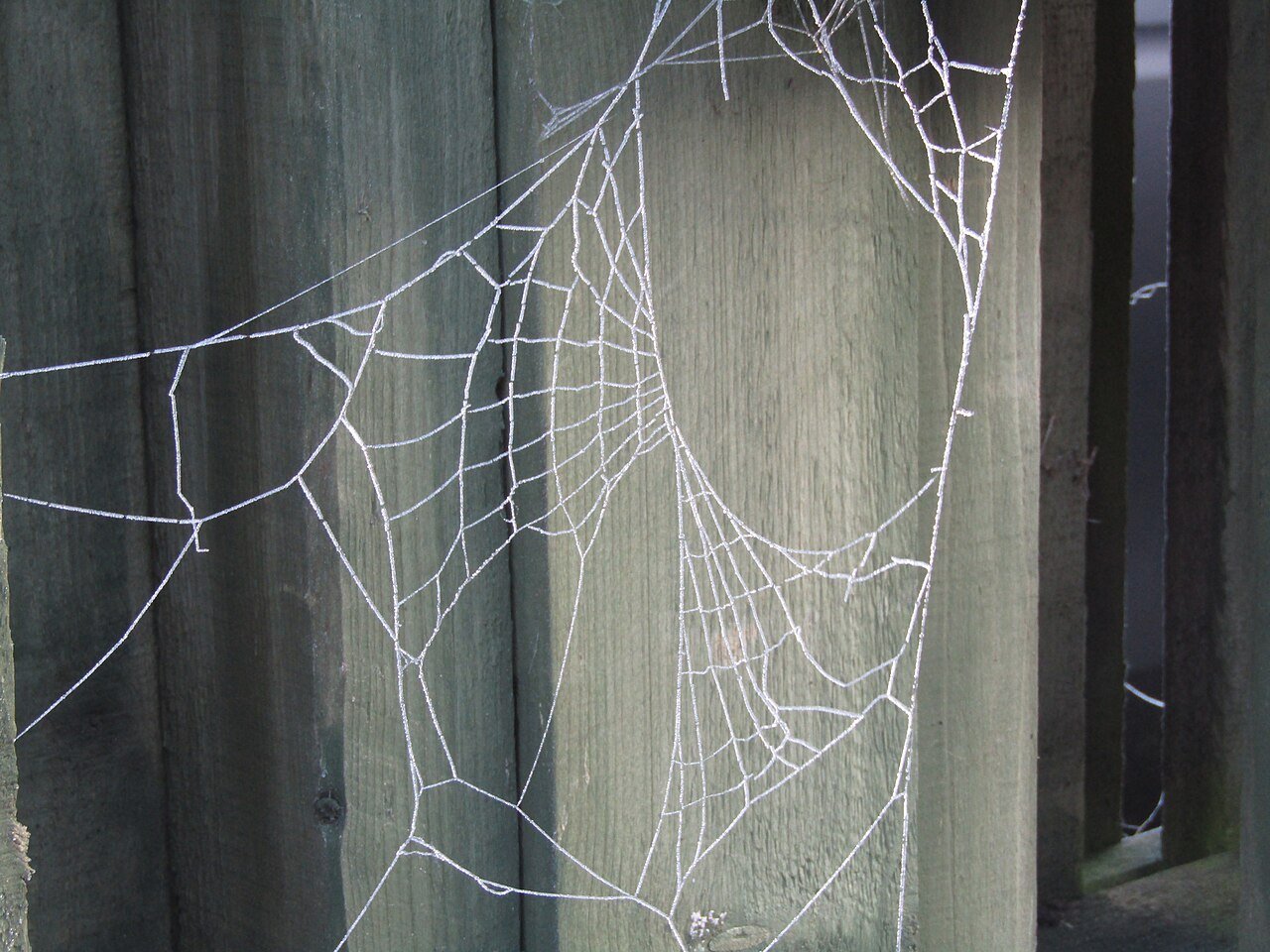
The showiest spiders of the Ohio summer — the big orb-weavers whose wheels span your garden paths in September — mostly don’t go anywhere in winter, because they aren’t there anymore. Their species run an annual calendar: hatch in spring, grow all summer, peak in the fat, conspicuous females of early fall, then mate, lay, and die with the hard frosts. The “where” that matters is the egg sac — a silk-wrapped capsule of several hundred eggs, stashed under bark, in eaves, inside dense shrubs, tucked under deck rails — engineered to ride out months of freezing as next year’s entire franchise. (Charlotte’s Web got the biology exactly right, which is why the ending lands.) Two practical notes: the frosted, abandoned webs of November are truly abandoned — sweeping them costs nothing and no one; and the egg sacs are the winter’s one meaningful spider-control target — each papery marble you remove from the porch ceiling or shutter-back during holiday-light installation is a few hundred spring hatchlings subtracted from May, which is the cheapest spider treatment that exists.
The ones in your basement never left, and their egg sacs are why spring looks the same. Breaking that cycle is spider control in Dayton.
Strategy two: antifreeze and a snow blanket (the ones that stay outside, alive)
Most Ohio spiders that survive winter as adults or juveniles do it outdoors, awake, and within yards of where you saw them in August — and the mechanism is genuine chemistry. As days shorten and temperatures fall, cold-hardy species load their hemolymph with glycerol and related cryoprotectant compounds — functionally the same job as the antifreeze in your radiator — dropping the freezing point of their tissues into the teens and single digits. Thus fortified, they tuck into the insulation layer the landscape provides free: leaf litter, bark crevices, rock piles, mulch beds, the thatch at the base of tall grass, and the remarkable microclimate under snow — the “subnivean zone,” where ground warmth holds a stable near-freezing pocket regardless of the air above. On mild January days, some — wolf spiders especially — wake and hunt across the snow surface, which is why hikers occasionally meet a spider strolling across a drift and assume something has gone wrong with nature. Nothing has. The practical corollary for your house: the “spiders die back in winter” assumption is half-true at best, and the spring population your yard produces is largely set by how much sheltering debris sat against your foundation all winter — the harborage-moat logic from our main spider guide, working in the off-season.
Strategy three: already home (the indoor residents winter doesn’t touch)
Now the species people actually meet in January — and the myth that needs retiring. The spiders in your winter house are overwhelmingly house spiders in the literal sense: American house spiders, cellar spiders (the “daddy longlegs” of basement corners), and the occasional jumping spider on a sunny sill — species so adapted to structures that many individuals live their entire lives indoors, generation after generation, in a climate that never changes. They didn’t come in from the cold in November; their great-grandparents moved in when the house was built, and the population cycles quietly year-round on whatever insects the house supplies. Winter doesn’t drive them in; it just makes you notice them, because you’re indoors more, the low winter sun rakes the corners, and the holiday cleaning reaches places August never did. The one honest exception to “there is no fall invasion”: some outdoor-capable species — notably funnel-weaving grass spiders and the odd wolf spider — do wander through door gaps in the warm days of September and October. But mark the mechanism: those are accidental tourists following prey and warmth through holes, not a migration fleeing frost, and the number that survive long in the Sahara-dry warmth of a heated Ohio house is small. The fall uptick people report is mostly mating-season males on walkabout — the September wanderers — plus ordinary autumn housecleaning discoveries, stapled together into an invasion story.
The January bathtub spider, explained once and for all
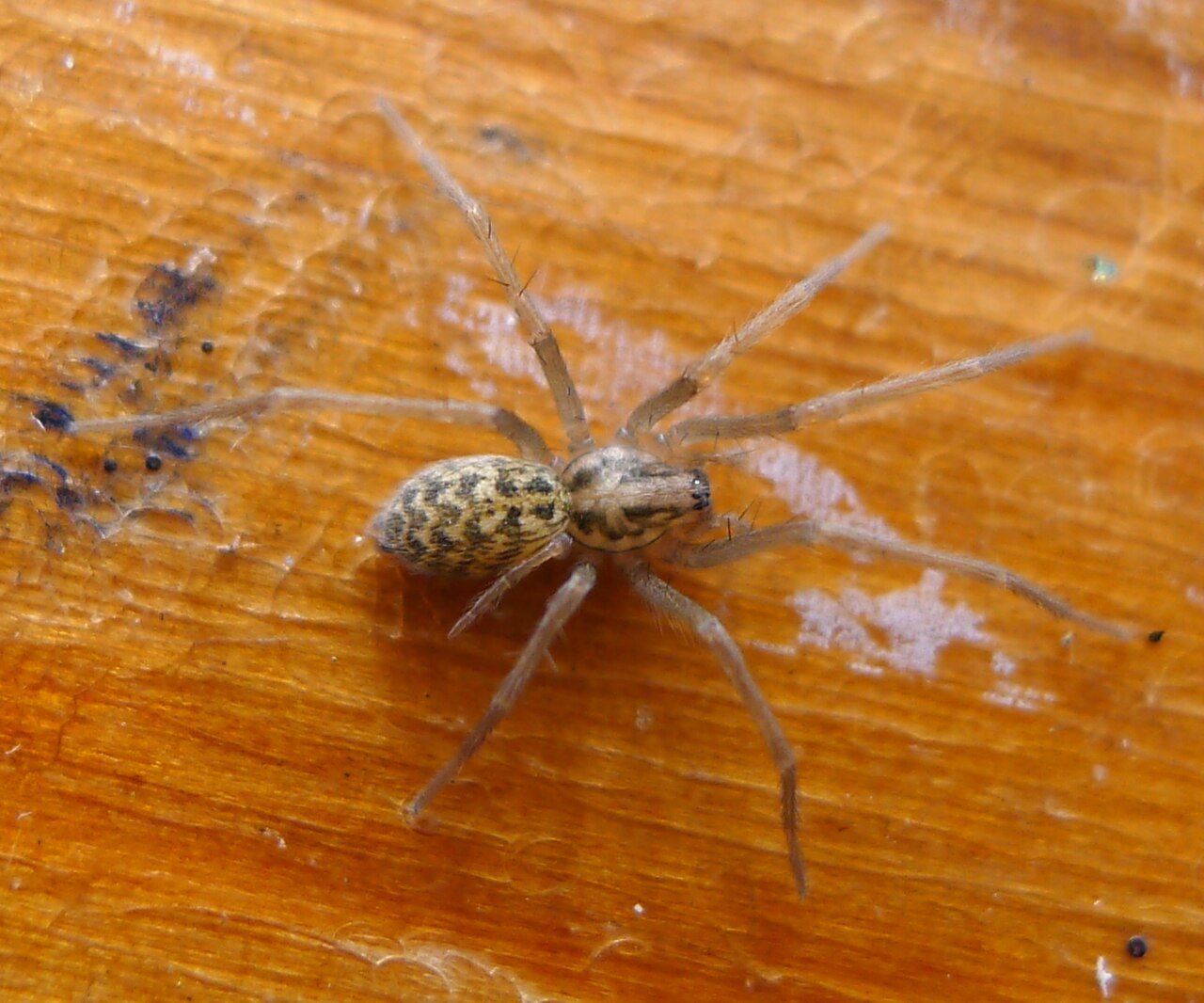
Every winter the calls come: “It’s freezing out — why is there a huge spider in my tub?” Assembly required, three facts. One: he (usually he) didn’t come up the drain — the trap’s water seal blocks that route as thoroughly for spiders as for the roaches we’ve acquitted of the same charge. Two: he’s a resident — a house or giant house spider who’s lived in your basement or wall voids all along. Three: the tub is a trap, not a destination — winter houses are ferociously dry, spiders need water, the tub’s residual moisture draws them in overnight, and the porcelain walls are unclimbable for a funnel-weaver’s foot design. He’s not invading; he’s stranded at the water hole. Cup, card, basement corner — or, since a heated house’s dryness is genuinely hostile to most of them, accept that winter itself is quietly culling the indoor population all season, which is more than any spray accomplishes.
Why winter is secretly the best season to fix a spider-heavy house
- The egg-sac harvest: with leaves down and webs abandoned, sacs are visible like nothing else — the porch-ceiling sweep during light take-down removes hundreds of spring spiders per minute of work.
- The moat, unguarded: pulling mulch, leaf litter, and stacked wood off the foundation in December evicts the antifreeze crowd from their insulation at the one moment they can’t relocate — the harshest, most effective version of the harborage audit.
- The gaps, findable: cold makes air leaks visible — every draft you feel at a sill or door sweep in January is a September spider door; caulk follows the chill, and the same seal serves against stink bugs and mice.
- The dry-out, free: running the dehumidifier and fixing basement moisture in winter removes the one thing indoor spiders and their prey both require — the dehumidifier doctrine, off-season edition.
- The prey audit: winter’s indoor spiders are a census of winter’s indoor insects; a basement that keeps feeding cellar spiders in February has a moisture or pest base worth finding — which is exactly what our winter inspections go looking for.
The species scorecard: who’s where from December to March
- Orb-weavers (garden spiders, barn spiders): adults dead by December; the species overwinters entirely as egg sacs in bark, eaves, and shrubs. Winter address: a silk capsule.
- Wolf spiders: alive outdoors under leaf litter and snowpack on antifreeze chemistry; occasional mild-day surface hunters; sporadic accidental house guests via ground-level gaps. Winter address: the subnivean suburbs.
- Jumping spiders: juveniles and adults in silk “sleeping bags” under bark and siding laps outdoors; the sunny-windowsill individuals indoors are residents enjoying the only warm hunting ground in town. Winter address: both, comfortably.
- Grass/funnel spiders: mostly annual like orb-weavers — egg sacs carry the line; the fall door-gap wanderers rarely last long inside. Winter address: egg sacs in the thatch.
- House, cellar, and giant house spiders: indoors, year-round, unchanged — your basement is their permanent climate. Winter address: same as their summer one.
- The medical two (black widow, brown recluse): widows overwinter dormant in undisturbed outdoor-adjacent clutter — garages, crawlspaces, meter boxes; recluses, rare-but-real in Ohio, live indoors year-round in storage zones. Winter protocol: gloves for the boxes you haven’t opened since spring, per the venomous spider guide.
Winter spider questions from the call log
“Do spiders freeze and come back to life?” No — the antifreeze species avoid freezing solid; a truly frozen spider is done. What people witness on warm days is dormant spiders waking, not resurrecting. “Will a cold snap kill the spiders in my garage?” The attached garage is winter’s halfway house — too cold for house species to thrive, sheltered enough for outdoor species to survive; expect a modest, sluggish population either way, and check stored gloves before wearing (the one widow-relevant habit worth keeping). “Are spider eggs in my house hatching in winter?” House-spider species can reproduce year-round indoors, but slowly; a sudden burst of tiny spiderlings usually traces to an egg sac on something recently carried in — firewood and holiday-decoration boxes are the classic vehicles, worth a shake outdoors first. “Should I spray for spiders in January?” Almost never — contact sprays on wandering winter residents accomplish little, and the leverage is all in the mechanical list above. Winter is for sacs, seals, and dehumidifiers; chemistry waits for the spring perimeter round.
The bottom line
Spiders go three places for winter: into the egg bank (the annual species, whose adults end with the season), into antifreeze-fueled dormancy under the landscape’s insulation (the hardy outdoor crowd), and exactly nowhere (the house species that were already yours). The fall “invasion” is mostly a story we tell about wandering males and better lighting; the tub spider is a stranded local, not a refugee; and the season everyone writes off is quietly the best one on the spider-control calendar — sacs visible, moats clearable, gaps findable, basements dryable. Do the winter list once and May arrives hundreds of spiders lighter, with no spray involved. And for houses whose winter census keeps coming back high — or whose storage rooms deserve a professional flashlight before the gloves go on — the inspection line is open all season: (937) 569-3330.
The deep dive: how spider antifreeze actually works
The chemistry deserves its own section, because it’s one of the genuinely great tricks in backyard biology. Freezing kills animals not by cold per se but by ice crystals — water expanding inside cells shreds membranes like frost heaving a sidewalk. Cold-hardy spiders run a two-part defense. Part one is supercooling: by purging their gut of food particles (ice needs a seed crystal to start forming, and a speck of debris is a seed), a spider’s body water can drop well below 32°F without freezing at all — the same reason a clean bottle of distilled water can sit liquid in your freezer until you tap it. Part two is the cryoprotectant load: glycerol and related polyols accumulated in the hemolymph through fall lower the freezing point further and cushion cells against partial ice formation, exactly as antifreeze protects an engine block. The seasonal ramp matters — the protection builds over weeks of shortening days and cooling nights, which is why an early hard freeze after a warm October kills far more overwintering spiders (and insects generally) than a brutal January, and why a snowless, freeze-thaw winter is harder on the leaf-litter crowd than a deep-snow one: the blanket is the strategy. If you’ve ever wondered why spider (and bug) pressure varies so much year to year, you’re looking at one of the main levers — last winter’s timing, not last summer’s weather.
The winter to-do card
- December: egg-sac sweep during light hang — porch ceilings, shutters, eaves, deck rails. Each sac = hundreds of May spiders.
- January: draft-finding tour with the caulk gun; dehumidifier service; tub-spider escorts as needed.
- February: foundation moat — mulch, leaves, and woodpiles pulled back before the early wake-ups.
- March: storage-zone glove check and box shakedown; book the spring perimeter round before the hatch.
Four months, four short jobs, and the house enters spider season with the egg bank raided, the moat drained, the doors sealed, and the basement dry — a quieter arachnid year, arranged entirely while the spiders slept.
The eight-county winter census
The overwintering mix shifts with the housing and the land across our service area. Dayton, Oakwood, and Kettering’s older basements — stone-foundation, moisture-prone, generously cracked — carry the region’s richest indoor house-spider populations, and their mature-tree streets bank the most orb-weaver sacs per porch; the December sweep pays best here. Beavercreek, Springboro, and Huber Heights’ newer builds run drier and tighter — their winter calls skew to garage wolf spiders and the fall funnel-weaver stragglers that slipped under un-swept doors, so the January draft tour is the high-leverage stop. Miami and Preble counties’ rural properties hold the biggest outdoor reservoirs — fencerows, barns, woodpiles, and unbroken leaf litter shelter the antifreeze crowd by the thousand, and the February moat-pull matters most where the moat is widest. Same three strategies everywhere; the winter to-do card just gets reshuffled. And wherever you are on the map, the winter inspection — egg sacs, storage zones, moisture, and the prey base that feeds it all — is a standing offer: it’s the quietest season on our calendar, which makes it the most thorough hour we’ll ever spend in your basement.
One last winter walk: what to notice on a February morning
If the biology in this page took, a February walk around your own property becomes a different experience, so here’s the guided version. The frost-rimmed web on the fence line: last September’s orb-weaver architecture, unoccupied since the first hard freeze — its builder’s entire estate now resides in a pea-sized sac somewhere within twenty feet, probably under the nearest rail. The undisturbed leaf drifts against the shed: the antifreeze district, housing wolf spiders idling at a metabolic whisper, glycerol-loaded, waiting on the photoperiod. The garage’s stacked boxes: the halfway house, worth gloves in March. The bright basement window with the cellar spider in the corner: the permanent city, unchanged since July, patiently fishing for the winter’s few fungus gnats. And the draft you feel at the back door: September’s spider gate, holding its application open for fall. None of it is an invasion, none of it is an emergency, and nearly all of it is adjustable with a broom, a rake, a caulk gun, and an hour — which is the quiet thesis of this whole library: the pests are running fixed programs, and the household that can read the program wins every season, including the one where nothing seems to be happening at all.
Winter answered: the spiders went into the bank, under the blanket, or nowhere at all — and the smart money spends the cold months raiding the first, raking the second, and dehumidifying the third.
Frequently asked questions
Where do spiders go when it gets cold?
Three places: into the egg bank (annual species like orb-weavers die at frost, leaving sacs), into antifreeze-fueled dormancy under leaf litter, bark, and snowpack (wolf spiders and the hardy outdoor crowd), and exactly nowhere — the house spiders in your basement were year-round residents all along.
Do spiders die in the winter?
The annual species do, on schedule — the big September orb-weavers end with the hard frosts, their entire estate banked in silk egg sacs. Cold-hardy species survive outdoors on genuine antifreeze chemistry (glycerol-loaded hemolymph), and indoor species never notice the season at all.
Do spiders come inside when it gets cold?
Far less than believed — the fall “invasion” is mostly mating-season males wandering plus better indoor sightlines. Outdoor species that do slip in through door gaps rarely last long in a heated house’s desert-dry air; the January spiders you meet are permanent residents, not refugees.
Why is there a spider in my bathtub in January?
A resident house or giant house spider that came for the tub’s moisture — winter houses are ferociously dry — and cannot climb the slick porcelain back out. Not up the drain (the water trap blocks that), not an invasion: a stranded local at the water hole.
How do spiders survive freezing temperatures?
Two-part chemistry: supercooling (purging gut particles so body water lacks ice-seed crystals) plus cryoprotectant loading — glycerol accumulated through fall that drops their freezing point into the teens. The snowpack’s insulation does the rest; an early hard freeze before the ramp-up kills far more than a brutal January.
Are spider eggs in my house hatching over winter?
House-spider species can breed year-round indoors, slowly. A sudden burst of spiderlings usually traces to an egg sac on something carried in — firewood and holiday-decoration boxes are the classic vehicles; shake both outdoors first.
Should I spray for spiders in the winter?
Almost never — contact sprays on scattered winter residents accomplish little. Winter’s leverage is mechanical and unmatched: egg-sac sweeps (visible like no other season), foundation moat clearing, draft-finding caulk work, and the dehumidifier. Chemistry waits for the spring perimeter.
Is winter a good time for spider control?
Secretly the best: sacs are exposed on bare porches (each removal cancels hundreds of May spiders), the antifreeze crowd cannot relocate when you rake away its insulation, cold makes every entry gap findable as a draft, and basement drying collapses the indoor food web. Four short jobs, one much quieter spring.
Do black widows and brown recluses die off in winter?
No — widows overwinter dormant in undisturbed outdoor-adjacent clutter (garages, meter boxes, crawlspaces) and recluses live indoors year-round in storage zones. Winter’s storage-diving season is exactly when the gloves-for-old-boxes rule earns its keep.
Why do I see spiders on warm winter days?
Wake-ups, not resurrections — dormant spiders rouse when their microclimate warms, and wolf spiders will hunt across snow on mild afternoons. A February spider on the siding is running ancient protocol, not signaling an infestation.
Do spiders freeze and come back to life?
No — the antifreeze species avoid freezing solid; one that truly freezes is done. What people witness revived on a warm sill is a chilled, torpid spider warming up — impressive, but chemistry, not resurrection.
Who do I call about winter spider problems?
Us — winter is our quietest season, which makes it the most thorough inspection you will ever get: storage-zone widow/recluse checks, sac sweeps, moisture reads, and the prey-base diagnosis behind any house whose census stays high: (937) 569-3330.