
Stink bugs in the house are a uniquely Ohio kind of maddening. They don’t bite, they don’t breed indoors, they don’t eat your pantry — and yet every October they arrive by the dozen, bumbling into lampshades, dive-bombing the TV, clinging to the curtains like tiny shield-shaped ornaments, and detonating their signature cilantro-and-burnt-rubber cologne the moment anyone handles them carelessly. Then, just when winter seems to have solved it, they reappear in February on a sunny windowsill as if they’d been hiding in the walls the whole time — which is exactly where they were. This page is the complete eviction file: why they pick your house (it’s not random, and it’s not the bird feeder), how they get in, the indoor removal method that doesn’t end in stink, why the vacuum has an asterisk, the exclusion program that actually cuts next fall’s invasion by half or more, and the honest word on what professional treatment can and can’t do for a pest whose invasion is an annual weather event.
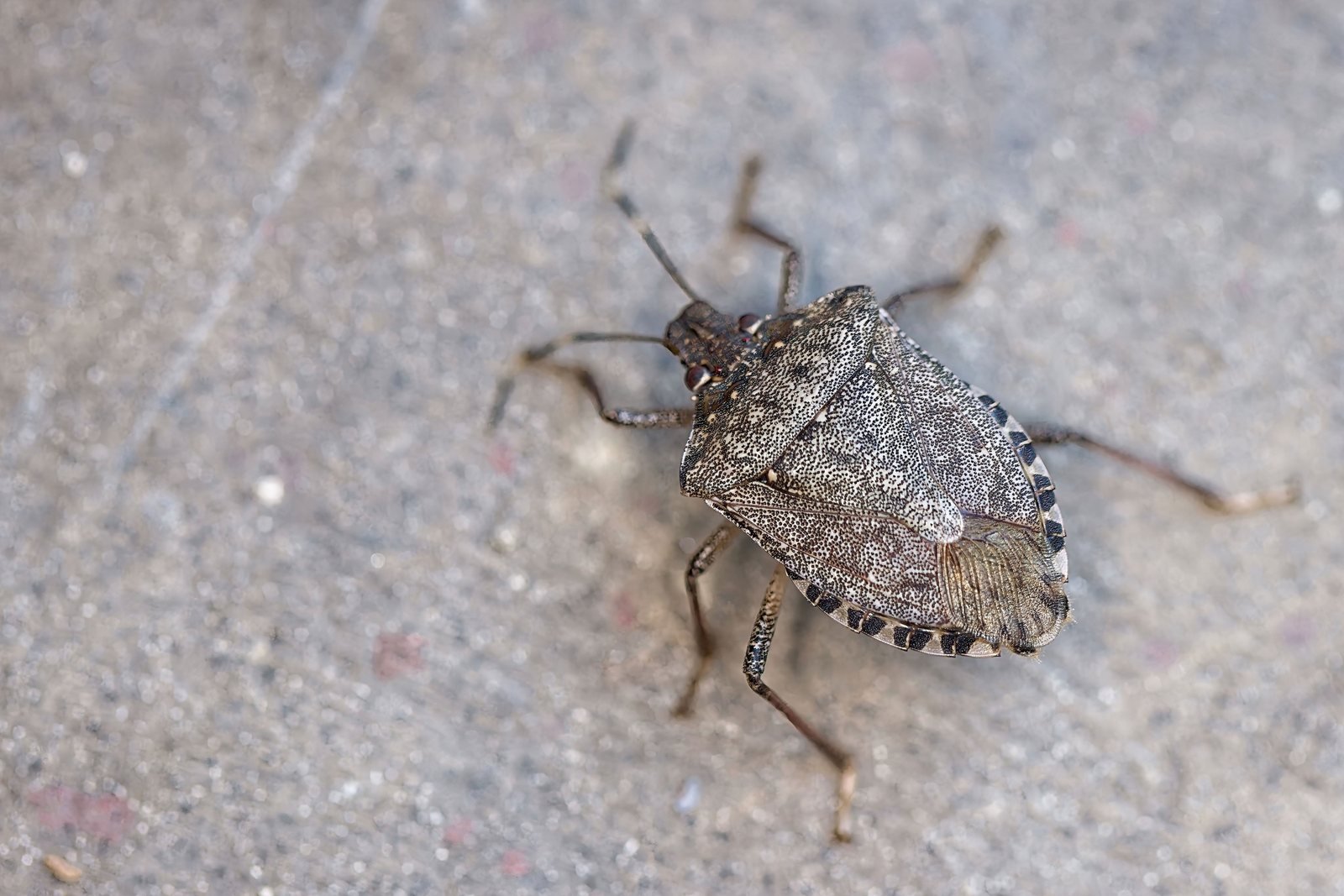
Know your tenant: the brown marmorated stink bug in one paragraph
The stink bug in your house is almost certainly the brown marmorated stink bug — a half-inch, shield-shaped, marbled-brown import from East Asia that reached the U.S. in the 1990s and blanketed Ohio in the 2010s. Two field marks separate it from the native brown stink bugs that stay politely outdoors: white bands on the antennae, and alternating light-dark checkering along the edge of the abdomen. Outdoors it’s a serious orchard and soybean pest; indoors it’s a nuisance with a gland. It cannot bite you (mouthparts are a plant-juice straw, incapable of piercing skin), it cannot breed inside (eggs are laid on host plants, never in houses), and it does not eat anything in your home — not food, not fabric, not wood. Every stink bug you see indoors between October and April is an adult in diapause — insect hibernation — that checked into your walls for the winter and occasionally wanders out by mistake. That single fact drives every piece of advice on this page. For the related questions we answer constantly — do they bite and can they fly — the short answers are no and emphatically yes.
Once they are in the wall for winter, eviction is slow. Sealing before October is what pest control in Dayton does about it.
Why your house: the September audition
Stink bug invasions look random and aren’t. In late September, as day length shortens and the first cool nights arrive, adults leave the fields and orchards and fly toward overwintering sites — and they choose by a repeatable checklist. Sun-warmed vertical surfaces: south- and west-facing walls that hold afternoon heat are the landing zones; on the first warm day after a cold snap you can watch dozens basking on the siding like tourists at a pool. Light colors: pale siding and trim out-recruit dark by a wide margin in field trials — one of the few pest problems where paint color is a real variable. Height and edges: they orient to tall silhouettes and roofline edges, which is why two-story houses, gable ends, and chimney chases collect more than ranches. Proximity to food fields: houses bordering soybeans, corn, orchards, or weedy tree lines — half of Miami and Preble counties, in other words — sit directly on the flyway. And critically, aggregation pheromone: the first scouts that find a good crevice broadcast a chemical “vacancy” signal that recruits the neighborhood. That’s why the same houses get hammered year after year while the identical house two doors down collects a handful — and why the exclusion work below, done once, keeps paying: a house that’s hard to enter never builds the pheromone reputation.
How they actually get in — and where they spend the winter
From the sunny wall, the bugs work the seams: gaps around window frames and AC units, under siding laps and J-channel, torn screens, unsealed soffit and gable vents, the chimney chase, the gap under the garage door’s weather strip, and utility penetrations. Anything wider than an eighth of an inch — a stink bug flattens remarkably — is a door. Once inside the envelope, they don’t head for your living space; they wedge into wall voids, attic insulation, window frames, and the dead air behind fascia, and switch off for the winter. The February windowsill sighting is a sleeper that woke early: a warm spell (or your furnace warming the wall cavity) fools a few into thinking it’s spring, and they emerge on the inside, disoriented, bumping toward light. This is why midwinter stink bugs cluster at windows and lamps, why they seem drunk, and why there’s no nest to find — the “colony” is just scattered sleepers in your insulation, checking out one at a time. Come actual spring, the survivors leave the way they came, back to the fields, and the house stands empty until next September’s audition.
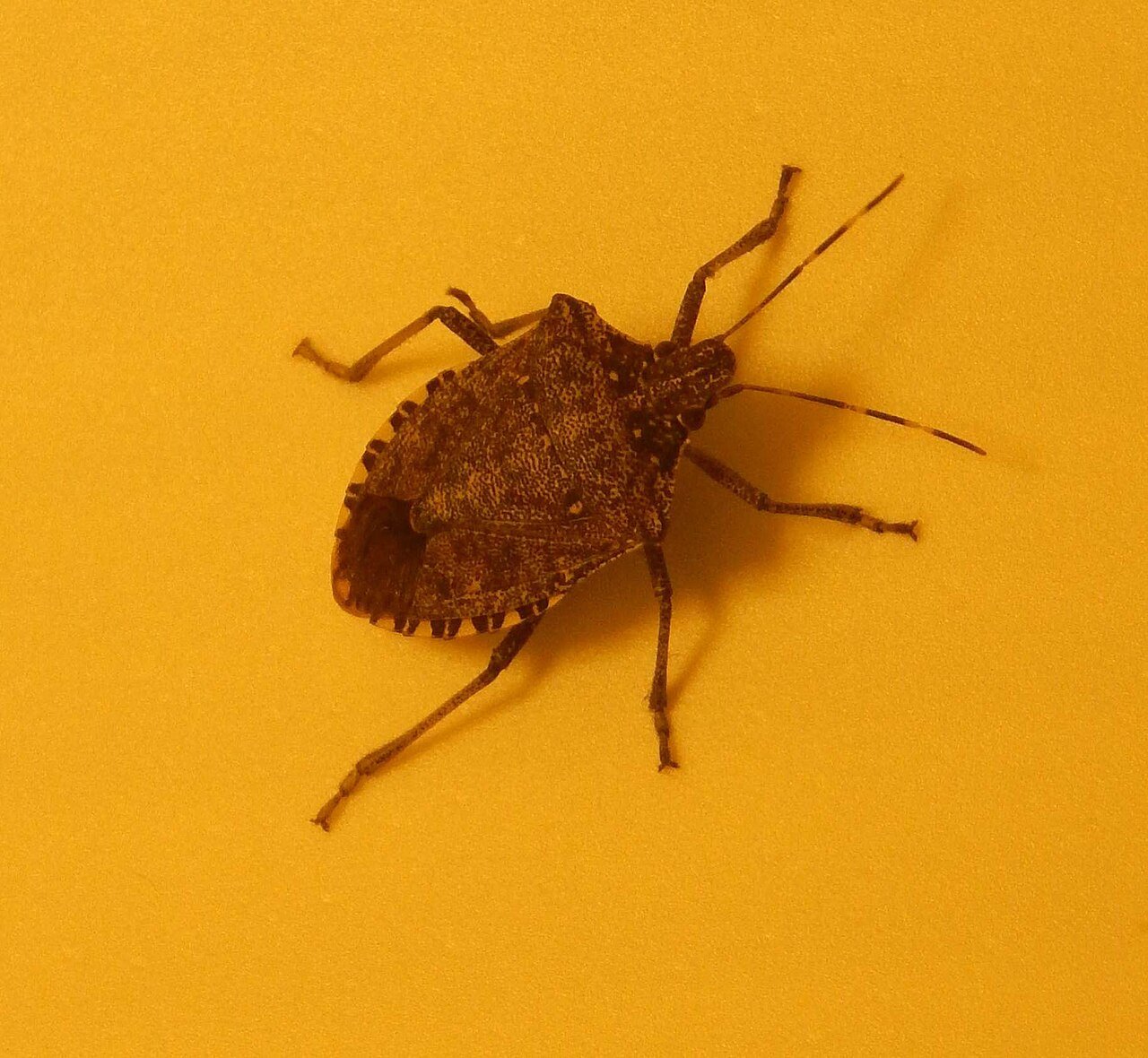
Indoor removal: the no-stink methods, ranked
The gland fires when the bug is crushed, threatened, or roughly handled — so every good indoor method is built on gentleness or containment. Method one, the jar (grade A): ease a wide-mouth jar or cup over the bug, slide a card underneath, and either escort it outside (fine in October; pointless in January, when release equals death and re-entry attempts) or tip it into soapy water, which kills quickly and odorlessly — a standing jar of soapy water under a lamp is also a passable overnight trap, since they tumble toward light. Method two, the bottle sweep (A−): an empty water bottle’s mouth touched gently to the bug triggers its drop reflex — it falls neatly inside; cap and toss. Fastest tool for curtain and ceiling work. Method three, the vacuum (B, with the famous asterisk): excellent for volume days, but a bagless vacuum’s spinning chamber is a stink-gland percussion section, and the machine can smell for weeks. Use a shop vac with an inch of soapy water in the canister, or a bagged vacuum with a nylon-stocking pre-filter over the wand (knot and toss the stocking after). Never the good Dyson. What never makes the list: swatting (guaranteed stink plus a stain on light fabric), and indoor insecticide sprays — killing sleepers inside walls just converts them into a winter pantry for dermestid beetles, trading a nuisance for an actual infestation. The dead-in-the-wall problem is also the reason we don’t fog attics for stink bugs, and any company eager to do so is selling you a second pest problem.
The exclusion program: how the invasion actually gets cut
- Late August deadline: all sealing happens before the mid-September flights — caulking in October locks bugs in rather than out.
- Windows and doors: caulk frame perimeters, repair screens (they walk through fingertip-sized tears), install door sweeps and garage-door thresholds — the under-door gap is the single busiest entrance on most houses.
- The high seams: soffit-fascia junctions, gable vents (back with window screen), chimney flashing gaps, and the utility penetrations for cable and AC lines — foam or caulk every one. This is ladder work on the sunny side of the house, and it’s where the volume enters.
- Siding discipline: J-channel ends and lap gaps can’t all be sealed (siding needs to breathe), which is why exclusion cuts invasions by half to three-quarters rather than to zero — an honest number no one should promise past.
- Window AC units: the accordion side-panels are stink bug turnstiles; foam-seal them or pull the units by Labor Day.
- Lights: they navigate to lit silhouettes at night in flight season — porch lights off or amber during peak weeks trims the landing traffic.
What professional treatment honestly adds
Here’s the straight version, because stink bug service is a category where overselling is rampant. What works: a timed exterior barrier treatment — a residual pyrethroid applied in early-to-mid September to the landing zones (sunny walls, rooflines, window perimeters, soffit seams) intercepts bugs at the audition stage, before they’re in the walls. Done on the right week, it knocks the year’s entry down dramatically; done in November, it’s theater. What doesn’t work: interior spraying (the sleepers are in voids the spray never reaches, and the dermestid problem again), fogging, and any promise of a stink-bug-free house next to a soybean field — the flyway refills annually no matter what anyone sprays. Our program pairs the September barrier with the exclusion audit — we walk the sunny walls with a caulk gun’s eye and a ladder, flag the entry seams, and either seal them on the spot or hand you the short list. For Protection Plan households the fall visit is already on the calendar, which is the whole advantage: stink bug defense is ninety percent timing, and a standing quarterly service catches the September window automatically every year.
The trap-and-gadget aisle, graded
Light traps indoors (B−): a lamp over soapy water genuinely catches winter wanderers overnight in a bug-heavy room; cheap and harmless. Commercial plug-in versions do the same for more money. Pheromone traps outdoors (C−): they catch bugs, but the aggregation lure’s effective radius means a trap on your deck can recruit more bugs to the yard than it drowns — university trials keep finding houses with traps collect more wall landings, not fewer. If you use one, hang it at the property line, never on the porch. Ultrasonic repellers (F): no credible evidence, here or for any pest on this site. Dryer sheets, mint sprays, garlic barriers (D): repel for hours, not seasons; the September flight outlasts every scent. The honest gadget verdict: a $4 tube of caulk in August outperforms the entire aisle.
The Miami Valley calendar and the eight-county forecast
September–early October: flight and entry; the only window where barriers and sealing matter. October–November: peak indoor bumbling as stragglers work through the envelope. December–February: the sleeper trickle — sunny-day windowsill appearances, worst in warm winters. March–April: the spring wake-up and departure; a brief second bumbling peak as sleepers exit. May–August: outdoors on hosts; the house is clean and it’s sealing season. Geography sets the volume: Miami and Preble county homes on the bean-field edge and Warren County’s orchard-adjacent properties take the heaviest flights; Beavercreek, Springboro, and Huber Heights subdivisions backing to tree lines run middling; the urban cores of Dayton and Kettering see the lightest, courtesy of distance from the food. If your house borders row crops, treat the September barrier as annual infrastructure, like gutter cleaning — it’s the same houses every year, and yours is one of them.
The bottom line
Stink bugs in the house are winter tenants, not invaders with intent: harmless, sterile indoors, and annoying precisely in proportion to how many found a seam last September. Evict the wanderers with jar, bottle, or soapy-water vacuum — never a swat, never an indoor spray. Cut next year’s head count with August sealing and, for flyway houses, a September exterior barrier timed to the flight. Skip the gadget aisle, keep the porch light amber in flight season, and grade success honestly: half to three-quarters fewer is a win next to a soybean field. And if this fall’s landing party looks like a siege — or you’d just rather hand the ladder work to someone who does it weekly — the September visit books fast: (937) 569-3330, free estimate, honest forecast included.
Stink bug questions from actual Dayton phone calls
“They keep landing on me while I’m watching TV. Why me?”
Not you — your lamp. Winter wanderers navigate by flying toward the brightest silhouette in a dark room, and a person lit by a reading lamp or TV glow is the tallest bright object in the space. They’re terrible pilots (the flight is all throttle, no steering, as our can-they-fly page explains), so the “attack” is a crash landing. Move the lamp away from the couch and the strafing runs follow it.
“I found dozens in a spare bedroom window. Is that a nest?”
It’s a sun trap, not a nest. That window’s frame connects to a void where sleepers clustered, and its sunny exposure wakes them into the gap between sash and storm window — the classic accumulation point. Vacuum protocol, then caulk the interior trim seam in spring, and next winter they’ll wake into the wall instead of the window — unglamorous, but invisible.
“Do they damage anything at all?”
Indoors, the ledger is nearly empty: no chewing, no boring, no breeding, no disease. The two real line items are stain risk — the defensive fluid can mark light curtains and lampshades, which is why the swat is banned — and the dermestid chain: big die-offs inside walls become food for carpet beetle larvae, which do eat fabric. That chain is triggered mainly by spraying voids, which is why the whole page keeps steering you away from it. Outdoors is another story — ask any Miami County soybean grower — but that’s the farm’s problem, not the living room’s.
“Every fall it’s worse. Do they remember my house?”
In effect, yes. The aggregation pheromone marks proven crevices, and scent traces persist season to season — houses build reputations. The good news cuts the same way: a thorough seal-up plus a September barrier breaks the recruiting signal’s payoff, and after a year or two of failed auditions the flyway’s attention drifts to easier silhouettes. The houses that “got better on their own” almost always got caulked first.
That’s the complete file on the Miami Valley’s politest pest — the one that never bites, never breeds indoors, and never quite goes away. Jar in the cabinet, caulk gun in August, phone number on the fridge for September: the whole defense fits on an index card, and the winter gets a lot less crunchy.
The two-season game plan, condensed
- Now through winter (management): jar and bottle for singles; soapy-water shop vac for volume days; lamp-over-soap trap in the worst room; no swatting, no sprays, no fogging. Tolerance is a legitimate tool — every indoor bug dies or leaves by May without your help.
- August (prevention): the sealing sweep — doors, windows, screens, soffits, gable vents, AC penetrations, garage threshold — finished before Labor Day.
- Early September (interception): exterior barrier on the sunny walls and rooflines for flyway houses; porch lights amber; pheromone traps, if any, exiled to the property line.
- Every year after: repeat the September pieces. Stink bug defense isn’t a cure, it’s a calendar — and houses that keep the calendar stop being the neighborhood’s best hotel.
Four lines on the calendar, and the annual invasion drops from “infestation” to “occasional guest with terrible landing skills” — which, for a pest carried in on every autumn wind from every bean field in the valley, is what winning actually looks like.
And one closing courtesy for the road: when October’s first houseguest helicopters past your reading lamp tonight, remember it can’t bite, can’t breed, and can’t even steer. Jar, card, soapy water — thirty seconds, zero smell, case closed.
Related: The barrel-shaped egg clusters that preview the autumn invasion.
Frequently asked questions
Why are stink bugs in my house?
They are overwintering tenants, not invaders with intent — brown marmorated stink bugs enter through fall gaps to hibernate in your walls and attic, then wander out on warm days. They do not breed, feed, or lay eggs indoors; every winter stink bug checked in last September.
How do I get rid of stink bugs without the smell?
Gentleness or containment: the jar-and-card escort, the empty-bottle drop trick (touch the mouth to the bug; it drops in), or a soapy-water shop vac. Never swat (guaranteed stink plus fabric stains) and never crush — the gland fires on rough handling.
Can I vacuum up stink bugs?
With the famous asterisk: a bagless vacuum’s spinning chamber becomes a stink-gland percussion section that smells for weeks. Use a shop vac with an inch of soapy water in the canister, or a stocking pre-filter over a bagged vacuum’s wand — never the good Dyson.
What attracts stink bugs to my house specifically?
Sun-warmed south and west walls, light-colored siding, tall silhouettes, proximity to bean and corn fields — and the aggregation pheromone: scouts that find good crevices broadcast a vacancy signal that recruits the neighborhood, which is why the same houses get hammered yearly.
When do stink bugs come out in the house?
Two waves: October–November as stragglers work through the envelope, and midwinter sunny days when wall-void sleepers wake early and emerge on the warm side — disoriented, bumbling toward lamps and windows. The February windowsill bug was in your wall since fall.
Do stink bugs do any damage indoors?
Essentially none — no chewing, breeding, or disease. The two real line items: stain risk on light fabrics (hence the no-swat rule) and big die-offs in walls feeding carpet beetle larvae — which is why we refuse to fog wall voids for them.
Do stink bugs bite people or pets?
Cannot — the mouthpart is a plant-juice straw incapable of piercing skin. Pets that mouth one get a memorable taste lesson and nothing worse.
How do I keep stink bugs out next year?
Seal before mid-September flights: window frames and AC units, torn screens, door sweeps, soffit and gable vents, chimney flashing, garage threshold. Done by Labor Day, exclusion cuts invasions by half to three-quarters — the honest ceiling next to a soybean field.
Does professional stink bug treatment work?
One thing does: a September exterior barrier on the landing walls, timed to the flight, intercepting bugs before they enter — dramatic reduction when timed right, theater when sprayed in November. Interior spraying and fogging are on our refuse-to-sell list for this pest.
Do stink bug traps work?
Indoors, a lamp over soapy water genuinely catches winter wanderers (grade B−). Outdoors, pheromone traps can recruit more bugs than they drown — university trials keep finding trap-bearing houses collect MORE wall landings. If you hang one, hang it at the property line.
Why does my house get them worse than my neighbor’s?
Exposure and reputation: sunnier wall aspect, lighter siding, better crevices — and the pheromone-marked history of successful overwintering. The good news cuts the same way: a sealed, barrier-treated house fails auditions two falls running and the flyway’s attention drifts.
When should I call about stink bugs?
For the September package — barrier plus the sealing audit — especially for flyway houses near row crops, or any fall where the count turns from nuisance to siege. Winter calls we mostly talk out of: the sleepers are already in, and the money waits for September: (937) 569-3330.