
“Where do cockroaches come from?” is the question people ask with an edge in their voice, because what they mean is: my kitchen is clean — so why is this happening to me? It’s the right question, and it deserves a better answer than the internet’s usual shrug about crumbs. Roaches don’t materialize from dirt, and they aren’t a verdict on your housekeeping. Every roach in every Dayton kitchen arrived by one of a small number of well-documented routes — and which route it took is the single most useful fact in the whole case, because the route determines the species, the species determines the strategy, and the strategy determines whether this is a two-week fix or a recurring nightmare. This page runs the full investigation: the two completely different origin stories behind Ohio roach problems, the exact vehicles and doorways each species uses, why spotless houses get roaches anyway, and what the arrival route tells you to do about it.
The first fork: two species, two completely different origin stories
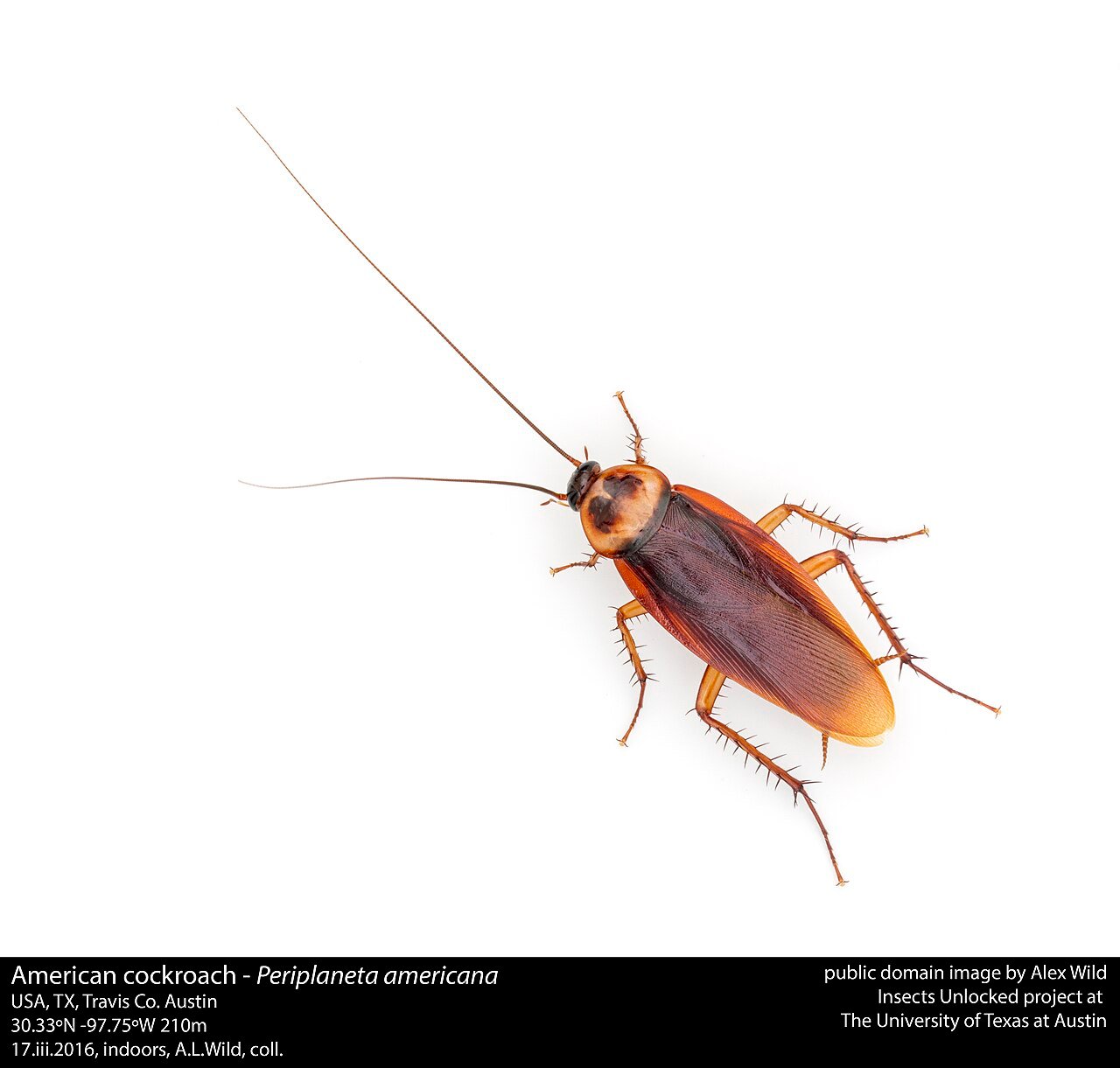
Southwest Ohio kitchens meet two main roaches, and they come from opposite directions. The German cockroach — small, tan, two dark racing stripes behind the head — is a hitchhiker. It cannot survive Ohio winters outdoors and essentially never walks in from the yard; it arrives inside something you carried. A German roach problem is always an importation event. The American cockroach — the big mahogany one, up to two inches, the one that makes people drop things — is infrastructure fauna. It lives year-round in sewer systems, storm drains, steam tunnels, and sump pits, and it walks into buildings through the plumbing and foundation connections those systems share with your house. An American roach problem is an intrusion event. (The Ohio roster adds two bit players: the Oriental cockroach, a cool-basement cousin of the American with the same infrastructure origins, and the brown-banded, a rarer hitchhiker that prefers warm, dry rooms.) Hold that fork in mind through everything below — hitchhiker or infrastructure — because every “where from” answer on this page lands on one side or the other, and the two sides get opposite treatments.
Almost every origin story ends in something carried through the door. Clearing what came with it is cockroach control in Dayton.
The hitchhiker’s vehicles: how German roaches actually get in
Ranked by how often we trace a Dayton infestation to them: Cardboard boxes — the number-one vehicle in America. Corrugated cardboard is roach housing: warm layered paper, glue they can eat, and dark flutes exactly one roach tall. Boxes from warehouses, storage units, moves, and yes, deliveries have seeded countless kitchens. Used appliances and electronics — a secondhand microwave, fridge, or game console from an infested home is a colony in a box; the warm motor compartments are premium real estate, and this is the classic way a “great Facebook Marketplace deal” becomes a six-month project. Grocery and takeout bags — less common per trip than folklore says, but the volume of trips makes it a steady contributor, especially via egg cases (more on those in a moment). Luggage and backpacks — hotel, dorm, and hospital stays; the same routes bed bugs ride. Visitors’ belongings and shared walls — in duplexes and apartments, German roaches commute between units along plumbing chases and shared voids, which is why a spotless unit can inherit its neighbor’s problem and why multi-unit treatment has to be building-wide to stick. The unsettling detail that explains half of these: a female German roach carries her egg case — forty-plus eggs in a purse-shaped capsule — until just before hatch, and she glues it inside cardboard flutes and appliance seams. You don’t need to import a single live roach to start an infestation. One abandoned egg case in a box flap will do it.
The infrastructure routes: how the big ones walk in
American and Oriental cockroaches don’t need a ride — they have the municipal map. Floor drains are route one: basement, garage, and laundry drains connect your house to the storm or sanitary system where these roaches live by the thousand, and a drain whose U-trap has dried out is an open corridor — no water seal, no barrier. The classic Dayton case is the big roach in the basement every August, traced to a floor drain nobody has poured water into since spring. Sewer line breaches — older neighborhoods with clay tile laterals develop root intrusions and joint gaps that let roaches exit the pipe underground and follow its outside surface to your foundation. A sudden multi-roach basement appearance after a sewer backup or major street work is this route announcing itself. Foundation gaps and sill openings — in high summer, Americans roam outdoors and squeeze under doors without sweeps, through torn crawlspace vents, and around utility penetrations, especially during hot droughts (seeking moisture) and cold snaps (seeking heat) — September’s first cool week is their moving day. Sump pits and crawlspaces — unsealed pits are a stone corridor from the drain tile straight to the basement; damp crawlspaces are a service road under the whole house. Note what’s absent from this list: your dishes. Infrastructure roaches come for water, warmth, and access — a bone-dry, freshly-bleached basement gets them exactly as often as a cluttered one if the drain trap is dry.
“But my house is clean” — why sanitation determines survival, not arrival
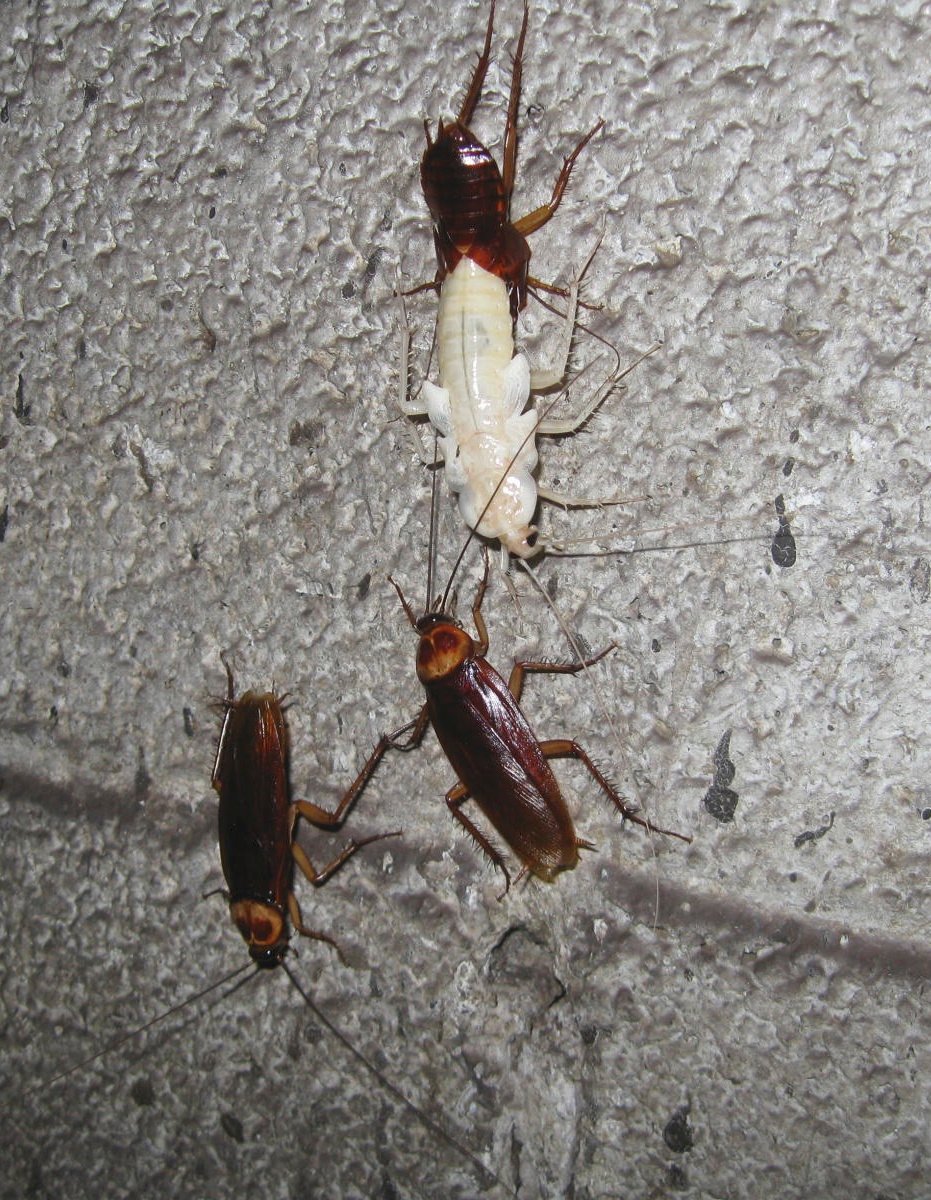
Here’s the reframe that makes the whole subject make sense: cleanliness has almost nothing to do with whether roaches arrive, and almost everything to do with whether they stay. Arrival is a function of vehicles and doorways — boxes carried in, traps gone dry, gaps unsealed — and those are distributed democratically across tidy and messy households alike. What a clean kitchen does is lower the carrying capacity: fewer calories and less water per square foot means a founding population grows slowly or fails entirely, while the same arrival in a target-rich kitchen becomes a thousand roaches by Halloween. This is why the question “why me?” has a comforting answer (you didn’t cause it; a box or a drain did) and an actionable one (your habits decide what happens next). It’s also why our German roach work leads with sanitation and gel bait rather than baseboard spraying — the full doctrine is on the main roach guide — and why the fastest infestations we see are in homes where a previous half-treatment scattered the colony instead of starving and baiting it.
Route tells: reading where yours came from
- Small tan roaches, kitchen/bathroom only, daytime sightings escalating: German, imported. Think back eight weeks: a move, a used appliance, a storage-unit retrieval, a new roommate’s boxes. The vehicle is usually findable.
- One big mahogany roach in the basement or first floor, occasional, mostly summer: American, infrastructure. Check floor drain traps first — it’s the answer more than half the time.
- Several big roaches after plumbing work, a backup, or street excavation: sewer route. The plumbing event is the arrow.
- Big roaches upstairs, near bathrooms: they climbed the plumbing chase — still infrastructure, entering higher. Attic and roof-vent entries turn up in older two-stories.
- Dark, sluggish roaches in a damp basement or around a sump: Oriental — the cool-moisture specialist; the sump pit and foundation seepage are the roads in.
- Roaches in a warm bedroom or electronics, stripes across the back: brown-banded, imported in furniture or devices.
Every one of those reads converts directly into a to-do list, which is the entire value of asking “where from” before “how do I kill them.”
Why they come out at night — and what a daytime roach is telling you
The nocturnal question belongs on this page because it’s really a population question in disguise. Roaches are hard-wired night-shift animals: they carry an internal clock that starts activity a couple of hours after lights-out, and they treat open, lit space as predator territory. A healthy-sized colony can feed every member during the dark hours with room to spare, which is why a modest infestation produces zero daytime sightings and why “I only ever see one at midnight” still means there are more. The diagnostic flip: when roaches appear in daylight, the night shift is over capacity. Crowded harborage pushes the weakest members — usually nymphs — out to forage in dangerous daylight hours. One daytime German roach in the kitchen is, statistically, the tip of a colony in the hundreds. That’s not folklore; it’s the population math we bring to every inspection, and it’s why the “one roach at noon” call gets triaged ahead of the “one roach at midnight” call every time. (The single big American wandering the basement at 11 p.m. is exempt from this arithmetic — solo infrastructure tourists keep normal roach hours and imply nothing about a colony upstairs.)
Closing the routes: the prevention program, by origin
Against the hitchhikers: break down and recycle cardboard within a day — never store it, and never bring storage-unit or warehouse boxes deeper than the garage. Inspect used appliances and electronics in daylight before they cross the threshold: flip them, open compartments, look for pepper-grain droppings and glued egg cases in seams. Unpack luggage on hard flooring after high-risk stays. In multi-unit buildings, ask management for building-wide treatment — unit-by-unit whack-a-mole is how German roaches become permanent residents. Against the infrastructure walkers: pour a quart of water into every floor drain monthly (add a spoonful of mineral oil to slow evaporation) — the refilled U-trap is the single cheapest roach barrier in existence. Seal the sump pit with a gasketed lid. Sweep exterior doors, screen crawlspace vents, and caulk utility penetrations at the foundation — the same seam-by-seam audit our rodent playbook uses, because the doorways overlap almost perfectly. And after any sewer backup or lateral repair, treat the following month as a watch period: that’s when the displaced tenants come looking. Against both: fix the moisture. Every roach on this page is drought-limited — drips, condensation, and pet-bowl overflow are the water supply that turns a scouting trip into a settlement.
The eight-county origin map
Route frequency tracks infrastructure age across our service area. Dayton proper, Oakwood, and old Kettering run on century-old clay laterals and basement floor drains — the American-roach infrastructure routes lead, and August basement sightings are practically a neighborhood tradition. The newer plats of Beavercreek, Springboro, and Huber Heights flip the ratio: tight PVC plumbing shuts the walkers out, so what arrives is what gets carried in, and German importation cases dominate. Miami and Preble counties’ rural properties add the outlier routes — well pits, cistern overflows, and barn-to-house firewood hauls. Same species, same fork, different traffic mix; the inspection just starts at a different door.
The bottom line
Roaches come from somewhere specific, every time: German roaches ride in — cardboard, used appliances, luggage, a neighbor’s wall — and infrastructure roaches walk in — dry drains, sewer breaches, foundation gaps, sump pits. Clean houses get both, because arrival is about vehicles and doorways, not crumbs; what cleanliness controls is whether the arrivals prosper. Read the species and the room and you can usually name the route; close the route and you’ve solved next year’s problem along with this one. And if the sightings are already daily — or daytime — skip to the endgame: (937) 569-3330, free estimate, and a treatment plan built on exactly the origin story your kitchen is telling.
The importation post-mortem: tracing your patient zero
When a German case lands in a Dayton kitchen, running the timeline backward is worth ten minutes because it changes behavior forever after. German roaches need roughly sixty days from a stowaway egg case to the first sightings most people notice — nymphs are tiny, translucent, and easy to miss for weeks. So draw the line back two months from your first sighting and inventory what crossed the threshold: a move? A yard-sale appliance? Boxes down from a relative’s attic? A dorm move-out in May that became kitchen roaches by July? In our experience the vehicle identifies itself in that window more than half the time, and the households that find it never repeat it — they become the people who break down boxes in the driveway and flip the used mini-fridge in the sunlight, which is precisely the immune system this page is trying to install.
Three origin myths, retired
- “They spontaneously show up in dirty houses.” No route, no roaches. Mess feeds a colony; it cannot conjure one. The corollary cuts the other way too: no amount of bleach closes a dry floor drain.
- “They come up the toilet.” Almost never — the toilet’s water seal is the one plumbing barrier that’s always full. The floor drain two feet away, dry since March, is the actual culprit; the toilet just gets the blame because that’s where the big one was spotted.
- “One roach means an infestation.” Half true, species-dependent: one German roach means a colony is nearby, because they never travel alone from outside; one American in the basement in August is usually exactly what it looks like — a single tourist off the drain line, worth a trap-refill and a watchful week, not a panic.
Species, room, season, and route: four facts that turn a shudder into a diagnosis — and a diagnosis into a short, boring, permanent fix, which is the only kind worth paying for.
What we do differently once the route is known
Origin isn’t academic for us — it’s the treatment plan. A confirmed importation case gets the German protocol: crack-and-crevice gel baiting keyed to harborage, insect growth regulator to break the breeding cycle, sanitation coaching, and follow-up visits timed to the sixty-day egg-to-adult clock, because one baiting round never outlasts the egg cases already glued in the seams. A confirmed infrastructure case gets the opposite posture: trap refills and drain screens, sump sealing, door sweeps, exterior perimeter treatment, and — where the evidence points underground — a recommendation to camera-scope the lateral, because we can kill walkers all year, but only the plumber can close the highway. Under the Protection Plan, both postures are covered as standing service: the quarterly visit re-checks the routes as a habit, which is why plan customers’ roach calls are almost always “found one, dead” rather than “found the kitchen moving.” Either way the first visit starts with the same question this page just taught you to answer yourself: where did yours come from? Bring the answer — or just bring the photo — and the rest of the plan writes itself.
And if you want the sixty-second version to tape inside a cabinet door: small and tan means something you carried; big and mahogany means something underneath; dry drains are doors; cardboard is a vehicle; clean decides whether they stay, not whether they come. Five clauses, the whole page — and the reason the next box from the storage unit gets opened in the driveway.
Case closed — and the drain trap gets its quart of water tonight.
Frequently asked questions
Where do cockroaches come from in the first place?
Two origin stories: German roaches ride in — cardboard boxes, used appliances, luggage, a neighbor’s wall — and the big American roaches walk in from municipal infrastructure through dry drains, sewer gaps, and foundation openings. Which story yours followed determines the entire fix.
Can roaches come from a clean house?
Arrival has nothing to do with cleanliness — boxes and dry drain traps are distributed democratically. What a clean kitchen controls is carrying capacity: the same arrival that fizzles in a tight house becomes a colony in a target-rich one.
Do roaches really come up from drains?
American roaches, yes — through drains whose U-trap water seal has evaporated. The toilet, whose seal never dries, is almost never the route; the basement floor drain nobody has run water into since spring almost always is. A monthly quart of water per drain is the cheapest roach barrier in existence.
Can roaches come in on grocery bags or deliveries?
Steadily if unspectacularly — egg cases glued in corrugated flutes are the real cargo, forty-plus eggs per capsule, no live roach required. Break down and recycle cardboard within a day; never store boxes from warehouses or storage units indoors.
Can I get roaches from a used appliance or furniture?
It is the classic seeding event — a secondhand fridge, microwave, or console from an infested home is a colony in a box, warm motor compartments included. Inspect in daylight before it crosses the threshold: droppings like pepper grains, egg cases in seams.
Do roaches travel between apartments?
Fluently, along plumbing chases and shared voids — which is why a spotless unit inherits its neighbor’s problem and why single-unit treatment in multi-unit buildings is temporary by physics. Building-wide protocols are the honest fix; Ohio puts treatment on the landlord.
Where do roaches hide during the day?
Within body-contact cracks near warmth and moisture: appliance voids, cabinet hinge lines, under-sink pipe gaps, drawer slides. Daytime invisibility is normal at any population — the five-second flashlight flip ninety minutes after lights-out is the honest census.
What causes roaches to suddenly appear?
A vehicle event (a move, a used appliance, boxes from storage), an infrastructure event (dried trap, sewer work, backup), or a season event (drought and cold snaps drive Americans indoors). “Sudden” German sightings usually mean an eight-week-old importation just reaching visibility.
Does one roach mean an infestation?
Species decides: one German (small, tan, striped) means a colony nearby — they never arrive solo from outdoors. One American in the basement in August is usually exactly what it looks like: a lone drain tourist worth a trap and a watchful week, not a panic.
How do I stop roaches from ever coming in?
Close both routes: water in every floor drain monthly, sump pit sealed, door sweeps and foundation gaps closed — and cardboard discipline, daylight appliance inspections, and luggage unpacked on hard floors after travel. Arrival prevention is habits, not products.
Do roaches come from outside in Ohio?
The big ones do — Americans and Orientals live year-round in sewers, steam tunnels, and mulch, entering structures seasonally. German roaches cannot survive Ohio winters outdoors at all: every German infestation is an importation, full stop.
Where are the roaches coming from if I cannot find a source?
That is inspection work: species ID narrows the route, dropping concentrations map harborage, and monitor traps triangulate direction. It is also literally what we do all day — the origin question is the first thing our visit answers: (937) 569-3330.