
Tiny fuzzy flies on the bathroom wall, always near the sink or shower, sitting motionless like specks of gray felt until you swat at one — and no matter how many you kill, the same three or four are back by tomorrow. Those are drain flies, and here is the single fact that makes this whole page work: the flies you see are not the problem — the film inside your drain is. Drain flies breed in the gelatinous biofilm that coats the inside of drains, overflow channels and traps, and every adult you swat is being replaced on schedule by the nursery you haven’t touched. Kill the film and the flies end, permanently, usually within two weeks and often without spending a dollar on chemicals. This guide covers the whole method: confirming drain flies (versus the fruit flies and fungus gnats they’re mistaken for), finding the guilty drain with a piece of tape, destroying the biofilm mechanically, why bleach down the drain fails, and the handful of situations — broken pipes, sewage intrusions, commercial floor drains — where the flies are telling you something a brush can’t fix. Straight answers from Greater Dayton Pest & Rodent, the company that would rather teach you the free fix first: (937) 569-3330.
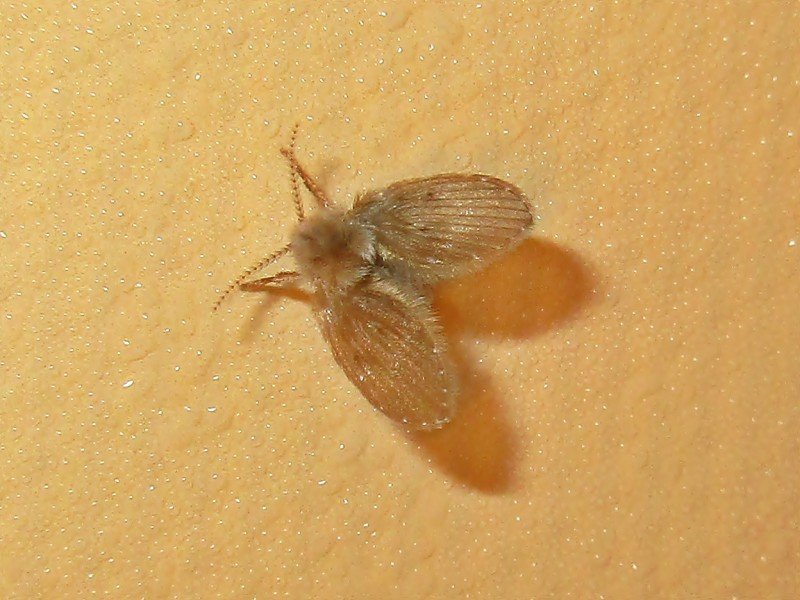
Know your enemy: what a drain fly is
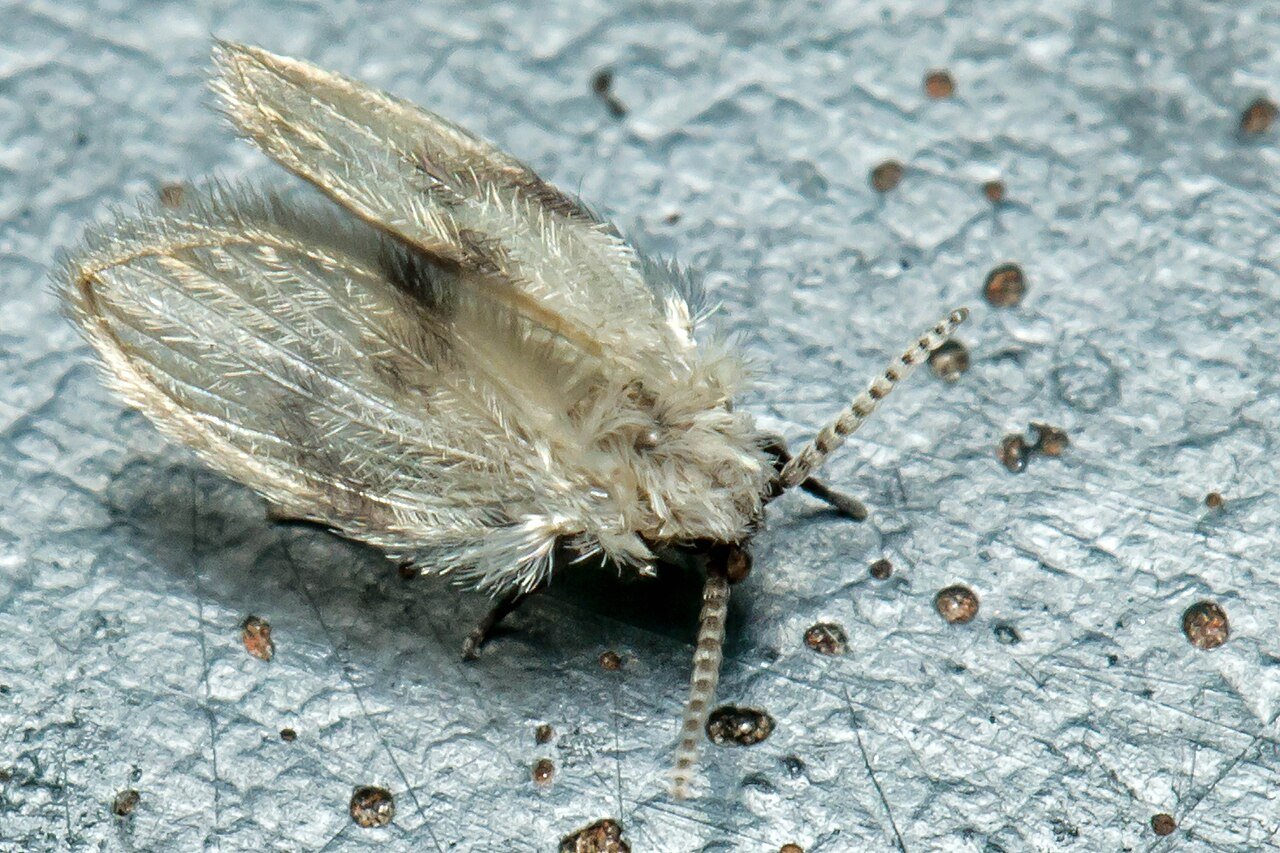
Drain flies (family Psychodidae — also sold to you in search results as moth flies, sewer flies, sink flies or filter flies) are two-to-four-millimeter true flies wearing moth costumes: densely furry bodies and wide, hair-fringed wings held roof-like over the back, giving each one a fuzzy heart-shaped silhouette. They are terrible fliers — short, drunken hops of a few feet, which is why they’re always resting on the wall near their drain rather than cruising the kitchen the way fruit flies do. The adults don’t bite, don’t sting, and barely eat; their entire two-week adult mission is producing the next generation, and a female lays thirty to a hundred eggs at a time directly into organic film. Egg to adult runs one to three weeks in a warm bathroom, which means a single neglected drain can run a continuous conveyor of adults off a nursery the size of a coffee stain. They’re found in every county we serve and every century of housing stock — drain flies are strictly egalitarian, because every building has drains.
The biofilm is the breeding site, and nothing changes until it goes. When it is somewhere you cannot reach, that is pest control in Dayton.
Drain fly, fruit fly, or fungus gnat? Thirty seconds to certainty
Three tiny flies get called “gnats,” and each needs a different fix, so identification is the fork in the road. Drain fly: fuzzy, moth-like, gray, sits still on bathroom/kitchen walls near plumbing, flies clumsily when disturbed. Fix = clean the drain (this page). Fruit fly: smooth tan body, often red eyes, agile flier orbiting the fruit bowl, trash can or recycling — the kitchen’s fermentation fan. Fix = find the fermenting source (our fruit fly method). Fungus gnat: delicate, dark, mosquito-shaped with dangly legs, hovers around houseplants and windows. Fix = dry the overwatered potting soil (our gnat guide runs the full protocol). Wrong ID means treating the fruit bowl for a plumbing problem or bleaching drains at a houseplant problem — weeks of effort against the wrong insect. Thirty seconds of looking saves all of it, and a phone photo to (937) 569-3330 gets you a free professional ID if the fly won’t hold still for inspection.
The tape test: finding the guilty drain
Houses have a dozen drains and the flies rarely commute far, so before treating anything, run the classic overnight diagnostic. Dry each suspect drain’s rim, then stretch clear packing tape across the opening, sticky side down, leaving a gap at one edge so air still moves (a fully sealed drain changes airflow and can fool the test). Do every candidate at once: bathroom sink, tub, shower, kitchen sink, basement floor drain, laundry standpipe, the guest bath nobody uses. By morning, emerging adults will be stuck to the underside of the tape over the breeding drain — a censused, dated, undeniable answer. Two refinements from the field: run the test two or three consecutive nights before declaring a drain innocent (emergence comes in pulses, not streams), and don’t skip the drains that “can’t be it.” The single most common culprit we find in Dayton-area homes is the rarely used drain — the basement floor drain, the guest shower, the utility sink — because a drain that never gets flushed with hot water grows the thickest film, and a P-trap that evaporates dry stops blocking sewer gases and sewer flies. If tape shows flies at a floor drain that also smells, you may have found two problems worth one fix.
Killing the biofilm: the method that actually ends it
Here is the part every “pour X down the drain” article gets wrong: biofilm is not a liquid problem. It is a structured, glue-like colony of bacteria and organic matter stuck to pipe walls — the same reason biofilms defeat antibiotics defeats drain pours, because liquids slide past the film’s surface and touch almost none of it. Bleach poured down a drain kills the top millimeter for a moment, voids nothing underneath, and corrodes older pipes while it fails — the same verdict our bleach myth series keeps reaching, for the same reason. Boiling water is marginally better and still temporary. The actual method is mechanical: 1) Remove and scrub — pull the stopper and pop-up assembly (usually one setscrew), and physically scrub the slime off with a stiff bottle brush or a flexible drain brush run the full length you can reach; the gunk that comes up gray-black and gelatinous is the nursery itself. 2) Follow with an enzyme or bacterial gel cleaner — the gel formulations (sold as “drain gel” or bio-drain treatments) cling to pipe walls and digest the residue the brush missed; used weekly for three or four weeks, they starve any survivors through the full egg-to-adult cycle. 3) Flush hot weekly thereafter. That sequence — brush, gel, habit — ends better than nine in ten residential drain fly problems with no insecticide at all, which is why it’s what we teach before what we sell.
The two-week timeline (and why patience is part of the method)
Set expectations correctly and nobody panics on day six. Scrubbing the drain kills eggs and larvae but not the adults already loose in the room — and adults live up to two weeks. So the honest schedule: days 1–3, visible adults continue, possibly seeming worse as the disturbed drain pushes stragglers out; swat freely or set a vinegar-and-soap dish nearby to speed attrition. Days 4–10, steady decline as the adult cohort ages out with no replacements emerging. Day 14, a clean wall — and the tape test re-run for one night to certify the win. Still catching fresh emergers on tape after a proper scrub-and-gel cycle? That’s diagnostic gold, not failure: it means the breeding site is past where your brush reached — deeper in the line, in a second unsuspected drain, or somewhere that isn’t a drain at all, which is exactly the moment to read the next section.
When drain flies mean something bigger
Most drain fly stories end at the P-trap. The exceptions matter because persistent flies are one of plumbing’s cheapest early-warning systems. A breeding site you can’t reach: flies emerging from a line that’s been properly scrubbed suggest film beyond the trap — in older Dayton housing stock, that can mean a bellied pipe holding standing water, root intrusion in a clay lateral, or a decades-old accumulation past the reachable run; a plumber’s camera answers in twenty minutes what a month of gel cannot. A hidden moisture failure: drain flies breeding outside drains — under a loose toilet base, in the overflow cavity of a tub, around a slow leak inside a vanity, in a sump pit, in the condensate pan of an HVAC unit — are pointing at wet organic matter somewhere it shouldn’t exist. We’ve traced “bathroom gnats” to a cracked toilet flange feeding a subfloor colony more than once; the flies were the cheapest part of that discovery, and finding it early saved the joists. A sewer breach: a sudden bloom of drain flies in a basement, paired with odor, can follow a dried floor-drain trap (pour a bucket of water in — solved) or, more seriously, a broken sewer line under the slab. Multi-unit buildings: in apartment stacks, one unit’s flies often breed in another unit’s (or the building’s) shared line — a wing-wide problem no single tenant’s scrubbing can fix, which is why our commercial drain programs treat the stack, not the complaint. The rule of thumb: a drain fly problem that survives the full method has stopped being an insect problem and started being an inspection.
Restaurants and commercial kitchens: the floor-drain economy
Commercial spaces run the same biology at industrial scale — floor drains under prep lines collect a continuous organic subsidy, grease-trap margins grow film like intent, and a health inspector who sees drain flies reads them (correctly) as a sanitation index. Our restaurant program handles it as routine maintenance rather than crisis response: scheduled bio-gel treatment of every floor drain on the route visit, foaming applications that coat the full pipe circumference (foam reaches what liquid can’t — the commercial-grade answer to the biofilm-vs-liquid problem), monitoring logs that show the inspector a managed system, and the same source-first doctrine — if flies persist, we find the wet failure, because in a commercial kitchen it’s usually a broken tile seam or a leaking line worth finding early. Drain flies on a dining-room wall cost real revenue in review photos; the program that prevents them costs a line item.
Prevention: the thirty-second weekly habit
- Hot-water flush weekly on every drain, including — especially — the ones nobody uses; sixty seconds of the hottest tap water keeps film from establishing.
- Water into dry traps monthly: basement floor drains and guest bathrooms evaporate their seal; a bucket of water (a spoonful of mineral oil on top slows re-evaporation) blocks both gases and flies.
- Enzyme gel monthly on kitchen and heavy-use bathroom drains — cheap insurance that digests film before it matters.
- Fix the drips: a vanity leak or running overflow is a nursery subscription; the flies are cheaper to prevent as plumbing than to fight as insects.
- Screens on problem drains: fine-mesh drain screens keep organic matter from feeding the film in the first place — the same food-discipline logic as every other pest on this site.
Drain fly questions, answered
Are drain flies dangerous or dirty?
They don’t bite or sting, and unlike house flies they rarely commute between filth and food. The honest concerns are smaller: they can mechanically carry drain bacteria in grim quantities in heavy infestations, their airborne debris can aggravate asthma in sensitive people, and large indoor populations signal a sanitation or moisture condition worth fixing for its own sake. File under “fix promptly, don’t panic.”
Why do they keep coming back every few months?
Because the film does. A one-time scrub without the weekly hot-water habit regrows its nursery in six to twelve weeks — the same arithmetic as every recurring pest on this site: recurrence means a condition, and conditions need habits, not heroics.
Do those foaming drain bombs from the hardware store work?
The foam format is right (it coats walls), and the consumer versions are weaker cousins of what we use commercially. Fine as step two after mechanical scrubbing; routinely disappointing as a substitute for it. Nothing pours its way through a brush’s job.
Fuzzy flies on the wall, film in the pipe, brush in your hand — you have everything you need, and if you’d rather have it handled or the flies have outlasted the method, Greater Dayton Pest & Rodent is a phone call away: (937) 569-3330, serving all eight counties with the source-first approach on every job, one-time or Protection Plan.
The Miami Valley drain fly calendar
Drain flies are indoor insects with an outdoor pulse, and the local pattern is worth knowing. Summer is peak season inside and out: warm pipes accelerate the breeding cycle to its one-week minimum, and outdoor populations breeding in storm drains, catch basins, birdbath edges and compost margins produce the occasional window-screen visitor that has nothing to do with your plumbing (a few flies near open windows in July with clean tape tests = outdoor drift; close the case). Wet summers amplify everything — the same standing-water abundance that drives mosquito pressure feeds outdoor psychodid breeding. Fall brings the heating-season reveal: basement floor drains that ran dry over a mild summer announce themselves when the furnace kicks on and airflow shifts — October’s “sudden basement gnats” are usually a dry trap plus a warm pipe. Winter is prime diagnosis season, oddly: with outdoor sources frozen silent, any drain fly indoors is definitionally breeding indoors, and the tape test runs with zero noise in the data. Spring means sump pits working hard and utility drains moving meltwater — check both if March produces flies. Year-round, the answer never changes: find the film, kill the film, keep the habit. The seasons just tell you where to point the tape.
One page, one method, one insect permanently solved — that’s the standard this whole pest library is built to, and the phone works for everything the brush can’t reach.
What a professional visit actually adds
Fair question, given that we just taught you the free version: what does calling us buy that the brush doesn’t? Four things, honestly stated. Certainty of identification — roughly a third of the “drain fly” calls we take turn out to be fungus gnats, fruit flies or, occasionally, the first trickle of something that matters more, and the eight-county photo triage sorts it before anyone pays for anything. Reach — commercial foaming equipment treats the full interior circumference of lines far past a hand brush’s range, which is the difference-maker in older homes with long horizontal runs and in any multi-drain mystery. Diagnosis pressure-tested — when flies persist, we’re the ones who’ve seen the cracked flange, the bellied lateral and the wet subfloor before, and we’ll tell you plainly when your insect problem is a plumber’s referral (we keep good ones). And the guarantee structure — drain work on a Protection Plan carries the re-treatment guarantee, so a return of the flies between visits is our return trip, free. The method on this page solves most cases; the visit exists for the rest — and either way, nobody should be buying bleach.
And if you got here at 2 AM with a phone flashlight aimed at a fuzzy speck on the shower tile: it’s a drain fly, it can’t hurt you, the fix starts with tape and a brush, and tomorrow is soon enough. Sleep first — the film isn’t going anywhere, and neither is the method.
Related: What fly eggs look like and where they are laid.
Related: How long the adults actually live.
Related: The full list of tiny flying bugs that turn up indoors.
Frequently asked questions
How do I get rid of drain flies fast?
Physically remove the film they breed in: pull the stopper, brush the pipe walls with a stiff flexible brush, follow with an enzyme or bacterial drain cleaner overnight, and flush hot in the morning. Adults die off within days once the nursery is scrubbed; sprays without scrubbing solve nothing.
What are the little fuzzy moth-like flies in my bathroom?
Drain flies — also sold under sink fly and sewer gnat — fuzzy wings held roof-like, weak fluttering flight, found resting on walls near their breeding drain. Harmless to people; diagnostic of organic film in your plumbing.
Which drain are they coming from?
The overnight tape test: dry each suspect drain’s rim, tape a clear cup or inverted-tape patch over it, and check in the morning — flies caught inside convict that drain. Test them all; the guest-bath and floor drains are the classic surprise winners.
Does bleach kill drain flies?
Mostly no — bleach pours past the gel film clinging to pipe walls, killing some larvae and missing the habitat. The mechanical brush plus enzyme treatment removes what bleach cannot reach; boiling water helps as follow-up, not as strategy.
Why do drain flies keep coming back?
The film regrows — or a second source persists: a rarely-used drain with a dried trap, a slow leak under the slab, condensate lines, or the sump pit. Monthly enzyme maintenance on problem drains, plus water poured into unused traps, holds the line.
Are drain flies harmful?
Not meaningfully — no bites, minimal disease evidence in homes, and even a modest sanitation upside in sewage plants. The real message is maintenance: a drain fly bloom announces organic buildup somewhere in your plumbing.
What if drain flies appear with no drain problem I can find?
Escalate the search: dried floor-drain traps, the sump, AC condensate pans, a broken pipe under the slab, or the drain-fly look-alike — phorid flies — which flag sewage breaches worth taking seriously. Persistent no-source cases are exactly when to call.
Do drain flies mean my house is dirty?
No — film forms in the cleanest homes’ drains from soap, grease traces, and time. Frequency of hot-water flow is the main variable, which is why guest baths and basement drains lead the league.
How do I prevent drain flies permanently?
Monthly-ish enzyme treatment on slow or rarely-used drains, a quart of water into every floor drain and unused trap (the same habit our roach pages preach), and prompt attention to any drain that gurgles or slows.
When should I call a professional for drain flies?
When the tape test clears every drain and flies persist (hidden breach territory), when phorid flies join the lineup, or when a commercial kitchen needs the program version with documentation: (937) 569-3330 — finding invisible plumbing sources is genuinely a specialty of ours.