
Fly eggs are the part of a fly problem nobody sees and everybody inherits: tiny white grains deposited in wet, hidden organic material, hatching within a day, and converting one overlooked garbage bag into next week’s hundred flies. If you’ve found them — rice-like clusters in a trash can, on old food, or somewhere worse — or you’re trying to break a fly cycle that keeps “coming back,” this page is the complete file: what fly eggs look like and where each species lays them, the hatch math that sets your response clock, the two-minute egg-site destruction that outperforms every spray, and the honest answer to the question people are usually too grossed out to ask out loud (yes, we cover the food scenario).
What Fly Eggs Look Like
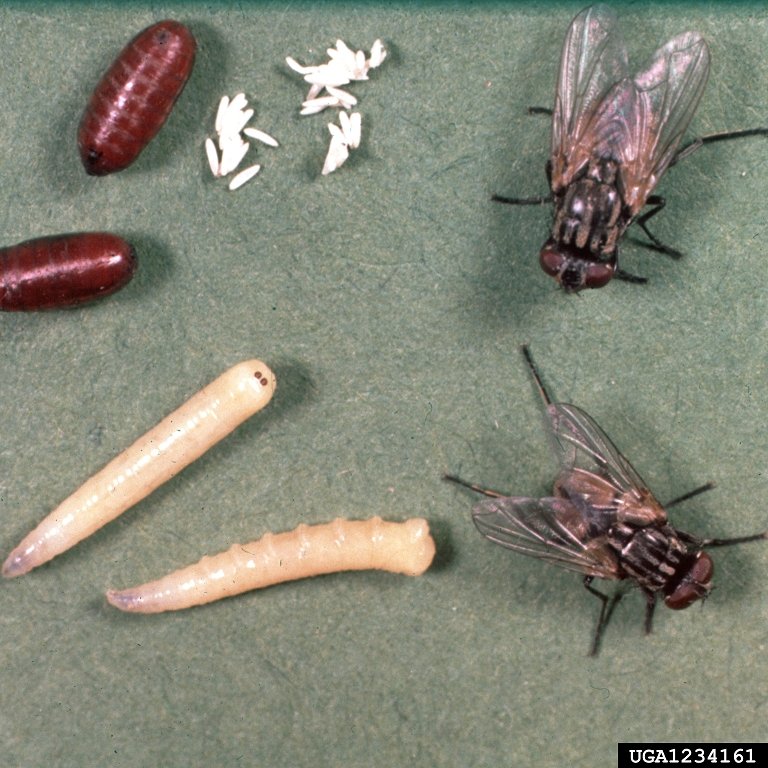
House fly and blow fly eggs are pale, elongated grains about a millimeter long — think miniature rice, laid in clusters of dozens to 150 that read as a patch of off-white granules or a tiny clump of wet sawdust. You’ll essentially never find them anywhere dry, exposed, or clean: females deposit only into moist organic material that can feed larvae the moment they hatch — garbage, decaying food, pet waste, drain sludge, compost, and carrion. Fruit fly eggs are far smaller (functionally invisible, laid into the skin of overripe fruit and the film in drains), and flesh flies skip eggs entirely, depositing live larvae. The identification that matters practically: white grains + wet organic material + any flies nearby = egg site, and an egg site found is a problem nearly solved — because unlike the flies, the eggs can’t flee.
Eggs hatching in a day is why a fly problem escalates so fast. Finding what they are laying on is pest control in Dayton.
The Hatch Clock: Why Fly Eggs Are a Same-Day Problem
The numbers set the urgency. A female house fly lays up to 500 eggs across her few weeks, in batches of ~75–150, and in summer warmth those eggs hatch in as little as 8–24 hours. The larvae (maggots) feed for three to five days, pupate for another three to six, and the emerging adults are laying their own eggs within two days — the seven-to-fourteen-day generation loop our fly lifespan page walks in full. The practical translation: an egg site discovered today is a maggot site tomorrow and an adult bloom next week. There is no “deal with it this weekend” tier for fly eggs in July — but the flip side is just as strong: destroy the site today and you’ve deleted a hundred flies with two minutes of unglamorous work no spray can match.
Destroying an Egg Site (the Two-Minute Protocol)
- Bag and remove the material — the eggs’ food source IS their nursery; out of the house, sealed, into the outdoor can. This alone ends most sites.
- Boiling water or a hot-wash for surfaces and containers that stay — heat kills eggs and young larvae instantly and chemically-free. A kettle poured down a suspect drain or over a can bottom is the classic.
- Scrub the residue — eggs sit in a film of the material that attracted the female; soap and a brush remove both the survivors and the scent invitation for the next one.
- Skip the insecticide — sprays on eggs underperform heat and removal, contaminate the surface, and do nothing about the wet material that will simply host the next laying. The egg site’s cure is sanitation wearing rubber gloves.
- Then find the pattern: one egg site is an incident; recurring sites mean a standing attractant — the can that needs a rinse routine, the drain that needs the biofilm treatment, the forgotten produce drawer.
The Question Nobody Asks Out Loud: Fly Eggs on Food
Here it is, answered plainly. If you caught a fly landing on dinner: relax — a touch-and-go landing deposits pathogens worth washing off but essentially never eggs; laying takes sustained minutes on suitable (wet, decaying) material, and your fresh burger doesn’t qualify. If food sat out longer — the picnic casualty, the counter chicken, the “how long has that been there” discovery — and you can see white grains: discard it without ceremony. And if someone in the house already ate something that later showed eggs: in nearly all cases nothing happens — stomach acid handles fly eggs, and accidental ingestion passes unnoticed; genuine intestinal trouble from fly larvae is a rare, medically-documented oddity associated with heavy contamination, not a picnic mishap. Wash what the fly walked on, toss what the fly colonized, and reserve the worry for the garbage can’s schedule — which is where the actual risk lives.
Egg-Site Geography: Where to Hunt by Species
- House flies: garbage cans (under the liner especially), pet waste, compost, garbage disposal splash zones, forgotten produce. The can’s bottom film is the #1 residential site.
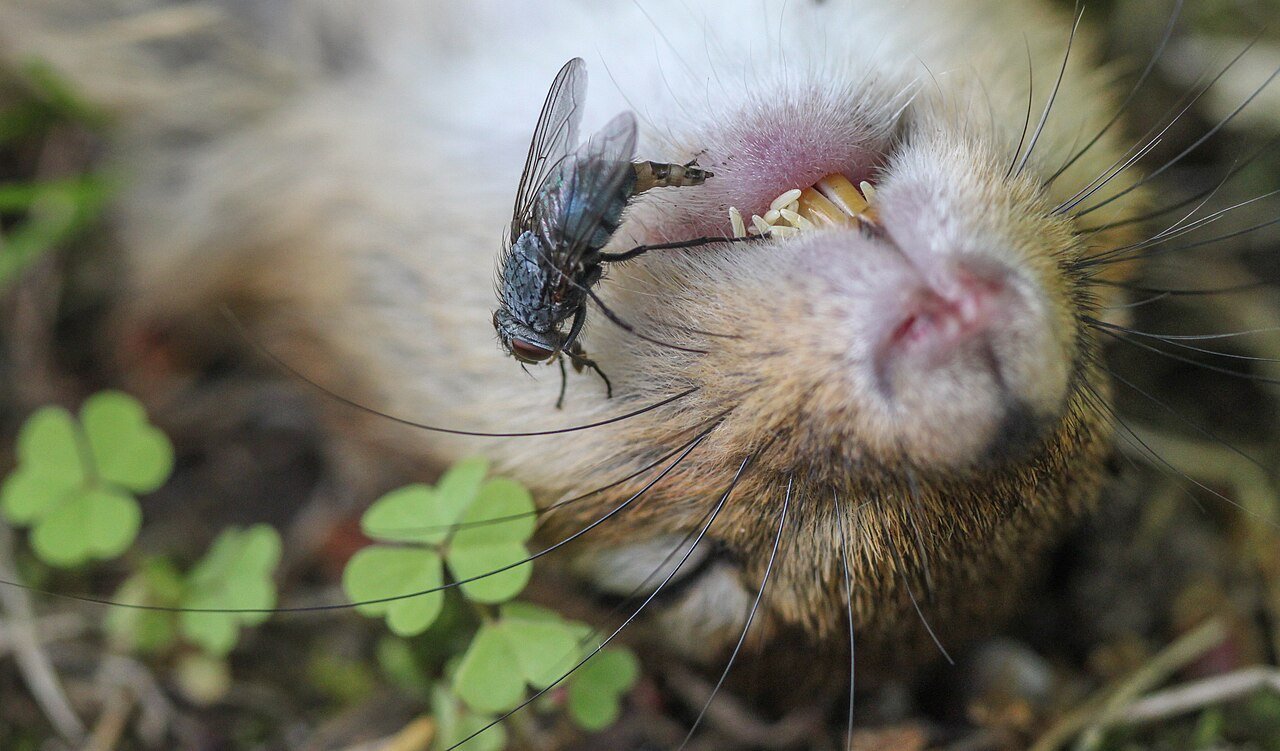
- Blow/bottle flies: meat scraps, carrion — the trash after chicken night, or the wall-void mouse our burst-decoder page covers.
- Fruit flies: into the skin of overripe produce, drain gunk, recycling residue (beer cans, juice bottles), mop heads and wet rags.
- Drain flies: the gel film inside drains and overflow holes — eggs you’ll never see; the film is the tell and the target.
- The seasonal note: every clock above assumes summer warmth; spring and fall stretch hatching to 2–3 days and winter suspends outdoor laying entirely — which is why fly problems that persist in January are always indoor-source problems.
When Egg Sites Keep Refilling: the Escalation Line
One found-and-destroyed site needs nobody. Call when the sites recur despite clean habits — that pattern means a producer you haven’t found: a failed drain seal breeding beneath the floor, a chronic moisture pocket, a deceased animal restocking blow flies on a schedule, or (in multifamily and food-service settings) a neighbor’s or shared-space source outside your control. Our version of the hunt brings the inspection cameras, the drain diagnostics, and the same-week clock — and in commercial kitchens, the standing monitoring program that keeps egg-site discovery ahead of the health inspector’s. Serving Dayton and all of Montgomery, Greene, Miami, Clark, Warren, Butler, Preble, and Darke counties.
Egg Sites as Diagnosis: Reading What You Found
An egg site is a message about your house, and reading it prevents the sequel. Eggs in the trash can say the can’s hygiene cycle lost to the laying cycle — the fix is cadence (bags sealed, can rinsed, lid seated), not vigilance. Eggs on food left out say the kitchen’s reset routine has a gap the summer exploits; counters cleared and produce refrigerated closes it. Eggs in a drain’s splash zone say biofilm — the scrub-and-enzyme protocol, not the kettle alone. Eggs somewhere inexplicable — a closet, a wall gap, under an appliance — say something organic is decaying where you can’t see it, and that’s the finding that earns the flashlight session or the call, because females don’t waste eggs: wherever a fly invested her clutch, larvae can live. That grim little rule is the most useful sentence on this page — it means every egg site, however baffling, is proof of a food source at exactly that spot, and the hunt can trust the fly’s judgment even when yours is stumped.
It’s also why this page pairs with the flea egg and bed bug egg files in our library: across species, the egg stage is where infestations are cheapest to end — stationary, concentrated, and placed by the parent exactly where your attention should go. The adults are the alarm; the eggs are the address.
The Maggot Interlude (What Hatches, and What It Tells You)
Since egg finds and maggot finds are the same discovery a day apart, the short version of the next stage: house and blow fly larvae are cream-colored, legless, tapered cylinders that grow to about half an inch over 3–5 days — size maps to age, so uniform small maggots mean the site is fresh this week. A column of full-grown larvae marching AWAY from the material means feeding just ended and pupation is being sought — vacuum or sweep the parade into a sealed bag now, because that single minute deletes the adult bloom otherwise due in about a week. The dark rice-grain pupal cases you may find later in corners are the aftermath, and useful forensics: they date an infestation you never saw. The full larvae-to-adult mechanics, along with the sudden-swarm decoder, live on the blow fly page — this page’s job ends where the eggs do, which is exactly where yours should start.
Prevention: Winning the Laying War Weekly
Because a female fly scouts continuously and lays within minutes of finding qualifying material, prevention is simply a schedule that keeps qualifying material scarce: garbage bagged sealed and cans rinsed on a monthly rhythm (the bottom film is the county’s most productive nursery); pet waste on daily pickup in fly season; compost enclosed or hot; drains on the enzyme cadence; produce triaged twice weekly with the ripe moved to refrigeration; and disposals run with cold water past the splash zone. None of it is new advice — it’s the same boring sanitation gospel every fly page in this library preaches — but the egg lens explains WHY it works: you’re not repelling flies, you’re failing their real-estate inspection. A female that finds nothing worth an egg clutch moves to the neighbor’s, and the whole seven-day compounding machine never starts on your side of the fence. In fly control, the cheapest victory is the nursery that never opens.
(One respectful nod before the FAQ: the same eggs this page teaches you to destroy are, in sterile lab form, the seed stock for the FDA-cleared maggot therapy modern wound care quietly relies on, and the timing tables forensic entomologists use began as egg-hatch observations. The house fly’s nursery schedule has saved limbs and solved murders. In your trash can, though, it remains fair game.)
Bottom line: fly eggs are the one stage of a fly problem that can’t run, hide, or reproduce — a stationary target on a 24-hour fuse. Find them, bag them, boil the spot, fix the schedule that fed them, and the summer’s compounding math starts working for your house instead of against it.
Frequently Asked Questions
What do fly eggs look like?
Pale, elongated grains about 1mm long — miniature rice — laid in clusters of dozens to 150 in wet organic material: garbage, decaying food, pet waste, drain sludge, carrion. Never on clean, dry surfaces. Fruit fly eggs are far smaller and effectively invisible inside overripe produce.
How long do fly eggs take to hatch?
As little as 8–24 hours in summer warmth; 2–3 days in cooler weather. Egg to egg-laying adult runs 7–14 days, which is why one overlooked site becomes next week’s hundred flies — and why destroying a found site today is worth any spray tomorrow.
How do I kill fly eggs?
Remove and bag the material they’re in (it’s both nursery and food), pour boiling water over surfaces and drains that stay, and scrub the residue film. Heat and removal outperform insecticide on eggs every time — sprays are the wrong tool for this stage.
What if a fly landed on my food — did it lay eggs?
Almost certainly not. Laying requires sustained minutes on wet, decaying material; a landing deposits germs worth washing off, not eggs. Food left out long enough to show white grains gets discarded — and accidental ingestion of eggs, for the record, virtually always passes without any effect; stomach acid wins.
Why do I keep finding maggots in my trash can?
The can’s bottom film is the #1 residential egg site: females lay through liner gaps into the residue, and summer heat runs the 24-hour hatch. The fix is a routine, not a product: sealed bags, a monthly can rinse (a splash of cleaner), lid seated, can out of afternoon sun.
Do all flies lay eggs?
Nearly all — the notable exception is flesh flies, which deposit live larvae, skipping the egg stage and shortening the timeline. Fruit flies lay into produce skins and drains; house and blow flies into garbage and carrion; drain flies into pipe film.
Are fly eggs dangerous?
The eggs themselves aren’t — the hazard is what they mark: material contaminated enough to raise a brood, visited by flies that walk between waste and food. Treat an egg find as a sanitation alarm with a 24-hour snooze button, not a health emergency.
When should I call pest control about fly eggs?
When sites recur despite clean habits — that means an unfound producer: a broken drain seal, a wall-void carcass, chronic moisture, or a shared-building source. Recurring egg sites are a hunt, and the hunt is the part we’re equipped for.