Bradford is the county’s railroad town — a village of about 1,800 that the Pennsylvania Railroad’s Columbus–Indianapolis line called into being, straddling the Miami–Darke county line with a self-assurance that once brought presidential whistle-stops to its platform (Woodrow Wilson campaigned from a train here in 1912). The roundhouse era ended, but the town it built remains: the brick blocks along Miami Avenue, the railroad museum keeping the story, the grain elevator working the harvest, and every October the Bradford Pumpkin Show — one of Ohio’s oldest street fairs — filling downtown with floats, midway food and several tons of prize pumpkins. Greater Dayton Pest & Rodent serves Bradford entire, both sides of the county line: ants, mice and rats, wasps, termites, mosquitoes, spiders, roaches and bed bugs, on the northwest loops that already run Covington and Piqua. (937) 569-3330 — or book online.
Looking for an exterminator in Bradford? That is this, under a newer name — a licensed technician, not a subcontractor sent by a national brand.
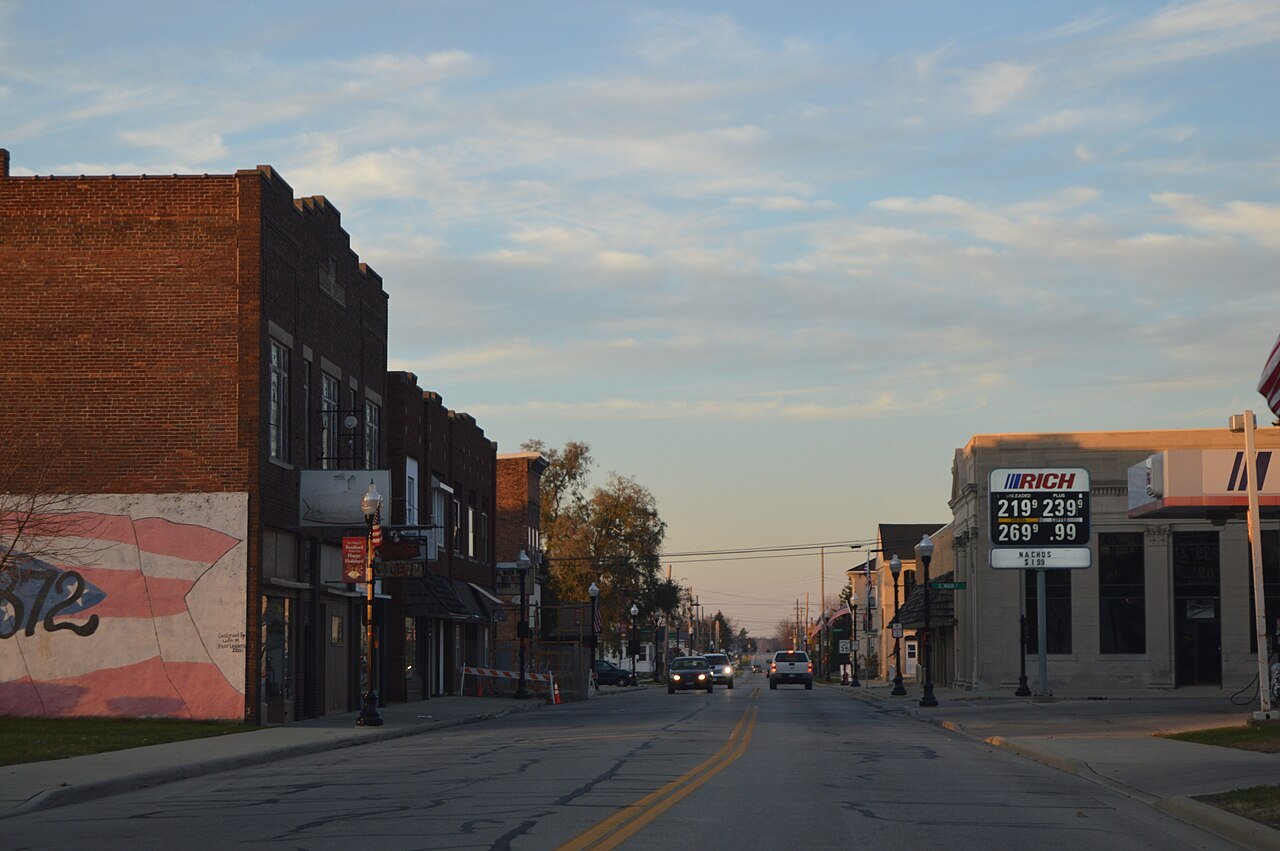
Railroad-town bones: what the Pennsy left behind
A railroad town’s pest map is written by its founding industry a century after the industry leaves. The rail corridor itself — active track plus the wide old right-of-way where the yards and roundhouse stood — is a linear ecosystem running straight through town: gravel ballast and brushy margins that move rodents the way the county’s rivers move them elsewhere, with the corridor doctrine applying in full to every backyard that touches it. The housing followed the payroll: tight streets of workers’ cottages and foursquares built fast in the boom decades, balloon-framed and cellar-doored, plus the handsome brick of the Miami Avenue blocks where the merchants banked the railroad’s money. Boom-built stock shares a signature — speed over fuss — which means generous gaps at sills and returns that a twelve-doors inspection reads quickly and reversible exclusion closes for good. And the grain elevator working beside the tracks anchors the food map the way elevators always do: a permanent calorie bank whose rodent pressure radiates outward on a harvest schedule, managed properly with perimeter grids and the documentation grain buyers ask for.
The Pumpkin Show: October’s festival doctrine
Most of the valley’s festivals land in June or September; Bradford’s glory is October, and that changes the pest arithmetic in interesting ways. By Pumpkin Show week the yellowjacket colonies are past their Labor Day peak but at their hungriest — cooling weather and dying colonies make late workers desperate, and desperate wasps work funnel-cake row harder than August ones ever did. Meanwhile the midway’s sugar weekend coincides exactly with the field-mouse migration’s main event: harvest is done, nights are cold, and downtown’s lit, warm, crumb-rich blocks are the best advertisement in the township. So the festival doctrine runs a special edition here: pre-Show wasp patrols in the second week of October (desperation-phase colonies close to the route), vendor-corridor monitoring through the weekend, and — the Bradford twist — the post-Show sweep doubling as the downtown blocks’ fall exclusion window, because the mice the midway advertised to are house-hunting that same week. One more octoberism: several tons of display pumpkins soften on the square by Sunday, and soft pumpkin is fruit-fly and picnic-beetle chum — the cleanup’s speed is half the pest plan, and the village runs it well.
Two counties, one town, one standard
Bradford’s county line runs through the middle of town — Miami County on one side, Darke on the other — and pest pressure has never once checked the plat. Neither do we: both sides ride the same loop at the same published prices, and the county line’s only practical meaning is which courthouse records the deed. It’s worth saying because rural households are used to service-area fine print — the frustrating discovery that a company’s map ends at an invisible line a quarter mile short of the lane. Ours ends where the customers do. The northwest loops thread Bradford, Covington and Pleasant Hill on a standing schedule, the priority lane reaches the whole town at no markup, and the farm lanes running toward Gettysburg and the Darke County grain get the same campus quoting as everything else on the roster.
The grain economy’s pest calendar
Bradford sits in serious grain country — the flat, productive square miles where Miami and Darke counties blur together — and the agricultural calendar governs the village’s pest year more directly than anywhere else on our roster except the Preble villages. February–March: winter populations speak up in the boom-era walls; exclusion weather. April–May: planting dust, waking ant files, swarm watch in the oldest stock, wasp queens prospecting the eaves and the elevator’s sheltered corners. June–August: the growing season’s steady state — mosquito work where the corridor and the ditches hold water, wasp management as colonies build, the summer’s routine defense. September: the anchor visit as harvest begins — perimeter treatment at yellowjacket peak, exclusion ahead of the migration. October: Bradford’s signature month — the Pumpkin Show’s doctrine week and the migration’s main event, handled as one combined campaign. November: post-harvest farm audits; the elevator’s winter grid checked. December–January: interior follow-ups, museum-quiet downtown, and next season priced before it starts.
Farm campuses on both sides of the line
The townships around Bradford run the farm-campus doctrine at full scale: house, barn, machine shed, feed room and grain storage quoted as one system, because that’s what they are. The rules don’t change at the county line: feed room hardened first (sealed containers, its own twelve doors), barn populations managed with bait geometry the cats can live with, the farmhouse sealed the same visit, everything re-read after harvest when the pressure re-sorts. Equipment sheds get spring queen patrols before the overwintered wasps found June’s nests; livestock operations get fly-management honesty (sanitation first, chemistry second, because the manure schedule outvotes any spray); and the growing rural-residential class — five acres, a pole barn, chickens — gets the honest scaled-down version: your mini-campus runs mini-campus rules, and the coop is the feed room.
The corridor houses: living along the right-of-way
The houses backing the rail corridor — and there are many, in a town the railroad laid out — run a specific profile worth naming. The brushy right-of-way margins are rodent housing and rodent highway at once; ballast holds heat that extends the fall movement season; and the corridor’s length connects every backyard on it to the grain landscape at both ends of town. Corridor-backing households get the corridor protocol: exclusion checked annually rather than eventually (the pressure is standing, not episodic), perimeter defense on the corridor side treated as the front line, brush-line honesty at the property boundary (the six feet you keep clear is worth more than the sixty you can’t control), and monitoring that reads movement before it becomes residency. It’s the same doctrine the river towns run against their wooded banks — Bradford’s river is just made of steel and gravel, and it floods with mice instead of water, every October, on schedule.
Why Bradford calls us
- Both counties, one price: the Miami–Darke line means nothing to our routes — the whole town and its townships ride the northwest loops at published rates.
- Railroad-town literacy: corridor doctrine for the right-of-way, boom-era exclusion for the workers’ stock, elevator-grade rodent grids where the grain is.
- October fluency: the only pest company on the roster with a Pumpkin Show playbook — desperation-phase wasps, migration-week exclusion, soft-pumpkin cleanup counsel.
- Two honest tiers: one-time jobs at posted prices; the Protection Plan’s re-treatment guarantee when you want the year owned.
- Photo-first triage: text the evidence to (937) 569-3330 — free identification before any truck rolls, honey bee swarms referred to beekeepers free, always.
Bradford questions, answered straight
Mice show up every October like the train still runs. Why, and what stops it?
Harvest plus first frost plus a corridor town equals scheduled migration — the fields empty, the nights turn, and the warmest, crumb-richest structures win the lottery. What stops it: September exclusion (the twelve doors found and sealed before the migration files), corridor-side monitoring where you back the right-of-way, and the workmanship guarantee backing the seal. The clockwork is the vulnerability — a scheduled invasion can be met at the door, on schedule.
Does the elevator make the whole town’s mouse problem worse?
It makes the town’s mouse ecology bigger, but a well-run elevator — and Bradford’s is well-run — manages its own perimeter hard, because grain contracts demand it. What the elevator’s presence really means for households: the ambient population never drops to zero, so the village’s baseline defense (sealed foundations, honest sanitation) matters more than in a town without a calorie bank on Main Street. Your house doesn’t need the elevator’s program; it needs its own twelve doors shut. That’s achievable, guaranteed, and cheaper than the reactive alternative every single year.
We’re on the Darke County side. Do we call somebody else?
No — same trucks, same day, same prices. The service map follows the loop roads, not the auditor’s plat, and half of Bradford would be orphaned by county-line fine print. If your lane runs west toward Gettysburg or north toward the Darke grain, you’re still on the loop; the county page maps the roster and the service-area hub shows the whole eight-county valley.
Wasps get vicious at the Pumpkin Show. Is that normal?
It’s normal and it’s biology: October colonies are dying, their larvae (the adults’ sugar source) are gone, and the workers turn desperate exactly when the midway opens. That’s why the pre-Show patrol targets the desperation-phase nests near the route, and why the honest personal advice is October-specific: keep drinks lidded, dump cans promptly, and treat any lawn nest discovered in Show week as a call-us item — agitated October colonies are the year’s worst DIY candidates. Sting allergies get priority routing at no surcharge, Show week included.
Do it yourself, or call?
The split, railroad edition: a reachable paper-wasp umbrella in June, a rain-week ant line, one mouse in a tight modern garage — DIY territory, guides on the house. The call list: October lawn nests (see above), anything in a wall or soffit void, any termite evidence in boom-era stock, farm-scale rodent pressure, bed bugs, bats always, and any problem outlasting its third store-bought fix. Recurrence means a condition; conditions need diagnosis; the photo line diagnoses free.
Termites, the museum, and keeping the boom-era stock standing
Bradford’s building stock is a boom-era time capsule — fast-built, wood-rich, and now a century-plus into the termite experiment — and the town’s memory institutions (the railroad museum’s collection among them) hold wood that is genuinely irreplaceable. Our termite logic here follows the standard county doctrine with a boom-town emphasis: moisture-first inspection (the fast builders were casual about grade lines, and a century of settling has buried more than a few sills), monitoring-first protection (bait systems watching the soil beat one-time barriers around rubble foundations), and annual checks in the oldest stock as the cheap line on the ledger. Bryan’s 10A/10B licenses cover treatment; Category 12 covers the WDI inspections that village home sales order; and heritage wood — museum stock, the oldest survivors — gets the reversible, collection-safe handling the county’s other institutions already receive. A town that keeps its history in wooden buildings should keep a termite program on retainer; it’s the cheapest insurance the collection will ever buy.
Landlords and the village portfolio
Bradford’s rentals — the flats over the Miami Avenue blocks, doubles in the workers’ grid, farmhouse leases in the townships — get the full landlord program: per-door pricing, direct-tenant scheduling, per-unit documentation, shared-wall protocols where one boom-era roof covers two leases. The corridor rentals earn a special line: units backing the right-of-way carry standing rodent pressure the lease can’t manage, so the owner’s plan covers the corridor side explicitly. And the October ledger gets quoted to every owner honestly: one migration-week exclusion pass per unit costs less than one February emergency call — in a railroad town, every single year.
What the whistle-stop town teaches
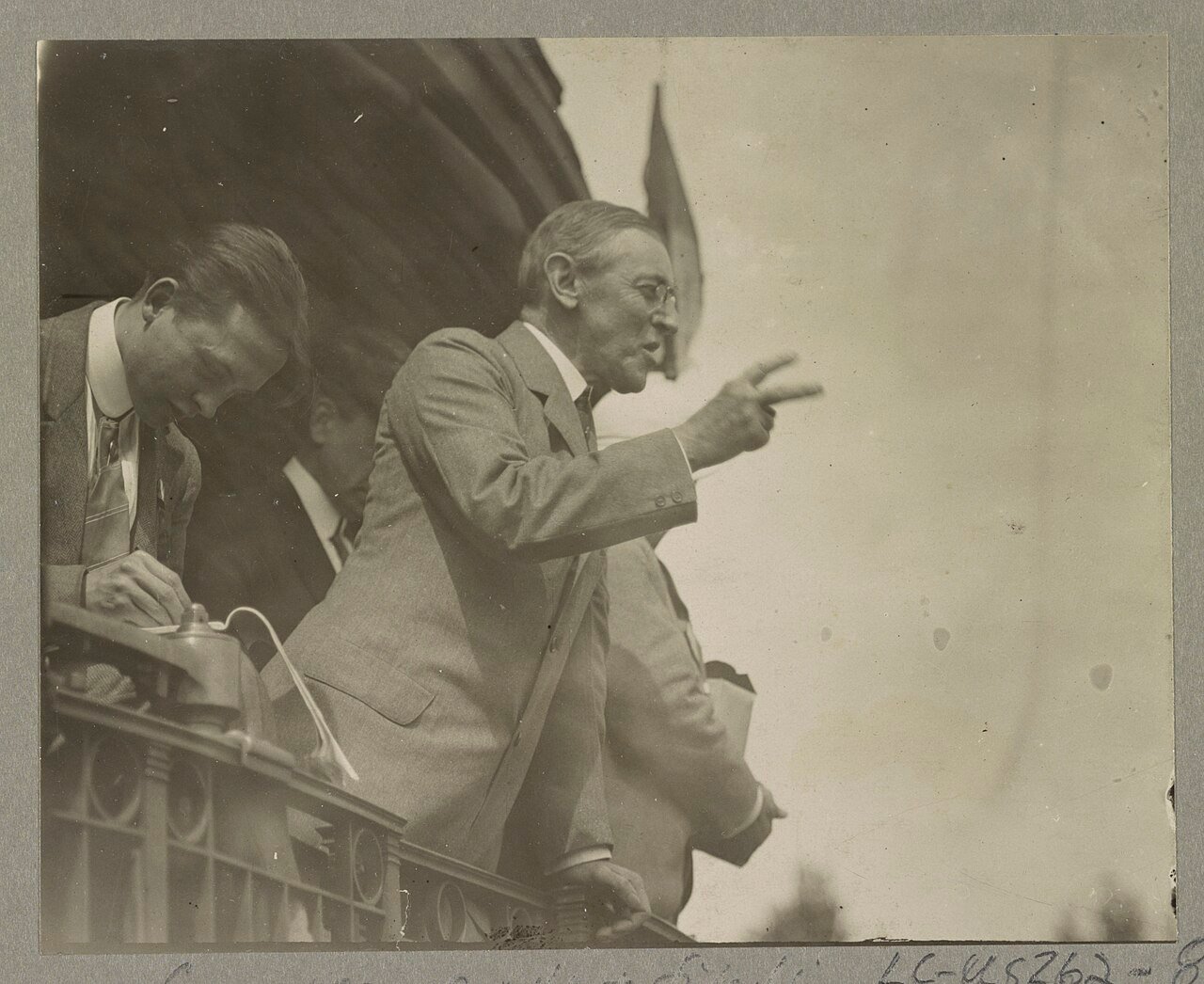
There’s a reason the 1912 photograph — a presidential candidate working the crowd from a train platform in a village of two thousand — still feels right in Bradford. Railroad towns understood schedules as a form of respect: the train came when the board said it would, the freight moved on time, and the town’s whole economy ran on kept appointments. That’s the ethic a route company owes a town like this. The loop comes when the schedule says; the September and October work lands in September and October, not whenever dispatch gets around to it; the quote quoted is the price charged; and the migration that arrives on the harvest’s timetable gets met by defense on the same timetable. Pest control in grain country is fundamentally a scheduling discipline — the pests keep better calendars than most companies do — and Bradford, of all towns, can judge whether a service runs on time. We intend to pass that inspection every year.
From the Arnold Block’s brick to the last grain lane over the Darke line, the railroad town is on the roster and the roster runs on time: Covington, Pleasant Hill and Piqua on the same loops, the eight-county map behind it all. Text a photo to (937) 569-3330, take the free identification and the straight quote, and let’s put your address on a schedule the Pennsy would have approved of.
The mosquito file: ditch country’s honest answer
Bradford’s mosquito pressure runs on drainage rather than rivers — the field ditches, the culverts under every township road, the low corners where tile outlets pool after storms — and flat grain country holds its water longer than the valley’s slopes. The honest program: barrier treatments on your own vegetation knock down the resting adults and re-apply through the season; larval-source discipline on your own quarter-acre (gutters, troughs, the tarp over the wood pile, the kiddie pool) removes the breeding you actually control; and the ditch network keeps producing regardless, because nobody treats a township’s drainage and nobody should. Measured expectation, reliably met: treated yards get their porch evenings back — the difference between hosting a cookout and surrendering one — and livestock places get the added counsel that trough hygiene and manure timing move more mosquitoes than any fog ever will. It’s the least glamorous file on the page and the one August thanks us for most.
One more schedule note, because this town appreciates them: new customers who call in late summer get the September-October double — anchor visit and migration-week exclusion — as one planned sequence, which is the single best-value fortnight of pest work the grain belt offers. The board says the train’s coming; meet it at the platform. Bradford’s file is open, the northwest loop runs weekly, and the whistle-stop town’s winters are about to get railroad-quiet.
From roundhouse days to Pumpkin Show nights, the town the railroad built keeps its appointments — and now its pest calendar does too. Welcome aboard, Bradford.
The line is open, the loop is scheduled, and the platform’s yours — one photo starts everything.
Who actually turns up in Bradford: Greater Dayton Pest & Rodent is owned and operated by Bryan Camden, licensed by the Ohio Department of Agriculture — firm #115079, commercial applicator #170858, categories 10A, 10B and 12. When you call, you talk to the person who does the work. No call center, no rotating crews, and the same technician on every visit.
Frequently asked questions
Do you provide pest control in Bradford?
Yes — the railroad village on the Miami-Darke line sits on our county rotation; every address gets the full program.
What pests are most common in Bradford?
Rail-town farm-belt files: the harvest rodent surge (the county’s defining event, felt hard here), older-stock foundation mice, grain-adjacent stored-product pests, barn wasps, and the September flights off the surrounding acreage.
How much is pest control in Bradford?
County formula, no edge-of-county premium: most homes $39–$55/month quarterly; one-time flat; campuses walked. Free: (937) 569-3330.
Does the rail corridor affect pest patterns?
Modestly and classically — rail rights-of-way run rodent highways and harbor the brush that feeds edge pressure; corridor-adjacent properties get the exclusion emphasis and sentry-trap standard.
Why do Bradford’s older houses get October mice?
Age plus acreage — the housing stock’s accumulated doors meet the farm belt’s field population at first frost. September masonry-appropriate sealing beats November trapping; the route calendar exists for it.
How fast can you reach Bradford?
Weekly rotation despite the distance — days typically, priority arranged, no travel charges.
Do you serve Bradford businesses?
Yes — village storefronts and the ag operations alike, matched programs and documentation included.
What stored-grain pests show up here?
The farm-belt suite — weevils, flour beetles, and the rodent seed-caching that seeds wall-void infestations; the stored-product protocols plus exclusion consulting fit the grain-adjacent properties exactly.
Is the Protection Plan worth it in Bradford?
Farm-adjacent and older-stock houses: clearly — the standing pressure and accumulated doorways make quarterly maintenance the cheap option. The first-call triage stays honest either way.
How do I start service in Bradford?
Instant quote, free photo ID, or (937) 569-3330 — free estimates, route-day scheduling, first visits typically within the week.