
Yes — stink bugs can fly, and fly surprisingly well for something shaped like a tiny shield. Adult brown marmorated stink bugs carry two pairs of fully functional wings folded flat beneath that armored back, they cruise at a lumbering few miles per hour with a loud, droning buzz that most people mistake for a much larger insect, and in fall dispersal mode they can cover more than a mile a day — laboratory flight-mill tests have clocked individuals at several kilometers in a single session. If one just helicoptered past your lamp and sent the household diving, that’s normal, that’s the season, and this page is the full answer behind the quick one: how stink bug flight actually works, why it’s so loud and so clumsy indoors, when and why they take to the air (the fall answer explains the bug in your living room right now), whether the nymphs can fly (no — and that matters), and what any of it means for keeping them out of a Miami Valley house. From Greater Dayton Pest & Rodent — whose fall invader treatment exists for exactly this insect’s October habits — with the free photo ID line as always: (937) 569-3330.
How a shield flies: the mechanics under the armor
Stink bugs are “true bugs” (Hemiptera), and their flight kit is classic for the group: the visible shield is partly the folded forewings — leathery at the base, membranous at the tips, snapped shut like a case over the body — and beneath them lie the hindwings, the broad membranous panels that do the actual flying. Takeoff is a small mechanical ceremony: the case wings lever open, the hindwings unfold, and the insect launches with the wing pair beating in the slow, high-amplitude style that produces the signature drone — a low buzz far louder per gram than a fly’s whine, because big wings beating slowly move big pulses of air. In flight they’re stable but graceless: strong enough to hold a heading across a soybean field, clumsy enough that indoor flights end in lampshade collisions and drapery landings, and the “dive-bombing” a startled household reports is mostly poor cornering at face height. Two flight facts worth keeping: they are strong-light seekers after dark, which is why evening flights orbit lamps and TV glow; and they’re warmth-triggered, which is why a bug that’s been dormant in a wall void all December suddenly performs aviation across the den on the first furnace-warmed evening of a cold snap.
They fly well enough to find the warm side of your house every October, which is why sealing beats reacting. See pest control in Dayton.
The fall flight: why the sky fills in October
Most of the year, stink bug flight is short-hop commuting — plant to plant through gardens, orchards, and row crops, where the species does its real damage as an agricultural pest. The aviation event that concerns homeowners is fall dispersal: as days shorten and the harvest strips their food, adult stink bugs enter a migratory mode, flying — sometimes a mile-plus per day for days on end — in search of overwintering shelter, and orienting toward exactly the target your house presents: tall, sun-warmed, southwest-facing surfaces. This is the massing behavior our fall invader guide covers across the whole cast (stink bugs, Asian lady beetles, boxelder bugs, cluster flies): the warm-wall staging afternoons in late September and October, the gap-seeking crawl into soffits, siding seams, and window frames, and the winter of dormancy in your wall voids that follows. Flight is the delivery mechanism for the entire problem — which is also why the defense calendar is what it is: the exterior barrier treatment goes on before the staging flights peak, the sealing happens in summer or after frost, and the household that watches the first local field come down knows its air-traffic forecast a week out. Farm-adjacent suburbs — Huber Heights’ north edge, Fairborn’s Bath Township line, Springboro’s new rings, rural Xenia and Lebanon — sit directly under the flyways and feel it worst.
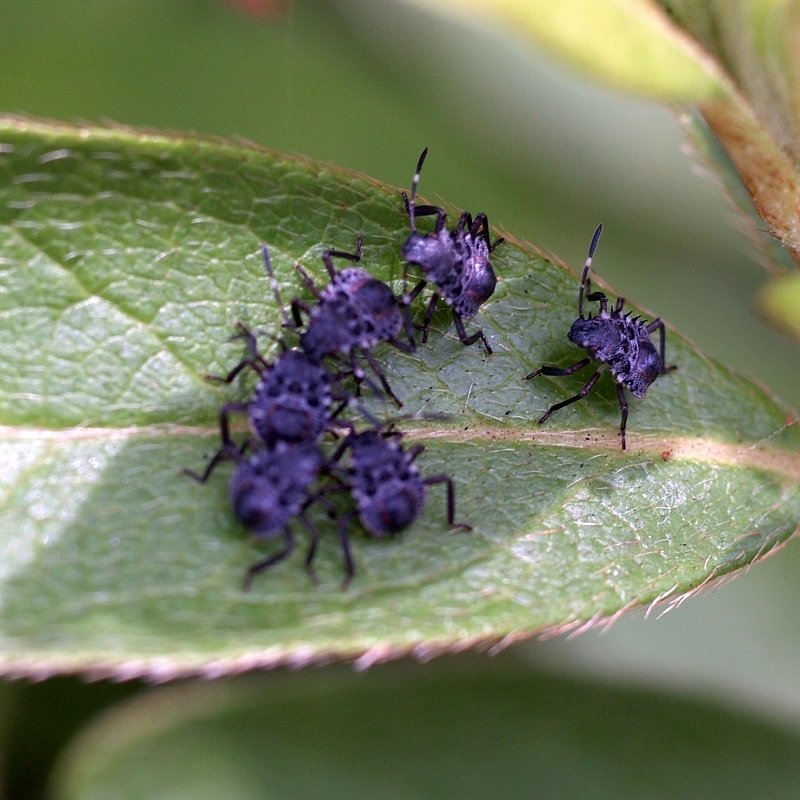
The flightless months: nymphs, and why they change the diagnosis
Here’s the detail that makes flight knowledge practically useful: stink bug nymphs cannot fly. From hatch through five juvenile stages, they have only wing buds — flight arrives with the final molt to adulthood in late summer — so every nymph you find walked to where it is. Outdoors that’s trivia; indoors it’s a diagnosis. An adult buzzing your lamp in January is the expected story: it flew to your wall in October, wintered in a void, and warmth woke it. But nymphs indoors in early summer mean eggs hatched indoors or immediately adjacent — a female overwintered in your walls, emerged inward instead of outward in spring, and laid her barrel-cluster of eggs on a houseplant, a window herb garden, or the patio planters at the door. It’s uncommon and it’s actionable: find the plant hosting pale, banded little nymphs (they cluster on the egg mass at first), relocate or rinse it, and you’ve closed a nursery no fall barrier could have caught. The same wing logic reads the seasons in reverse — a fat, full-winged adult on the September screen is inbound traffic; a wingless straggler on the June sill is outbound history — and reading traffic direction correctly is half of timing the defense.
Flying stink bug FAQ — the questions the buzz always raises
- Will a flying stink bug bite or sting me? No — the mouthpart is a plant-juice straw, folded under the body, useless as a weapon; the worst a panicked flyer delivers is a startle, a bump, and (if swatted) the smell
- Why is the flight SO loud? Big membranous wings at low beat frequency — a bass drone rather than a fly’s treble whine; in a quiet room it reads two sizes larger than the insect
- Do they fly at night? They’re day-active by nature but strongly light-drawn after dark — the evening living-room flight is a woken bug orienting to the brightest thing it can find, which is your lamp, then your TV, then unfortunately your forehead
- How far can one fly? Routine hops: yards. Fall dispersal: a mile-plus per day, with flight-mill records several times that — your October visitors may have crossed half a township
- Can they fly in winter? Only indoors: outdoor cold grounds and kills them, but a furnace-warmed void keeps flight muscles operational all season — hence the January den flight
- Does the smell come out when they fly? Not from flying — the scent glands fire on threat or crushing; a cruising bug is odor-neutral until intercepted, which is the argument for the cup-and-card over the swat
Indoor air traffic control: the calm capture protocol
The right response to an indoor flyer is unglamorous and works every time. Kill the lights it’s orbiting and turn on one lamp in a corner you don’t mind it visiting; it will re-orient and land within a minute — they always land. Cup and card the landed bug (or run the dedicated-jar method: an inch of soapy water in a wide-mouth jar, held under the bug while you nudge it — the drop-and-done reflex takes them straight in), and escort it out or let the soap finish it odorlessly. Never swat, never vacuum with a bagless machine — both trigger the scent glands, and a bagless vacuum will exhale stink bug for a week (a shop vac with a stocking-covered nozzle or soapy water in the tank is the volume-capture tool for heavy days). And log where indoor flyers keep appearing: repeat launches from one ceiling corner, fixture, or window head map the void they’re wintering in — exactly the intelligence the spring sealing pass on our fall invader page spends first. A household that captures calmly, logs locations, and books the September barrier has converted the loudest insect in the living room into a minor scheduling note.
Flight versus the region’s farms: the bigger stakes behind the buzz
The homeowner meets stink bug flight as a nuisance; the region’s growers meet it as an economic force. The brown marmorated stink bug’s strong dispersal flight is exactly what made it — within two decades of its East Coast arrival — a first-rank agricultural pest across the Midwest: it commutes between wild hosts, orchards, vegetable plots, and row crops all season, punching its feeding straw into apples, peaches, peppers, tomatoes, sweet corn, and soybeans and leaving the dimpled, corky “cat-facing” damage that downgrades produce. Miami Valley market growers and orchardists run trap networks and threshold scouting against it, and the annual fall flight off the soybeans is the same event that fills suburban walls — one insect, two audiences, identical calendar. For gardeners the practical inheritance is scouting: check tomato and pepper clusters from July on, hand-pick into soapy water in the morning cool when the bugs are sluggish, and know that the barrel-shaped egg clusters (pale green, geometric, undersides of leaves) wipe off in seconds if you find them first. And a hopeful note from the research world: the samurai wasp — a tiny parasitoid that specializes in stink bug eggs, no threat to anything else — has established in Ohio and is quietly clipping the population’s growth curve; the long game against this invader is being flown by something the size of a sesame seed.
The one-screen answer
- Can they fly? Yes — adults have full wings under the shield; loud droning flight, clumsy indoors, capable of a mile-plus per day in fall dispersal
- Nymphs can’t — indoor nymphs in summer mean an indoor/adjacent egg source (check the houseplants); winged adults indoors in winter mean wall-void winterers waking to warmth
- Why it matters: flight is the delivery system for the October wall-massing — the fall barrier goes on before staging flights peak, sealing happens summer or post-frost
- Indoor protocol: lights down, let it land, cup-and-card or soapy jar — never swat, never bagless-vacuum
- No bite, no sting, no breeding indoors — noise and odor are the whole threat profile
- Heavy pressure? Farm-adjacent addresses under the flyways: (937) 569-3330 — barrier treatments book by the forecast, and September slots go fast
Loud, armored, mile-flying, and ultimately harmless in the living room — the stink bug’s flight is more impressive than its threat, and now both are fully on record. The insect answered the title question the moment it buzzed your lamp; this page just filled in the flight plan.
Ohio’s other shield-backs: which stink bugs share the airspace
The brown marmorated invader dominates the conversation, but Ohio’s airspace carries a full squadron of shield bugs, all flying on the same wing plan, and a few are worth telling apart. The green stink bug — bright leaf-green, larger than the marmorated — is a native garden regular whose fall flights occasionally bring it to sunny walls, though it rarely winters indoors in numbers. The brown stink bug (the native one, no white antenna bands) works the same crops with less invasive-species drama. The rough stink bug, bark-gray and flattened, is a camouflage specialist that startles wood-pile handlers and is largely a predator of other insects — a resident worth tolerating. The spined soldier bug, with its pointed shoulders, is actively beneficial: a stink bug that hunts caterpillars and beetle larvae, sold commercially as biological control, and routinely executed by gardeners who couldn’t tell it from the pest. And the western conifer seed bug — technically a leaf-footed bug, honorary squadron member — is the fall’s other loud indoor flyer, distinguishable by the leaf-like flags on its hind legs and already profiled on our kissing bug look-alikes page, where it moonlights as a false alarm. The identification stakes are gentle — none of them bite, all of them fly the same clumsy indoor patterns — but the soldier bug’s case alone justifies the photo habit: (937) 569-3330, where “good bug, let it go” is a verdict we deliver with genuine pleasure.
The stink bug flight calendar for the Miami Valley
- April–May: overwintered adults emerge from voids and fly OUT — short, purposeful morning flights toward green space; the outbound season, and the week to note which soffit corners produce departures (they mark your sealing list)
- June–July: plant-hop commuting in gardens and field margins; egg-laying on host undersides; the flightless nymph generations grow — indoor sightings should be near zero, and any nymphs indoors point to a houseplant nursery
- August: the new adults finish their final molt and take their first flights; garden pressure peaks; scouting and hand-picking season for growers
- September–October: THE flight event — harvest plus shortening days launch dispersal; warm afternoons after cold nights fill southwest walls; barrier treatment window opens with the forecast and closes with sustained frost
- November–March: grounded outdoors, dormant in voids indoors — except the furnace-triggered living-room sorties that make January’s loudest insect a bug that flew in three months earlier
Twelve months, one wing plan, and a defense calendar that beats the flight calendar by exactly one step when it’s run on time — which is the entire trick, and the reason the fall invader program books by the weather map rather than the month. The buzz over your lamp tonight filed its flight plan in October; next year’s can be denied boarding at the wall: (937) 569-3330.
Why a flight question earns a full page
It might seem like a lot of words to spend on “can stink bugs fly,” but the question is secretly load-bearing, and answering it properly reorganizes a household’s whole relationship with this insect. Flight explains the arrival (October’s mile-a-day dispersal, not some breach in your housekeeping), the indoor winter appearances (voids plus furnace warmth, not reproduction — they never breed inside), the noise (big wings, slow beat), the defense calendar (barrier before the flights, sealing around them), and even the diagnosis of the rare genuine indoor problem (flightless nymphs meaning an indoor egg source). Every piece of practical advice on this page hangs off the aerodynamics — which is true of more pest questions than people suspect, and is why this site keeps answering the “silly” ones at full depth alongside the emergencies. The insect that interrupted your evening is a capable long-distance flyer, a terrible indoor pilot, a harmless houseguest, an expensive farm pest, and a solved problem for any household running the fall calendar — all of which you now know because you asked whether a shield-shaped bug has wings. It does. Ask us anything: (937) 569-3330.
Postscript for the curious: the stink bug’s flight drone has one more secret — researchers eavesdrop on it. Because the wingbeat frequency is distinctive, agricultural scientists have tested acoustic sensors that count dispersing stink bugs by sound, and orchardists already time their defenses to trap counts that spike exactly when the flights do. Your living room, in other words, is running the same detection program every October evening, one drone at a time — and unlike the researchers, you get the satisfaction of the cup-and-card at the end. Science, pest control, and a quiet lamp: everyone wins except the passenger.
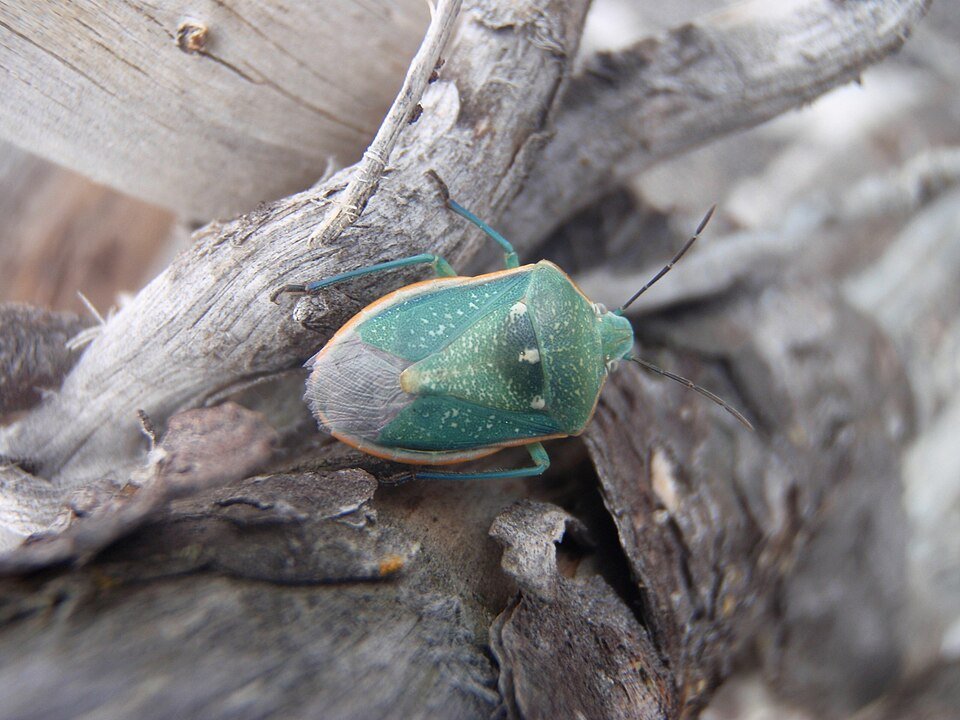
Frequently asked questions
Can stink bugs fly?
Emphatically — brown marmorated stink bugs are strong, capable fliers, covering miles on seasonal flights between crops and overwintering sites. The clumsy indoor helicoptering that prompts the question is navigation failure, not flight failure.
Why do stink bugs fly so badly indoors?
They navigate by light gradients and open sky — a lamp-lit room scrambles both, producing the drunken circling and lampshade collisions. Outdoors on migration they are competent; your living room is an instrument-failure environment.
Why do stink bugs fly at my face or TV?
Brightness targeting — the lit screen or the lamp behind you is the brightest silhouette in the room, and the approach is a crash-landing attempt, not an attack. Move the light source and the traffic follows it.
How far can stink bugs fly?
Flight-mill studies clock multi-mile capability in a day — ample range to commute from any bean field in the county to your siding. Which is why source-distance is no protection and the September seal-and-barrier program is.
Do stink bugs fly in winter?
Indoor wanderers manage short, sluggish hops on warm days — wall-void sleepers waking with depleted reserves. The competent flights are seasonal: the September arrival and the April departure.
What is the buzzing sound when they fly?
Wingbeats plus body resonance — the shield shape is not aerodynamic, and the loud, laboring buzz makes the insect sound bigger than it is. Harmless noise from a harmless flier.
Do all stink bugs fly — even the babies?
Nymphs cannot — wings arrive with the final molt to adulthood. Any stink bug flying at you is an adult; the smaller banded nymphs you meet outdoors in summer are pedestrians on the host plants.
Can stink bugs fly through window screens?
No — intact screens defeat them completely; they enter through gaps, not mesh. Every indoor stink bug walked through an opening somewhere; the flight just delivered it to the wall.
Should I swat a flying stink bug?
No — a mid-air hit triggers the spray and can stain whatever it lands on. Let it land, then jar-and-card or bottle-drop it; patience is the odor-free method.
Why does knowing they fly matter for control?
Because it explains the whole problem: no yard treatment stops multi-mile fliers from arriving — only the sealed envelope and the timed September barrier intercept them at the wall. Flight range is the reason the defense is architectural: (937) 569-3330 for the September slot.