
Stink bug eggs are one of the garden’s small geometric marvels — and one of its most useful early warnings: perfect barrel-shaped capsules glued in tidy rows of twenty-some to leaf undersides, weeks before the fall wall invasion those eggs will eventually staff. Finding a cluster in June is a preview of October’s houseguests; recognizing it is the cheapest stink bug control on the calendar (a thumbnail ends twenty-eight future wall-sitters in one scrape); and confusing it with the LOOK-ALIKE eggs — some of which belong to the garden’s best allies — is the mistake this page exists to prevent. The full file: what brown marmorated stink bug eggs actually look like, where and when to find them, the hatch-to-house timeline that connects June leaves to October siding, the crucial friend-or-foe egg key, and the honest answer to whether egg-hunting is worth your summer.
The identification: barrels in formation
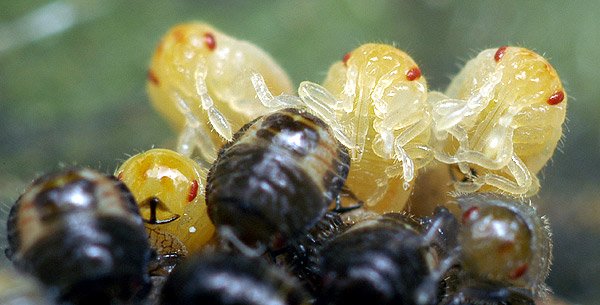
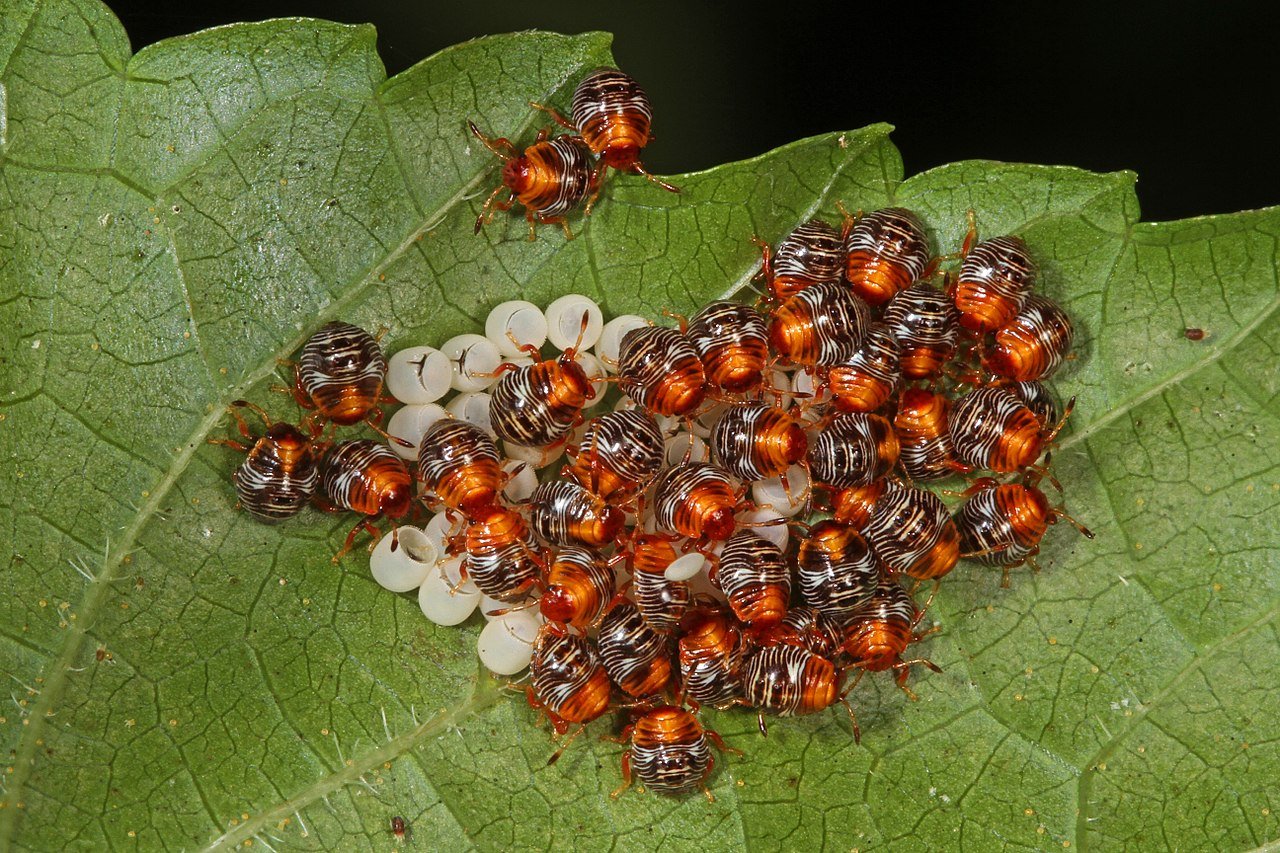
Brown marmorated stink bug eggs read like manufactured goods: light green-to-pale white barrels, a millimeter and a half each, laid in tight hexagonal-packed clusters of 20–30 (28 is the textbook count) on the undersides of leaves — smooth-topped little kegs standing on end in rows so regular they look printed. As hatch approaches the barrels darken, and two tells confirm the species afterward: the “triangle opener” — hatched eggs show a tiny black T-shaped rupture line where the nymph’s egg-burster tooth split the lid — and the huddle: first-instar nymphs (black-and-orange, tick-mistaken constantly) cluster ON the empty shells for days before dispersing, the stage in the photo above and the single most-photographed stink bug moment on our line. Host leaves to check first: the documented favorites — tree of heaven, catalpa, paulownia, redbud — plus the food crops (beans, tomatoes, peppers, sweet corn) and, in flyway yards, practically any broadleaf within range of the bean fields.
A June cluster is the cheapest control there is. If October already brought them inside your walls, that is what our pest control in Dayton is built to handle.
The timeline: June leaves to October siding
The egg calendar explains the whole domestic stink bug year. Overwintered adults — the ones that spent winter in your walls per the stink-bugs-in-house file — emerge in spring, feed, and begin laying in late May; Ohio runs one full generation plus a partial second, with egg-laying continuing into August. Each female banks up to 400 eggs across her season in those 28-count installments; eggs hatch in four to seven days; nymphs run five instars over roughly five weeks; and the adults maturing from July-and-later clutches are precisely the cohort that answers September’s shortening days by flying to your sunny south wall. The arithmetic that makes June scouting pay: every cluster scraped before hatch is 28 wall-siders subtracted from October — and every female that never matured is 400 eggs unlaid next year. The leaf-underside habit is the fall defense’s earliest checkpoint; the September barrier and Labor Day sealing remain its main line, but the egg patrol is the one phase where a thumbnail outperforms every product in the file.
Friend or foe: the egg-cluster key that protects your allies
The scrape-everything instinct destroys allies, so the key earns its place. Scrape (foe): the pale barrel clusters above (brown marmorated), plus the green stink bug’s similar kegs and the squash bug’s bronze diamonds on cucurbits. Protect (friend): lacewing eggs — single white ovals each atop a hair-thin STALK, scattered like tiny lollipops (aphid-destroyer nurseries; the stalk is unmistakable); ladybug eggs — bright YELLOW-ORANGE spindle clusters standing on end (the aphid patrol’s next shift); and assassin bug eggs — brown bottle-clusters per yesterday’s page, the wheel bug’s security-staff academy. Verify first (wildcard): the parasitized cluster — stink bug eggs gone BLACK with a tiny exit hole per barrel mean samurai wasps (the specialist egg parasitoid tracking the invasion) already did your work: leave blackened clusters in place; they are wasp nurseries now, and the tiny alumni hunt stink bug eggs all season. Color and architecture decide everything: pale barrels scrape, stalked singles stay, yellow spindles stay, blackened barrels stay — and the photo line adjudicates the ambiguous, free.
Do stink bugs lay eggs in the house? (The winter worry, retired)
The question behind half this page’s traffic, answered flatly: no — brown marmorated stink bugs never lay eggs indoors. Egg-laying is host-plant biology (nymphs must hatch onto food they can drink), the indoor overwintering population is in reproductive diapause — a hormonal off-switch that spring daylight alone reverses — and every wall-void resident from October to April is a sterile sleeper, not a breeder. The corollaries that follow: no indoor eggs means no indoor generations (each fall’s invasion is entirely NEW recruits from the field, never descendants of last year’s guests), the February windowsill bug is a waking sleeper rather than evidence of a nursery, and “stink bug eggs” found indoors are something else — usually spider egg sacs, lady-beetle clusters near windows, or moth cocoons, all adjudicable by photo. The winter file stays what the main page says it is: tenants, not tenants-with-children — and the egg story stays entirely an outdoor, summer story.
The honest verdict on egg patrol (and what outranks it)
Is scouting leaf-undersides worth your summer? The calibrated answer: as a gardener’s habit, yes; as a homeowner’s primary defense, no. Vegetable growers and flyway-adjacent yards get real returns — clusters concentrate on the crops and favorite hosts, checks piggyback on watering, and each scrape protects produce now and walls later. But egg patrol cannot carry the fall defense alone: females fly in from the surrounding bean acreage all season, most of the regional egg-laying happens off your property entirely, and the October wall pressure reflects the COUNTY’s summer, not your garden’s. So the program keeps its established ranking — Labor Day sealing first, September barrier second for flyway houses, gentle indoor removal third — with egg patrol as the satisfying summer bonus round and the samurai-wasp protection rule as its ecological fine print. Scrape what you find, spare the blackened and the stalked, and let the main defense keep its calendar: (937) 569-3330 books the September package that does the heavy lifting.
The samurai wasp: the invasion’s countermeasure, already at work
The blackened-cluster rule deserves its backstory, because it is the best news in the whole stink bug file. The samurai wasp — a gnat-sized parasitoid that develops inside stink bug eggs — co-evolved with the brown marmorated in Asia, followed it to North America on its own (first detected stateside in 2014, spreading since), and has been documented across the Midwest doing exactly what it did at home: finding barrel clusters and converting them, one egg per barrel, into more samurai wasps. Parasitism rates in establishing areas climb year over year — some orchard studies now report the majority of wild clusters struck — which is why the invasion’s worst years may already be behind the region and why the protect-blackened-clusters rule is genuine ecological policy, not sentiment: every black cluster left standing graduates a wasp cohort that hunts eggs for the rest of the season. Homeowner participation costs nothing — scrape the pale, spare the black, skip the broadcast sprays that kill the wasp faster than the bug — and the fall wall-count quietly benefits from a war being won at the leaf level, two seasons upstream of your siding.
The eggs, in short: geometry outdoors, mythology indoors, and a friend-or-foe key worth the two minutes it takes to learn — the smallest chapter of the stink bug story, and the only one where the whole invasion fits under a thumbnail.
Frequently asked questions
What do stink bug eggs look like?
Pale green-to-white barrel-shaped capsules, about 1.5mm, glued in tight geometric clusters of 20–30 (classically 28) on leaf undersides — tiny kegs standing on end in printed-looking rows. They darken before hatch, and hatched shells show a tiny black T-shaped rupture.
Where do stink bugs lay their eggs?
Undersides of host-plant leaves, late May through August in Ohio: tree of heaven, catalpa, and redbud among trees; beans, tomatoes, peppers, and sweet corn in gardens; and nearly any broadleaf in bean-field flyway yards. Never indoors — egg-laying is strictly host-plant biology.
Do stink bugs lay eggs in the house?
No — the indoor overwintering population is in reproductive diapause (a hormonal off-switch) and every wall-void resident is sterile until spring daylight restarts it outdoors. Indoor “stink bug eggs” are spider sacs, beetle clusters, or cocoons — photo-adjudicable, free.
How many eggs does a stink bug lay?
About 28 per cluster, up to 400 per female across her season in repeated installments — the arithmetic behind the scrape-early payoff: one June thumbnail-scrape equals 28 fewer October wall-sitters, and one preempted female equals 400 fewer eggs next year.
How long do stink bug eggs take to hatch?
Four to seven days in summer warmth, followed by the huddle — black-and-orange first-instar nymphs clustering on the empty shells for days before dispersing. Five nymph stages and ~five weeks later, the adults join the fall flight roster.
What are the black stink bug eggs with holes?
The best find on the leaf: samurai-wasp-parasitized clusters — each blackened barrel raised a parasitoid instead of a stink bug, and the tiny exit holes mark graduates now hunting more eggs. Leave blackened clusters in place; they are ally nurseries.
Should I remove stink bug eggs from my plants?
Pale, viable clusters: yes — scrape into soapy water or crush; it is the cheapest control in the file. But run the friend-or-foe key first: stalked single eggs (lacewings) and yellow-orange spindles (ladybugs) are allies, and blackened barrels are wasp nurseries — all protected.
What are the tiny black and orange bugs near egg shells?
Freshly hatched stink bug nymphs in the huddle phase — tick-mistaken constantly (the acquittal: six legs, plant venue, clustered on shells). They disperse within days; a huddle found is a cluster scraped one week too late and still worth removing.
Do stink bug eggs survive winter?
No — the species overwinters exclusively as adults (in your walls, famously); eggs and nymphs end with the season. Every spring’s first eggs are laid by emerged sleepers, which is why the fall seal-out also reduces the following summer’s local egg pressure.
What kills stink bug eggs?
Mechanics beat chemistry: scraping into soapy water is total and instant, while sprays reach eggs poorly and kill samurai wasps efficiently — the worst trade on the leaf. For season-scale control, the September barrier-and-seal package remains the main event: (937) 569-3330.
The gardener’s egg-patrol route (ten minutes, twice a week, June through August)
For the yards where patrol pays — vegetable growers and flyway addresses — the efficient circuit: start at the documented favorites if you have them (tree of heaven above all — the invasion’s beloved host — then catalpa and redbud), flipping a sample of leaves at eye level; move to the garden’s stink-bug crops — bean rows first, then tomatoes, peppers, and sweet corn, checking the youngest full-sized leaves where females prefer to glue; finish at the property’s sunny south edge, the flyway’s landing strip, where any broadleaf can host. Carry nothing but thumbnail and phone: pale barrels scrape on sight, ambiguous clusters photograph for the key (or the free line), blackened and stalked finds stay untouched with a mental thank-you. Log what you scrape — a patrol that finds clusters weekly in June and nothing by August is watching the samurai wasps take over the shift, the best trendline in the whole file. Ten minutes, twice weekly, piggybacked on watering: the one stink bug chore that fits inside a garden habit you already keep, and the only one performed entirely at thumbnail range.
Barrels scraped, allies spared, wasps saluted — and October’s wall count already a little lighter for it. The rest of the stink bug year lives on the main house file and the September package; the egg chapter closes here, at thumbnail range, where the whole invasion is briefly small enough to win by hand.
Twenty-eight at a time, all summer long — happy hunting.
And for the adults those eggs would have become — the wall-siders, the winter sleepers, the September flights — the full stink bug wing stands one link away, defense calendar included.