
There’s a specific fly event that reliably ends with our phone ringing: a house that had no flies at breakfast has a dozen fat, shiny, metallic-green or blue ones bumping the kitchen window by dinner — slow, loud, seemingly from nowhere. That’s not a fly problem building; that’s a blow fly hatch announcing itself, and it almost always means one specific thing: something died in your house’s hidden spaces, and the most efficient recycling crew in nature just finished the job. This page covers the two families behind these appearances — the metallic blow flies (bottle flies) and their gray-striped colleagues the flesh flies — how to read a sudden indoor burst like an inspector, the source hunt that actually ends it, the outdoor and forensic sides of a genuinely remarkable insect, and when the burst is telling you about a bigger problem upstream (usually: last month’s mouse decision).
Meet the Recycling Crew: Bottle Flies and Their Gray Colleagues
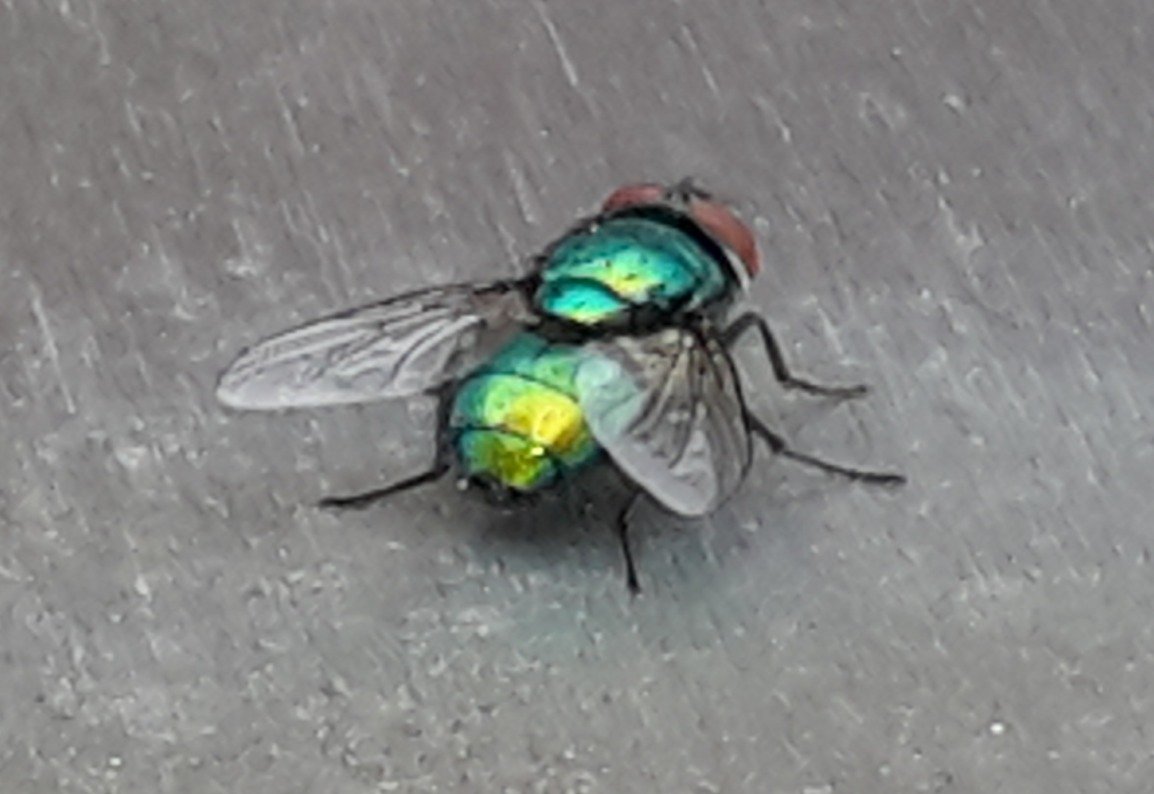
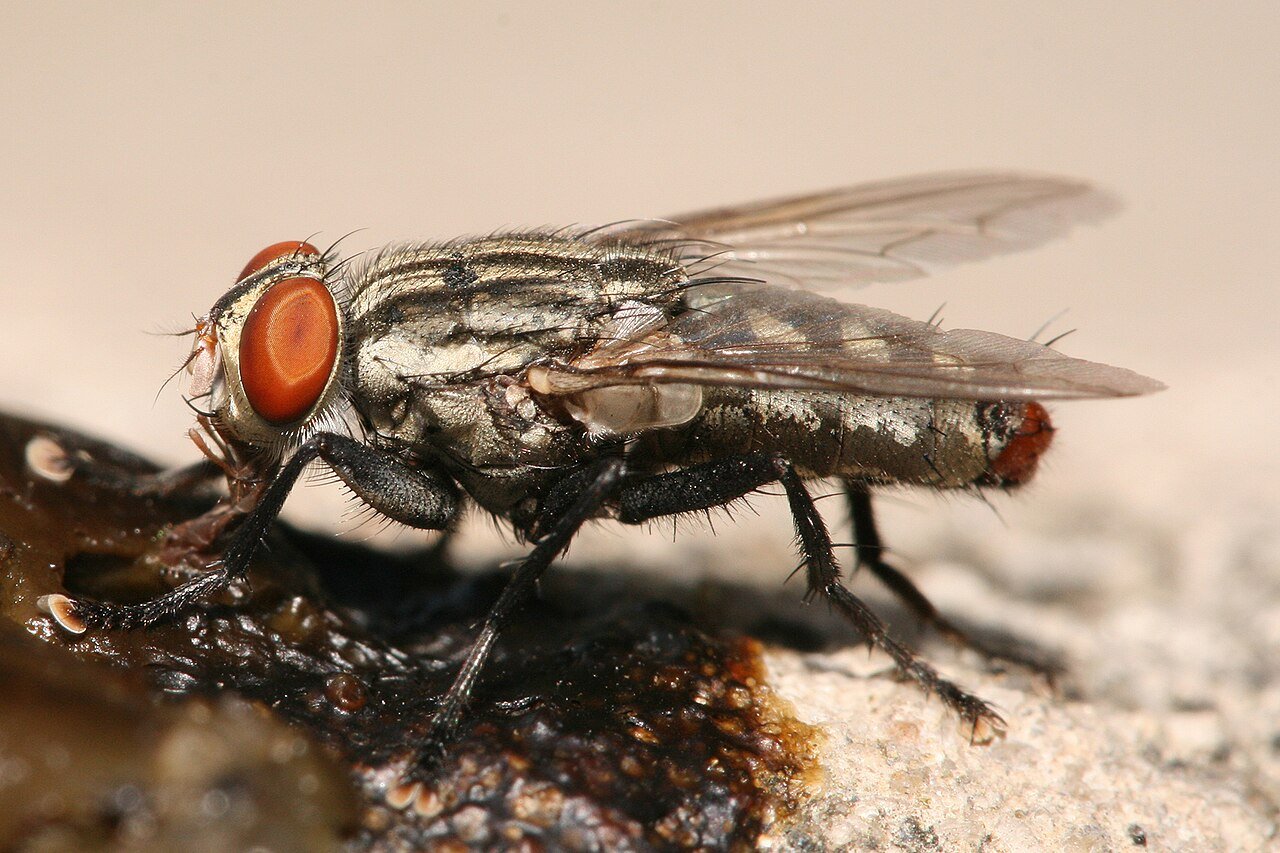
Blow flies (family Calliphoridae) are the jewel-cased ones: the green bottle fly in polished emerald, the blue bottle in deep metallic sapphire, both noticeably chunkier and louder than house flies. That armor-paint look is the fastest field mark in the fly world — nothing else shiny bumbles at your window at that size. Flesh flies (Sarcophagidae) run drabber but equally distinctive: gray with bold black racing stripes down the thorax, a checkerboard abdomen, and red eyes, typically bigger than a house fly. Both families work the same industry — carrion and decay — with one operational difference that matters for timelines: blow flies lay eggs on a source, while most flesh flies deposit live larvae, skipping the egg stage entirely and shortening the clock. Their shared talent borders on the supernatural: a blow fly can detect a dead animal from over a mile away and typically arrives within minutes of death — a fact that makes them the founding tool of forensic entomology and the fastest messengers your house employs.
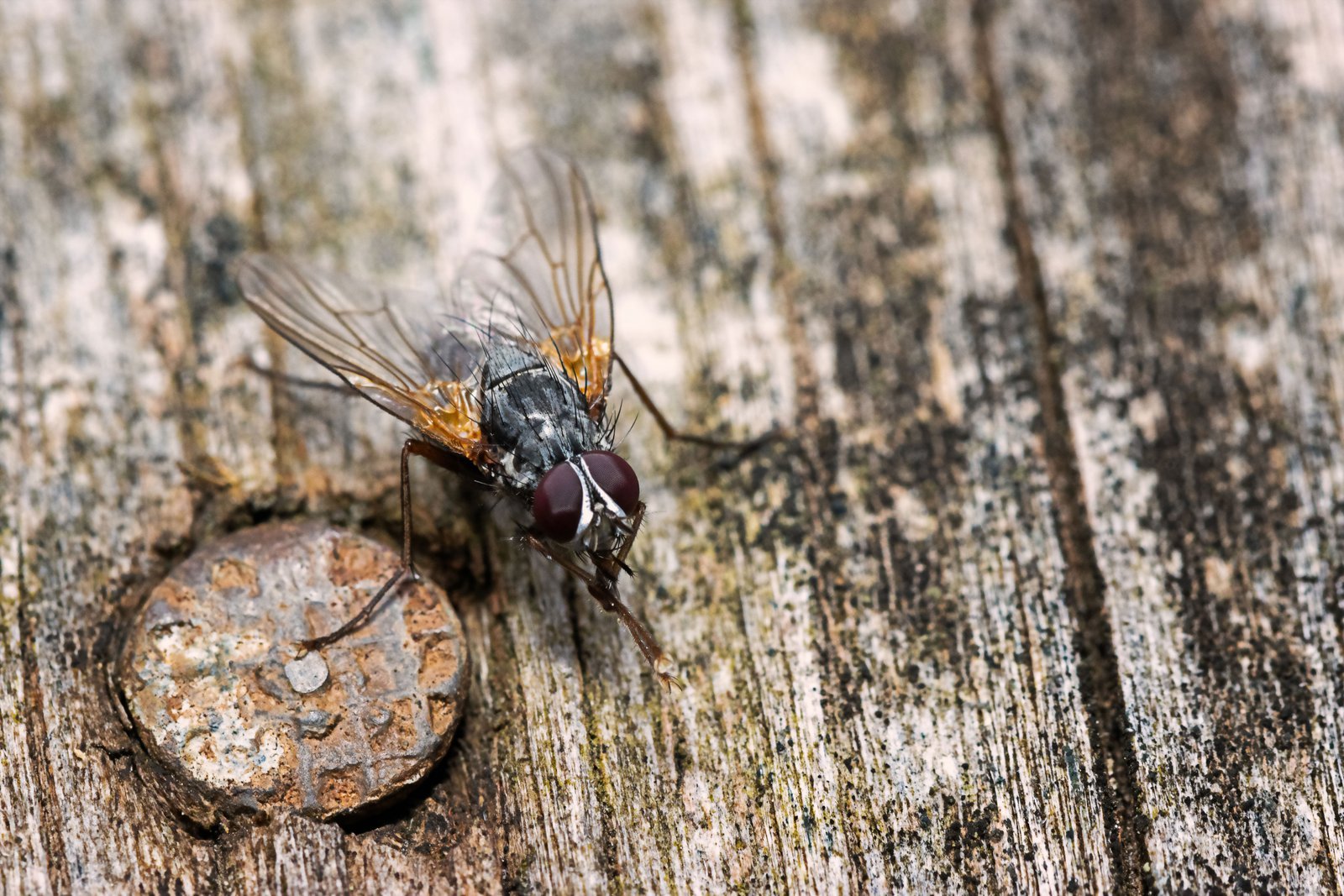
Shiny flies appearing from nowhere almost always mean something has died in a wall or a crawl. Finding it is what pest control in Dayton is for.
Reading the Burst: What a Sudden Indoor Hatch Means
Here’s the timeline behind the dinner-time surprise. A mouse (typically one that ate rodenticide — this is the single most common backstory), a bird down a chimney, or a squirrel in a soffit dies in a void. Blow flies find it through gaps you can’t see, within hours. Eggs hatch in a day; larvae feed for roughly 3–10 days; then they wander from the source to pupate — and the adult emergence two-ish weeks after the death is your dozen window-bumpers, hatching indoors and steering for light. Decoded: the flies at your window are the END of a process, not the start — the source is largely consumed, the smell (if you ever caught one) is peaking or past, and the burst will run its course in days even if you do nothing but vacuum the slow ones off the glass. The window-bumping itself is diagnostic: fresh-hatched blow flies indoors always push toward daylight. Count, note the room, and you’ve started the source map.
The Source Hunt: Finding What the Flies Already Found
- Map the flies, not the smell: note which rooms produce window-bumpers — emergence clusters within a room or two of the source. Nose is a lagging indicator; flies are real-time.
- Check the classic morgue spots in order: wall voids near recent mouse activity (put your ear and nose at outlets — remove the cover plates, they’re free inspection ports), the attic and soffits (birds, squirrels), the chimney and fireplace damper, under/behind major appliances, crawl space, and the garage’s stored-stuff strata.
- Follow the secondary witnesses: a cluster of flies at one ceiling corner, a patch of warm wall, or the arrival of dermestid beetles weeks later all triangulate the same address.
- Retrieval decision, honestly: if it’s accessible — attic floor, damper, behind the fridge — bag it gloved, disinfect the spot, done. If it’s mid-wall: cutting drywall for one mouse is usually worse than the alternative (sealed void + patience + the burst’s natural end within days). We say this against our own interest weekly.
- End the pipeline, not just the batch: the corpse got there somehow. The permanent fix is the entry-point sweep and retiring the poison program that manufactures wall-void deaths on a schedule.
The Outdoor Version: Trash-Line Ecology
Outdoors, blow and flesh flies are constant, lawful citizens — the sanitation department of every ecosystem, clearing roadkill and refuse with an efficiency no municipal service matches. They become a homeowner issue at exactly one interface: the garbage line. A can with a film of meat juice, a missed bag, a grill drip tray, or (the July classic) a diaper pail runs a blow fly nursery on a 7–10 day production cycle, and the sudden “maggots in the can” discovery is that cycle caught mid-shift. The fixes are structural, boring, and total: bags sealed, cans rinsed monthly (a splash of ammonia-free cleaner), lids that actually seat, cans out of afternoon sun, and pickup cadence matched to season. For chronic cases — multi-family dumpsters, restaurant lines — this is core commercial program territory: enclosure hygiene schedules, fly monitoring, and the documentation trail that keeps inspectors reading quietly.
When to Call: the Burst vs. the Pattern
A single burst that fades inside a week with a findable backstory needs a vacuum and maybe a stern conversation with a bait station — not us, and we’ll say so on the phone. Call when: bursts repeat (a pipeline is manufacturing carcasses — active infestation dying in your walls), flies persist beyond two weeks with no source found (larger animal, or a source you shouldn’t crawl to — been there), the numbers are wrong for one mouse (dozens daily suggests something bigger in the attic), or it’s a business where any fly is a compliance event. Our version of the hunt adds the tools that shortcut it — inspection cameras, moisture meters, the same-week schedule — plus removal, sanitation, and the exclusion work that ends the sequel. And if the backstory is rodents: the full eliminate-exclude-verify program is how the blow flies lose their supplier permanently.
Shiny flies from nowhere — or a repeat performance you’re tired of hosting? Get a quote and we’ll find what they found. Serving Dayton and all of Montgomery, Greene, Miami, Clark, Warren, Butler, Preble, and Darke counties.
The Forensic Résumé: the Fly That Testifies in Court
No insect in this library carries heavier professional credentials. Because blow flies arrive at death within minutes and develop on rigid temperature-driven schedules, forensic entomologists read their life stages like a clock — measuring larvae, identifying species succession, and back-calculating time of death with accuracy that has anchored expert testimony for over a century (the founding casebook, China’s The Washing Away of Wrongs, used fly behavior to break a murder case in 1247). The same green bottle fly bumping your kitchen window is, in other contexts, a court-qualified witness. And its résumé runs stranger still: medical-grade blow fly larvae are FDA-cleared medicine — sterile-raised maggots of this exact species debride wounds that resist every other treatment, eating only dead tissue with a precision surgeons admire. One family: crime-scene clock, wound therapy, and your ecosystem’s sanitation department. The window-bumping is honestly the least interesting thing it does.
Reading the Larvae (for the Strong of Stomach)
If the discovery point is maggots rather than flies — the trash can, the missed hamburger, the garage surprise — a ten-second read tells you the timeline: blow fly larvae are smooth cream tapered cylinders that reach roughly half an inch over 4–10 days, so size maps to age and small-plus-uniform means the source is fresh this week. A wandering column of full-sized larvae crossing a floor means feeding just ended and pupation sites are being hunted — the adult burst is 1–2 weeks out unless you vacuum the parade now (do: bag, freeze or seal, done — it’s the single highest-leverage minute in the whole timeline). Dark rice-grain pupal cases in corners and sill plates are the aftermath, and finding them without ever seeing flies solves many a cold case of “what WAS that smell in March.” None of this requires enthusiasm; it requires one look before the vacuum, which converts a gross-out into a dated incident report.
One Fly, Two Doors: Sorting the Burst From the Buzz
Because everything metallic gets called a “big fly problem,” here’s the final sort against the rest of the fly wing. A burst — many shiny flies appearing over a day or two, window-focused, fading within the week — is this page: carrion-driven, self-limiting, source-hunt appropriate. A buzz — steady daily house flies for weeks — is a breeding-site story (garbage, drains, pet waste) that belongs to the general fly playbook and its generation math. Cluster flies — sluggish, non-metallic, at windows in cold months — are the overwintering lodgers with their own file, and drain-line gnats belong to the pipe-scrubbing department. The burst is the only one of the four that solves itself; ironically, it’s also the one that generates the most panicked calls, because a dozen metallic flies at once FEELS like an invasion while three house flies a day for a month feels like weather. Read the pattern, not the shine, and the response picks itself.
(Etymology desk, closing shift: “blow fly” comes from the old term for meat visited by flies — “fly-blown” — a phrase Shakespeare used four centuries before anyone photographed a green bottle on a windowsill. The bottle names are simpler: they’re just the colors of old glass. Language keeps the receipts; the flies keep the schedule.)
Frequently Asked Questions
Why are there suddenly big shiny flies in my house?
A blow fly hatch: something died in a hidden space (most often a mouse in a wall void — frequently a poisoned one) about two weeks ago, and the new adult generation just emerged indoors and headed for your windows. The burst marks the END of the process and typically self-resolves within days once the source is spent.
What’s the difference between blow flies and flesh flies?
Blow flies wear metallic green or blue armor (bottle flies); flesh flies are gray with black racing stripes, a checkerboard abdomen, and red eyes. Same carrion industry — but flesh flies deposit live larvae instead of eggs, skipping a stage. Both indoors mean the same thing: a source.
How do I find the dead animal the flies came from?
Map which rooms produce window-bumping flies (emergence clusters near the source), then check the classic spots: wall voids near recent mouse activity (outlet plates are free inspection ports), attic/soffits, chimney damper, behind appliances, crawl space. The nose lags; the flies are real-time.
Should I cut open the wall to remove a dead mouse?
Usually no — for a mouse-sized source, drywall surgery costs more than patience: the flies finish, the smell fades in one to a few weeks, and the void stays sealed. Cut only for accessible retrieval, repeat bursts, or something clearly larger. The better spend is sealing the entries that let it die there.
Do blow flies mean my house is dirty?
No — they mean a carcass, not a housekeeping verdict. A spotless house with one expired mouse gets the same dozen window-bumpers. (The garbage-line version outdoors IS hygiene-driven: sealed bags, rinsed cans, seated lids end it.)
How long does a blow fly infestation last?
A single-source burst runs days to about a week as the cohort emerges and dies at the windows — they cannot re-breed without another source. Persisting or repeating flies mean an ongoing supply: an active rodent die-off, a bigger animal, or a garbage/drain issue wearing the wrong costume.
Are blow flies dangerous?
They don’t bite, but they’re serious mechanical contaminators — carrion to countertop is exactly the route you’d design to move bacteria. During a burst: cover food, wipe surfaces they’ve walked, and vacuum the slow ones rather than swatting them over the fruit bowl.
Why do blow flies keep coming back every month?
That cadence is a supply chain, and its usual name is a rodent poison program — each bait death in a void feeds the next hatch. Swap poison for trapping, seal the entry points, and the blow flies lose their vendor. It’s the most common “recurring fly” fix we deliver.