
Oxford is a town of very old trees and very old houses, and carpenter ants like both. The mature hardwoods that line the streets around the Mile Square and shade the older neighborhoods drop limbs, hold dead wood, and leave stumps, and every one of those is a potential parent colony within easy foraging distance of a porch. The houses themselves supply the second half: century-old framing, porch roofs that have been reflashed more than once, and window sills under paint that has been failing for years. The ants are usually the symptom. The water is the problem.
Carpenter Ants and the Water Behind Them
Carpenter ants are the large black ants, a quarter to a half inch long, most active after dark and most conspicuous in spring. They excavate galleries to nest rather than feeding on wood, and the galleries are clean and smooth inside, almost sanded — which is how they are distinguished from termite damage, where galleries are packed with soil and mud. The tell-tale evidence is frass: coarse, sawdust-like shavings mixed with insect fragments, piling up below a small opening.
On Oxford houses the moisture sources repeat with real consistency. Porch roofs where flashing at the house wall has been patched rather than replaced. Window sills and casings under old paint. Framing behind a bathroom that was tiled decades ago, or added when a house was subdivided into units. Chimney chases taking water at the flashing. Box gutters on the larger homes. A rear addition whose roof ties into the main house at a valley that has never quite worked.
That is why we look for water first. A colony treated without correcting the leak that made the wood habitable will be replaced by another colony, often in the same cavity, within a couple of seasons. It turns a pest quote into a maintenance conversation, which is frustrating for an owner who wanted a simple answer, but it is the sequence that actually holds.
Parent Colonies in the Street Trees
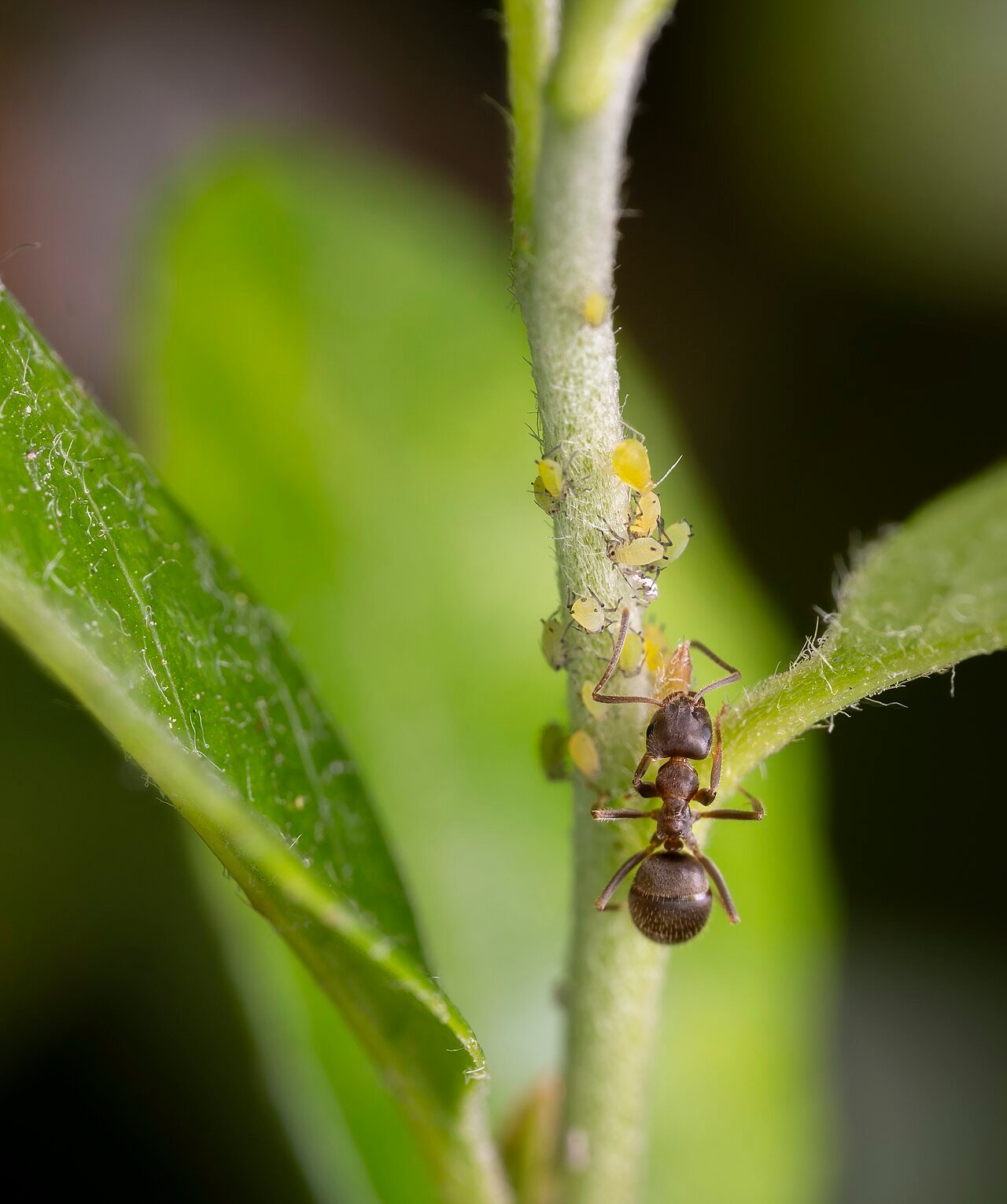
Carpenter ants operate as a parent colony plus satellites. The parent colony, holding the queen and the developing brood, is very often outdoors — in a stump, a dead limb high in a mature street tree, a section of buried construction lumber, or an old landscape timber. Satellite nests, holding workers and older larvae, are what end up inside a structure.
That means finding and treating a nest in a wall is frequently only part of the job. If the parent colony is in the silver maple at the curb or in a neighbor’s dead limb, it will keep producing satellites and the house will keep hosting them. Following the trails after dark, when the ants are genuinely active, is the practical way to work out which direction the traffic runs and where the outdoor source sits.
On lots this size the parent colony may well not be on your property at all. That is not a reason to give up — treatment and exclusion at the structure still work — but it does explain why some houses here need a maintenance approach rather than a single visit, and we would rather say that plainly than pretend one treatment settles it forever.
The Small Ones and Why Spraying Backfires
The small dark ant trailing across a kitchen counter in April is almost certainly the odorous house ant. Crush one and it smells faintly of coconut or spoiled citrus. It causes no structural damage, but it is genuinely difficult to eliminate for a reason worth understanding before anyone reaches for a spray can.
These colonies have many queens rather than one and exist as networks of connected nests rather than a single central colony. Attacked with a contact insecticide, they bud — queens split off with workers and establish new satellite nests away from the disturbance. One trail behind the dishwasher becomes four trails in four rooms, and the household has spent money making the problem harder. Bait works instead, because foragers carry it back and share it through the colony by mouth-to-mouth exchange, reaching queens and brood no surface spray will touch.
Pavement ants are the other common species, and Uptown Oxford and the older neighborhoods give them plenty of habitat: brick walks, stone stoops, and concrete porches poured decades ago, all sitting on a sand base. The visible sign is small piles of excavated sand along joints, and in spring, swarms of winged ants from a walk seam or basement floor crack. Ants have elbowed antennae, a pinched waist, and forewings longer than the hind wings; termites have straight antennae, no waist, and four equal wings.
- Coarse frass below a small hole — an active carpenter ant gallery, with a water problem behind it.
- Large black ants after dark — follow the trail at night to find the outdoor source.
- Small dark ants trailing indoors — odorous house ant. Bait it, never spray it.
- Sand piles along brick walks and stoops — pavement ants in the base beneath.
- Porch flashing, window sills, and box gutters — the three recurring moisture sources here.
What Treatment Involves
For carpenter ants, treatment targets the nest rather than the trail, which means locating it first. That involves following activity after dark, listening at suspected cavities, checking the moisture sources, and sometimes accepting that a cavity has to be opened to be treated properly. Non-repellent materials matter here, because ants pass through them without detecting them and carry material back, where a repellent product would simply cause the colony to relocate somewhere less convenient.
For odorous house ants, it is a matched bait program with follow-up. The first forty-eight hours after baiting often look like failure as activity increases, because a food source has just been placed and recruitment does what recruitment does. Spraying at that moment destroys the process exactly when it is working. Bait selection also has to match what the colony currently wants, since colonies shift between carbohydrate and protein preference through the season.
For pavement ants, treatment goes at the nest under the hardscape rather than the trail indoors, which is why a perimeter spray on a kitchen baseboard accomplishes so little. On old brick and stone work that usually means treating along joints and at the slab edge rather than lifting anything.
Across Butler County
Hamilton southeast has comparable older stock and the same carpenter ant profile, College Corner is west, and Eaton is north in Preble County.
General service is on the Oxford pest control page, and since carpenter ants are wood-destroying insects, the WDI inspection covers them alongside termites.
Frequently asked questions
Why do I keep finding big black ants in the same room?
Because there is almost certainly a satellite nest in a wall or ceiling cavity there, in wood that water has softened. Carpenter ants nest in damp wood rather than eating dry wood, so the recurring room usually sits under a leak — porch flashing, a window sill, a chimney chase, or a box gutter.
What is the difference between carpenter ants and termites?
Carpenter ants excavate wood to nest but do not eat it, and their galleries are clean and smooth with coarse frass pushed out below. Termites consume wood and pack their galleries with soil. Both appear on a WDI report, and both should be identified correctly before anyone quotes treatment.
Do I have to fix the leak?
If you want it to stay fixed, yes. A colony treated without correcting the moisture that made the wood habitable is usually replaced by another within a couple of seasons. It turns a pest quote into a maintenance conversation, and that is the honest sequence.
The nest might be in a street tree. Then what?
It happens constantly here. Carpenter ants run a parent colony outdoors — a stump, a dead limb, buried lumber — and satellites indoors. Treatment and exclusion at your structure still work, but a nearby off-property source is why some houses need a maintenance approach rather than one visit.
Why did spraying make my small ant problem worse?
Odorous house ants respond to contact insecticide by budding — queens split off with workers and start new nests away from the threat. One trail becomes several in several rooms. Bait works instead because foragers carry it back and share it with queens and brood.
There are more ants since you baited. Is it failing?
No, that is expected in the first forty-eight hours. Bait is a food source, so recruitment rises before the colony declines. The material is slow-acting deliberately so foragers survive long enough to share it. Do not spray the trail during that window.
Are the winged ants coming out of my walk termites?
Check three things. Ants have elbowed antennae, a pinched waist, and forewings clearly longer than the hind wings. Termites have straight antennae, no waist, and four equal-length wings shed in piles. Spring swarms from a walk seam or basement floor crack are usually pavement ants.
Is sand between my bricks a problem?
It is pavement ants nesting in the sand base beneath the walk or stoop — a nuisance rather than a structural issue. Treatment targets the nest under the hardscape rather than the trail indoors, which is why spraying a baseboard accomplishes very little.