
Stand anywhere in West Milton — the village core, the school, the newest cul-de-sac — and you are, at most, a couple of blocks from crop ground. That single geographic fact runs the whole local ant story. In the bigger suburbs, we talk about “edge habitat” as the special condition of the properties backing to fields; in a village this size, ringed by corn and beans and stitched through by the Stillwater corridor’s tree lines, there is no interior — every lot is edge. Ant control in West Milton starts from what we call the one-block rule: the field’s ant economy reaches your foundation no matter your address, the seasonal waves hit the whole village at once, and the treatment logic that works is the rural playbook, applied inside town limits.
What the Fields Send
Crop ground runs its own ant calendar, and the village inherits it wholesale. Spring belongs to the moisture-followers: odorous house ants nesting in the field margins and tree lines wake with the soil, and the first sustained wet week sends foragers down every fencerow and sidewalk crack toward the kitchens — the whole village reports them the same fortnight. High summer is the pavement ant season in the village core, where the older sidewalks, curbs, and stone-foundation houses of the historic blocks offer the joint-and-crack real estate that species colonizes best. Then the post-harvest shift: when the combines run, the fields’ insect economy collapses at once, and the late-September push of everything mobile — ants included — tightens against the buildings for the warm margin. It’s the same wave the mice ride, on the same calendar, for the same reason: the village is the best remaining habitat in a suddenly bare township.
The Village-Core Complication
West Milton’s older houses add the structural layer: century frames on stone or early-block foundations, porches on brick piers, and the settled grade of a village platted in the 1800s. Ants read a stepped-back mortar joint the way mice do — as a door — and the odorous house ant’s talent for satellite colonies means a wet spring can put a nest in a porch pier, a wall void, and the mulch line simultaneously. The classic village-core mistake is the repellent spray at the kitchen baseboard: on a budding species it’s colony mitosis, splitting one nest into three and moving the problem two rooms over. The fix is the opposite tool — non-repellent baits the workers carry home, placed on the actual trails, timed to the spring recruitment surge.
The Rural Playbook, In Town
- Perimeter-first service: non-repellent exterior treatment and baiting on the foundation line and trail corridors — intercepting the field’s waves before the kitchen ever sees them
- Village-core structural work: pier, joint, and void baiting for the satellite networks the old foundations host, with the mortar-gap list handed over honestly
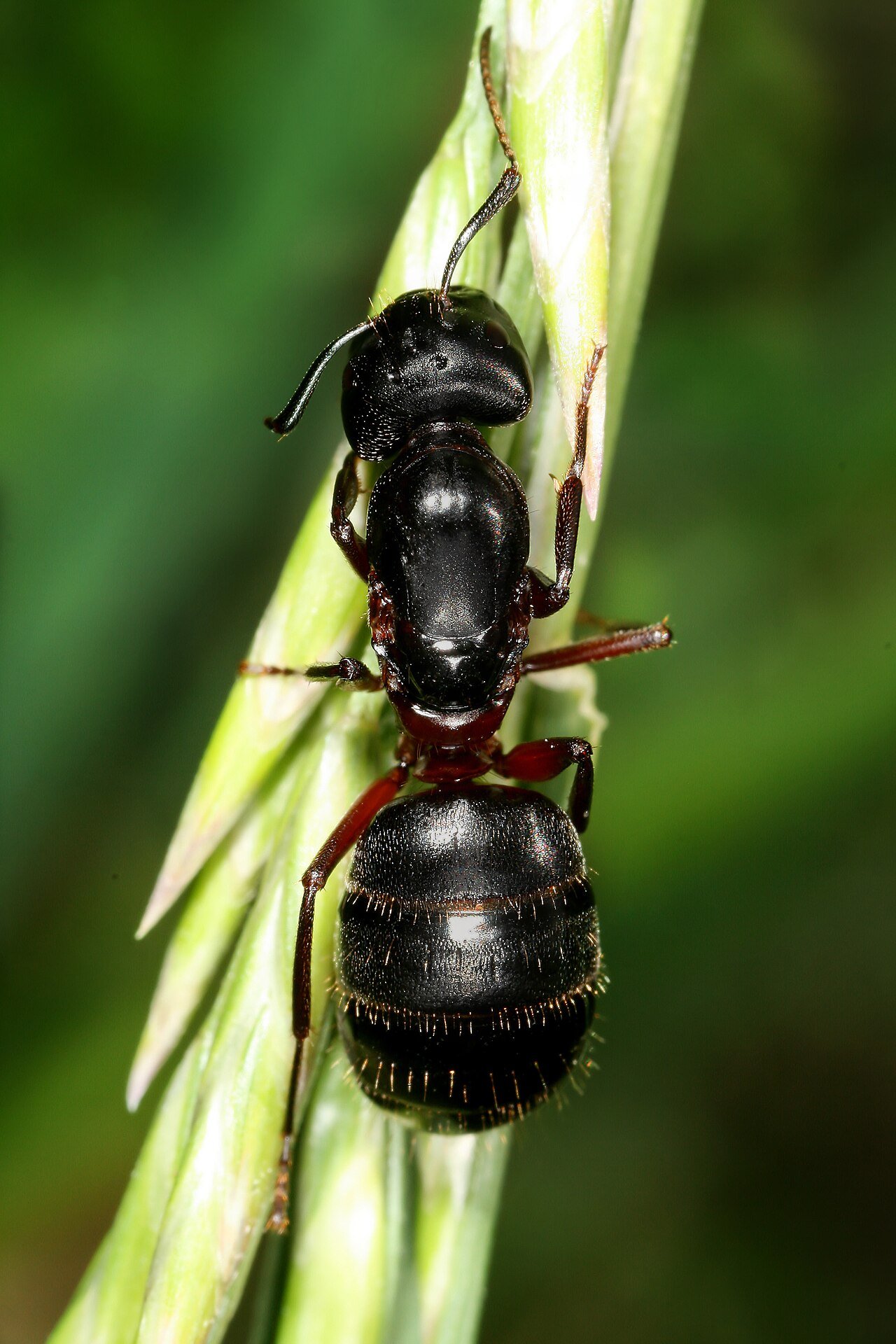
- The carpenter check: the Stillwater tree lines carry carpenter ants, and big black ants near the corridor get the foraging-vs-resident inspection — frass and wall rustle mean the structural conversation, a trail from the yard means exclusion and bait
- Calendar-matched visits: spring surge, summer pavement season, and the post-harvest tightening — three pressure points, three timed passes, instead of a flat monthly habit
And the honesty clause that applies village-wide: living inside the one-block rule means background ant pressure is permanent — the fields will bank colonies forever, and anyone promising a West Milton yard with zero ants is selling weather. What’s winnable, reliably, is the house: trails intercepted outside, satellites cleared from the structure, entry architecture tightened, and the seasonal waves met on schedule. That’s the standing program, and it’s priced for a village, not a subdivision. The town’s full file lives on our West Milton service page.
Meet the Wave at the Foundation
One visit reads your lot’s position in the village’s edge economy — trail lines, foundation joints, tree-line distance — and sets the three-pass calendar that meets each wave on time. Free photo ID on anything you can photograph first.
Frequently asked questions
Why does the whole town seem to get ants at the same time?
The one-block rule: no West Milton lot sits more than a couple of blocks from crop ground, so the fields’ seasonal waves — the wet-week spring surge, the post-harvest tightening — hit the village as a unit. Your neighbors’ fortnight is your fortnight.
What kind of ants are in my kitchen every spring?
Most likely odorous house ants off the field margins and tree lines — small, dark, and smelling of rotten coconut when crushed. They’re moisture-followers whose surge tracks the first sustained wet week, and they’re a baiting job, never a spraying job.
Why did spraying the baseboards make it worse?
Because odorous house ants respond to repellents by budding — one colony splits into satellites in the porch pier, the wall void, and the mulch line, and the problem moves two rooms over. Non-repellent baits carried home by workers are the tool that actually ends the network.
Do the big black ants near the river tree lines mean trouble?
They’re carpenter ants off the Stillwater corridor, and the question is residency: a trail in from the yard is foraging (exclusion and bait); frass piles and rustling in a wall void mean a satellite moved into moist timber, which is the structural conversation. The inspection tells them apart honestly.
Why do ants surge again in late September?
Harvest collapses the field’s insect economy overnight, and everything mobile tightens against the village’s buildings for the warm margin — ants on the same calendar as the mice, for the same reason. The fall perimeter pass exists precisely for that wave.
Can I ever be completely ant-free living here?
The yard, no — the fields bank colonies permanently, and promises otherwise are weather forecasts. The house, yes: intercepted trails, cleared satellites, tightened entries, and timed seasonal passes keep kitchens clear year after year inside the one-block rule.
Are the ants coming out of my sidewalk cracks a problem?
Pavement ants — the village core’s summer specialists, colonizing the joint-and-crack real estate of older walks and curbs. They’re a nuisance-and-perimeter file unless they’re trailing into the house, and the granular bait pass handles the season.
What does ant control cost in West Milton?
Village pricing: a flat-rate three-pass seasonal program matched to the spring, summer, and post-harvest waves — and the honest note that a $15 mortar patch on a stone foundation sometimes outperforms the second treatment.
Related reading from the same streets: wasp & hornet removal in West Milton and rodent control in West Milton.