The ant trail runs across the kitchen floor — the same floor where the beagle vacuums crumbs, the cat bats at everything that moves, and the toddler conducts daily archaeology. Every product that promises to kill the ants also shares a floor with the creatures you love, and the standard advice (“just spray the trail”) manages to be wrong twice: hard on the household, useless on the colony. Here is the complete pet-safe playbook — what “pet-safe” actually means past the marketing, which methods control ants without ever being accessible to a paw or tongue, the specific products and placements that work when species like Ohio’s odorous house ant punish sprays anyway, and the honest line where a professional visit becomes the safest option in the room.
What “pet-safe” really means (it is about placement, not potions)
The marketing phrase implies a magic ingredient harmless to mammals and lethal to ants; the truth is more useful. Toxicity is dose times exposure — and household ant control becomes pet-safe by controlling exposure: how much active ingredient exists in the home, in what concentration, and above all whether a pet can physically reach it. A “natural” essential-oil spray misted across the floor your cat grooms off her paws delivers more exposure than a sealed bait station holding a gram of gel behind plastic baffles — and several “natural” actives are themselves hard on pets (concentrated tea tree and pennyroyal oils are documented toxicity cases in cats and dogs; the natural-equals-safe reflex fails both directions). So the pet-safe hierarchy runs on architecture: sealed beats surface, crack-and-crevice beats broadcast, targeted grams beat misted ounces, and outdoors-at-the-source beats anything indoors at all. Judge every option on this page — and every product label at the store — by where the active ingredient sits relative to a curious tongue, and the decisions mostly make themselves.
Bait in a station the dog cannot reach does the job without the risk, and that is how ant control in Dayton is done in a house with animals.
The pet-safe arsenal, floor-tested
Enclosed bait stations — the backbone
Commercial ant bait stations solve the exposure equation by design: the attractant-toxicant matrix (typically borax or slow actives at fraction-of-a-percent concentrations) lives inside tamper-resistant housings that dogs, cats, and toddlers cannot open, placed where ants trail and pets do not linger — behind the fridge, under the sink cabinet, along the wall behind the trash pull-out. Workers ferry the payload home, the colony collapses over one to three weeks (the same trophallaxis logistics from the vinegar guide), and total household exposure is measured in sealed grams. Even the worst case — the terrier who somehow cracks a station — involves ingredient amounts and concentrations engineered far below harm thresholds for animals their size; poison-control calls about commercial ant baits overwhelmingly end in observation, not treatment. That said: place them out of reach anyway, note the placement locations, and skip loose gel dabs on open cards (the professional technique) in dog households — cards are for homes where nobody licks the baseboards.
Exclusion and sanitation — the zero-exposure tier
The only truly exposure-free ant control is the kind with no active ingredient at all, and it does more heavy lifting than any product: caulk on the entry gaps (window sills, thresholds, the backsplash seam, plumbing penetrations under the sink), the pet-food protocol (bowls picked up between meals or set in a moat — a shallow water-filled tray ants cannot cross — and kibble stored in sealed bins, because pet food is the number one ant attractant in animal households), instant ownership of sweet spills, and the outdoor fundamentals — mulch pulled back from the foundation, trailing routes along hose bibs and wires interrupted. Households that run this tier alone end a meaningful share of invasions without opening a single product, and every product they do open works better for it.
Outdoor perimeter stations and non-repellent treatments — source control
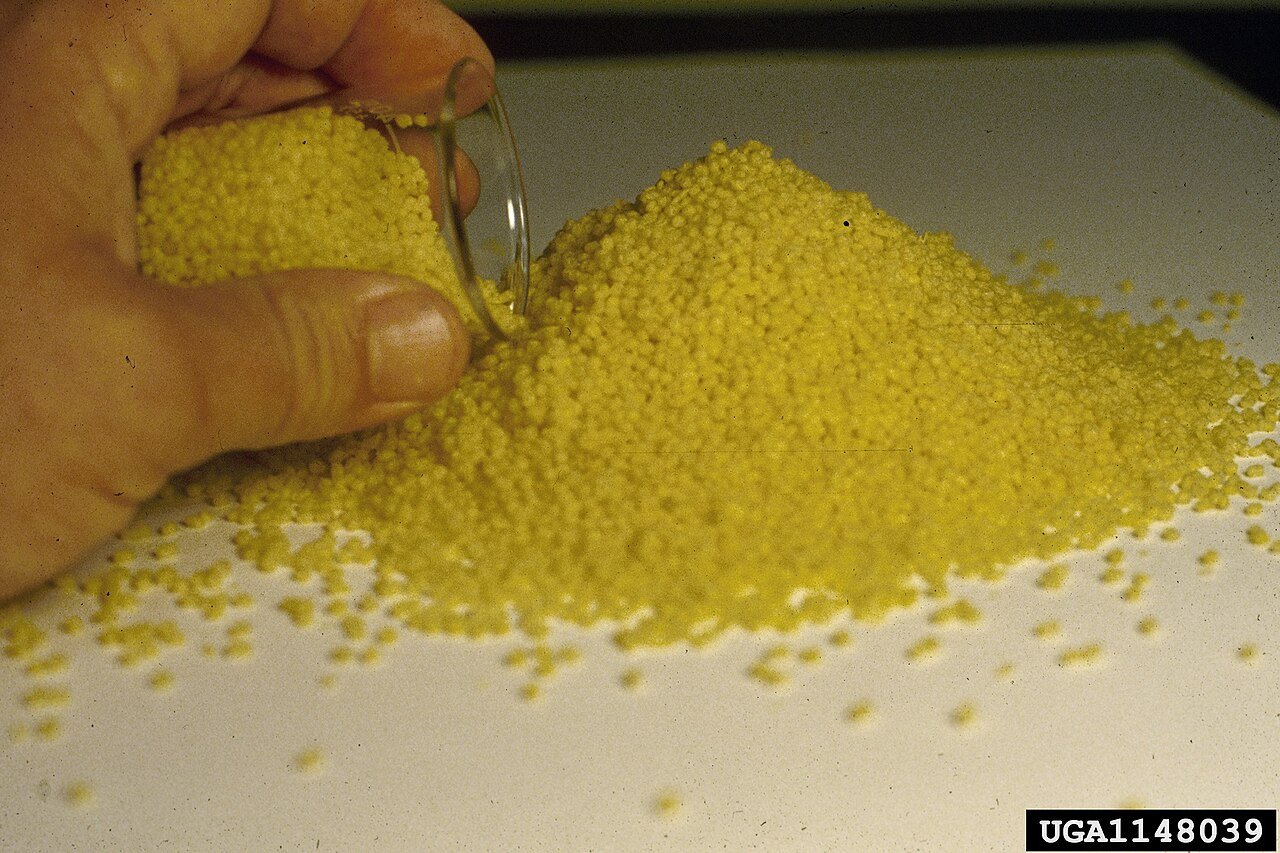
The most elegant pet-safety move is keeping the fight outside entirely: exterior bait stations staked at trail origins and entry lines, and — the professional version — non-repellent liquid barriers on the foundation that foraging ants walk through and share colony-wide. Outdoor placements slash indoor exposure to zero while attacking the same colony the kitchen trail comes from; fenced-yard placements go along the house line where dogs do not dig, and granular baits get watered-in or skipped in active dog zones (a labrador’s relationship with scattered granules is not to be trusted). For the lawn-and-yard side of pet safety — grub treatments, mole products, fertilizer windows — the same read-the-label-reentry-time discipline applies: most modern applications are pet-safe once dry, and “once dry” is a real instruction, not a suggestion.
The bottom-shelf honesty section
Rapid grades for the pet-aisle temptations. Diatomaceous earth: mechanically safe for pets in thin films (food-grade, applied so it stays put — airborne clouds irritate everyone’s lungs, the pug’s especially), modestly useful in dry cracks, useless damp (full guide). Essential-oil sprays: the “natural” trap — repellency without colony effect, plus genuine feline toxicity concerns with several oils; skip in cat households entirely. Vinegar: harmless to pets, harmless to colonies, occasionally harmful to outcomes via the budding backfire — cleaning tool only. Repellent perimeter sprays from the big-box aisle: the double fail — broadcast exposure on floors and thresholds and colony-splitting repellency; the product category pet households most need to walk past. Boiling water on outdoor mounds: pet-safe, satisfying, and legitimate for the isolated pavement-ant volcano.
Special households: the cases that change the plan
Cats specifically: the grooming species concentrates whatever lands on paws and fur into ingestion, walks every counter and windowsill (so “out of reach” barely exists), and metabolizes several compounds — permethrin famously, some essential oils — far worse than dogs. Cat households live by the sealed-and-crack-crevice rules with no exceptions, and skip oil-based anything. Birds: the extreme case — avian respiratory systems are exquisitely sensitive to aerosols of every kind, natural included; bird rooms get exclusion, sealed stations only, and ventilation planning around any treatment anywhere in the house (tell us about the cockatiel before the visit, always). Reptiles and aquariums: closed systems concentrate airborne residues — tanks get covered and filters paused per our instructions on any nearby application day. The puppy and the toddler: same creature, legally distinct — both explore with their mouths at floor level, and both are why our default residential placements assume their presence without being asked. If a company’s technician does not ask about pets and kids before opening the truck, that tells you the placement philosophy already.
What professional pet-safe ant work looks like
Worth spelling out, because “hire a pro” is only reassuring if you know what changes. Our residential ant protocol in animal households: inspection first (species and trail-mapping — the supercolony species gets different chemistry than pavement ants); products chosen from the modern non-repellent and bait classes at crack-and-crevice and void placements — inside wall gaps, behind kick plates, in sealed stations — never broadcast across floors pets use; outdoor source treatment carrying the load wherever possible; everything documented (what, where, active ingredients, reentry guidance in writing, typically “keep pets off treated exterior lines until dry — about an hour”); and the re-treatment guarantee, because colony work verified beats colony work promised. The professional advantage in pet households is not braver chemistry — it is narrower delivery: grams in cracks instead of ounces on floors, plus the species knowledge that ends the problem in one campaign instead of a summer of retail experiments, each with its own exposure footprint. One treatment done right is the lowest-exposure outcome available.
If the dog got into something: the calm checklist
Because preparedness beats panic: know what it was (grab the product, station, or label — the active ingredient and amount drive everything); call your veterinarian or the ASPCA Animal Poison Control Center (888-426-4435; a consultation fee applies) with the label in hand; do not induce vomiting unless a professional tells you to (several products do more harm coming back up); and watch for drooling, vomiting, lethargy, or tremors while you get guidance. The reassuring base rate: commercial enclosed ant baits sit at the mild end of every poison-control database — typical incidents end with observation and an unrepentant terrier — while the serious calls cluster around concentrated DIY mixtures (homemade borax syrups mixed strong and left open answer for most of them), essential-oil applications in cat households, and broadcast granules in dog yards. Which is the safety case for this page’s whole philosophy in one sentence: the engineered, sealed, boring products fail safe; the improvised and broadcast ones do not. If your ant plan would worry you written on the fridge, replace the plan.
Pet-household ant questions we hear
Ants are in the pet food bowl right now — what do I do this minute?
Bowl into the dishwasher, ants and all; floor beneath washed with plain soapy water (erasing the recruiting trail); food resumed on the moat system — and resist the spray reflex on the trail itself, because that is exactly the budding trigger. Then place a sealed station along the wall route the trail used, and let the colony logistics work for you instead of against you. Ants in the food are a recruitment event, not a contamination emergency — the kibble was never the health risk; the response chemistry might have been.
Is professional treatment safe with pets in the house during the visit?
Standard practice: pets secured in another room during application (curiosity and wet product should not meet), back on treated-adjacent floors once dry — usually within the hour — and no evacuation needed for modern crack-and-crevice ant work. We schedule around nap times, crate routines, and the cat’s opinion of strangers; tell us the household roster when you book and the visit plans itself around it.
Do flea treatments on my pet protect against ants too?
No crossover — spot-on flea products defend the animal, not the architecture, and ants have no interest in treated fur. The reverse question matters more: ant products never substitute for veterinary flea control either, and the flea page covers how home treatment and vet treatment divide that labor. Different pests, different systems, both pet-safe done right.
Related: vinegar & home remedies, graded · the sugar ant supercolony · carpenter ants · bed bugs & pets · professional ant control.
The two-week pet-household campaign, assembled
- Day 1: species ID (photo to (937) 569-3330, free) and trail mapping — follow every line to its entry; start the sanitation tier: bowls up between meals, kibble sealed, sweet spills owned
- Day 1–2: sealed stations placed on the trail routes in pet-inaccessible positions (behind appliances, inside cabinets, wall-line placements); exterior stations at the entry points outside
- Days 2–5: the surge — traffic to stations increases and this is victory in progress; no spraying, no vinegar, no station relocations; pets and stations coexisting uneventfully
- Days 5–14: collapse — trails thin, then vanish; refresh any emptied station; hold all placements two weeks past the last sighting
- After quiet: the cleanup and hardening pass — trails washed away, entry gaps caulked, mulch pulled back, moat system retired to the cabinet for next season
- The escalation line: failed baiting rounds, trails from outlets and upper walls, carpenter-ant-sized specimens, or a household too complex for retail placements (birds, exotics, a toddler-and-terrier tag team) — professional visit, with the roster disclosed at booking
Total exposure footprint of that campaign: a few sealed grams indoors, a few stations outside, and a tube of caulk — less active ingredient than one afternoon of aisle-spray improvisation, deployed against the colony instead of the couriers. That is the whole pet-safe thesis: the gentlest plan and the most effective plan are, for once, the same plan.
The bottom line
You do not have to choose between the ants and the animals. Control that works — bait logistics, source treatment, exclusion — is inherently controllable exposure, because it lives in sealed grams and cracks rather than misted floors; the products that endanger the household are largely the same broadcast repellents that fail against the colony anyway. Run the sealed-and-source playbook, respect the cat-bird-toddler special cases, keep the poison-control number where panic can find it, and escalate to professionals whose first question is who lives there. Ant-free and animal-safe is the standard outcome, not the lucky one — we deliver it weekly across the Miami Valley, guarantee attached: (937) 569-3330, Greater Dayton Pest & Rodent.
Reading a label like a pet owner (the 60-second skill)
Since the store shelf will keep tempting, here is the label literacy that turns marketing back into information. Find the active ingredient line first — the chemical name and percentage — and let concentration calibrate you: baits run at fractions of a percent, effective and engineered for enclosed delivery; concentrates demand dilution discipline that improvised mixing routinely botches. Find the signal word — CAUTION (lowest tier), WARNING, DANGER — a legally mandated toxicity ranking hiding in plain sight. Read the precautionary statements for the actual pet language — “keep animals off treated areas until dry” is an instruction with a clock, not boilerplate — and note that “pet-safe!” on the front of the box is marketing while the precautionary paragraph on the back is law. And distrust any product whose label cannot say where it is registered or what is in it — the unregulated corners of the “natural” market carry exactly the untested oils the cat paragraph warned about. Sixty seconds of label reading sorts the whole aisle into the same tiers this page did — sealed and specific versus broadcast and vague — and once you see the pattern, you cannot unsee it. Neither can your vet, which is why they will approve of the boring choices too.
Our yard backs up to woods and the ants keep coming — is a quarterly program safe with two dogs?
Yes, and edge lots are where programs earn their keep for pet households specifically: quarterly non-repellent exterior work keeps the standing pressure met at the foundation line — outside the dogs’ primary zone, dry within the hour, documented every visit — so the indoor products never need to escalate at all. The alternative most edge households drift into, an annual cycle of indoor retail responses each spring, accumulates more floor-level exposure per year than the program does. Steady, sealed, and outside beats sporadic, sprayed, and inside — for the colony and the retrievers alike. Every program visit notes the pets on the ticket, and the technicians carry dog treats with owner permission, which has resolved more gate negotiations than any product we stock.
The whole subject in one image to keep: the household you are protecting eats off the floor, grooms itself with its tongue, and investigates everything new at nose height — and the ant colony you are fighting lives behind the wall, reachable only by couriers. Every good decision routes lethality to the couriers in sealed grams; every bad one broadcasts it across the floor the family lives on. Choose courier-logistics over floor-chemistry every time, and both wars — the one against the ants and the one for the animals — end in the same victory. Questions about your specific zoo and your specific trail: (937) 569-3330, free, honest, and fluent in beagle.
Frequently asked questions
What ant control is safe to use around pets?
The placement-first toolkit: enclosed bait stations in pet-inaccessible spots (behind appliances, inside cabinets, high shelves), gel dots in cracks and hinge lines pets cannot lick, and non-repellent exterior perimeters applied at the foundation per label. Method plus placement beats any “pet-safe” label claim.
Are ant baits poisonous to dogs and cats?
The actives are low-dose by design — a licked bait station is a call-the-vet-for-guidance event, rarely an emergency — but plastic station casings chewed and swallowed are their own hazard. The rule stands: placements go where paws and mouths cannot, full stop.
What happens if my dog eats an ant trap?
Note the product name and active ingredient, call your vet or the ASPCA poison line, and expect reassurance more often than panic — common baits (indoxacarb, borate, fipronil at bait doses) sit at the low end of canine toxicity. The plastic housing is frequently the bigger concern.
Is vinegar or baking soda a pet-safe ant solution?
Pet-safe and ant-ineffective — vinegar erases trails without touching colonies; baking soda barely functions at all. Safety without efficacy just extends the infestation; properly-placed real bait delivers both.
Are essential oils safe for pets as ant repellent?
Mostly no on both counts — tea tree oil is genuinely toxic to cats and dogs, several citrus and peppermint concentrates irritate, and none of them control colonies anyway. The essential-oil aisle manages to fail the pet test and the ant test simultaneously.
Is diatomaceous earth pet-safe for ants?
Food-grade DE is essentially non-toxic if licked — the caveat is airborne dust irritating lungs (yours and the pet’s) during application. Applied damp-then-dried into cracks it is a legitimate C+ supporting player; dusted across open floor it is theater with a respiratory tax.
How do professionals treat ants in homes with pets?
The same crack-crevice-and-station discipline this page teaches, plus non-repellent exterior work that keeps most product outside entirely — with every placement mapped and reported so you know where everything is. Tell us the species and habits of your animals; the protocol adapts (chewers get stations only).
Do I need to keep pets away during ant treatment?
Briefly and locally — out of the treated room during application and until any liquid placements dry; exterior perimeter work needs pets in for an hour. It is a far shorter quarantine than the DIY spray can honestly requires.
What about ant control with birds, reptiles, or fish?
Higher sensitivity class — aquariums get covered and pumps paused during any nearby application, bird cages move rooms, reptile enclosures likewise. Flag exotic pets when you book and the treatment plan routes product away from their rooms entirely.
Ants are in the pet food bowl — now what?
A moat: bowl inside a shallow water-filled tray beats every spray, pet food picked up between meals removes the standing ad, and the trail gets the standard bait protocol placed outside pet range. The bowl is almost always the recruiting event; fix the buffet, then run the bait.