
You wake up with itchy welts, find nothing in the bed, search “bed mites,” and fall into the least helpful corner of the internet — because “bed mites” is not really a thing, but biting mites absolutely are, and telling the possibilities apart is the difference between solving the problem this week and chasing it for months. This guide sorts the whole mite question honestly: why the “bed mite” you are picturing (the dust mite) cannot be biting you, which mites genuinely do bite people in Ohio homes — bird mites, rodent mites, chiggers, and the oak leaf itch mite — how each one announces itself, what the bites look like, and the source-removal logic that actually ends every one of them. Plus the hardest, kindest section we write: what to do when no source can be found.
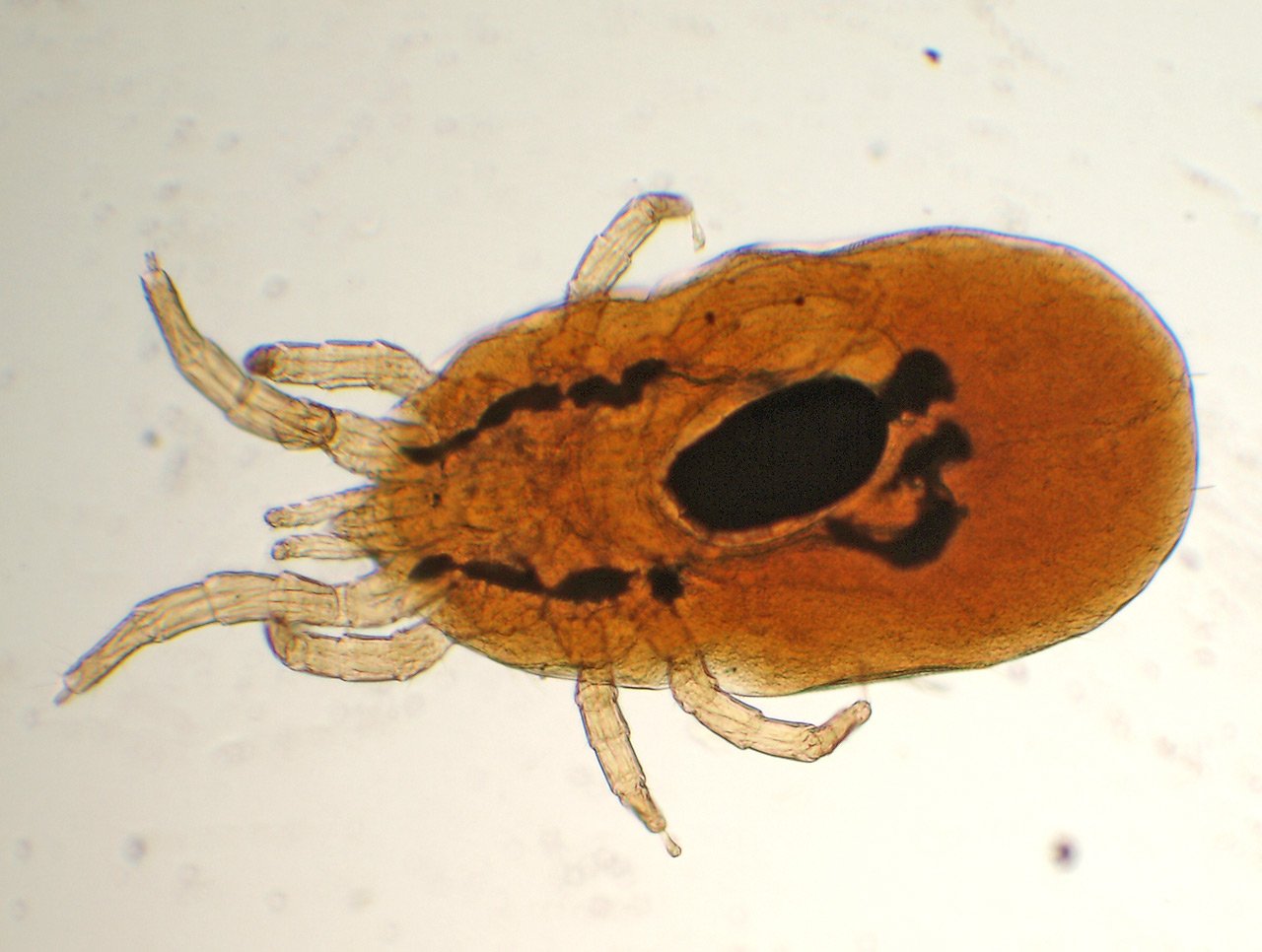
First, clear the suspect everyone accuses: dust mites do not bite
Dust mites are real, they are in virtually every bed in Ohio including ours, and they are microscopic scavengers of shed skin flakes with no biting mouthparts capable of piercing human skin — none. The itchy morning skin blamed on “bed mite bites” is, when dust mites are genuinely involved, allergy: their droppings and fragments trigger eczema flares, rhinitis, and itchy skin in sensitized people, which feels bite-adjacent but produces no punctures, no welt-with-a-center, no bite pattern. We wrote a full guide to dust mites and what their “bites” actually are — if your symptoms are all-over itchiness, morning congestion, and no visible punctures, start there, because no pest control treatment on earth fixes an allergy, and no honest company sells you one.
Bird and rodent mites bite people only after their host leaves, which means the nest is the real target. Finding it is pest control in Dayton.
The mites that actually bite, ranked by how often we find them
1. Bird mites: the empty-nest surprise
The champion of solved “mystery bite” cases. Bird mites (Dermanyssus and Ornithonyssus species) live in bird nests feeding on nestlings — and when the babies fledge or a nest fails, thousands of suddenly hostless mites migrate into the nearest structure through vents, window frames, and soffit gaps, biting every warm thing they meet. The tell is the timeline: bites beginning within days of birds going quiet in the bathroom vent, the gutter-line nest, the porch light, or the attic gable — classically late spring and early summer, classically in the rooms nearest the nest. The bites are small red papules with fierce itch, often several in a night, and the mites themselves are barely visible walking specks — sometimes spotted on windowsills and ceilings near the entry. The fix is source-first and completely reliable: remove the nest (wearing protection), treat the nest cavity and migration paths, screen the vent or gap, and the biting ends because the population cannot reproduce on human blood — we are their famine food, not their home. This is a same-week job for us, start to finish, guarantee included.
2. Rodent mites: the after-the-mice epilogue
The tropical rat mite and its kin run the same play with a rodent cast: a mouse or rat population dies or gets removed, the mites lose their hosts, and the building’s warm-blooded runners-up — you — start getting bitten, typically within a week or two of the rodent work. If mystery bites follow a rodent cleanout, a poisoning die-off in the walls, or a neighboring unit’s pest work, rodent mites lead the suspect list. The response mirrors the bird-mite play: find and remove the nest sites and carcasses where mites concentrate, treat the harborage and travel routes, and close the rodent entries so the cycle cannot restart. It is also our standing argument for trap-based rodent work over wall-void poisoning — carcasses you can retrieve do not become mite nurseries you cannot.
3. Chiggers: the outdoor specialist
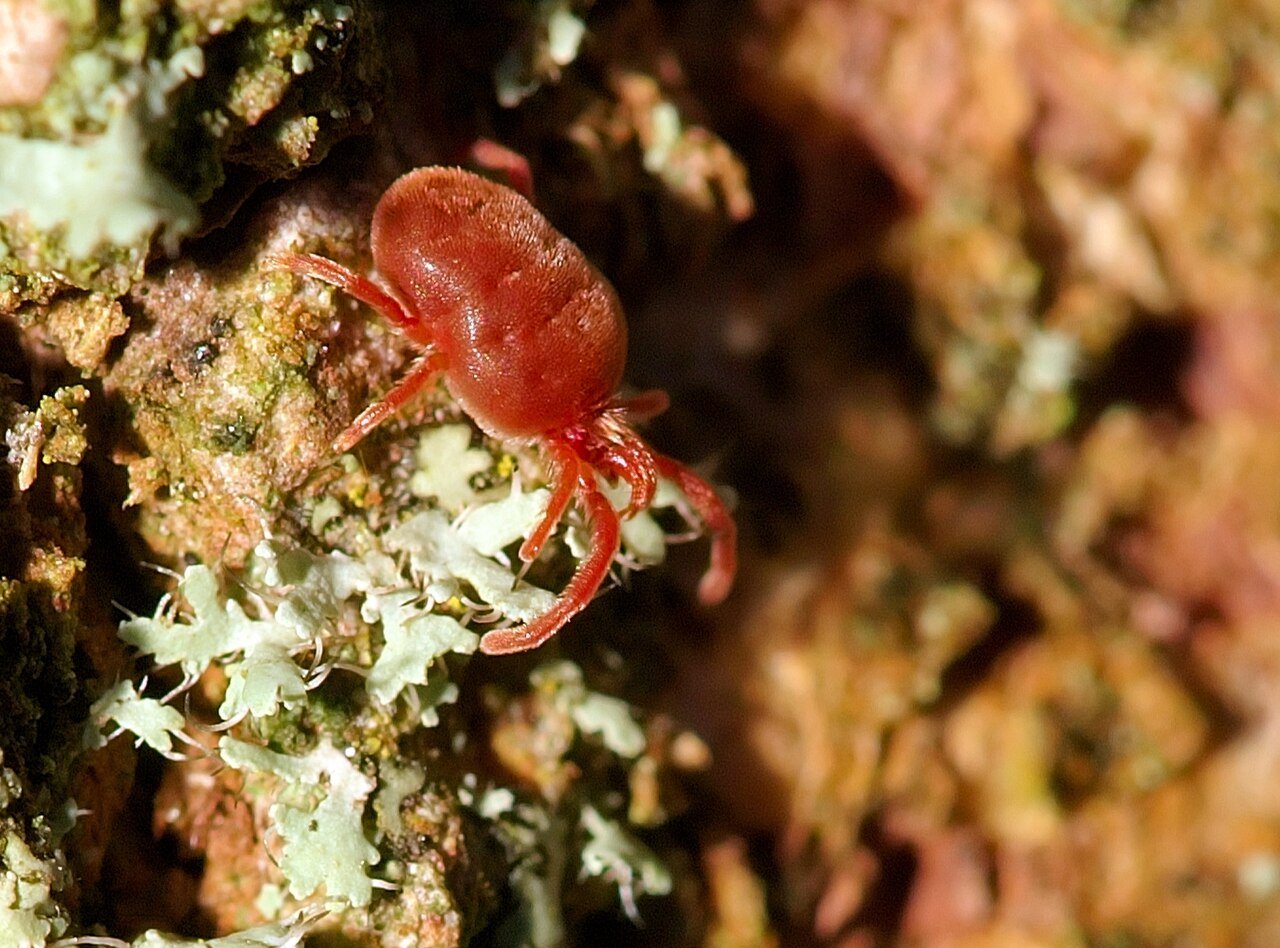
Chiggers are the larval stage of trombiculid mites, and they never infest homes — every chigger case is an outdoor souvenir. The Ohio pattern: tall grass, field edges, brambles, and damp woods from June through September; bites appearing hours after exposure in maddening clusters exactly where clothing pressed skin — sock lines, waistbands, behind knees, bra lines; itch that peaks on day two and outlasts a week. Two myths to retire: chiggers do not burrow into skin (the red dot is a feeding puncture, not an embedded mite — the mite fell off long before you started itching), and nail polish on bites does nothing but decorate the welt. Prevention is clothing and repellent at the ankles; relief is anti-itch care (our bite-itch guide covers the protocol); and yard pressure on a chigger-heavy lot responds to mowing the transition zones and the same margin treatments we run for tick-edge properties.
4. Oak leaf itch mites: the September mystery
Every few years — the Midwest has seen repeated waves — the oak leaf itch mite (Pyemotes herfsi) turns raking season itchy: the mite feeds on midge larvae inside oak leaf-edge galls, and when populations boom, mites shower from the canopy onto anyone beneath. Bites concentrate on the neck, shoulders, and upper chest — the falling-from-above pattern — as intensely itchy welts with a tiny blister center, appearing 10 to 16 hours after time under oaks or handling leaf piles. There is no spray for a tree canopy and no need: awareness (shower and change after heavy oak-leaf contact in outbreak years), timing (the waves end with hard frost), and symptomatic care carry you through. If your bite pattern is neck-and-shoulders every October under the big oak, you have likely met Pyemotes, and you can stop shampooing the carpets.
5. Scabies: the one that belongs to your doctor
Scabies mites are the exception to every rule above: they do live and reproduce on human skin, they spread person-to-person by prolonged contact, and they produce relentless nighttime itch with threadlike burrows in finger webs, wrists, and waistlines. They are also entirely a medical condition — diagnosed by clinicians, cured with prescription treatment for the whole household, and completely outside pest control’s lane: the mites die within days off a human host, so treating the house does nothing and anyone selling a “scabies treatment” for your carpet is selling smoke. If the pattern above sounds familiar, the right call is your family doctor today — and normal laundering handles the linens.
Mite bites vs. bed bugs vs. fleas: the pattern decoder
Because the bites themselves are frustratingly generic — red, itchy, welted — the diagnosis lives in the pattern and the context, and this is the table our technicians run in their heads. Bed bugs: bites on skin exposed during sleep (arms, shoulders, face), often in lines or clusters of three, paired with physical evidence findable on inspection — eggs, fecal spotting, shed skins; no evidence after a proper search argues hard against them. Fleas: ankles and lower legs first, in homes with pets or wildlife history; you can often see fleas with a white-sock walk test. Bird/rodent mites: bites anywhere, strongly tied to specific rooms, with the nest-or-rodent timeline above and sometimes visible walking specks near entry points. Chiggers: compression lines, outdoor timeline, no indoor spread ever. Oak leaf itch mites: neck and shoulders, autumn, oaks. Nothing fits and nothing is found: keep reading — the next section is for you, and it is not a brush-off.
When no source can be found: the honest conversation
Several times a month, someone calls us with persistent biting sensations, no visible pests, and a history of treatments that changed nothing — sometimes after other companies have sprayed repeatedly. Here is how we handle it, because we think it is the only ethical way. First, we actually investigate: a real inspection for the four findable culprits above, plus interceptor traps and sticky monitors placed and checked, because bird and rodent mites are genuinely easy to miss and deserve a genuine search. Second, we widen the differential honestly: environmental irritants (fiberglass from a disturbed attic, new carpet chemistry, water-softener changes), medication side effects, and dermatological conditions all produce “invisible bug” presentations, and a dermatologist visit with our written no-findings report is often the most useful referral we make. Third — and this is the line we will not cross — we do not treat homes where nothing is found. Repeated spraying for unfound pests is not caution; it is charging desperate people for chemical placebo, it can worsen skin irritation, and it postpones the appointment that actually helps. A written “we inspected thoroughly and found no infestation” is sometimes the most valuable document a pest company can produce — it is free here, and doctors take it seriously.
The source-removal playbook (why mite jobs stay solved)
Every legitimate biting-mite infestation shares one beautiful weakness: the population depends on a non-human host, and finding that host ends the story. The professional sequence on a bird- or rodent-mite job: locate — the nest in the vent, the abandoned squirrel drey against the attic gable, the mouse nursery behind the water heater, guided by where bites happen and where specks appear; remove — nest material and carcasses out, bagged, with respirator-and-gloves protocol (nest debris carries more than mites); treat — the cavity, the migration routes, and the affected rooms with targeted acaricide applications, which work spectacularly well once the source is gone and pointlessly while it remains; exclude — screen the vent, cap the gap, seal the rodent entries, because the bird that rebuilds in May restarts the calendar; and verify — monitors placed and rechecked, so the all-clear is evidence rather than optimism. Homeowners can run parts of this on an accessible porch-light nest; attic and vent work, wall-void carcass retrieval, and anything involving bat or bird droppings in quantity belong with professionals for reasons beyond mites. Either way, note what the sequence is not: it is not spraying the bedroom weekly and hoping. Mite problems are solved at the source or not at all.
Mite questions we hear
Can mites live in my mattress like bed bugs do?
The biters cannot — bird and rodent mites need their animal hosts and survive only days to a few weeks off them, and they nest near the host animal, not in your bedding. What lives in mattresses long-term is the dust mite (harmless, allergenic, non-biting) and occasionally bed bugs themselves (a different insect entirely, with findable evidence). If something is genuinely living in the bed and biting, the search is for bed bugs; if mites are biting in the bedroom, the search is for the nest or rodent activity near it. Encasements, hot laundering, and vacuuming help every version of this story, so they are never wasted effort while the real search proceeds.
Are any of these mite bites dangerous, or just miserable?
In Ohio, overwhelmingly the latter. Our biting mites are not meaningful disease vectors in this region — the risks are the itch itself, infection from scratching (keep bites clean, resist the fingernails, treat the itch properly), and the occasional stronger skin reaction in sensitive people. The exception worth naming is secondary: heavy nest and droppings cleanups — the bird-mite scenario’s messy half — carry respiratory precautions unrelated to mites, which is part of why we suit up for them. Miserable, treatable, solvable: that is the honest threat profile.
I can feel them crawling but never catch one. What is that?
Formication — the crawling sensation without a visible cause — has a long differential, and real mites are only one line of it: static on synthetic fabrics, dry winter skin, fiberglass exposure, medication effects, and heightened skin awareness after any pest scare all produce it (everyone who reads this page will feel something crawl within the hour — that is normal neurology, not infestation). The productive move is capture: clear packing tape pressed wherever the sensation concentrates, folded onto itself, labeled, repeated for a few days. Actual mites tape beautifully and identify under any magnifier — ours included, free. A week of honest taping with nothing caught is strong evidence pointing away from pests, and we will say so in writing.
Do I need to throw away bedding, clothes, or furniture?
Almost never — this is the happiest difference between mites and bed bugs. Because biting mites cannot sustain themselves on people or fabric, ordinary hot-wash-and-dry laundering clears textiles completely, vacuuming clears surfaces, and furniture needs nothing but time once the source is removed. Save the disposal budget; spend a fraction of it on the vent screen.
Related reading: dust mites — the non-biting “bed mite” · bed bug evidence guide · stopping the itch · rodent control (the upstream fix for rodent mites).
The Miami Valley mite calendar
Mite complaints here run a legible season, and knowing it speeds every diagnosis. May–July is bird-mite season — fledging time for the starlings, sparrows, and robins nesting in our vents, gutters, and porch fixtures, and the weeks our “invisible bites in the back bedroom” calls spike; the nest was charming in April and evacuated in June, and the mites followed the warmth inward. June–September belongs to chiggers, tracking every tall-grass and creek-edge exposure from Sugarcreek trails to backyard meadows. Late September–frost is oak-mite risk in outbreak years, timed to raking. October–February shifts suspicion toward rodent mites — the fall mouse push moves populations (and their passengers) indoors, and midwinter die-offs or cleanouts strand the biters. Dust-mite allergy, fittingly, is the year-rounder that spikes when the furnace first fires and stirs the summer’s accumulation. Match your bite timeline to this calendar and you will usually walk into the phone call already knowing the answer — which is exactly how we like our callers armed.
The bottom line
“Bed mites” is a search term, not a diagnosis. The all-over itch with no punctures points to dust-mite allergy and the doctor’s side of the house; genuine mite bites point to a findable animal source — a bird nest, a rodent history, a grassy afternoon, an oak in September — and end permanently when the source does. Run the pattern decoder, respect the scabies exception, tape-test the ambiguous, and never let anyone treat a home where nothing was found. When you want the search done professionally — nest to vent screen, inspection to written verdict — it starts with a free call: (937) 569-3330, Greater Dayton Pest & Rodent, where the honest answer is the whole product.
What should I photograph or collect before calling?
Three things turn a mystery-bite call into a fast one: the bites (clear photo, with a note on where and when they appear), the context (the vent where birds nested, the room map of where it happens, any recent rodent history or outdoor exposure), and any specimen — the tape-test fold, the speck from the windowsill in a zip bag, even a clear macro photo of a dot on white paper. With those, our identification is usually same-day and the plan writes itself. Without them, we start the search from scratch — still free, just slower. Either way, nobody should live in a guessing game about their own bed: bring us the evidence and let’s settle it.
Frequently asked questions
What do mite bites look like on humans?
Small red papules, intensely itchy, often in scattered clusters without pattern — distinguishable from the ordered lines of bed bugs and the ankle geography of fleas. The tell is context: mite bites arrive with a findable source (rodents, birds, grain, grass) and stop when the source goes.
What kind of mites bite people?
The realistic Ohio roster: bird mites (from nests in eaves and vents), rodent mites (tropical rat mite — the post-extermination biter), chiggers (outdoor larvae, seasonal), and straw itch mites (grain and hay handling). NOT on the roster: dust mites, whose “bites” are actually allergy welts, and scabies, which is a medical mite requiring a doctor rather than an exterminator.
Why did bites start after we got rid of mice or birds?
The classic sequence — parasitic mites abandon their dead or departed hosts and seek the nearest warm blood: yours. Post-extermination and post-nest-removal bite waves are diagnostic gold; the fix is treating the abandoned nest zones, not re-questioning the rodent work.
Do dust mites bite?
Never — no dust mite has ever bitten anyone; they eat shed skin flakes and produce allergens. “Dust mite bites” are allergic dermatitis wearing a bite costume; the response is allergen control (encasements, hot washing, humidity), not pest treatment. Full file on our dust-mite page.
What are chigger bites and how do I avoid them?
Larval trombiculid mites from tall grass and brush — fierce welts at sock lines, waistbands, and skin folds appearing hours after exposure. Defense: permethrin-treated clothing, DEET at the boot line, prompt hot showers after field time. They do not infest homes or persist on skin.
How do I know if my house has biting mites?
Find the source, not the mite: check for bird nests at vents and eaves, rodent history (current or recently treated), and the bite-timing pattern (which rooms, which activities). Tape samples from suspect surfaces can confirm under magnification — ours or an extension lab’s.
How do I get rid of bird or rodent mites?
Source first, always: remove the nest (or complete the rodent program), treat the nest zone and migration paths with labeled acaricide, vacuum thoroughly, and expect the population to collapse within days — parasitic mites cannot sustain on human blood alone; they die out once the host reservoir is gone.
Can mites live in my bed like bed bugs?
Parasitic mites visit rather than colonize bedding — no seam harborage, no spotting evidence, no persistent bed population. A “bed mite” complaint with clean seams is usually dust-mite allergy or the bird/rodent hunt; the evidence types separate every case.
Why can’t I see what’s biting me?
Mites run tiny-to-microscopic, and several bite-like conditions involve no arthropod at all — dermatitis, medication reactions, dry-air itch (winter’s “invisible bug” season). The honest protocol: evidence hunt first, doctor consult in parallel, and treatment only for confirmed sources — spraying for invisible mites treats anxiety, not arthropods.
Who investigates mystery bites near Dayton?
We do — the source inspection (nests, rodents, seams, the full differential) plus honest verdicts including “this one is for your dermatologist”: (937) 569-3330. Bite mysteries are solved by finding reservoirs, and finding reservoirs is the job.