
Spiders are predators, and the single most useful thing to understand about them is that predator populations track prey populations. A house with a lot of spiders almost always has a lot of the insects spiders eat, and in Fairfield’s mature subdivisions there are two reliable insect factories working against you: forty-year-old foundation landscaping holding moisture and organic matter right against the wall, and exterior lighting burning all night at the garage, the front door, and the patio. Deal with those two and the spider problem largely deals with itself.
The Landscape Is Feeding Them
Foundation beds installed at construction in the seventies and eighties have been mulched annually ever since, and the result is a deep, damp organic layer running the length of the house. That layer supports springtails, sowbugs, millipedes, earwigs, and the small flies that breed in decaying matter — the base of the food chain spiders live on. Shrubs planted as one-gallon stock are now large enough to hold moisture, block airflow, and shade the wall permanently.
That puts a substantial insect population within inches of every ground-level opening in the building, and it gives spiders sheltered harborage immediately adjacent to it. A perimeter treatment applied over the top of that arrangement is fighting a supply line it cannot cut.
The corrections are the same ones that help with ants and mice, which is convenient: pull beds back several inches so a band of foundation is visible, trim plantings so nothing touches the siding, redirect irrigation away from the wall, and extend downspouts. Drier ground against the house supports fewer insects, and the spider population follows the food down over the following season.
Lighting Is the Lever Nobody Pulls
The second supply line is easier to fix than the first and almost nobody touches it. Bright white fixtures at the garage, the front entry, and the patio pull flying insects in continuously all night, and the spiders that string webs across those exact locations are simply eating what the lights deliver. The orb webs across a porch light in August are not a sign of neglect. They are a sign that the fixture is working extremely well as an insect trap.
Switching exterior bulbs to warm-toned or amber dramatically reduces insect attraction, because the wavelengths that draw night-flying insects are concentrated at the cool end. Adding motion activation instead of dusk-to-dawn operation cuts it further, and moving a fixture away from a doorway means that whatever is still attracted is not attracted to the door you use.
It costs the price of a few bulbs, it is permanent rather than something that has to be reapplied, and it typically produces a visible reduction within weeks. When people ask what the single most effective thing they can do about spiders is, this is the honest answer, and it is not a service we sell.
Crawl Spaces and Window Wells
On the crawl-space and split-level houses common here, two features do most of the harborage work. Crawls are frequently dirt-floored or have a vapor barrier laid once and since torn, walked on, and never re-lapped. They run humid most of the year, they are dark, and essentially nobody goes into them, which makes them ideal for both spiders and the insects they eat — with a direct route up through plumbing and duct penetrations in the subfloor.
Window wells on lower levels are the other. A well that has not been cleaned in a few years holds several inches of leaf litter, which supports the same food chain, and the window at the bottom of it is very often a lower-level bedroom. Clearing the wells and fitting covers makes a visible difference in a single season and it also stops the wells filling with water.
Both fixes are ordinary building maintenance rather than pest control: a continuous, properly lapped vapor barrier, crawl vents actually open and unobstructed, sealed subfloor penetrations, window wells cleared and covered, and downspouts extended so water is not being delivered alongside the foundation.
- Warm or amber exterior bulbs on motion activation — the single most effective change.
- Beds pulled back and shrubs trimmed off the siding — cuts the insect supply at the wall.
- Window wells cleared and covered, especially on lower-level bedrooms.
- Crawl vapor barrier lapped and vents open — a drier crawl supports far fewer insects.
- Webs and egg sacs knocked down physically — residual treatment will not do this for you.
What Treatment Does, and When It Is Worth It
Spiders are less susceptible to residual insecticides than most insects, and the reason is mechanical rather than chemical. They walk on the very tips of their legs and hold the body clear of the surface, so a spider crossing a treated band picks up considerably less material than a crawling insect does. That is simply how they are built, and it is why nobody can honestly promise to eliminate every spider from a property with a spray.
What a well-placed exterior treatment does accomplish is real but narrower: it reduces the insect population the spiders are feeding on, and it treats specific harborage points around entries, window wells, soffits, the garage door track, and the foundation line. Combined with the lighting and landscape changes, that is a meaningful reduction. On its own, applied over overgrown beds and under a bright porch light, it is fighting a resupply it cannot win against.
Mechanical work matters as much as chemical. Knocking down webs and egg sacs physically removes the next generation, which no residual will do, and it needs repeating a couple of times a year because it is maintenance rather than a one-time job. Then there is a threshold question worth asking honestly: a few cellar spiders in a crawl or an unfinished corner are ordinary in every house in these subdivisions and are doing you a small favor. Treatment makes sense when spiders are appearing in living space, when there is a widow identification concern around a woodpile or shed, or when exterior webbing has genuinely got out of hand.
What You Almost Certainly Have
The long-legged, fragile spider hanging in a loose, untidy web in a crawl, a garage ceiling, or a lower-level corner is a cellar spider. Harmless to people, unable to do anything meaningful to human skin, and genuinely useful because it preys on other spiders and on insects. It is the most common complaint we hear, and in most cases a broom is a better response than a treatment.
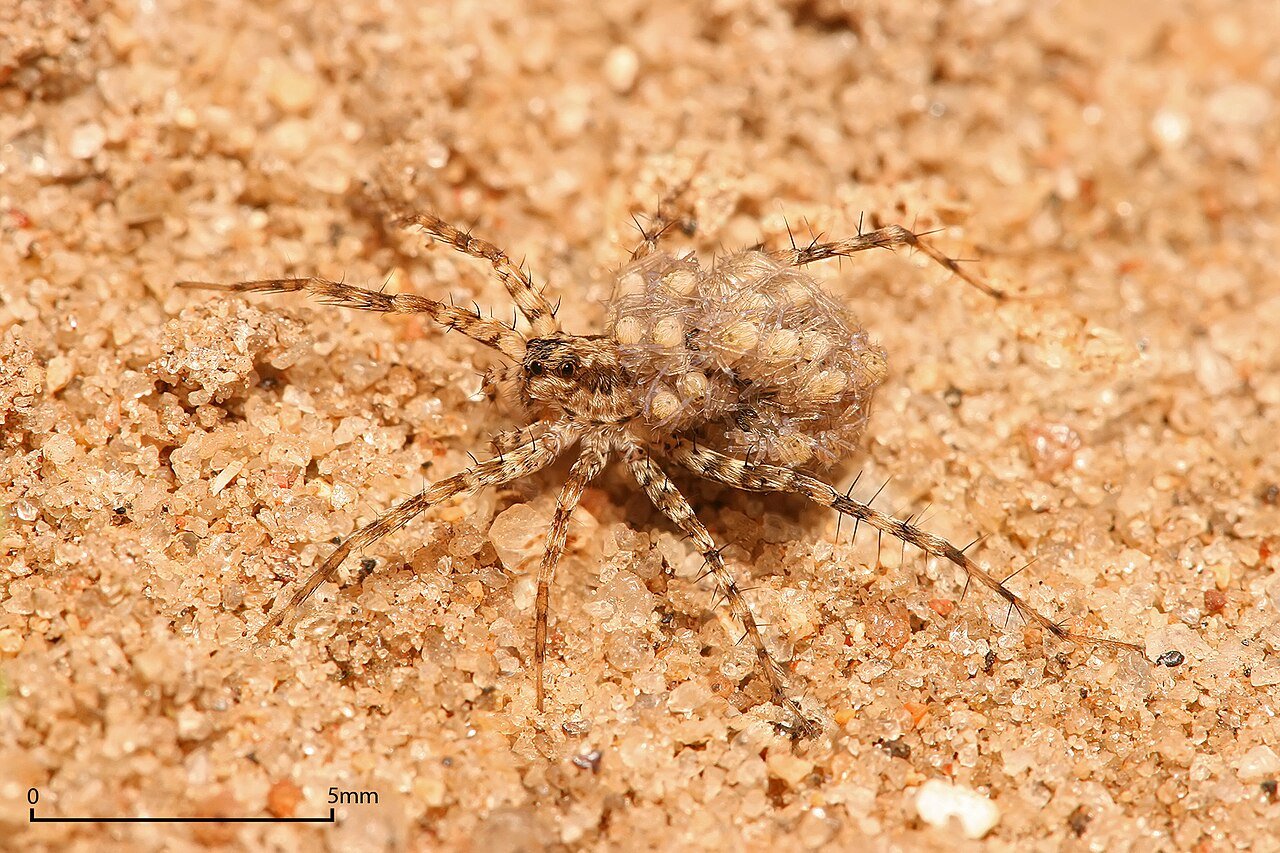
The larger, fast, hairy spider that appears on a lower-level floor or sprints across a garage in October is a wolf spider. They hunt actively rather than building webs, which is why you see them moving. Alarming because of size and speed, they will bite if genuinely trapped against skin, and they are not dangerous and not interested in people. Their appearance in autumn is the wandering season — mature males leaving their webs to look for females — and it passes.
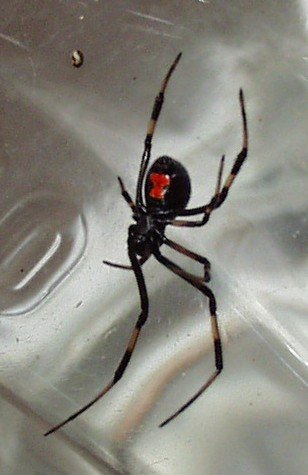
Black widows do occur in Ohio, uncommonly but genuinely, and they favor undisturbed low spaces: firewood stacks, under a deck, a shed corner, a crawl access, and a neglected window well. Look for a glossy black spider with a globular abdomen and a red hourglass underneath, in a tangled web close to the ground, and wear gloves handling stored materials. Brown recluse, by contrast, sits outside Ohio’s established range, and the large majority of suspected recluse spiders submitted for identification here turn out to be common house spiders, grass spiders, or sac spiders.
Across Butler County
Hamilton to the north has old stone basements that change the picture entirely. West Chester is east with newer construction, and Middletown is north with more slab houses.
General service is on the Fairfield pest control page.
Frequently asked questions
What actually reduces spiders the most?
Exterior lighting, by a wide margin. Bright white fixtures at the garage, entry, and patio pull flying insects in all night, and spiders set up where the food is. Warm or amber bulbs on motion activation cuts the supply, costs the price of a few bulbs, and is permanent rather than something that has to be reapplied.
Why do I have so many more than I used to?
Usually the landscaping has matured. Forty years of annual mulch has built a damp organic layer against the foundation that supports springtails, sowbugs, millipedes, and small flies, and overgrown shrubs hold moisture and shade the wall. That is a large insect population inches from every ground-level opening.
Will spraying get rid of all the spiders?
No, and anyone promising that is overselling. Spiders walk on their leg tips and hold their bodies clear of treated surfaces, so they pick up much less residual than crawling insects. Treatment works mainly by reducing the insects they eat and by hitting specific harborage points.
What are the long-legged spiders in the crawl and garage?
Cellar spiders. Harmless, unable to meaningfully bite human skin, and useful because they eat other spiders and insects. In most crawls and garages a broom is a better response than a treatment.
Why do spiders suddenly appear every September?
Mature males leave their webs in autumn and wander looking for females, and a wandering spider that meets a house with settled thresholds and ground-level openings ends up inside. It is a seasonal movement rather than an infestation, and it passes.
Do window wells really matter?
On lower-level bedrooms especially. A well holding a few inches of leaf litter supports springtails, sowbugs, millipedes, and small flies, and the spiders follow the food with a window right there. Clearing the wells and fitting covers makes a visible difference in one season.
Are black widows really in Ohio?
Yes, uncommonly but genuinely. They favor undisturbed low spaces — firewood stacks, under decks, shed corners, crawl access, and neglected window wells. Look for a glossy black spider with a globular abdomen and a red hourglass underneath, and wear gloves handling stored materials.
Do we have brown recluse here?
Almost certainly not. Ohio sits outside the established range, and the large majority of suspected recluse spiders submitted for identification in this state turn out to be common house spiders, grass spiders, or sac spiders. We identify what you actually have rather than assume the worst.
When is treatment actually worth it?
When spiders are turning up in living space, when there is a black widow identification concern around a woodpile, shed, or window well, or when exterior webbing has genuinely got out of hand. A few cellar spiders in a crawl or an unfinished corner are ordinary in every house in these subdivisions and are quietly eating other insects for you.